Starting an Aesthetics Business in Nigeria
Learn how to start an aesthetics business in Nigeria, including licences, regulatory requirements, training and the real costs to plan for.

Starting an aesthetics business in Nigeria can look deceptively simple from the outside.
A treatment room. A few machines. Injectable products. Social media. A booking link.
But an aesthetic practice is still a healthcare business when medical procedures are being provided.
That means the real work begins long before your first patient books Botox, dermal fillers, body contouring or another aesthetic treatment.
You need to think about your professional qualifications, facility registration, practitioner licensing, training, equipment, products, clinical protocols, patient records, consent, insurance, staffing and ongoing compliance.
And then there is the question every prospective owner eventually asks:
How much does it actually cost to start an aesthetics business in Nigeria?
There is no single figure that applies to every practice.
A doctor opening a small consultation-and-injectables clinic will have a very different budget from a larger aesthetic centre offering injectables, lasers, body treatments, skin treatments and medical weight management.
The right way to approach the numbers is to understand what you are legally and clinically required to have first, then build your business budget around the services you intend to provide.
First: decide what kind of aesthetics business you are building
Before calculating costs, define the business.
There is a significant difference between:
- A doctor adding aesthetic services to an existing medical practice
- A small aesthetic clinic focused on facial injectables
- A skin and facial clinic
- A medical aesthetics centre with multiple treatment rooms
- A larger aesthetic and wellness facility
- A non-medical beauty business offering treatments that do not constitute medical practice
The regulatory requirements, staffing, equipment and capital requirements can differ substantially.
This is why copying another clinic’s startup budget can be misleading.
Your first question should be:
What treatments will we actually provide?
Once that is clear, you can work backwards into the required people, premises, equipment, products and approvals.
What licences do you need to start an aesthetics business in Nigeria?
There is no single universal “aesthetics licence” that covers every business model.
The requirements depend on what the business is doing, who is providing the service and where the facility operates.
For a medical aesthetics business in Lagos, several regulatory layers are particularly important.
1. Corporate Affairs Commission registration
Your business needs an appropriate legal structure.
The Corporate Affairs Commission (CAC) is responsible for registering companies and business names in Nigeria. Its current registration process is handled through its Company Registration Portal.
Depending on the structure of the business, this may involve registering a business name or incorporating a company.
CAC registration gives the business legal recognition and is also relevant for opening corporate accounts, contracts and other formal business activities.
However, CAC registration does not give you permission to operate a healthcare facility.
That distinction is important.
Registering a company is one part of setting up the business.
Healthcare-facility registration is another.
2. HEFAMAA registration in Lagos
If you are establishing a health facility in Lagos State, the Health Facility Monitoring and Accreditation Agency (HEFAMAA) is a critical part of the regulatory picture.
HEFAMAA states that no person is authorised to establish, carry on or run a health facility in Lagos on premises that are not registered with the agency. Its registration framework includes different categories of health facilities, including private clinics, specialist clinics and cosmetic procedure categories.
The category that applies to your business should therefore be established before you sign a long-term lease or begin fitting out the premises.
What does HEFAMAA registration cost?
HEFAMAA’s published current transaction billing lists:
- Cosmetic Procedure, Category A: ₦75,000 registration; ₦50,000 renewal
- Cosmetic Procedure, Category B: ₦100,000 registration; ₦75,000 renewal
- Specialist Clinic: ₦75,000 registration; ₦50,000 renewal
- Clinics with two beds, strictly no admission: ₦50,000 registration; ₦35,000 renewal
The applicable category depends on the facility and services being provided.
Do not assume that every aesthetics business automatically falls under the same category.
Confirm the appropriate classification with HEFAMAA before committing to your premises or business model.
3. Your doctor’s practising licence
If you are a doctor providing medical services, the business registration does not replace your individual professional licence.
The Medical and Dental Council of Nigeria (MDCN) states that registration alone is not sufficient for legal medical practice; practitioners must also maintain the appropriate practising licence.
The MDCN’s current published annual practising licence fees are:
- ₦20,000 for practitioners with less than 10 years’ experience
- ₦40,000 for practitioners with 10 years’ experience or more
These fees were revised effective 8 January 2025.
The Council has also stated that practising without a current annual practising licence is an offence and that, from 1 January 2026, late payments attract the applicable surcharges.
If you are building an aesthetics business around doctors or other regulated healthcare professionals, each practitioner needs to be appropriately qualified and licensed for their professional role.
4. Product and device regulation
Another area that is easy to overlook is what you are actually purchasing and using.
Aesthetic businesses may use medicines, medical devices, cosmetics and other regulated products.
NAFDAC regulates relevant products and requires registration and regulatory compliance where applicable. Its medical-device guidelines, for example, set out requirements for registration of medical devices in Nigeria.
This matters when you are purchasing:
- Injectable products
- Medical devices
- Certain lasers and energy-based devices
- Regulated medicines
- Other products subject to NAFDAC oversight
Do not build a clinic around products or devices simply because a supplier can sell them to you.
You need to establish that the relevant product or device is appropriately registered or otherwise legally permitted for its intended use.
NAFDAC also provides an online system for regulatory services, including product registration and fee estimation.
How much does it cost to start an aesthetics business in Nigeria?
This is where many online guides become unreliable.
You will often see claims that you can start an aesthetics clinic with a particular amount of money.
The problem is that the number may exclude rent, renovation, professional fees, equipment, staff, products, regulatory costs, marketing, working capital or emergency funds.
There is no responsible single startup figure for every aesthetics business.
Instead, divide the budget into five categories.
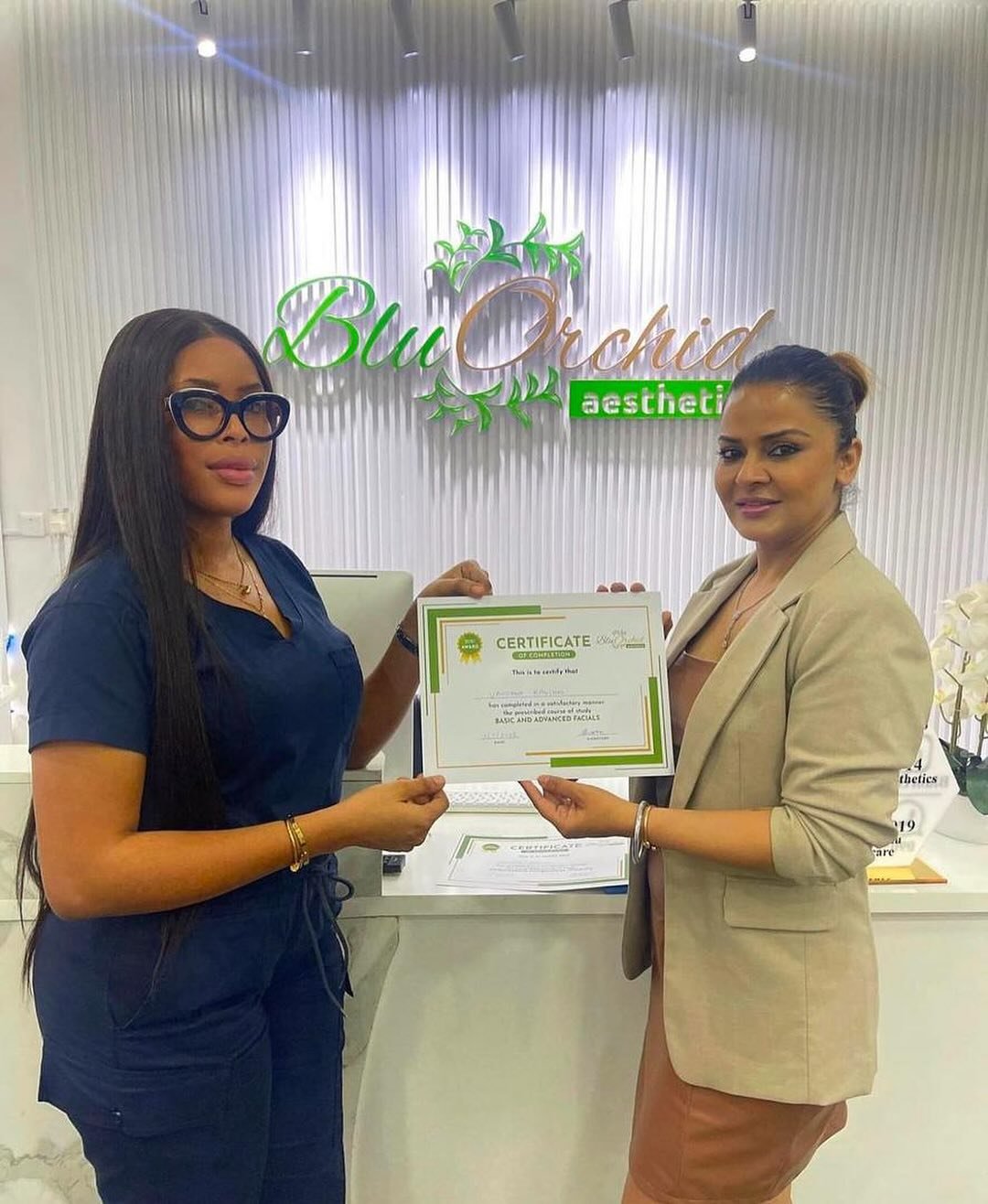
Academy at BluOrchid Aesthetics, Lagos
1. Legal and regulatory costs
Your initial compliance budget may include:
- CAC registration
- HEFAMAA registration where applicable
- Professional licensing
- Legal and professional advice
- Regulatory documentation
- Insurance
- Relevant product or device compliance costs
Some of these have published fees.
Others depend on the structure of your business and the services you intend to offer.
For example, the current HEFAMAA registration fee for a cosmetic procedure facility can be ₦75,000 or ₦100,000 depending on the applicable category.
That is very different from saying “it costs ₦100,000 to licence an aesthetics clinic.”
It does not.
That figure is only one regulatory fee within a much larger startup budget.
2. Premises and fit-out
For a physical clinic, premises can become one of your largest startup expenses.
Your budget may need to cover:
- Rent or lease
- Legal and agency fees
- Renovation
- Reception
- Consultation room
- Treatment rooms
- Storage
- Hand-washing facilities
- Appropriate clinical surfaces
- Lighting
- Electrical work
- Plumbing
- Air conditioning
- Security
- Signage
- Waste management arrangements
- Backup power
Location matters enormously.
A premium clinic in Lagos will have a very different property budget from a smaller facility elsewhere in Nigeria.
Do not choose a premises based only on rent.
A cheap space that cannot satisfy the requirements of your intended healthcare facility can become an expensive mistake.
3. Equipment
Your equipment budget depends almost entirely on your treatment menu.
A facial-injectables practice may require a relatively focused equipment setup.
A larger clinic offering laser treatments, body contouring, skin treatments and other technology-driven services may require substantially more capital.
Before purchasing a machine, ask:
Do we actually need this device for the services we intend to offer?
Then consider:
- Purchase price
- Installation
- Staff training
- Maintenance
- Consumables
- Warranty
- Replacement parts
- Downtime
- Local technical support
The cheapest machine is not necessarily the cheapest machine to own.
4. Consumables and products
A clinic also needs working inventory.
Depending on your services, this could include:
- Injectables
- Needles and syringes
- Gloves
- Disinfectants
- Dressings
- Skin preparation products
- Post-treatment products
- Other treatment-specific consumables
The important principle is traceability.
A professional clinic should know what it has purchased, where it came from, what it is approved for and how it is stored.
Avoid building your supply chain around informal sources simply because they offer lower prices.
5. Working capital
This is the cost that new clinic owners most often underestimate.
Your clinic can be fully fitted out and still fail because there is not enough money to operate while patient numbers are building.
Your working-capital budget may need to cover:
- Salaries
- Rent
- Utilities
- Internet
- Marketing
- Software
- Cleaning
- Security
- Product replenishment
- Maintenance
- Professional fees
- Accounting
- Unexpected repairs
Do not spend your entire capital budget on the opening.
Keep money available for the months after launch.
Training is part of your startup budget
Aesthetic medicine should not be approached as a business where you purchase equipment first and learn later.
Training is part of the investment.
For doctors moving into injectables, training should cover more than the mechanics of a procedure.
Look for education that addresses:
- Anatomy
- Facial assessment
- Patient selection
- Treatment planning
- Product knowledge
- Injection technique
- Consent
- Complication recognition
- Complication management
- Follow-up
- Clinical decision-making
The objective is not to collect certificates.
It is to develop competence.
At BluOrchid Academy, the Aesthetic Injector Program is currently listed at ₦2,500,000 and is designed for doctors, nurses and licensed medical aestheticians who meet the programme’s eligibility requirements.
That figure gives prospective practitioners one real reference point when building an education budget, rather than relying on generic estimates.
What about staff?
You may not need a large team on day one.
But you do need to identify which roles your business actually requires.
Depending on the model, this could include:
- Medical practitioner
- Nurse
- Aesthetic practitioner
- Front-desk or patient coordinator
- Clinic manager
- Cleaner
- Marketing support
- Accountant or finance support
The key is to distinguish between clinical roles and business roles.
A receptionist cannot substitute for a qualified practitioner.
A marketing employee cannot determine clinical suitability.
And a business owner cannot simply delegate medical responsibilities to an unqualified person because the person has completed a short course.
Every role should match the person’s professional competence and permitted scope.
What should you spend money on first?
If your capital is limited, resist the temptation to make the clinic look impressive before making it clinically sound.
Prioritise:
1. Regulatory compliance
Know what registrations and approvals apply to your facility and services.
2. Clinical competence
Make sure the practitioners providing treatment are appropriately trained and licensed.
3. Appropriate premises
Choose a facility that can support the healthcare services you intend to provide.
4. Essential equipment
Purchase what your initial treatment menu actually requires.
5. Product quality and traceability
Know what you are putting into or onto your patients.
6. Patient systems
Build proper consultation, consent, documentation, treatment and follow-up processes.
7. Working capital
Keep enough cash available to operate after launch.
8. Marketing
Once the foundations are sound, invest in bringing the right patients through the door.
A leaner way to launch
You do not necessarily need to open with twenty treatments.
In fact, a focused launch can be strategically stronger.
For example, a new doctor-led practice might begin with a carefully selected group of services and expand after developing operational confidence and understanding patient demand.
Your first treatment menu could be deliberately narrow.
Then you can add services when you have:
- Appropriate training
- Appropriate equipment
- Appropriate products
- Sufficient demand
- Staff capacity
- Proper protocols
- A clear complication-management pathway
This approach reduces unnecessary capital expenditure and allows the business to grow around actual patient demand.
Common mistakes when starting an aesthetics business
Buying equipment before defining the business
A machine should solve a business and clinical need.
It should not become the reason you invent a treatment to sell.
Choosing a premises before checking regulatory requirements
The beautiful space you have found may not be appropriate for the facility you intend to operate.
Understand the requirements before committing significant capital.
Treating certificates as competence
A certificate confirms completion of a training programme.
It does not automatically make someone clinically competent to perform every aesthetic procedure.
Competing primarily on price
There will always be someone willing to charge less.
A sustainable practice needs a stronger proposition than “we are cheaper.”
Offering too many treatments too early
More treatments mean more equipment, more products, more training, more protocols and potentially more operational complexity.
Start with what you can deliver exceptionally well.
Ignoring working capital
Opening day is not the finish line.
It is the beginning of the business.
A practical startup checklist
Before opening, work through the following.
Business
- Choose the appropriate business structure
- Register with CAC
- Open appropriate business banking arrangements
- Set up accounting and financial systems
Clinical
- Confirm practitioner qualifications
- Confirm current professional licences
- Complete relevant aesthetic training
- Establish treatment protocols
- Establish consent procedures
- Establish patient-record systems
- Establish aftercare and follow-up processes
- Establish a complication-management pathway
Facility
- Identify an appropriate premises
- Confirm the applicable HEFAMAA category
- Complete required facility registration
- Plan treatment and consultation areas
- Establish appropriate storage and hygiene systems
- Put waste-management arrangements in place
Products and equipment
- Identify required equipment
- Verify suppliers
- Confirm applicable regulatory requirements
- Establish product traceability
- Create inventory systems
- Plan maintenance and servicing
Business operations
- Recruit appropriately qualified staff
- Establish pricing
- Create booking and payment systems
- Set up patient communication
- Establish financial reporting
- Build a marketing plan
- Maintain adequate working capital
So, how much money do you really need?
The honest answer is:
It depends on the clinic you are building.
A small doctor-led aesthetics practice and a full-service medical aesthetics centre should not have the same startup budget.
Rather than asking:
“How much does it cost to start an aesthetics business in Nigeria?”
ask:
“What will it cost to build the specific aesthetics practice I want to operate, legally and properly?”
Then calculate:
Regulatory costs + premises + fit-out + equipment + training + products + staffing + technology + marketing + working capital.
That is your real startup budget.
And if you cannot afford the complete model yet, reduce the scope of the launch rather than compromising on clinical standards.
Final thought
Aesthetics can be an attractive business opportunity in Nigeria.
But the strongest clinics are not built by buying the most machines, offering the longest treatment menu or opening the most beautiful space.
They are built around clinical competence.
Patients need to know that the person treating them understands not only how to perform a procedure, but also when it is appropriate, when it is not, what risks to discuss and what to do if something goes wrong.
Build that foundation first.
Then build the business around it.
Frequently asked questions
How much does it cost to start an aesthetics business in Nigeria?
There is no single reliable startup figure. Costs depend on your location, premises, treatment menu, equipment, staffing, training, regulatory requirements and working capital. Regulatory fees are only one part of the total investment.
Do I need CAC registration to start an aesthetics business?
A formal business operating in Nigeria should have the appropriate CAC registration. However, CAC registration does not replace healthcare-facility registration or professional licensing where those requirements apply.
Do aesthetics clinics need HEFAMAA registration in Lagos?
Health facilities operating in Lagos are subject to HEFAMAA registration requirements. The appropriate facility category depends on the nature of the facility and services provided. HEFAMAA publishes different registration categories and fees.
How much is HEFAMAA registration for a cosmetic procedure centre?
HEFAMAA’s published current schedule lists ₦75,000 for Cosmetic Procedure Category A and ₦100,000 for Category B registration. The applicable category should be confirmed for your specific facility.
Does a doctor need an MDCN practising licence to provide aesthetic treatments?
A doctor providing medical services must maintain the appropriate professional registration and practising licence. MDCN states that registration alone is not sufficient for legal medical practice.
How much is the MDCN annual practising licence?
The MDCN currently lists ₦20,000 for practitioners with less than 10 years’ experience and ₦40,000 for practitioners with 10 years’ experience or more.
Do I need training before opening an aesthetics clinic?
If you or your staff will be performing aesthetic procedures, appropriate clinical education and training should be part of the business plan. Training requirements depend on the procedure, practitioner and professional scope.
Can I start an aesthetics business without buying expensive machines?
Yes. Your startup model should be based on the services you intend to provide. A focused practice can begin with a narrower treatment menu rather than purchasing every available aesthetic device.
Can a non-doctor own an aesthetics business?
Ownership of a business and provision of medical treatment are different questions. The appropriate business structure and healthcare-facility requirements should be established separately from the professional qualifications and scope required for each clinical service.
What is the biggest mistake when starting an aesthetics clinic?
One of the biggest mistakes is treating the business primarily as a beauty venture and underestimating the clinical and regulatory infrastructure required to operate a healthcare service safely.
Ready to build your aesthetics practice?
If you are a medical professional planning to move into aesthetics, start with the clinical foundation before the business expansion.
Explore the BluOrchid Academy’s training pathways, or book a consultation if you need to discuss the right direction for your professional goals.
The Beginners Aesthetics Course is where this training actually happens.
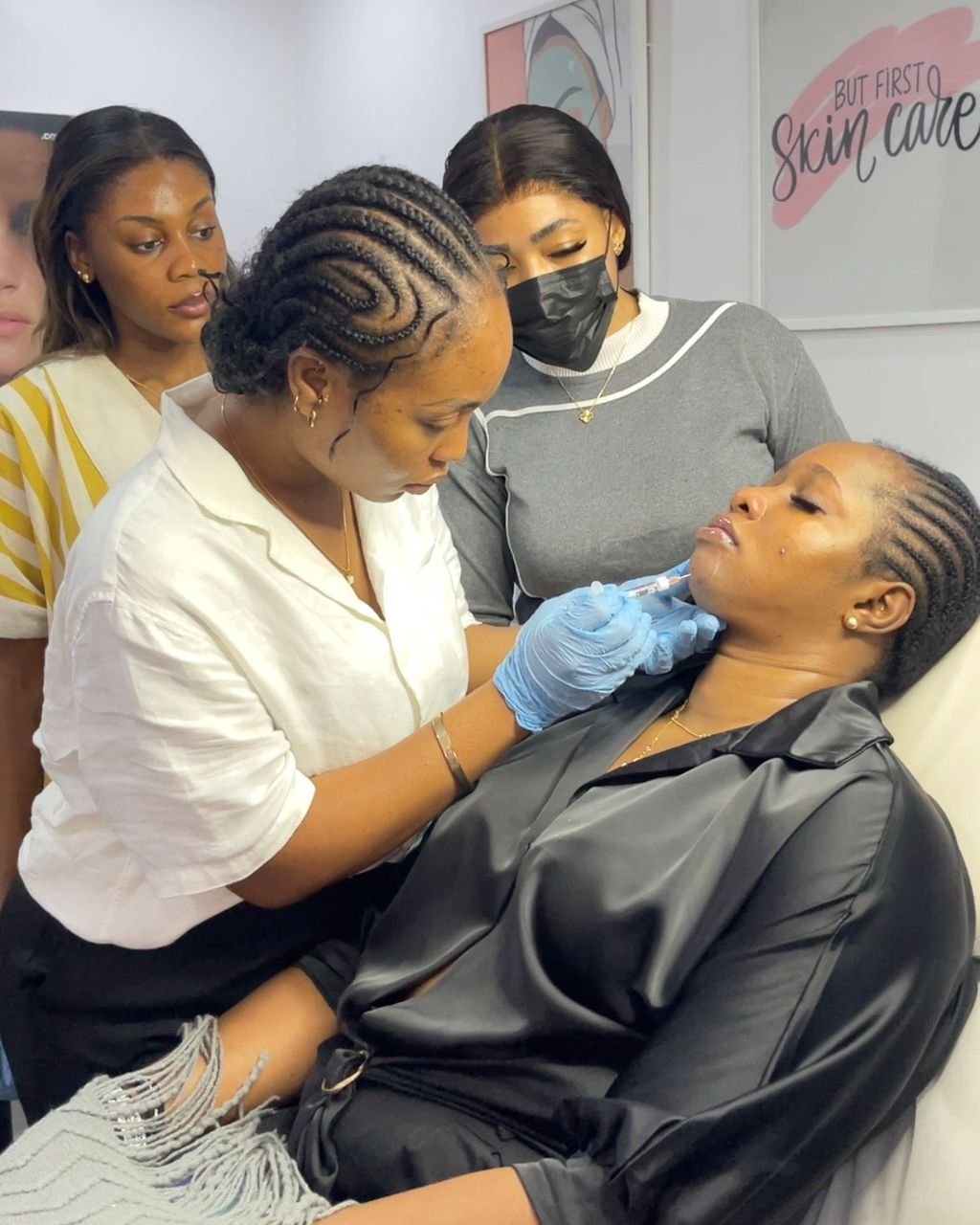
Hands-on training at the BluOrchid clinic in Lekki Phase 1, Lagos, taught by the doctors who treat patients there every week. Course fee ₦800,000.
See the Beginners Aesthetics Course Small cohorts. Live models. Certificate on completion.