Beginner or Advanced Aesthetics Course: Which Is Right?
Not sure whether to start with a beginner or advanced aesthetics course? Learn how to choose the right training level for your experience.

Choosing an aesthetics course is not simply a question of finding the most advanced programme available.
The better question is:
What level of training matches your current knowledge, clinical experience and professional goals?
For someone completely new to aesthetics, an advanced injector programme may introduce techniques before the learner has developed the foundations needed to understand them properly.
For an experienced medical professional who already has relevant knowledge and practical exposure, starting with a purely introductory course may not provide enough depth.
That is why choosing between a beginner and advanced aesthetics course should begin with an honest assessment of where you are now.
What is a beginner aesthetics course?
A beginner course is designed to establish the foundations.
It is generally the more appropriate starting point for someone who is new to aesthetic medicine or who has limited formal training in aesthetic procedures.
Rather than assuming that the learner already understands the field, beginner-level education can introduce the fundamental concepts needed to progress safely and systematically.
These may include areas such as:
- Understanding aesthetic medicine
- Patient assessment
- Consultation principles
- Facial anatomy
- Treatment planning
- Product knowledge
- Basic aesthetic techniques
- Patient communication
- Clinical considerations
- Aftercare and follow-up
- Professional practice
The exact curriculum will depend on the academy and programme.
The important distinction is that beginner training establishes the foundation on which more advanced skills can later be developed.

Who should consider a beginner aesthetics course?
A beginner programme may be appropriate if you:
- Are new to aesthetic medicine
- Have never received formal aesthetics training
- Are a healthcare professional entering aesthetics for the first time
- Want to understand the fundamentals before progressing
- Need structured introduction to aesthetic assessment and treatment planning
- Are unsure whether aesthetics should become a major part of your practice
It can also be useful for practitioners who have learned informally but recognise that their knowledge has gaps.
Being experienced in healthcare does not automatically mean being experienced in aesthetic medicine.
A clinician may be highly competent in another area of medicine while still needing foundational education in facial assessment, aesthetic anatomy, treatment planning and aesthetic-specific procedures.
What is an advanced aesthetics course?
An advanced programme assumes that the learner already has relevant foundations.
Instead of spending most of the training establishing basic concepts, advanced training can focus more heavily on developing higher-level clinical judgement, technique and treatment planning.
Depending on the programme, advanced education may cover areas such as:
- More complex treatment planning
- Advanced facial assessment
- Multiple treatment modalities
- Injectable techniques
- Facial balancing
- Managing more complex aesthetic presentations
- Recognising and responding to complications
- Refining treatment technique
- Combining procedures appropriately
- Developing greater clinical confidence
Again, the curriculum matters.
The word “advanced” should not be treated as a guarantee of quality.
A course can call itself advanced without necessarily providing the depth, supervision or practical training that an experienced practitioner actually needs.
Who should consider an advanced course?
An advanced programme may be more appropriate if you already have:
- Relevant professional qualifications
- Previous aesthetics training
- Experience with appropriate aesthetic procedures
- A working understanding of relevant anatomy
- Experience assessing aesthetic patients
- A clear understanding of basic treatment principles
The key is not simply how long you have worked in healthcare.
It is what relevant knowledge and practical experience you already possess.
Beginner vs advanced aesthetics course: the key differences
The simplest way to think about the distinction is this:
| Beginner course | Advanced course |
|---|---|
| Establishes foundations | Builds on existing foundations |
| Suitable for newcomers | Suitable for appropriately experienced practitioners |
| Introduces core concepts | Develops more complex knowledge and skills |
| Focuses on fundamentals | Focuses on refinement and advanced application |
| Helps establish a structured starting point | Helps practitioners progress beyond foundational training |
| May be the first step into aesthetics | Usually should not be the first exposure to aesthetic medicine |
The exact structure varies between academies, so always examine the actual curriculum rather than choosing based solely on the course title.
You should not choose an advanced course just because it sounds better
There is a common assumption that advanced automatically means superior.
It does not.
If you are starting from zero, an advanced programme may simply move too quickly through concepts that you need to understand properly.
Imagine trying to learn advanced facial treatment planning without a strong understanding of the anatomy and assessment principles that underpin it.
The problem is not that the learner lacks intelligence.
The problem is that the learning sequence is wrong.
Good education builds knowledge progressively.
Advanced should mean appropriate progression, not simply a more impressive course title.
What if you are already a doctor or nurse?
This is where the decision can become more nuanced.
Being a doctor or nurse gives you a professional and clinical foundation, but it does not automatically determine which aesthetics course is appropriate.
Consider what you already know.
A healthcare professional who has never studied aesthetic medicine may still benefit from foundational aesthetics education.
Another practitioner who has already completed recognised aesthetics training and has relevant practical experience may be ready for more advanced education.
Your professional background is therefore one factor.
Your aesthetic-specific training and experience are equally important.
What if you have trained informally?
Perhaps you have attended short workshops, watched online demonstrations or learned techniques from other practitioners.
That experience is worth acknowledging, but it should also be assessed honestly.
Ask:
- Was the training structured?
- Was there supervised practical learning?
- Was anatomy properly covered?
- Were patient assessment and treatment planning taught?
- Was there training on complications?
- Was your technique assessed by an appropriately qualified trainer?
- Can you explain not only how to perform a technique, but when and why it should or should not be performed?
If the answer to several of these questions is no, you may benefit more from strengthening your foundations than immediately pursuing advanced training.
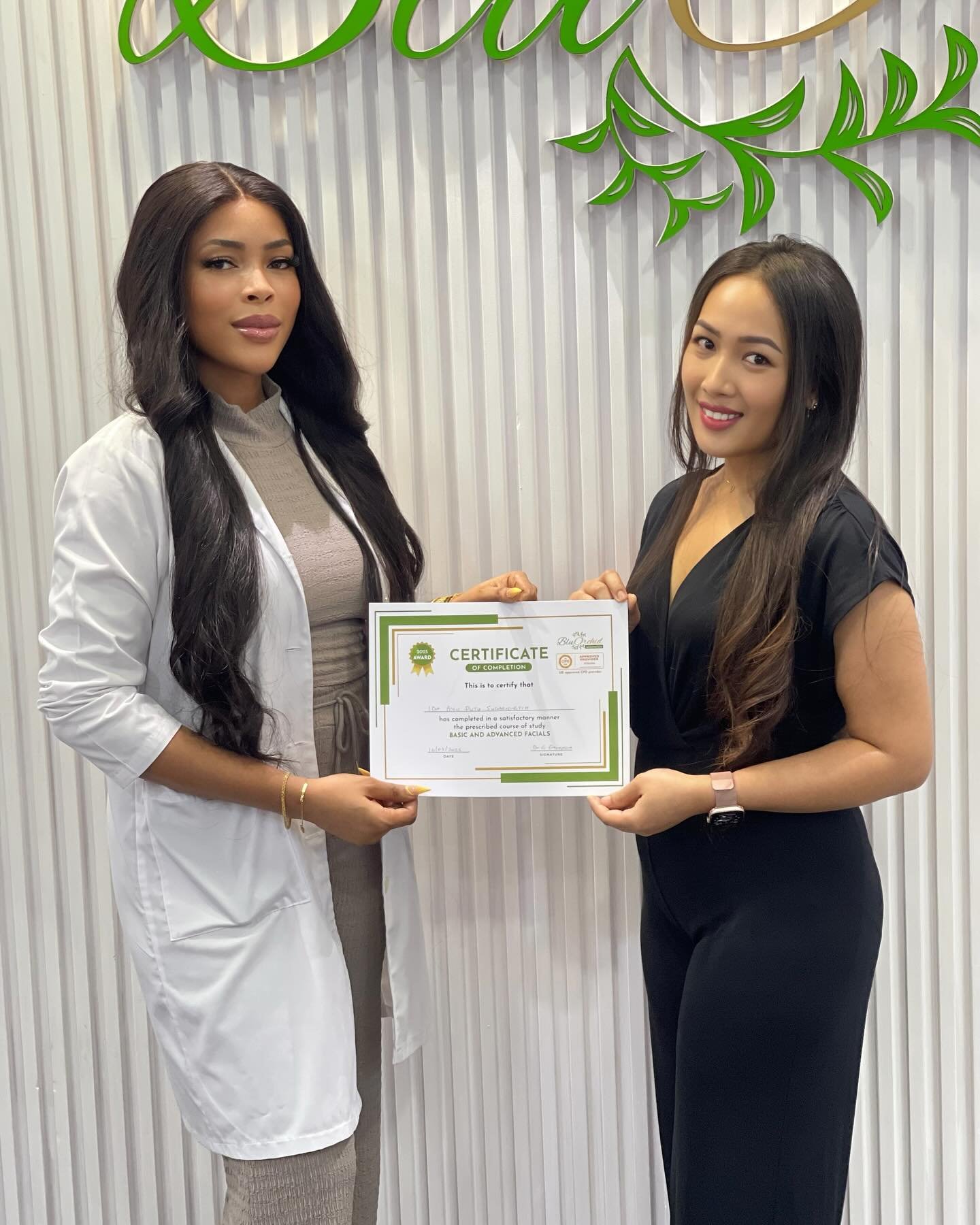
Academy at BluOrchid Aesthetics, Lagos
How to decide which level you need
Before enrolling, ask yourself five questions.
1. Have I formally studied aesthetic medicine before?
If the answer is no, a beginner-level programme may be the more logical starting point.
2. Do I have relevant practical experience?
Watching procedures is not the same as performing them under appropriate supervision.
Be honest about the difference.
3. Can I assess an aesthetic patient independently?
Treatment selection begins before the procedure.
You need to understand how to assess the patient, identify their goals, consider suitability and develop an appropriate treatment plan.
4. Do I understand the relevant anatomy?
Aesthetic procedures require more than memorising injection points or following a demonstration.
A practitioner needs a meaningful understanding of anatomy and how it relates to treatment decisions.
5. What am I trying to achieve?
Your goal matters.
You may want to:
- Add aesthetics to an existing medical practice
- Build a career in aesthetic medicine
- Develop injectable skills
- Expand an existing aesthetics practice
- Offer additional treatments
- Develop a specialised area of practice
The right course should take you from your current level toward that goal.
What if you are unsure?
You do not necessarily have to decide by yourself.
A reputable academy should be able to explain who a course is designed for and who it is not designed for.
Ask about:
- Entry requirements
- Professional eligibility
- Previous training requirements
- Course curriculum
- Practical training
- Supervision
- Assessment
- Trainer qualifications
- What happens after completion
- Whether the programme is introductory or progression-focused
Be cautious of any academy that presents an advanced course as suitable for absolutely everyone.
BluOrchid Academy’s two pathways
BluOrchid Academy offers different training pathways rather than assuming every learner should start at the same point.
The Beginners Aesthetics Course is positioned as an entry-level programme for those who need to establish their foundation in aesthetics.
The Aesthetic Injector Program is a more advanced pathway intended for eligible healthcare professionals with the appropriate background.
The distinction is important because the goal is not simply to sell a longer or more expensive course.
It is to match the learner with the level of education that makes sense for their existing experience.
If you are considering the [Beginners Aesthetics Course], review the curriculum and entry information before deciding whether it fits your current level.
If you are an eligible healthcare professional considering the [Aesthetic Injector Program], review its prerequisites and programme structure carefully before enrolling.
A simple decision framework
You can use this as a starting point:
New to aesthetics → Beginner
If you have little or no formal aesthetics training, start by building your foundations.
Healthcare professional but new to aesthetics → Usually beginner/foundation first
Your existing clinical qualification is valuable, but aesthetics has its own knowledge base.
Previously trained and actively practising aesthetics → Consider advanced
If you already have relevant training and experience, an advanced programme may be the more appropriate next step.
Informally trained with significant knowledge gaps → Strengthen the foundations
Do not allow the number of procedures you have watched or attempted to determine your level.
Already confident in the fundamentals and looking to refine advanced skills → Advanced
The objective should be progression, not simply obtaining another certificate.
A certificate is not the same as competence
This distinction deserves emphasis.
Completing a course gives you evidence that you completed a course.
It does not automatically mean that you are competent in every aesthetic procedure.
Competence develops through education, supervised practice, assessment, continued learning and appropriate clinical experience.
That is why the quality and structure of the training matter more than simply collecting certificates.
When comparing aesthetics academies, ask what happens inside the training, not just what certificate you receive at the end.
What makes an aesthetics course worth considering?
Regardless of whether you choose beginner or advanced training, look for a programme that takes education seriously.
Consider:
Qualified educators
Who is teaching you?
What is their professional and clinical background?
Relevant anatomy
Does the programme teach the anatomy that informs aesthetic treatment decisions?
Practical training
Will you have meaningful opportunities to develop practical skills under appropriate supervision?
Patient assessment
Does the training teach you how to assess patients rather than simply perform techniques?
Complication awareness
Does the curriculum address potential complications and how practitioners should respond?
Treatment planning
Does it teach you how to decide what is appropriate for a patient rather than simply demonstrating procedures?
Clear entry requirements
Does the academy clearly explain who the course is designed for?
Ongoing development
Does the programme encourage continued education after the course ends?
These questions are useful whether you are comparing two courses at the same academy or different academies entirely.
The right course is the one that matches your starting point
Choosing between a beginner and advanced aesthetics course should not be about prestige.
It should be about progression.
If you are new to aesthetics, give yourself permission to start with the fundamentals.
If you already have appropriate training and practical experience, you may be ready to develop more advanced skills.
And if you are uncertain, ask the academy to assess your background before you enrol.
The best training decision is not necessarily the course with the most impressive title.
It is the course that meets you where you are, and gives you the knowledge, practical development and clinical foundation to move forward responsibly.
Frequently asked questions
Is an advanced aesthetics course better than a beginner course?
Not necessarily. They serve different learners. A beginner course is designed to establish foundations, while an advanced course is intended for practitioners who already have relevant knowledge and experience.
Can a nurse take an advanced aesthetics course?
That depends on the programme’s eligibility requirements and the nurse’s existing aesthetics training and experience. Professional qualification alone does not necessarily mean that an advanced course is the appropriate starting point.
Can a doctor start with a beginner aesthetics course?
Yes. Being a doctor does not automatically mean that you have formal training in aesthetic medicine. If you are new to aesthetics, foundational education may be appropriate.
How do I know if I am ready for advanced aesthetics training?
Consider your previous aesthetics education, practical experience, knowledge of relevant anatomy, patient assessment skills and understanding of treatment planning. The academy should also clearly state its entry requirements.
Should I take an online aesthetics course before practical training?
Online education can be useful for theoretical learning, but practical aesthetic skills require appropriate hands-on education and supervision. The right combination depends on your existing training and professional goals.
Is one aesthetics certificate enough to practise?
Completing a course does not by itself establish competence in every procedure. Practitioners should consider their professional scope, training, supervised experience, applicable requirements and ongoing education.
What should I ask an aesthetics academy before enrolling?
Ask about entry requirements, curriculum, trainer qualifications, practical training, supervision, assessment, complication education and what the course is designed to prepare you to do.
Which BluOrchid Academy course should I choose?
The appropriate pathway depends on your professional background, previous aesthetics training and experience. Review the entry requirements and curriculum for the Beginners Aesthetics Course and Aesthetic Injector Program, or contact the Academy if you need help determining the appropriate level.
The Beginners Aesthetics Course is where this training actually happens.
Hands-on training at the BluOrchid clinic in Lekki Phase 1, Lagos, taught by the doctors who treat patients there every week. Course fee ₦800,000.
See the Beginners Aesthetics Course Small cohorts. Live models. Certificate on completion.