How to Choose the Best Aesthetics Academy in Africa
Choosing an aesthetics academy in Africa? Use these 10 checks to assess training quality, practical experience, clinical safety and credibility.

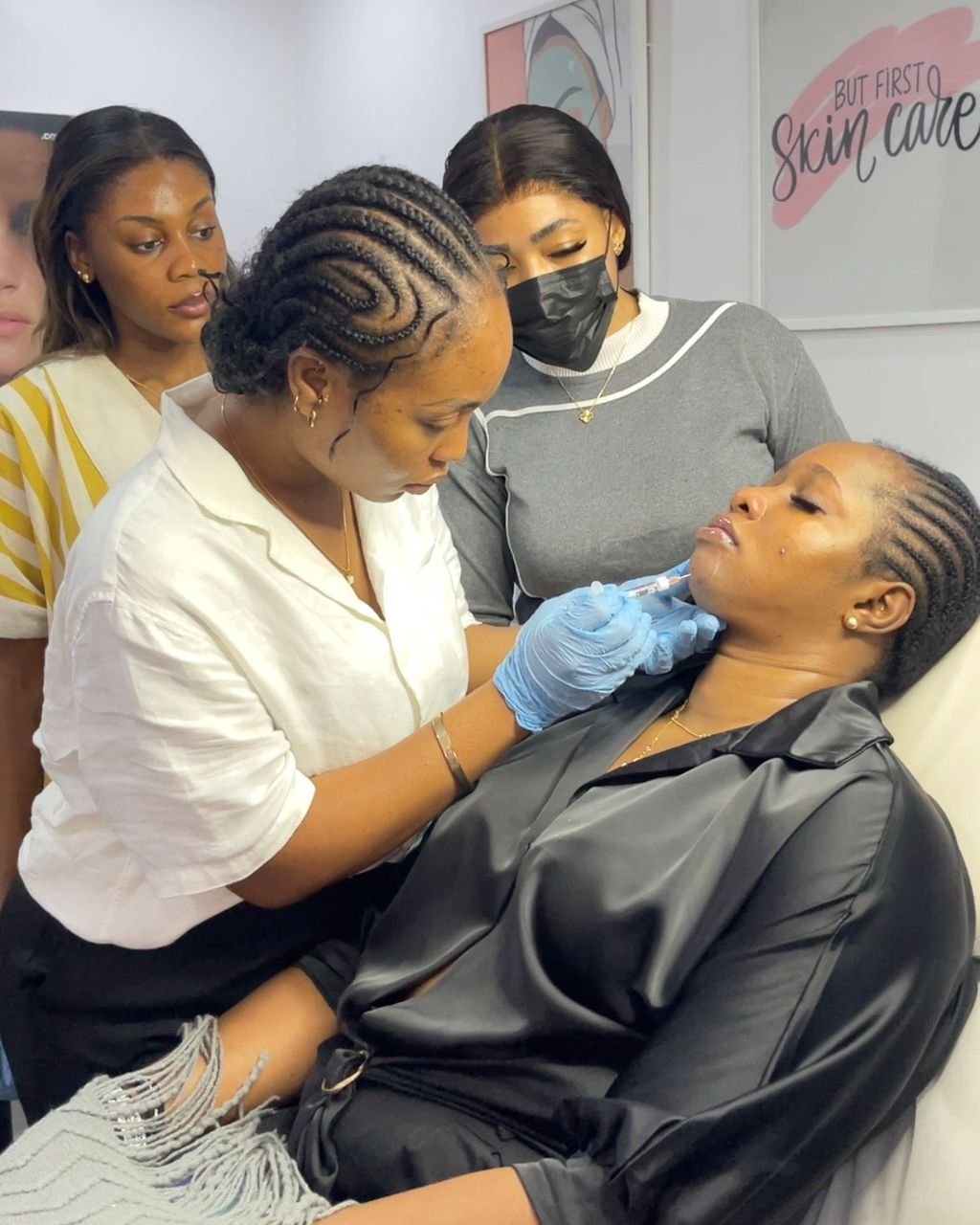
Choosing where to train in aesthetics is not simply a question of finding the academy with the most attractive course brochure, the longest list of treatments or the lowest price.
If you are investing your time, money and professional reputation into aesthetics, the quality of your training matters.
A good aesthetics academy should give you more than a certificate. You should leave with a stronger understanding of anatomy, patient assessment, treatment planning, technique, product knowledge, safety and what to do when a treatment does not go according to plan.
That is particularly important in aesthetic medicine, where the person holding the syringe is making decisions that affect a real patient’s face, skin or body.
Whether you are a doctor, nurse, licensed medical aesthetician or someone entering the aesthetics industry for the first time, here are 10 checks to make before choosing an aesthetics academy in Africa.
1. Check who is actually allowed to enrol
Start here.
A course may be advertised as being open to “everyone”, but that does not necessarily mean everyone should be performing the procedures being taught.
There is an important difference between learning about aesthetics and being professionally permitted to perform a particular treatment.
Before paying a deposit, find out:
- Who is eligible to enrol?
- Is the programme designed for doctors, nurses, medical aestheticians or beginners?
- Are there treatments that require a medical qualification?
- Does the academy clearly state who the course is not for?
- Does the training align with your existing professional scope?
This becomes particularly important when you are considering injectable treatments such as Botox and dermal fillers.
A certificate from an academy does not automatically create a professional licence or expand your legal scope of practice.
A credible academy should be comfortable explaining this distinction.

2. Look at the clinical background of the trainers
The person teaching you matters.
A polished website and impressive course title tell you very little about the person actually responsible for your clinical education.
Look at the trainers’ professional backgrounds.
For clinical aesthetics, ask:
- Are they medically qualified where the course requires it?
- Do they have real experience treating patients?
- Do they actively practise aesthetics?
- Can they demonstrate an understanding of anatomy and complications?
- Is their professional identity and experience clearly stated?
You should be able to understand who is teaching you before you commit your money.
The strongest training environments are usually built around practitioners who understand not only how to perform a procedure, but also when not to perform it.
3. Check how much practical training you will actually receive
This is one of the most important checks.
There is a significant difference between watching someone inject a model and performing a procedure under appropriate supervision.
A course can contain excellent theory and still leave you underprepared if you do not receive meaningful practical experience.
Ask exactly what “hands-on training” means.
Will you:
- Observe procedures?
- Practise techniques?
- Work on live models?
- Receive supervised correction?
- Have an opportunity to ask questions during procedures?
- Be assessed on your practical technique?
Be wary of courses that use “hands-on” as a marketing phrase without explaining what the practical component involves.
For aesthetic procedures, competence cannot be built entirely by watching videos.
4. Examine the curriculum, not just the course title
“Advanced Aesthetics” sounds impressive.
But what does the course actually teach?
Before enrolling, request the curriculum.
A strong programme should go beyond a list of procedures and consider the thinking behind them.
Depending on the course level, relevant areas may include:
Anatomy
Understanding facial anatomy is fundamental to safe aesthetic practice.
Patient assessment
You need to know how to assess a patient’s concerns, anatomy, expectations and suitability before recommending treatment.
Treatment planning
A good practitioner does not simply choose a treatment because the patient asks for it.
They determine what intervention, if any, is appropriate.
Product knowledge
You should understand the products being used, their intended applications, limitations and relevant considerations.
Injection or treatment technique
Technique needs to be taught in a structured and supervised way appropriate to the practitioner’s level.
Complication management
Perhaps most importantly, you need to know what can go wrong and how complications should be recognised and managed.
If a course focuses heavily on procedures but barely discusses assessment and safety, that should make you pause.
5. Ask how complications and patient safety are taught
Aesthetics is not simply about creating beautiful results.
It is also about recognising risk.
Before choosing an academy, ask how it teaches complication management.
For injectable training, for example, this may include recognising concerning symptoms, understanding potential complications, knowing when urgent escalation is required and understanding appropriate management pathways.
A good academy should not make complications sound frightening or mysterious.
It should teach practitioners to anticipate risk, recognise problems early and respond appropriately.
This is one of the clearest differences between procedural training and genuine clinical education.
6. Find out how you are assessed
Another useful question is:
How do I know whether I have actually learned the skill?
Some courses provide attendance certificates.
Others assess knowledge, practical performance or both.
Ask:
- Is there a written assessment?
- Is there a practical assessment?
- Who assesses students?
- What happens if a student is not yet competent?
- Is feedback provided?
- What does successful completion actually mean?
A certificate is more meaningful when it represents completion of a defined learning process rather than simply attendance.
And remember: a certificate is evidence of training. It is not automatically evidence of professional licensure.
7. Look beyond the certificate
A certificate is useful.
It should not be the entire reason you choose an academy.
Consider what you will actually be able to do with the knowledge and skills you acquire.
Ask whether the programme helps you understand:
- Patient consultations
- Treatment planning
- Consent
- Clinical documentation
- Aftercare
- Patient communication
- Recognising unsuitable patients
- Managing expectations
- Building a safe treatment pathway
The goal should be to develop a practitioner who can think clinically, not simply reproduce a technique.
This is particularly important if your long-term goal is to build aesthetics into an existing medical practice or establish your own aesthetics business.
8. Check whether the academy understands the African market
Training should make sense in the environment in which you intend to practise.
Africa is not a single aesthetic market.
Patient expectations, skin types, regulations, healthcare systems, product availability and business environments vary across countries.
If you intend to practise in Nigeria, for example, you should understand the Nigerian professional and regulatory environment rather than assuming that a qualification or practice model from another country transfers automatically.
For international students, ask whether the academy has experience working with practitioners from outside its home country.
Also consider whether the academy understands the realities of treating diverse skin types.
Good aesthetics education should teach principles that can be applied thoughtfully to different patients rather than relying on a one-size-fits-all approach.
Academy at BluOrchid Aesthetics, Lagos
9. Investigate what happens after the course
Your relationship with an academy should ideally not end the moment you receive your certificate.
Ask what support is available after training.
For example:
- Can graduates ask follow-up questions?
- Is there additional education?
- Are advanced courses available?
- Is there a pathway from beginner to advanced training?
- Can graduates return for further practical development?
- Does the academy maintain an alumni community?
This does not mean every academy needs to offer unlimited mentoring.
It simply means you should understand what happens after the classroom experience is over.
A good training pathway should help you understand your next step.
10. Compare the academy against your actual career goal
Finally, stop asking:
“What is the best aesthetics academy?”
Start asking:
“What is the best aesthetics academy for what I want to become?”
Those are different questions.
Someone completely new to aesthetics may need a foundational programme covering the principles of aesthetics, skin, consultation and treatment.
A doctor who already has significant clinical experience may need advanced injectable education.
A nurse may be looking for training that fits their professional background and intended scope.
An established practitioner may want to develop a specific area of expertise.
Your ideal course depends on where you are starting and where you want to go.
A simple way to compare your options
Before enrolling, score each academy against these 10 questions:
| Check | What to look for |
|---|---|
| 1. Eligibility | Clear admission requirements and professional scope |
| 2. Trainers | Qualified, experienced practitioners |
| 3. Practical training | Meaningful supervised hands-on experience |
| 4. Curriculum | Anatomy, assessment, planning, technique and safety |
| 5. Complications | Proper risk recognition and management education |
| 6. Assessment | Evidence that learning and practical skills are assessed |
| 7. Beyond the certificate | Consultation, consent, aftercare and clinical thinking |
| 8. African relevance | Training appropriate to your market and patient population |
| 9. Post-course support | A clear pathway for continued development |
| 10. Career fit | Programme suited to your professional background and goals |
If an academy performs well across all ten, you are looking at something much more valuable than a certificate.
What about online aesthetics courses?
Online education can be useful.
It can be an excellent way to learn theory, revise concepts and understand the foundations before practical training.
But you should be cautious about treating online education as a substitute for supervised practical training when learning procedures that require physical technique.
The question is not whether online learning is “bad”.
The better question is:
What can this particular course realistically teach online, and what skills require supervised practice?
For a deeper comparison, see our guide to online vs hands-on aesthetics training.
What about international certificates?
An international-sounding certificate can look impressive on paper.
But the word “international” does not automatically make a training programme clinically superior or legally recognised in your country.
Investigate:
- Who issued the certificate?
- What organisation stands behind it?
- What did the course actually assess?
- Was there practical training?
- Who is eligible to use the qualification?
- Is it relevant to your professional scope?
- Does it provide any professional or regulatory authority?
Always separate training recognition from professional licensing.
They are not the same thing.
Choosing an aesthetics academy in Nigeria
For practitioners based in Nigeria, the same principles apply.
You should look beyond marketing claims and assess the quality of the education, the clinical experience of the trainers, the practical component, the curriculum and the suitability of the programme for your professional background.
BluOrchid Academy offers different learning pathways rather than assuming every student needs the same level of training.
The Beginners Aesthetics Course is designed as an entry-level pathway, while the Aesthetic Injector Program is an advanced programme for eligible healthcare professionals.
The Aesthetic Injector Program is currently priced at ₦2,500,000.
Eligibility matters. The programme is intended for doctors, nurses and licensed medical aestheticians who meet the relevant requirements. It is not a general course for anyone who simply wants to learn how to inject.
If you are considering training, review the programme carefully against your own professional background and career objectives before deciding.
The best aesthetics academy is not necessarily the most expensive
Price can tell you something about a programme.
It cannot tell you everything.
A cheaper course is not automatically poor, just as an expensive course is not automatically excellent.
Instead, compare what you are actually receiving.
Consider the quality of the trainers, practical exposure, curriculum, assessment, safety education, class structure and post-course pathway.
You are not simply buying hours in a classroom.
You are investing in the knowledge and judgement that will eventually influence how you treat real patients.
That deserves careful consideration.
Final checklist before you pay your deposit
Before enrolling, ask the academy for clear answers to these questions:
Who is eligible for this programme?
Who is teaching me?
How much supervised practical training will I receive?
What exactly is included in the curriculum?
How are complications taught?
How will my knowledge and practical skills be assessed?
What does the certificate actually represent?
Does the training fit my professional scope?
What support is available after graduation?
Will this course take me closer to the career I actually want?
If you cannot get straightforward answers, do not rush to pay.
The right aesthetics education should leave you feeling better prepared to practise responsibly, not simply better equipped to advertise yourself as an aesthetic practitioner.
Frequently asked questions
What should I look for in the best aesthetics academy in Nigeria?
Look at trainer qualifications, practical training, curriculum, patient assessment, anatomy, complication management, assessment methods, professional eligibility and post-course support. The best academy for you should also match your existing professional background and career goals.
How do I know if an aesthetics academy is legitimate?
Look for transparent information about the academy, its trainers, course curriculum, eligibility requirements, practical training and certification. Be cautious if an academy makes broad claims about professional recognition without explaining what its certificate actually represents.
Is an aesthetics certificate the same as a licence?
No. A training certificate generally confirms that you completed a course. It does not automatically provide professional registration, a practising licence or permission to perform procedures outside your professional scope.
Is hands-on aesthetics training better than online training?
For procedures requiring practical skills, supervised hands-on training provides an element that online education cannot fully replicate. Online learning can still be valuable for theory, preparation and revision.
Can nurses train in aesthetic medicine?
Nurses may be eligible for certain aesthetics training programmes depending on their professional background, the course requirements and the scope of practice applicable to them. Eligibility should be confirmed before enrolment.
Can doctors add aesthetics to their medical practice?
Yes, doctors may choose to develop aesthetics as an additional area of practice, but appropriate training, professional requirements, clinical competence and regulatory considerations still matter.
How much does aesthetics training cost in Nigeria?
Costs vary considerably according to the programme, level, practical component and area of specialisation. For example, BluOrchid Academy’s Aesthetic Injector Program is currently priced at ₦2,500,000. Always compare the full curriculum and practical training rather than choosing based on price alone.
What should an aesthetics course teach besides injections?
A strong programme should cover areas such as anatomy, consultation, patient assessment, treatment planning, product knowledge, consent, aftercare, complications and clinical decision-making. These are essential parts of responsible aesthetic practice.
Is an international aesthetics certificate recognised in Nigeria?
That depends on what the certificate represents and the professional context in which you intend to use it. An international training certificate should not automatically be assumed to provide Nigerian professional recognition or licensing.
Where can I learn aesthetics in Nigeria?
There are a number of training providers, so compare them carefully using the checks in this guide. If you are considering BluOrchid Academy, you can review the available training pathways through the BluOrchid Academy or discuss your professional goals through a Consultation.
Ready to choose your training pathway?
The right course depends on where you are now and where you want your aesthetics career to go.
If you are considering training with BluOrchid Academy and want to understand which pathway is appropriate for your professional background, Book a Consultation to discuss your goals and the available options.
The Beginners Aesthetics Course is where this training actually happens.
Hands-on training at the BluOrchid clinic in Lekki Phase 1, Lagos, taught by the doctors who treat patients there every week. Course fee ₦800,000.
See the Beginners Aesthetics Course Small cohorts. Live models. Certificate on completion.