Hydrafacial vs a Regular Facial: What’s Different?
Hydrafacial vs a regular facial: understand the differences in exfoliation, extraction, hydration, customisation and which treatment may suit you.

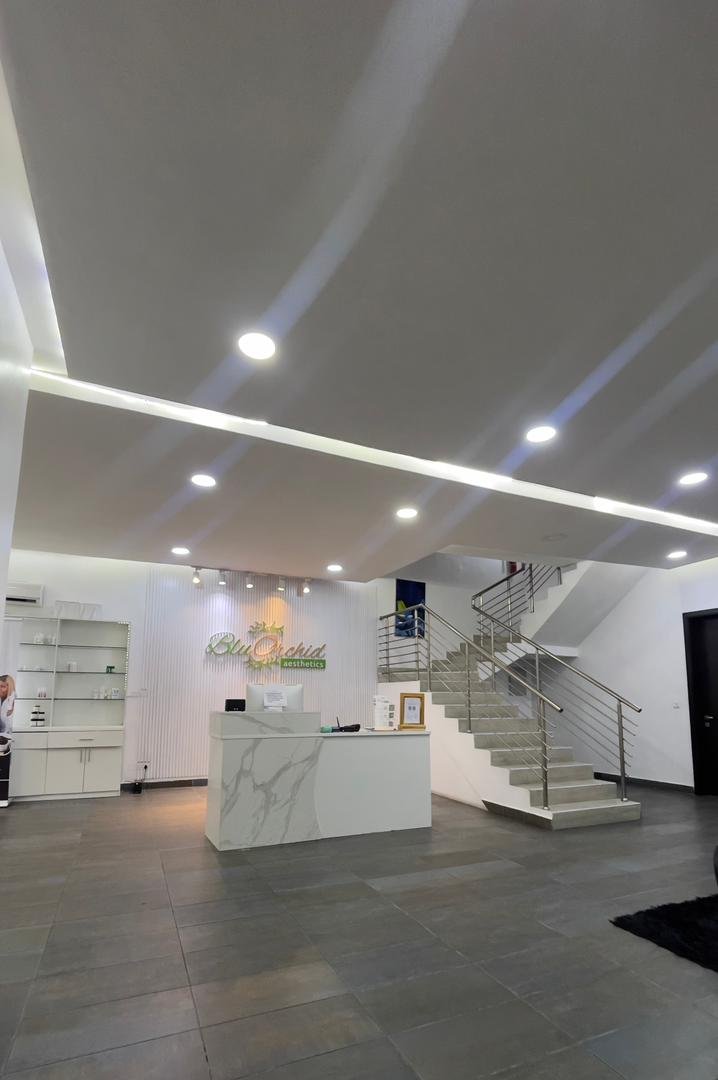
If you are looking for a facial in Lagos, you will quickly come across two options: a regular facial and a HydraFacial.
At first glance, they may seem like the same thing.
Both can cleanse the skin. Both may exfoliate. Both can involve extraction. Both can leave your skin looking fresher.
So what are you actually paying for when you choose a Hydrafacial instead?
The simplest answer is this:
A regular facial is a broad category of professional skin treatment. HydraFacial is a specific branded treatment system built around a defined technology and treatment process.
That difference affects how the treatment is delivered, how much it can be customised and what kind of skin concern it may be best suited to.
But that does not mean Hydrafacial is automatically better.
The right choice depends on what your skin actually needs.
What is a regular facial?
“Regular facial” is not one standard treatment.
A facial can vary considerably from one clinic to another.
Depending on the treatment and provider, a facial may include:
- Skin cleansing
- Exfoliation
- Steam
- Manual or other forms of extraction
- Massage
- A treatment mask
- Moisturisation
- Targeted skincare products
Some facials are designed primarily to relax and refresh the skin.
Others are more treatment-focused and may be designed around concerns such as congestion, dehydration, dullness or uneven texture.
So when someone says, “I had a facial,” that does not tell you exactly what happened to their skin.
The products, techniques, level of exfoliation and extraction method can all be different.
That is why comparing “Hydrafacial vs facial” is slightly misleading unless you first define what the facial involves.
What is a Hydrafacial?
HydraFacial is a specific branded treatment that uses the manufacturer’s Vortex-Fusion technology.
The system combines cleansing, exfoliation, extraction and hydration within the same treatment process. The manufacturer describes the treatment as using specialised tips and solutions to remove impurities while simultaneously delivering hydrating and other targeted ingredients.
The core treatment is generally built around three main stages:
Cleanse and exfoliate → Extract → Hydrate
Depending on the treatment level and provider, additional elements such as boosters, LED light therapy or lymphatic drainage may be incorporated.
This makes HydraFacial more than simply “a facial with a machine.”
It is a defined treatment system.
Hydrafacial vs regular facial: the main differences
| Item | Regular Facial | Hydrafacial |
|---|---|---|
| What is it? | Broad category of professional facial treatments | Specific branded treatment system |
| Cleansing | Usually included | Included |
| Exfoliation | May be included; method varies | Built into the treatment |
| Extraction | May be manual or device-assisted depending on facial | Uses specialised vortex-based extraction |
| Hydration | Usually moisturiser, mask or serum-based | Hydration is built into the treatment process |
| Customisation | Depends heavily on the facial and provider | Can be customised through treatment settings and optional boosters |
| Treatment experience | Varies considerably | More standardised treatment system |
| Best known for | Relaxation, cleansing and targeted facial care | Cleansing, exfoliation, extraction and hydration in one system |
The important word here is standardised.
A regular facial can be excellent, but the experience depends significantly on the exact facial being performed.
A HydraFacial is built around a particular technology and sequence.
1. The extraction process is different
This is one of the biggest practical differences.
With a traditional facial, extractions may be performed manually by a trained practitioner.
With HydraFacial, the device uses a specialised handpiece and vortex-based technology to help loosen and extract impurities from the pores.
For someone who particularly dislikes manual extraction, this difference can matter.
However, “machine extraction” does not automatically mean that every clogged pore should be aggressively extracted.
The skin still needs to be assessed first.
If you have significant inflammatory acne, painful lesions or another active skin condition, extraction should not be treated as the entire solution.
2. Hydration is part of the HydraFacial process
A regular facial may finish with a moisturiser, mask or serum.
HydraFacial is designed differently.
Hydration is incorporated into the treatment itself, with the system simultaneously delivering selected solutions while cleansing and extracting.
That is part of why HydraFacial is often chosen by people who want their skin to feel:
- Cleaner
- Smoother
- More hydrated
- Fresher
- More radiant
It is particularly appealing when someone wants exfoliation without ending the treatment feeling stripped or excessively dry.
3. Exfoliation is delivered differently
A regular facial may use a variety of exfoliation methods.
That could include a physical exfoliant, an enzyme-based product or a chemical exfoliant, depending on the treatment.
HydraFacial uses its own system of specialised tips and solutions to exfoliate the skin as part of the treatment. The manufacturer describes different tips and treatment settings for different levels of exfoliation.
That gives the practitioner more control over how the treatment is delivered.
But more exfoliation is not necessarily better.
Over-exfoliation can irritate the skin, and people with sensitive or pigmentation-prone skin need an approach appropriate to their skin rather than simply the strongest available treatment. The American Academy of Dermatology notes that aggressive exfoliation can cause irritation and may increase pigmentation in some people with darker skin tones.
4. HydraFacial is more technology-driven
A traditional facial can be highly hands-on.
The practitioner’s technique, products and assessment play a large role.
HydraFacial is more technology-driven.
The device controls important parts of the treatment process, while the practitioner determines how the treatment is adapted to the patient’s skin.
That does not make the practitioner less important.
In fact, the opposite is true.
A good treatment still starts with understanding the skin.
The machine cannot decide whether your concern is actually acne, dehydration, post-inflammatory pigmentation, irritation or something that requires medical treatment.
5. HydraFacial can be customised
HydraFacial is not necessarily one identical treatment for everyone.
The system can be customised through different treatment settings and, depending on the treatment level, additional boosters or technologies. The manufacturer lists options including targeted boosters, LED light therapy and lymphatic drainage.
That means two people can both have a HydraFacial while receiving somewhat different treatment approaches.
The same principle applies to regular facials.
A skilled practitioner can customise a facial according to your skin.
So the real comparison is not:
customised facial vs non-customised HydraFacial.
It is:
how is each treatment being customised, and what is it being customised for?
Which is better for clogged pores?
If your main concern is congestion, blackheads or a feeling that your skin is not being properly cleansed, HydraFacial can be an appealing option because cleansing, exfoliation and extraction are integrated into the same treatment.
A well-designed regular facial can also address congestion.
The difference is largely in the method.
If you have significant or persistent acne, however, neither treatment should automatically be considered your primary acne treatment.
Acne is a medical skin condition, and some patients require topical or prescription treatments rather than repeated cosmetic facials.
Which is better for dry or dehydrated skin?
HydraFacial may be particularly appealing when dehydration is one of your main concerns because hydration is built into the treatment process.
A regular facial can also be designed around hydration.
For example, the practitioner may choose a gentle cleanse, minimal exfoliation and hydrating products rather than an aggressive treatment.
The important distinction is that dry skin does not automatically need more exfoliation.
If your skin barrier is already irritated, adding increasingly aggressive exfoliation may make the problem worse.
The treatment should match the condition of the skin on the day.
Consultation at BluOrchid Aesthetics, Lagos
Which is better before an event?
This is one area where HydraFacial is often attractive.
If you have an event coming up and want your skin to look refreshed, smoother and more hydrated without planning around significant downtime, HydraFacial can be considered.
The manufacturer describes HydraFacial as a non-invasive treatment with no downtime.
But “no downtime” does not mean “appropriate for everyone immediately before an important event.”
Your skin can still react to any treatment.
If you have never had the treatment before, doing it for the first time immediately before a major event is not necessarily the most sensible approach.
Your practitioner should also consider your current skincare routine, sensitivity and any active skin condition.
Which is better for dark skin?
Neither treatment should be chosen simply because you have dark skin.
The important question is how aggressively the skin will be treated and whether the treatment is appropriate for your particular pigmentation tendency.
Darker skin can be more prone to post-inflammatory hyperpigmentation after irritation or injury.
The American Academy of Dermatology specifically cautions that more aggressive exfoliation can increase pigmentation in some people with darker skin tones.
That means a good provider should consider:
- Your skin tone
- Your history of pigmentation
- Your current skincare products
- Whether your skin is irritated
- Your acne status
- How much exfoliation is appropriate
- Whether extraction is actually needed
“Safe for dark skin” should never mean that every version of a treatment is automatically safe for every person.
Technique matters.
Can HydraFacial treat acne?
It may be useful as part of skin maintenance for some acne-prone patients, particularly when congestion is an issue.
But it should not be confused with comprehensive acne treatment.
If you have persistent inflammatory acne, painful cysts, nodules or significant scarring, you may need medical acne treatment.
The American Academy of Dermatology’s acne guidance includes topical and systemic medicines as important treatment options, while procedures such as chemical peels may sometimes be added to an acne treatment plan.
A HydraFacial may therefore be appropriate for one acne-prone patient and inappropriate as the main treatment for another.
Hydrafacial vs facial for acne-prone skin
HydraFacial may make sense when:
- Congestion is a major concern
- You want professional cleansing and exfoliation
- Your skin is suitable for the treatment
- You want hydration alongside exfoliation
- You are looking for a cosmetic skin-maintenance treatment
Medical acne treatment may be more important when:
- You have persistent inflammatory acne
- You have deep painful lesions
- You are developing acne scars
- Breakouts are widespread
- Your acne is not improving with basic skincare
The distinction matters because treating the surface of the skin is not always the same as treating the underlying acne.
What about pigmentation and dark spots?
HydraFacial can leave skin looking brighter and more even immediately after treatment.
But that does not mean it is a dedicated treatment for every pigmentation disorder.
Pigmentation can have many causes, including acne-related inflammation, melasma, sun exposure and other skin conditions.
A person with melasma, for example, needs a different conversation from someone whose main concern is temporary dullness.
Likewise, aggressive exfoliation is not automatically the answer to dark spots.
In some people, irritation can actually contribute to more pigmentation.
If pigmentation is your main concern, the treatment should be chosen around the cause of the pigmentation rather than simply around the desire for brighter skin.
Does a regular facial give the same results?
It can give some overlapping benefits.
Both treatments can:
- Cleanse the skin
- Remove surface buildup
- Improve the feeling of smoothness
- Support hydration
- Leave the skin looking fresher
The difference is how those things are achieved.
A regular facial may be simpler, more hands-on and highly dependent on the exact products and techniques used.
HydraFacial uses a specific device-based system to combine cleansing, exfoliation, extraction and hydration.
So it is less useful to ask:
“Which one gives better results?”
A better question is:
“Which treatment is designed around the result I actually want?”
Hydrafacial or regular facial: which should you choose?
Here is a simple way to think about it.
Choose a regular facial if:
You want a more traditional, hands-on facial experience and your skin mainly needs gentle cleansing, hydration, relaxation or straightforward maintenance.
Consider HydraFacial if:
You want a more technology-driven treatment that combines cleansing, exfoliation, extraction and hydration in one defined system.
Consider medical skin treatment instead if:
Your main concern is persistent acne, significant pigmentation, active inflammatory skin disease or another condition that requires diagnosis and treatment rather than cosmetic maintenance.
A facial is not automatically better because it is more expensive
This is worth saying because aesthetic treatments can easily become a competition between technologies.
A more advanced machine does not automatically mean a better outcome for every patient.
If your skin simply needs gentle hydration, a well-selected regular facial may be perfectly appropriate.
If you want a more structured combination of exfoliation, extraction and hydration, HydraFacial may be the better fit.
And if you have an actual skin condition, the best treatment may not be either.
Good aesthetic care starts with the skin, not the machine.
How often should you have a HydraFacial or facial?
There is no universal schedule that every person needs to follow.
The appropriate frequency depends on:
- Your skin type
- Your skin concerns
- The intensity of the treatment
- Your home skincare routine
- How your skin responds
- Whether you are receiving other treatments
More frequent treatment is not automatically better.
Your skin needs time to recover from exfoliation, and repeatedly layering exfoliating treatments can cause irritation. The AAD recommends adjusting exfoliation to skin type and avoiding over-exfoliation.
A treatment plan should therefore be based on your skin rather than a fixed calendar.
What should you tell your practitioner before a facial?
Before either treatment, tell your provider if you:
- Have active acne
- Have very sensitive skin
- Develop dark marks easily after irritation
- Are using retinoids or other active skincare products
- Recently had a peel or other aesthetic treatment
- Have an active rash, infection or skin irritation
- Are experiencing unexplained changes in your skin
Your current skincare routine matters.
For example, some products and medications can make skin more sensitive to exfoliation, increasing the risk of irritation.
Frequently asked questions
Is HydraFacial better than a regular facial?
Not automatically. HydraFacial is a specific branded treatment system that combines cleansing, exfoliation, extraction and hydration. A regular facial is a broader category whose techniques vary. The better choice depends on your skin and your goals.
What is the main difference between HydraFacial and a facial?
The biggest difference is standardisation and technology. HydraFacial uses a specific device and Vortex-Fusion technology to combine cleansing, exfoliation, extraction and hydration. A regular facial can use different products and techniques depending on the treatment.
Is HydraFacial good for blackheads?
It can be useful for congestion and extraction in appropriate patients. However, persistent acne or severe blackheads may require a broader acne treatment plan.
Can HydraFacial remove acne?
It may help with surface congestion, but it is not a substitute for medical acne treatment when you have persistent inflammatory acne.
Is HydraFacial good for dark skin?
HydraFacial may be suitable for dark skin, but the treatment still needs to be adapted to your individual skin and pigmentation history. Excessive exfoliation or irritation can contribute to post-inflammatory pigmentation in some people.
Does HydraFacial hurt?
The treatment is generally designed to be comfortable, although individual experiences can vary. Your provider should adjust the treatment according to your skin and tolerance.
Is there downtime after HydraFacial?
The manufacturer describes HydraFacial as a non-invasive treatment with no downtime. Individual skin responses can still vary.
Can I wear makeup after HydraFacial?
Ask your provider based on the specific treatment performed and your skin’s response. If you are having HydraFacial for an important event, it is sensible to plan the treatment in advance rather than trying it for the first time immediately beforehand.
How often should I get a HydraFacial?
There is no universal schedule. Frequency should depend on your skin, treatment intensity and overall skincare routine.
Can I have HydraFacial if I have acne?
Possibly, depending on the type and severity of acne. Persistent, painful or scarring acne should be medically assessed rather than managed solely with facials.
Can HydraFacial remove pigmentation?
It may improve the appearance of dull or uneven-looking skin, but pigmentation has different causes and requires cause-specific treatment. A HydraFacial should not be presented as a universal treatment for melasma or significant hyperpigmentation.
The bottom line
A regular facial and a HydraFacial are not exactly the same thing.
A regular facial is a broad category of professional skin treatments that can be adapted around cleansing, exfoliation, hydration, extraction and relaxation.
A HydraFacial is a specific branded treatment system that combines cleansing, exfoliation, extraction and hydration using Vortex-Fusion technology.
Neither is automatically “better.”
If your skin needs simple maintenance and hydration, a well-selected facial may be enough.
If you want a more structured combination of cleansing, exfoliation, extraction and hydration, HydraFacial may be worth considering.
And if you are dealing with persistent acne, pigmentation or another skin condition, the right answer may begin with a clinical assessment rather than a facial.
At BluOrchid Aesthetics, the goal is not to put every skin type through the same treatment. Your skin is assessed first, then the appropriate treatment is selected around what it actually needs.
The best facial is not necessarily the most advanced one. It is the one that makes sense for your skin.
A consultation at BluOrchid begins with exactly this assessment.
One hour with our doctors. An honest assessment. A plan built around you. ₦50,000, credited in full toward your first treatment.
Book your consultation Doctor-led assessment at Lekki Phase 1, Lagos.