The Golden Ratio and Your Face: What It Actually Means
Most people have heard the term. Very few understand what it actually means when a doctor applies it to a face, or why it changes everything about the quality of aesthetic results.

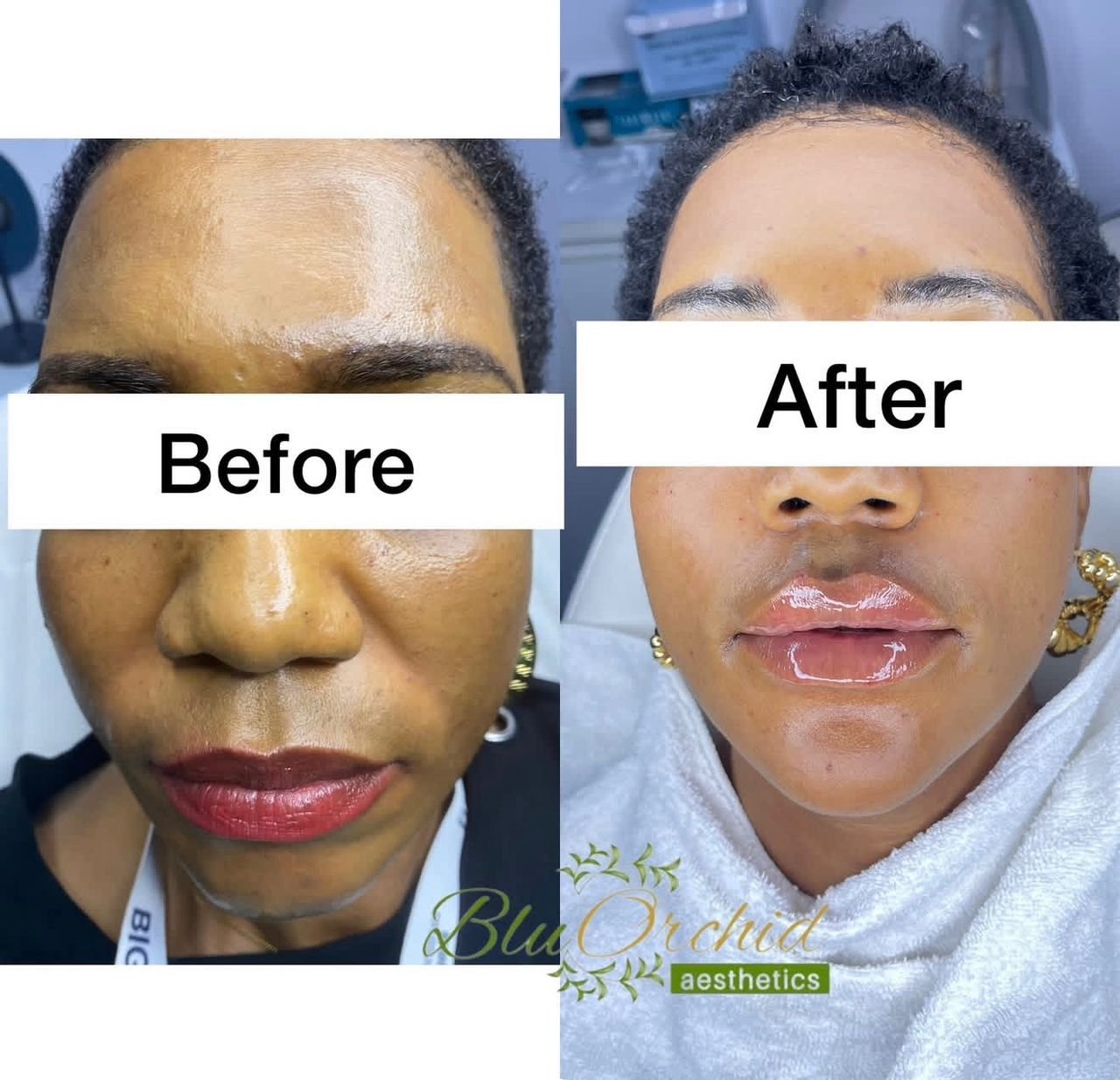
Have you ever looked at a photo of yourself and felt that something about your face looked different, without being able to explain exactly what it was?
Maybe your face looks slightly longer than it used to. Your cheeks seem less defined. Your jawline appears softer. Your lips look different in proportion to the rest of your face.
Sometimes, the concern is not about one particular feature.
It is about how the features relate to one another.
This is where the idea of the Golden Ratio often enters conversations about facial aesthetics.
But what exactly is the Golden Ratio, and how much does it really have to do with facial beauty?
What is the Golden Ratio?
The Golden Ratio is a mathematical proportion represented by the Greek letter φ (phi), approximately 1.618.
It has been studied in mathematics, geometry, art and architecture for centuries because certain proportional relationships can be found repeatedly in natural and constructed forms.
In aesthetics, the concept has also been used as one way of thinking about facial proportion.
The important point, however, is that there is no single mathematical formula that determines whether a face is beautiful.
Human faces are diverse. Beauty is influenced by culture, ethnicity, individuality, expression and personal preference.
So when a doctor talks about the Golden Ratio in facial aesthetics, it should not mean putting every face into the same mathematical template.
It is better understood as a framework for thinking about proportion and balance.
Why does facial proportion matter?
Your face is not made up of isolated features.
Your forehead relates to your eyes.
Your nose relates to your lips and chin.
Your cheekbones influence how the middle of your face is perceived.
Your jawline contributes to the overall shape and definition of your face.
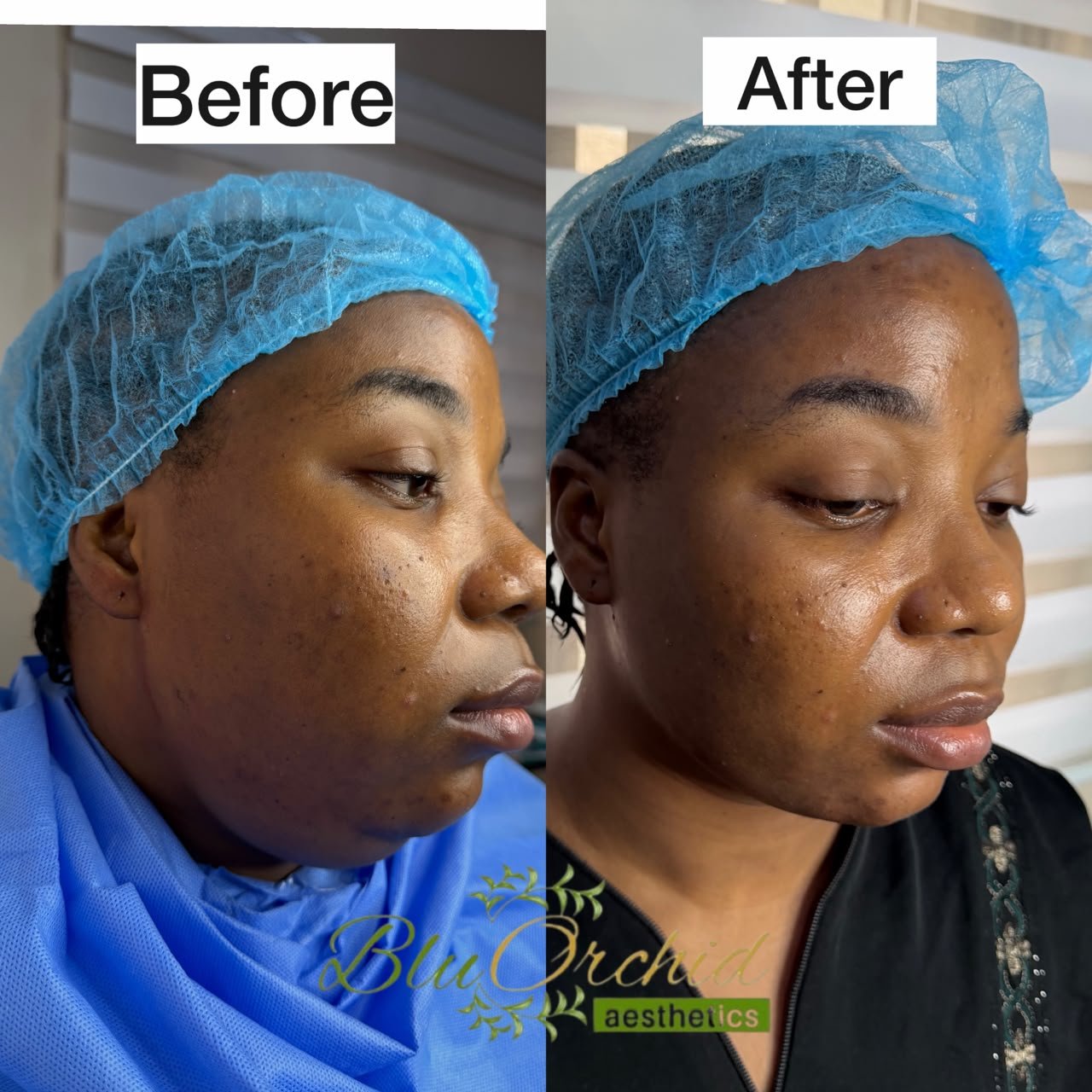
A change in one area can therefore influence how another area looks.
For example, adding volume to the lips does not happen in isolation. The result is perceived in relation to the nose, chin, cheeks and lower face.
Similarly, changing the appearance of the jawline can alter the way the entire face is perceived.
This is why facial aesthetics is not simply about asking, “What should we inject?”
The better question is:
“What is actually creating the imbalance I am noticing?”
The Golden Ratio and facial symmetry are not the same thing
These two ideas are often confused.
Symmetry refers broadly to how closely one side of the face resembles the other.
Proportion refers to the relationship between different parts of the face.
A face does not need to be perfectly symmetrical to be attractive.
In fact, small differences between the two sides of the face are completely normal.
A doctor assessing facial aesthetics therefore looks at much more than symmetry or a single ratio.
The assessment should consider the face as a whole.
What does a doctor actually look at?
When assessing facial proportions, an aesthetic doctor may consider relationships such as:
- The width and height of the face
- Forehead, midface and lower-face proportions
- The relationship between the nose, lips and chin
- Cheek projection
- Chin projection
- Jawline definition
- Lip proportion
- Facial asymmetry
- The way facial features change from different angles
The purpose is not to make every patient look identical.
It is to understand the patient’s existing structure before deciding whether anything actually needs to be changed.
Facial profiling at BluOrchid Aesthetics, Lagos
Why facial assessment matters before treatment
One of the biggest mistakes in aesthetic medicine is treating a visible feature without understanding the structure around it.
For example, someone may believe they need more volume in their cheeks when the actual concern is related to another part of their facial profile.
Someone else may think their face looks too round when the issue is really jaw definition.
Another person may want larger lips without realising that the desired result depends partly on the relationship between the lips, nose and chin.
This is why consultation should come before treatment.
A proper facial assessment can help separate what you think needs changing from what may actually be responsible for the concern.
Does the Golden Ratio apply to every face?
No.
And this is particularly important when working with diverse facial structures and ethnicities.
There is no single “ideal” Nigerian face, African face or female face.
Aesthetic medicine should not attempt to erase ethnic or individual characteristics in pursuit of a universal template.
The purpose of using proportional principles is to understand the individual face in front of you.
Your natural features should remain recognisably yours.
How the Golden Ratio can influence facial enhancement
At BluOrchid Aesthetics, the Golden Ratio is used as part of a broader facial assessment.
The objective is not to mathematically redesign your face.
It is to understand its geometry and identify where proportion, definition or balance may have changed.
That assessment can then help guide decisions about treatments such as:
Botox
Botox can be used to soften dynamic lines and, in selected cases, influence the appearance of facial proportions through treatment of specific muscles.
Explore: Botox in Lagos
Dermal fillers
Fillers can restore or add volume in areas such as the cheeks, lips and chin, depending on the individual’s anatomy and goals.
The aim is not simply to add volume.
It is to determine where volume would actually improve the overall relationship between facial features.
Explore: Dermal Fillers in Lagos
Masseter Botox
The masseter muscles contribute significantly to the shape of the lower face.
For some patients with prominent masseter muscles, treatment can create a softer or more refined lower-face appearance.
PDO threads
Thread treatments may be considered when lifting, tightening or structural definition is part of the concern.
Again, the appropriate treatment depends on the individual’s anatomy rather than a predetermined formula.
The goal is facial harmony, not a “perfect” face
This is perhaps the most important distinction.
Facial aesthetics should not be about creating a technically perfect face.
There is no universally perfect face.
Instead, the goal is often harmony.
Harmony means that the individual features of your face work well together.
Your lips still look like your lips.
Your nose still belongs to your face.
Your jawline still looks natural.
Your expressions remain yours.
The changes should make sense when your face is viewed as a whole rather than looking like an isolated procedure has been performed.
Why some aesthetic results look “done”
You have probably seen someone who has had aesthetic treatment and immediately noticed it.
Sometimes the issue is not that the individual treatment was inherently wrong.
It is that the treatment may have been considered separately from the rest of the face.
Too much volume in one area can make another feature appear smaller.
Over-treating one muscle can alter facial expression.
Adding volume without considering existing proportions can make the result look disconnected.
This is why more treatment does not necessarily mean a better result.
Good facial enhancement requires restraint as well as technical skill.
What happens during a facial profiling consultation?
At BluOrchid, facial profiling begins with assessment rather than a treatment menu.
Your consultation is designed to give your doctor time to understand:
- What you would like to change
- What you like about your face already
- Your facial anatomy and proportions
- How your face has changed over time
- Which treatment options may address the concern
- What does not need to be treated
The result is a personalised plan rather than a generic recommendation.
Your doctor can then explain what should be prioritised, what can wait and what may not be necessary at all.
Does using the Golden Ratio mean you will look different?
It should not be the objective.
The purpose of facial profiling is enhancement, not replacement.
You should still look like yourself.
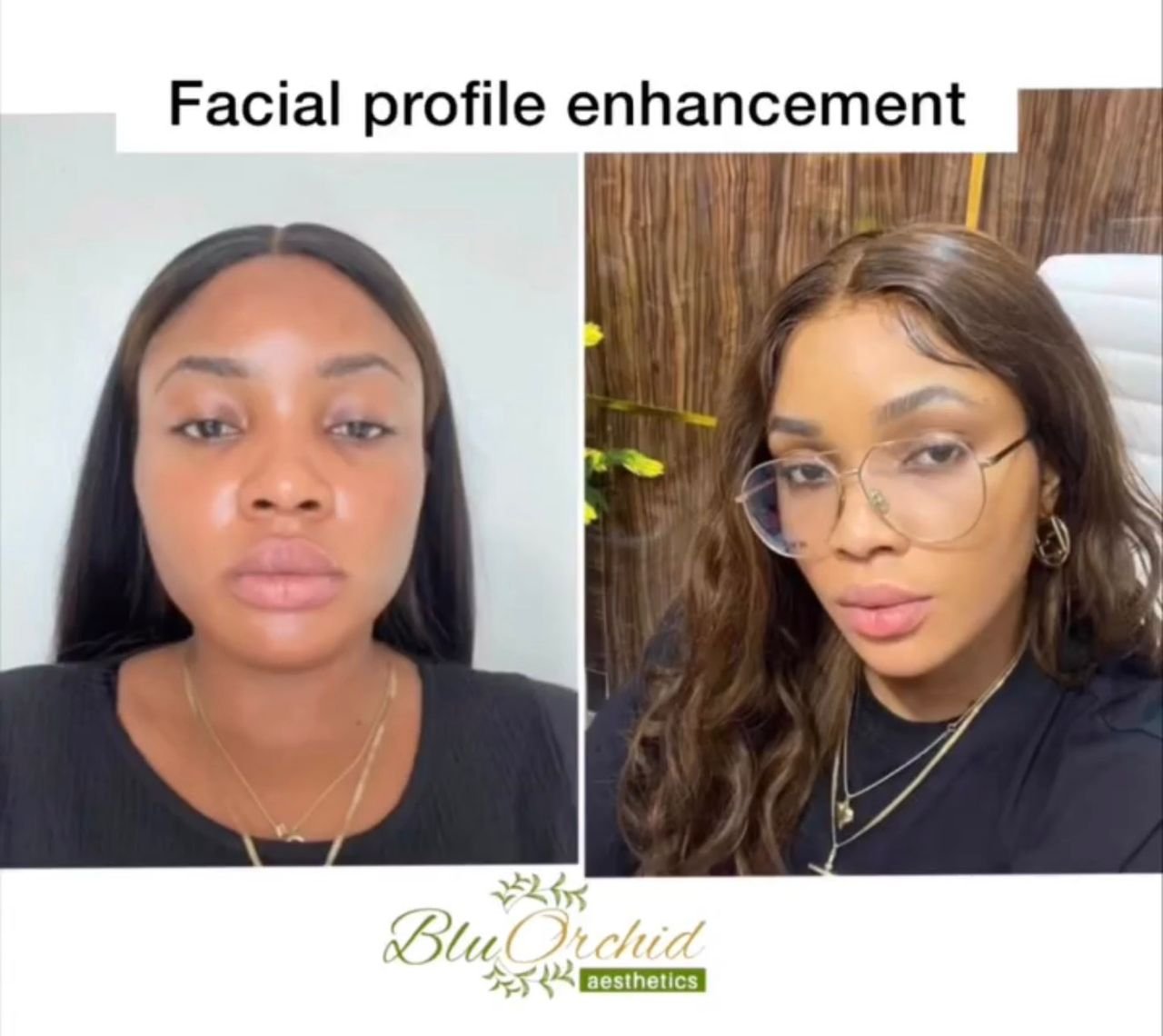
The difference may simply be that your features appear more balanced, your face looks more refreshed, or a particular concern is less noticeable.
That is very different from trying to create an entirely new face.
The Golden Ratio is a guide, your face is the final reference point
Mathematical proportions can provide a useful framework.
But your face is not a diagram.
It has movement, expression, personality, ethnicity, age and individuality.
A good aesthetic assessment therefore combines structural analysis with medical judgement and, most importantly, an understanding of what the patient actually wants.
The Golden Ratio can help answer:
“How do these features relate to each other?”
But your consultation must also answer:
“What do you want your face to look and feel like?”
Those two questions belong together.
Frequently asked questions
What is the Golden Ratio in facial aesthetics?
The Golden Ratio is a mathematical proportion of approximately 1.618 that has been used as a framework for considering proportion and balance. In facial aesthetics, it can help doctors assess relationships between different facial features, but it is not a universal formula for beauty.
Is the Golden Ratio the secret to a beautiful face?
No. Beauty is subjective and influenced by many factors. The Golden Ratio is better understood as one framework for analysing facial proportion rather than a definitive measure of attractiveness.
Can the Golden Ratio be used on African faces?
Yes, proportional analysis can be used when assessing any face. However, it should not be used to impose a single beauty standard on different ethnicities. Facial assessment should account for each person’s individual anatomy and natural features.
Does everyone have the same ideal facial proportions?
No. Facial proportions vary naturally between individuals, ethnicities, ages and sexes. A good aesthetic assessment recognises those differences rather than trying to make everyone conform to one template.
Can Botox change facial proportions?
In selected cases, Botox can influence the appearance of facial proportions by relaxing specific muscles. Whether this is appropriate depends on the individual’s anatomy and treatment goals.
Can dermal fillers improve facial balance?
They can be used to restore or add volume in selected areas, such as the cheeks, lips or chin. The decision should be based on the individual’s facial structure rather than simply adding volume wherever it appears to be missing.
What is facial profiling?
Facial profiling is an approach to aesthetic assessment that considers the structure, proportion and definition of the face before
If you would like your own proportions assessed rather than guessed at, you can book a consultation with the BluOrchid medical team.
A consultation at BluOrchid begins with exactly this assessment.
One hour with our doctors. An honest assessment. A plan built around you. ₦50,000, credited in full toward your first treatment.
Book your consultation Doctor-led assessment at Lekki Phase 1, Lagos.