Acne Treatments Compared: Facials, Peels or Prescriptions
Which acne treatment is best? Compare facials, chemical peels and prescription acne treatments, including when each approach makes sense.

If you have acne, there is no shortage of treatments promising clearer skin.
Facials.
Chemical peels.
Serums.
Prescription creams.
Antibiotics.
Professional extractions.
And sometimes, a clinic menu can make all of them sound like interchangeable ways to achieve the same thing.
They are not.
A facial is not the same as a prescription acne treatment. A chemical peel is not automatically better because it is more intensive. And a treatment that works beautifully for clogged pores may be completely inadequate for deep, inflamed acne.
So what actually is the best treatment for acne?
The answer depends on the type and severity of your acne, your skin, whether you are developing pigmentation or scarring, and whether there is an underlying factor contributing to the breakouts.
Here is how the main options compare.
First: What Are You Actually Treating?
Acne can involve several processes at once.
There may be:
- Blocked pores
- Excess sebum
- Inflammation
- Blackheads and whiteheads
- Papules and pustules
- Deeper nodules or cysts
- Post-inflammatory hyperpigmentation
- Acne scarring
Different treatments target different parts of this picture.
That is why there is no universal “best acne treatment”.
A person with occasional congestion may need a very different approach from someone with painful inflammatory acne.
Acne Treatments at a Glance
| Treatment | What it mainly does | Best suited to | Main limitation |
|---|---|---|---|
| Facial | Cleansing and skin maintenance; selected professional procedures may address congestion | Mild congestion and supportive skincare | Not a substitute for medical acne treatment |
| Chemical peel | Controlled exfoliation; selected peels may help acne or pigmentation | Selected mild acne and some skin concerns | Evidence and suitability vary |
| Topical prescription treatment | Targets acne formation, inflammation and clogged pores | Persistent mild-to-moderate acne and many other presentations | Requires consistency and can cause irritation |
| Oral medication | Works systemically for appropriate patients | Moderate-to-severe or treatment-resistant acne | Requires medical assessment and monitoring |
| Acne extraction | Removes selected lesions | Carefully selected comedones | Should be performed appropriately to avoid trauma |
| Intralesional steroid | Reduces inflammation in selected large lesions | A few painful inflammatory cysts | Not routine treatment for all acne |
The important point is that these treatments are not competing versions of the same procedure.
They have different roles.
1. Facials for Acne
Facials are probably the most familiar professional skin treatment.
Depending on what is included, a facial may involve:
- Cleansing
- Exfoliation
- Hydration
- Steam
- Masking
- Manual extraction
- Other cosmetic skin treatments
A facial can be useful for skin maintenance and, in selected cases, for managing superficial congestion.
But it is important not to oversell what a facial can do.
If you have persistent inflammatory acne, a facial does not necessarily address the underlying processes driving the acne.
That is where medical treatment becomes more important.
Can a Facial Clear Acne?
It depends on what you mean by “clear”.
A professional treatment may temporarily improve the appearance of congestion or help remove selected comedones.
But if your acne keeps returning, removing the visible blockage does not necessarily stop new lesions from forming.
Think of it this way:
A facial may help manage the skin you have today.
Medical acne treatment may be needed to reduce the processes creating tomorrow’s breakouts.
The two can sometimes complement each other.
They should not be confused.
When Does a Facial Make Sense?
A professional facial may be considered when:
- Your skin is mildly congested
- You want supportive skin maintenance
- You have selected superficial comedones
- Your skin is otherwise relatively stable
- It forms part of a broader skincare plan
It may be less appropriate to rely on repeated facials if you have:
- Deep painful acne
- Extensive inflammation
- Nodules or cysts
- Significant scarring
- Acne that is continually worsening
Those situations deserve proper clinical assessment.
2. Chemical Peels for Acne
Chemical peels are different from facials.
A peel applies a chemical solution to the skin to produce a controlled exfoliating effect.
Depending on the type and concentration, peels can affect the outer layers of the skin and may help with concerns such as:
- Congestion
- Certain forms of acne
- Uneven skin texture
- Post-inflammatory pigmentation
But “chemical peel” is a broad category.
A salicylic acid peel is not the same as a TCA peel, and a professional peel should not be selected simply because it sounds stronger.
Are Chemical Peels Actually Proven for Acne?
This is where it is important to be honest about the evidence.
There is some evidence that chemical peels may help mild-to-moderate acne.
However, the evidence base is limited.
NICE’s evidence review found some evidence of benefit in mild-to-moderate acne, but noted the small number and small size of studies and the lack of placebo comparisons. For moderate-to-severe acne, the evidence was insufficient to support a recommendation for chemical peels.
The American Academy of Dermatology’s 2024 acne guideline likewise stated that available evidence was insufficient to make recommendations for chemical peels as an acne treatment.
That does not mean chemical peels are useless.
It means they should be positioned appropriately.
They can be a useful option for selected patients, but they should not be presented as universally superior to evidence-based medical acne treatment.
Chemical Peels and Darker Skin
For people with darker skin tones, treatment selection deserves particular care.
Inflammation or irritation can sometimes be followed by changes in pigmentation.
That matters because you may already be dealing with:
acne + post-inflammatory hyperpigmentation.
A treatment that aggressively irritates the skin could potentially create another problem even if the original acne improves.
The peel, concentration, preparation, treatment interval and aftercare therefore need to be appropriate for the individual’s skin.
“Stronger” is not automatically “better”.
3. Prescription Acne Treatments
This is where acne treatment becomes fundamentally different from a facial.
Prescription medications can target the underlying mechanisms involved in acne.
Depending on the patient and severity, treatment may include topical or oral medication.
Current American Academy of Dermatology guidance recommends several topical options, including benzoyl peroxide and topical retinoids, with additional options such as azelaic acid, salicylic acid and clascoterone. It also recommends selected systemic treatments for appropriate patients, including certain oral antibiotics, combined oral contraceptives, spironolactone and isotretinoin.
Topical Treatments
Topical treatments are applied directly to the skin.
Depending on the type of acne, options may include:
Benzoyl peroxide
Useful for reducing acne-causing bacteria and inflammation.
Topical retinoids
These help keep pores from becoming clogged and can be useful for different types of acne.
Azelaic acid
Can help with acne and may also be useful when post-inflammatory dark marks are part of the concern.
Salicylic acid
Helps exfoliate the skin and can be useful for clogged pores.
Combination treatments
Sometimes different mechanisms are combined rather than relying on one active ingredient alone.
This approach is reflected in current acne guidelines.
What About Oral Acne Medication?
Some people need treatment that works beyond the surface of the skin.
Depending on the severity and circumstances, a clinician may consider:
- Oral antibiotics
- Hormonal treatments
- Other systemic medication
- Isotretinoin for selected severe or treatment-resistant acne
These are not treatments to self-prescribe.
For example, oral antibiotics need to be used carefully because of antimicrobial resistance and other risks. NICE recommends reviewing treatment and limiting prolonged antibiotic use where possible.
Isotretinoin is also a specialist treatment with important safety considerations.
What Is the Best Treatment for Mild Acne?
For mild acne, you may not need the most aggressive treatment available.
Depending on the presentation, a clinician may recommend an appropriate topical regimen.
A facial may be supportive.
A chemical peel may be considered in selected cases.
The important thing is not to confuse a cosmetic treatment with treatment of the underlying acne.
If you have mild congestion but otherwise healthy skin, professional skin treatments can sometimes sit alongside a sensible home-care routine.
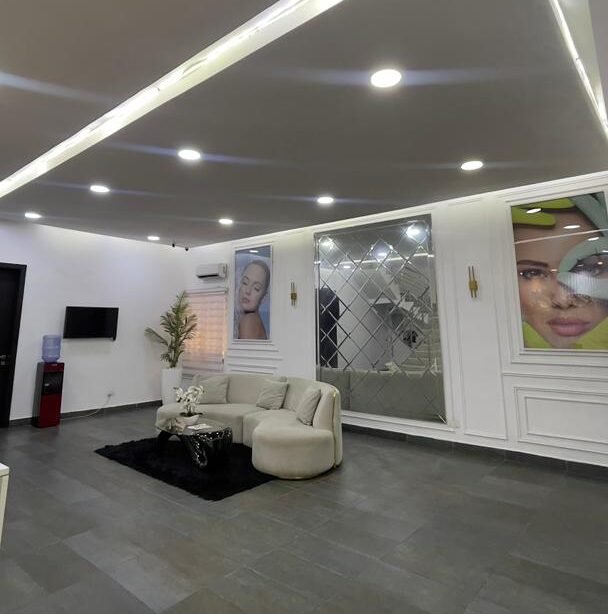
Consultation at BluOrchid Aesthetics, Lagos
What Is the Best Treatment for Moderate Acne?
Moderate acne may require more than occasional professional treatments.
Prescription topical treatment is often more relevant here, and some people may require oral medication depending on the severity and clinical picture.
The goal is to control active acne before it progresses to:
- Persistent pigmentation
- Scarring
- Recurrent inflammation
- Significant psychological distress
NICE recommends structured first-line treatment and reassessment rather than simply continuing the same ineffective approach indefinitely.
What About Severe or Cystic Acne?
This is where relying on facials alone becomes particularly problematic.
Deep, painful nodules and cysts can increase the risk of scarring.
Severe or treatment-resistant acne may require specialist medical management.
For selected large inflammatory lesions, a clinician may use an intralesional corticosteroid injection to reduce inflammation and pain more quickly.
For severe acne or acne that has failed standard treatment, isotretinoin may be considered under appropriate medical supervision.
A facial is not an equivalent treatment.
What About Acne Extractions?
Extraction can have a role in selected circumstances.
But there is a major difference between controlled professional extraction and aggressively squeezing your skin at home.
Persistent picking or scratching acne lesions can increase the risk of scarring. NICE specifically advises people with acne to avoid this.
If extraction is appropriate, it should be performed carefully and as part of an overall treatment strategy.
Facials vs Peels vs Prescriptions
Here is the simplest comparison.
Choose a facial when:
Your main concern is mild congestion or general skin maintenance and you want a supportive professional treatment.
Consider a chemical peel when:
You have a suitable skin concern that may respond to controlled exfoliation and the specific peel has been assessed as appropriate for your skin.
Consider prescription treatment when:
Your acne is persistent, inflammatory, recurrent, moderate-to-severe, scarring or not responding to basic skincare.
Consider specialist medical care when:
You have severe acne, painful nodules or cysts, significant scarring, or acne that has not responded adequately to appropriate treatment.
Can You Combine Facials, Peels and Prescriptions?
Sometimes.
But combination treatment needs to be planned carefully.
For example, someone using a prescription retinoid may not be an appropriate candidate for an aggressive peel at the same time.
Likewise, repeatedly exfoliating already irritated acne-prone skin can make the barrier more compromised.
The question should not be:
“How many treatments can I do?”
It should be:
“Which treatments complement each other without unnecessarily irritating my skin?”
What About Acne and Dark Spots?
This is particularly important for darker skin.
You may clear the acne only to be left with brown marks.
Those marks are often post-inflammatory hyperpigmentation, not necessarily acne scars.
The treatment strategy is therefore two-part:
Control the acne.
Then:
Manage the pigmentation appropriately.
Some acne treatments, such as azelaic acid, can address both acne and post-inflammatory dark spots.
Aggressive treatment is not automatically the best way to address pigmentation.
Preventing unnecessary inflammation is part of the strategy.
What If You Have Acne Scars?
Acne scars are a separate problem from active acne.
A depressed scar such as an ice-pick, boxcar or rolling scar is not simply a dark spot.
And treating a scar requires a different strategy from treating a new pimple.
Depending on the scar type, treatment may involve procedures such as:
- Chemical peels
- Microneedling
- Laser treatments
- Subcision
- Scar surgery
- Other combination approaches
Treatment should be selected according to the type of scar.
If you still have uncontrolled active acne, that generally needs to be addressed first.
What Should You Not Do?
If you have acne, be cautious about:
- Aggressive scrubbing
- Repeated squeezing
- Doing multiple peels too close together
- Layering several strong exfoliants
- Changing products every few days
- Assuming every facial is an acne treatment
- Treating severe acne exclusively with cosmetic procedures
- Using antibiotics without appropriate medical supervision
Acne treatment is usually more successful when it is consistent rather than chaotic.
So, Which Is the Best Acne Treatment?
There is no single winner.
If your acne is mild and your skin is mainly congested, a professional facial may have a supportive role.
If you have a suitable presentation, a chemical peel may be incorporated into your treatment plan.
If you have persistent or inflammatory acne, prescription treatment may be more important.
If you have severe or treatment-resistant acne, specialist medical management may be necessary.
The best treatment is therefore not necessarily the treatment that feels the most intensive.
It is the treatment that matches what is actually happening in your skin.
A Practical Decision Guide
Mainly blackheads and whiteheads
A structured topical routine may be appropriate, with professional skin treatments considered as an adjunct.
Mild congestion with occasional breakouts
A combination of appropriate home care and selected professional treatments may be reasonable.
Frequent inflamed pimples
Consider clinical acne treatment rather than relying on facials alone.
Painful nodules or cysts
Seek medical assessment.
Acne with persistent dark marks
Control the acne while also considering a pigmentation-conscious treatment strategy.
Acne with scars
Treat the active acne first and then assess the scar type.
Acne that keeps returning despite treatment
Reassessment is more useful than continually adding another facial, peel or product.
The Bottom Line
Facials, chemical peels and prescription acne treatments are not interchangeable.
Facials can have a supportive role, particularly for selected congestion and skin maintenance.
Chemical peels may help some people with acne, particularly selected mild-to-moderate presentations, but the evidence is limited and they should be used thoughtfully.
Prescription treatments directly target acne biology and are often more important when acne is persistent, inflammatory or moderate-to-severe.
And sometimes the best approach is a combination.
The goal is not to give your skin the most treatments.
It is to give it the right treatment for the problem you actually have.
Frequently asked questions
What is the best treatment for acne?
There is no single best treatment. The right approach depends on acne type, severity, skin type, pigmentation, scarring and other individual factors.
Is a facial better than acne medication?
Not necessarily. A facial and acne medication serve different purposes. A facial may support skin maintenance, while medication can target the underlying processes involved in acne.
Can facials cure acne?
Facials may help with selected congestion or provide supportive skin care, but persistent acne may require medical treatment.
Are chemical peels good for acne?
Some chemical peels may help selected mild-to-moderate acne, but the evidence is limited. They should be chosen according to the individual’s skin and acne presentation.
Can chemical peels make acne worse?
Any procedure that irritates the skin can potentially cause problems if it is unsuitable or performed too aggressively. This is particularly important when treating acne-prone or pigmentation-prone skin.
Can I get a facial while using prescription acne medication?
Sometimes, but it depends on the medication, the facial and the condition of your skin. Tell the practitioner about all acne medications you are using before undergoing a professional treatment.
Are prescription acne treatments stronger than facials?
They are not simply different strengths of the same treatment. Prescription treatments are medications designed to target acne, while facials are professional skin treatments.
What if my acne is painful?
Painful or deep acne deserves medical assessment, particularly if it is recurring or leaving scars.
Can acne treatments remove dark spots?
Some acne treatments can also help with post-inflammatory hyperpigmentation. However, active acne and residual pigmentation may require different strategies.
Should I treat acne scars before my acne is gone?
Usually, controlling active acne is an important priority before aggressively treating residual scarring. Otherwise, new lesions can continue creating new scars.
How long should acne treatment take to work?
Acne treatment generally requires consistency and time. NICE recommends reviewing first-line treatment at around 12 weeks rather than judging the treatment after only a few days.
When should I see a doctor for acne?
Seek professional assessment if your acne is persistent, painful, severe, scarring, suddenly develops in adulthood, or is significantly affecting your confidence or quality of life.
Acne Treatment in Lagos
If you have tried facials, skincare products or home remedies without getting your acne under control, the next step may be a proper assessment rather than another treatment added to the list.
BluOrchid Aesthetics offers professional acne treatment in Lagos, with treatment selected according to the individual’s skin and concern.
Book a Consultation to discuss your skin.
Related BluOrchid pages:
- Acne Treatment in Lagos: acne treatment lagos
- Chemical Peels in Lagos: chemical peels lagos
- Professional Facials in Lagos: facials lagos
- Acne Scar Treatment in Lagos: acne scar treatment lagos
- Consultation: consultation
Yes. A facial can make acne appear worse temporarily, particularly if the treatment involves aggressive exfoliation, heavy products, repeated extraction, or significant irritation. But a facial is not automatically bad for acne, the outcome depends on the type of acne, what the facial involves, and how your skin responds.
A consultation at BluOrchid begins with exactly this assessment.
One hour with our doctors. An honest assessment. A plan built around you. ₦50,000, credited in full toward your first treatment.
Book your consultation Doctor-led assessment at Lekki Phase 1, Lagos.