Sagging Jowls: Non-Surgical Options
What causes sagging jowls, and can they be treated without surgery? Compare HIFU, threads, fillers and other options.

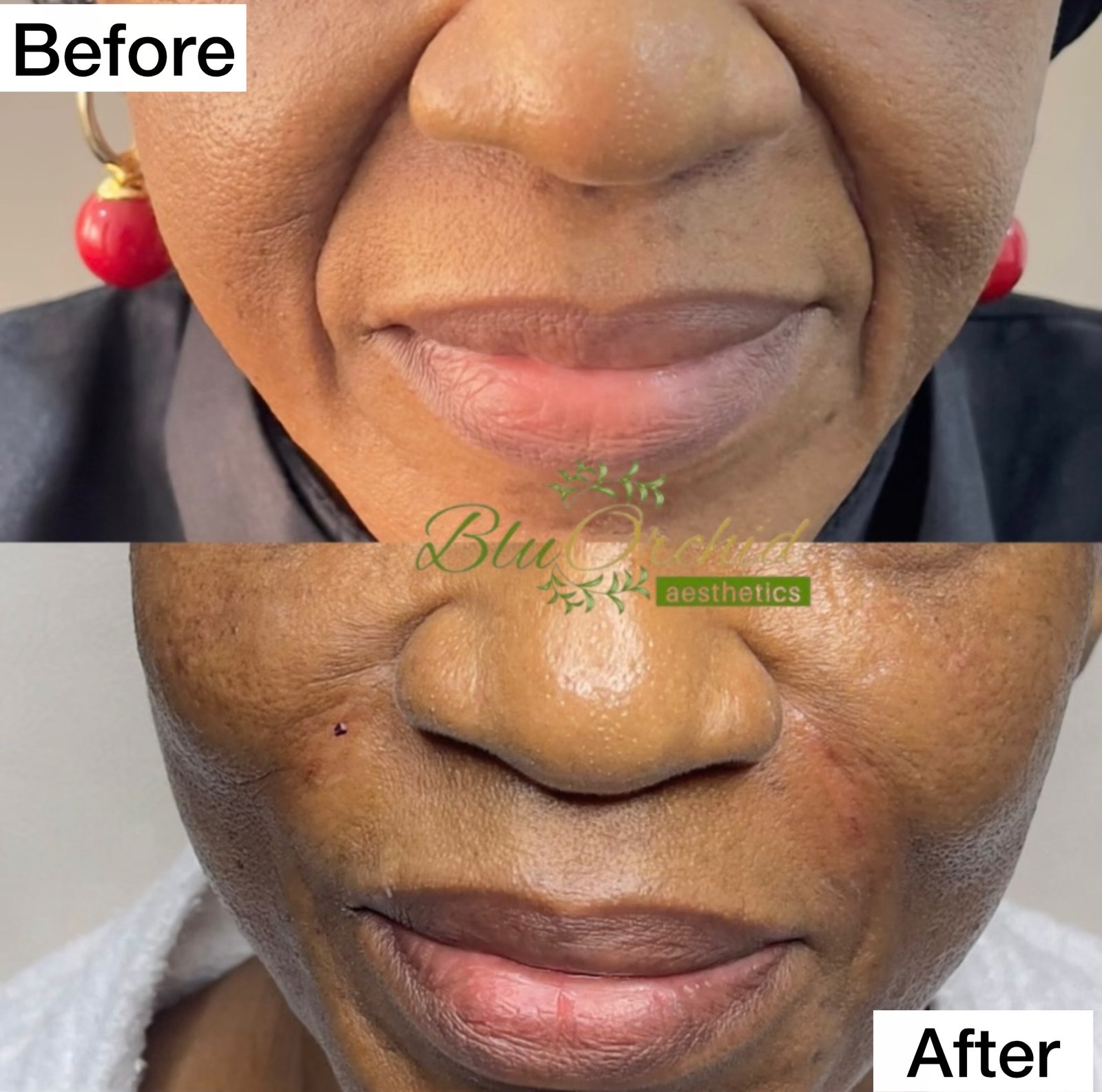
You notice that your jawline no longer looks as defined as it once did.
The lower face seems heavier. The skin around the corners of your mouth and jaw appears to have started descending. Perhaps your face still looks like you, just less lifted and defined.
These changes are often described as jowls.
And if you are looking for a jowl treatment without surgery, you will quickly find a long list of options: HIFU, thread lifts, fillers, fat-reduction treatments and various combinations.
The difficulty is knowing which one actually addresses your type of jowling.
Because jowls are not caused by one thing.
What are jowls?
Jowls are areas of fullness or sagging that develop along the lower face, particularly around the jawline.
They can become more noticeable with age as several changes occur at the same time.
These can include:
- Reduced skin elasticity
- Changes in facial fat
- Loss or redistribution of facial volume
- Descent of facial soft tissues
- Changes in the underlying facial structures
- Reduced definition between the jawline and neck
This is why simply treating the skin may not always produce the result someone wants.
The visible jowl may be influenced by several layers of the face.
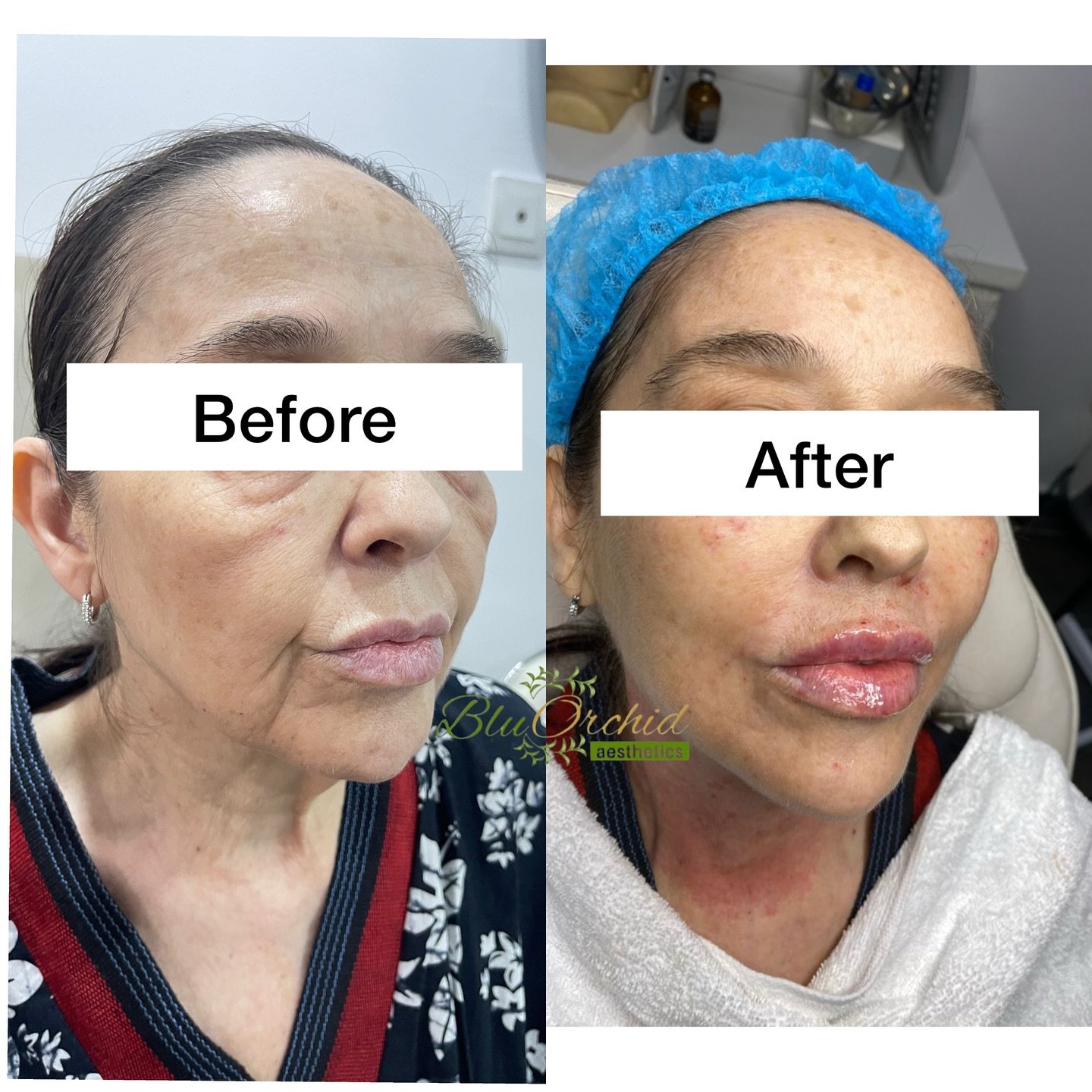
Why do jowls develop?
Ageing is one of the most common reasons, but it is not the only factor.
Genetics, changes in body weight, skin quality and individual facial anatomy can all influence how early or prominently jowls appear.
Two people of the same age can therefore have completely different lower-face changes.
One person may primarily have loose skin.
Another may have volume changes.
Someone else may have a combination of tissue descent and fullness beneath the jawline.
That distinction matters when choosing treatment.
Can sagging jowls be treated without surgery?
Sometimes.
Non-surgical and minimally invasive treatments can improve the appearance of selected types and degrees of jowling.
But they cannot all do the same thing.
For example:
HIFU may be considered for selected cases of skin laxity and tightening.
Thread lifts can provide mechanical support and lifting in appropriately selected patients.
Dermal fillers may improve facial structure and contour where volume loss contributes to an undefined lower face.
Fat-reduction treatments may be considered when excess subcutaneous fullness is part of the problem.
The challenge is identifying which of these, if any, actually matches the cause of your jowling.
1. HIFU for sagging jowls
HIFU is one of the non-surgical options commonly considered for facial laxity.
It uses focused ultrasound energy delivered at selected tissue depths.
For someone with early jowling associated primarily with laxity, HIFU may be considered as part of a skin-tightening treatment plan.
But there is an important limitation:
HIFU cannot remove excess skin.
It also does not physically reposition facial tissues in the same way as a facelift.
So if the lower face has significant tissue descent or excess skin, expectations need to be realistic.
HIFU is more appropriately considered when the degree and type of laxity are suitable for a non-surgical approach.
2. Thread lift for jowls
A PDO thread lift works differently.
Absorbable threads are placed beneath the skin to provide mechanical support and reposition selected tissues.
For appropriately selected patients, this can create a lifting effect around areas of the lower face.
Thread lifts may therefore be considered when the concern involves early tissue descent rather than simply loose skin.
But a thread lift is minimally invasive, not completely non-invasive.
There can be swelling, bruising, tenderness and other procedural risks, and the effect is not permanent.
It should also not be presented as equivalent to a surgical facelift.
3. Dermal fillers for jowls
Fillers can sometimes play a role in improving lower-face definition.
But this requires careful assessment.
If facial ageing has involved volume loss, restoring volume in strategically selected areas may improve the relationship between the cheek, chin, jawline and surrounding structures.
That does not necessarily mean putting filler directly into the jowl.
In fact, indiscriminately adding volume to an already heavy lower face can make the problem appear worse.
This is where facial profiling and structural assessment become particularly important.
The objective should be to understand whether restoring or repositioning the appearance of facial volume can improve overall balance.
Nasolabial at BluOrchid Aesthetics, Lagos
4. Fat-reduction treatments
Not every full-looking lower face is caused by sagging.
Sometimes there is a contribution from subcutaneous fat.
This is particularly important when someone describes their concern as “jowls” but also has fullness around the lower face or under the chin.
A practitioner may therefore need to distinguish between:
Skin laxity
Tissue descent
Fat
Volume loss
Underlying facial structure
These can look similar in photographs but require very different approaches.
Removing or reducing fat when the real problem is skin laxity may not produce the desired result.
5. Facial profiling and combination treatment
Sometimes jowling is not a single-layer problem.
A patient may have:
- Mild skin laxity
- Loss of cheek volume
- Lower-face fullness
- Early tissue descent
- Reduced jawline definition
In these cases, a combination treatment plan may be considered.
But “combination” should not mean performing several procedures simply because they are available.
Each treatment should have a specific purpose.
The question should always be:
What problem is this treatment solving?
Which non-surgical treatment is best for jowls?
There is no universal answer.
| What may be contributing to the jowls | Treatment that may be considered |
|---|---|
| Mild skin laxity | HIFU or another appropriate tightening approach |
| Early tissue descent | Thread lift in selected patients |
| Volume loss affecting facial balance | Carefully planned dermal filler |
| Localised fullness | Appropriate fat-reduction approach |
| Several contributing factors | Individualised combination treatment |
| Significant excess skin | Surgical assessment |
This table is a guide, not a diagnosis.
A treatment that is appropriate for one person’s jowls may be completely inappropriate for another person’s.
HIFU vs thread lift for jowls
This is one of the most common comparisons.
The difference is straightforward:
HIFU uses focused ultrasound energy.
A thread lift uses absorbable threads to provide mechanical support.
HIFU is non-invasive.
A thread lift is minimally invasive.
HIFU is generally considered in the context of tightening and tissue remodelling, while a thread lift can provide mechanical lifting.
Neither should automatically be considered the “stronger” treatment.
The right choice depends on what is actually causing the lower-face change.
Can fillers get rid of jowls?
Not directly in every case.
Fillers may improve the appearance of a poorly defined jawline when volume loss or structural imbalance is contributing to the problem.
But fillers do not remove loose skin.
And adding too much filler to the lower face can create additional heaviness.
This is why filler treatment for jowls should be based on facial anatomy rather than simply injecting the area that looks problematic.
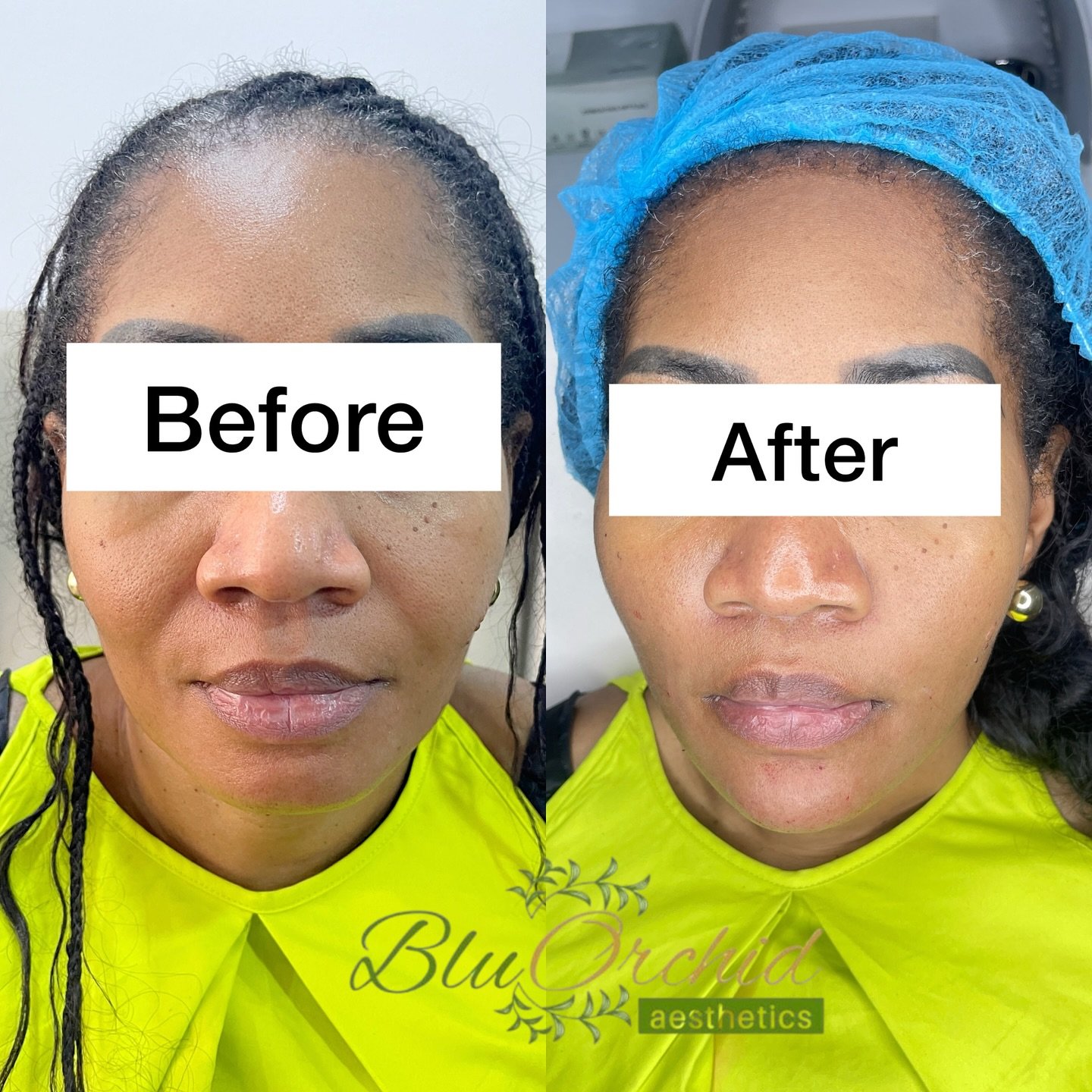
Can you get rid of jowls without surgery?
You may be able to improve their appearance without surgery.
That distinction matters.
Non-surgical and minimally invasive treatments can be useful for selected patients, particularly when the degree of ageing is relatively early.
But they cannot reproduce every aspect of a surgical facelift.
If there is substantial excess skin or significant tissue descent, surgery may provide a more appropriate level of correction.
A responsible practitioner should tell you that when it is relevant.
What about a facelift?
A surgical facelift is fundamentally different from non-surgical treatment.
Surgery can reposition facial tissues and remove or redrape excess skin.
That gives it capabilities that HIFU, fillers and other non-surgical approaches do not have.
This does not mean surgery is automatically the better choice.
If your jowls are mild and you want to avoid surgery, a non-surgical or minimally invasive approach may be entirely reasonable.
But if the structural changes are significant, it is important not to expect a non-surgical procedure to reproduce a surgical result.
When should you consider treatment?
You do not need to treat jowls simply because they exist.
Treatment becomes a consideration when the change bothers you and you want to explore what can realistically be improved.
Before deciding, consider:
- How pronounced the jowling is
- Whether the issue is skin, fat, volume or tissue descent
- How much change you want
- Whether you are willing to have an invasive procedure
- How much downtime you can accept
- How long you expect the result to last
Sometimes the best first step is simply an assessment.
Jowl treatment for dark skin
Dark skin is not automatically a reason to avoid facial treatments.
However, skin type and individual history should form part of treatment planning.
This is particularly relevant when energy-based treatments are being considered.
Your practitioner should know your skin characteristics, previous aesthetic treatments and any history of unusual pigmentation or sensitivity.
A treatment should be selected for your anatomy and skin, not simply because it is popular or advertised as a “non-surgical facelift”.
How to choose a clinic for jowl treatment in Lagos
If you are considering treatment for sagging jowls in Lagos, do not start by choosing a machine.
Start with the assessment.
Ask:
What is actually causing my jowls?
Is it lax skin, tissue descent, fat, volume loss or a combination?
What can this treatment realistically change?
A good consultation should make the limitations clear as well as the potential benefits.
Why are you recommending this treatment?
The recommendation should relate to your facial anatomy and goals.
What are the risks?
Non-surgical does not mean risk-free.
What happens if I do nothing?
You should never feel that treatment is necessary simply because you have visible signs of ageing.
Frequently asked questions
What is the best treatment for sagging jowls without surgery?
There is no single best treatment. HIFU, thread lifts, fillers and other approaches address different causes of lower-face ageing. The appropriate option depends on what is contributing to your jowls.
Does HIFU work for jowls?
HIFU may be considered for selected patients with facial laxity and early jowling. It cannot remove excess skin or reproduce the structural correction of a facelift.
Are thread lifts good for jowls?
A thread lift may be considered for selected patients with early tissue descent. It is minimally invasive and does not provide a permanent facelift.
Can fillers lift sagging jowls?
Fillers can sometimes improve facial balance and contour when volume loss contributes to an ageing lower face. They do not remove loose skin, and excessive filler can make a heavy lower face appear heavier.
Can losing weight get rid of jowls?
Not necessarily. Weight changes can alter facial volume, but jowling is influenced by skin elasticity, tissue descent, fat distribution and facial structure. Weight loss is therefore not a predictable treatment for jowls.
What is the difference between jowls and a double chin?
Jowls primarily refer to fullness or sagging along the lower jawline. A double chin refers more specifically to fullness beneath the chin. The two can occur together but are not the same concern.
Can skincare get rid of jowls?
Skincare can support skin quality, but creams cannot reproduce the lifting or tissue repositioning of a procedural treatment. If the primary concern is structural facial descent, skincare alone is unlikely to remove it.
Are non-surgical jowl treatments permanent?
Generally, no. Non-surgical and minimally invasive treatments have different durations, and natural ageing continues after treatment.
When is surgery better for jowls?
When there is significant excess skin or tissue descent, a surgical facelift may offer a degree of correction that non-surgical procedures cannot reproduce.
The bottom line
Jowls are not a single problem.
They can reflect changes in skin, fat, facial volume, soft-tissue position and underlying structure, often several at once.
That is why the right question is not:
“What is the best jowl treatment?”
It is:
“What is causing my jowls?”
For some people, HIFU may be appropriate.
For others, a thread lift or carefully planned structural treatment may make more sense.
And when there is substantial excess skin or tissue descent, surgery may be the more realistic option.
The most important step is an assessment that identifies the problem before choosing the procedure.
A consultation at BluOrchid begins with exactly this assessment.
One hour with our doctors. An honest assessment. A plan built around you. ₦50,000, credited in full toward your first treatment.
Book your consultation Doctor-led assessment at Lekki Phase 1, Lagos.