How to Become an Aesthetic Practitioner in Nigeria
Learn how to become an aesthetic practitioner in Nigeria, from choosing the right training to building clinical skills and a safe career.

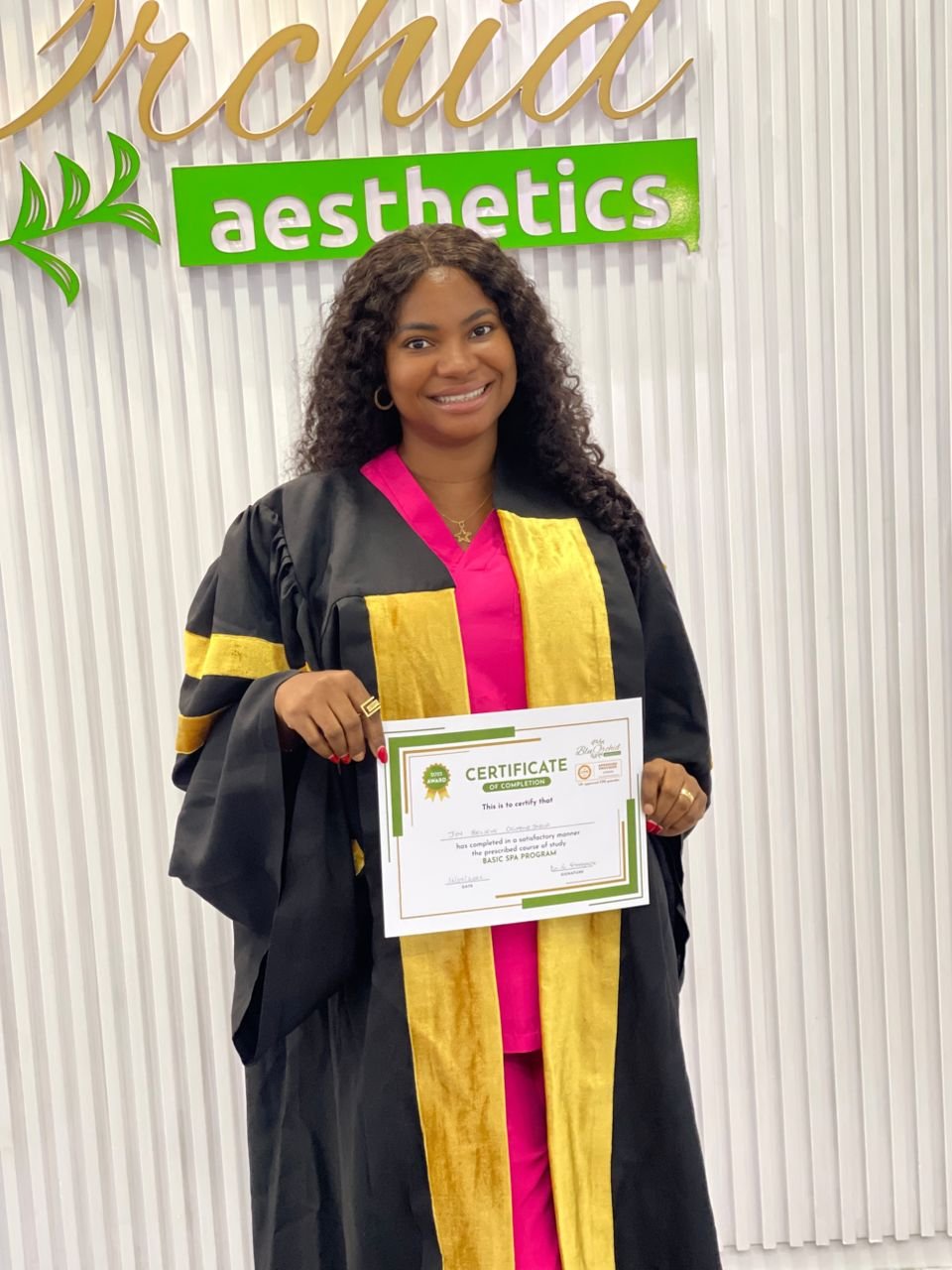
A career in aesthetic medicine can look deceptively simple from the outside.
You see the finished result: a treatment, a transformation, a patient who feels more confident.
What you do not always see is the clinical knowledge, hands-on training, patient assessment, anatomy, treatment planning, safety and professional judgement behind that result.
If you are considering becoming an aesthetic practitioner in Nigeria, the first question should not be:
“Which aesthetics course can I take?”
It should be:
“What kind of practitioner do I want to become, and what training will actually prepare me for that responsibility?”
This guide explains the pathway, the skills that matter, the difference between learning aesthetics and becoming competent in practice, and what to consider before choosing an aesthetics training programme in Nigeria.
What Is an Aesthetic Practitioner?
An aesthetic practitioner is a professional who provides aesthetic treatments designed to improve or maintain a person’s appearance, depending on their professional background, training, competence and permitted scope of practice.
The field can include treatments involving:
- Skin health and skin treatments
- Facial aesthetics
- Injectables
- Body treatments
- Hair restoration
- Non-surgical facial enhancement
- Advanced aesthetic procedures
- Patient assessment and treatment planning
But “aesthetic practitioner” is not simply another name for someone who has completed a weekend course.
Aesthetic practice sits at the intersection of clinical knowledge, technical skill, aesthetics and patient care.
That distinction matters.
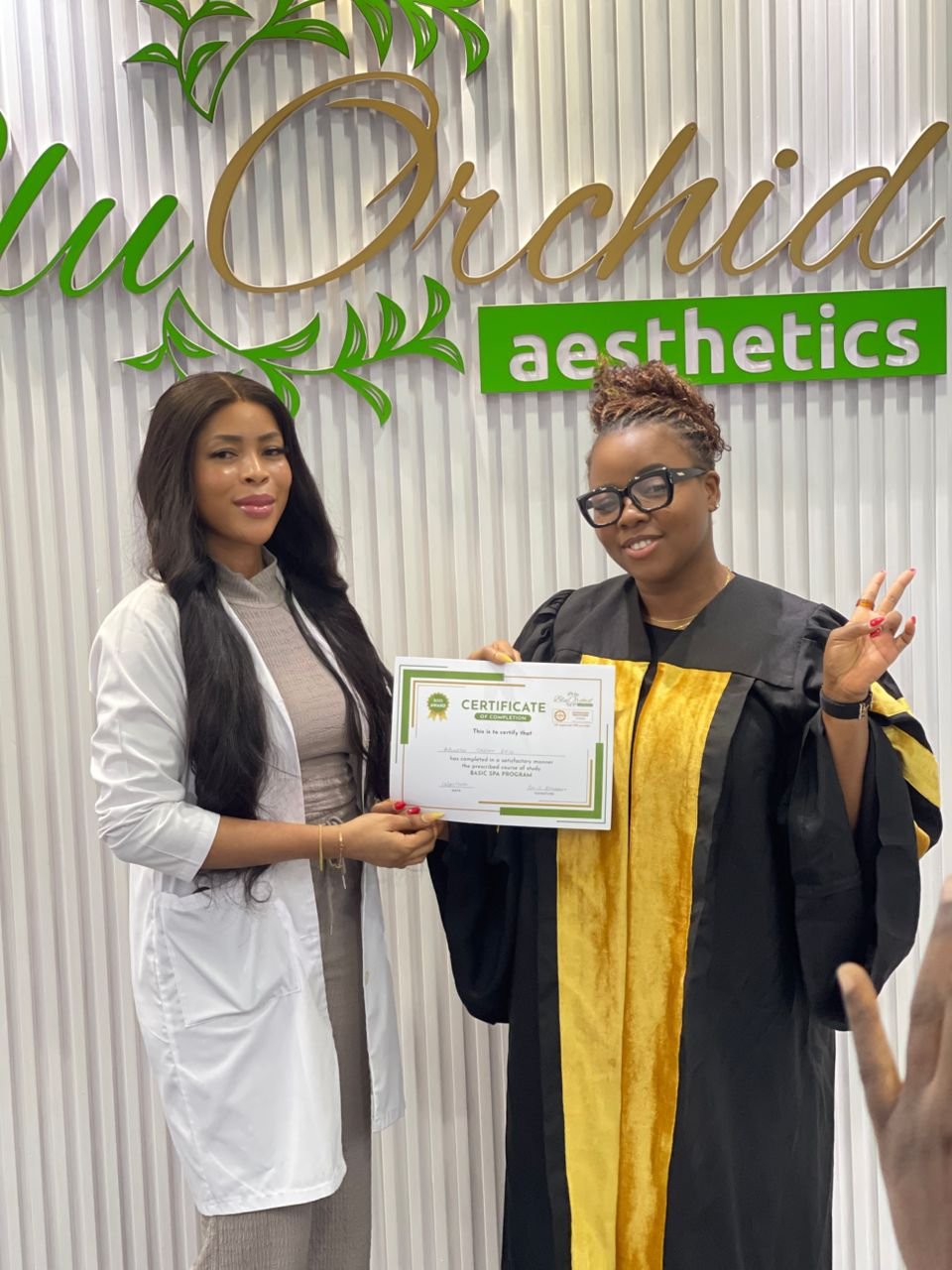
Who Can Become an Aesthetic Practitioner in Nigeria?
There is no single pathway that applies identically to everyone.
Your starting point matters.
A doctor, nurse or another healthcare professional may have a different educational, professional and regulatory pathway from someone entering aesthetics from a non-clinical background.
Before enrolling in any programme, you should understand:
- Your existing professional qualification
- Your current professional registration
- The treatments you want to provide
- Whether those treatments fall within your professional scope
- The training and supervision required
- The regulatory requirements that apply to your profession and practice
This is particularly important for injectable and other medically oriented treatments.
Training does not automatically give someone permission to perform every aesthetic procedure.
Your professional scope, applicable regulation and competence still matter.
For specific regulatory requirements, practitioners should verify the current position with the relevant professional and regulatory bodies rather than relying solely on a training provider’s marketing materials.
The Aesthetic Practitioner Pathway
For most people, becoming a competent practitioner involves several stages.
Think of it as:
Professional foundation → Aesthetic education → Hands-on training → Supervised practice → Continued development → Responsible practice
Let’s look at each stage.
1. Start With Your Professional Foundation
Before thinking about aesthetic techniques, understand your existing professional position.
If you are already a healthcare professional, your existing education may give you a foundation in areas such as:
- Anatomy
- Physiology
- Patient assessment
- Clinical communication
- Infection prevention
- Medical history
- Professional ethics
If you are entering the aesthetics industry from another background, your pathway may be different.
This is one reason you should be cautious about programmes that advertise aesthetics as though everyone can follow exactly the same route.
Your first question should be:
What am I already qualified and permitted to do?
Then:
What additional education and training do I need for the aesthetic services I want to provide?
2. Learn the Fundamentals of Aesthetic Medicine
Aesthetic training should go far beyond learning where to place a needle or how to operate a device.
You need to understand the principles behind the treatment.
Depending on your chosen pathway, this can include:
Facial anatomy
Understanding facial structures is fundamental to safe and thoughtful aesthetic practice.
You should understand the relevant anatomy before attempting to alter the appearance of a patient’s face.
Skin science
You need to understand the skin, common concerns and how different treatments affect it.
Patient assessment
Aesthetic treatment starts with assessing the person in front of you.
Not every patient is an appropriate candidate for every treatment.
Treatment planning
A good practitioner should be able to determine what is appropriate, what is unnecessary and when treatment should not proceed.
Complications and safety
You need to understand what can go wrong, how to reduce risk and what to do when a complication occurs.
Communication and consent
Aesthetic medicine is elective.
Patients should understand what is being proposed, what it is intended to achieve, the relevant considerations and the alternatives before proceeding.
Academy at BluOrchid Aesthetics, Lagos
3. Choose Your Aesthetic Specialisation
“Aesthetics” is a broad field.
You do not necessarily need to learn everything at once.
Your interests may eventually lead you towards areas such as:
- Facial injectables
- Skin treatments
- Body sculpting
- Medical aesthetics
- Hair restoration
- Wellness and aesthetic medicine
- Advanced facial enhancement
Your choice should influence the type of education you pursue.
For example, someone interested primarily in injectable facial aesthetics needs a very different depth of anatomical and practical training from someone interested in non-invasive skin treatments.
Start with the career you want.
Then work backwards to the skills required.
4. Choose Hands-On Training Carefully
This is one of the most important decisions you will make.
There is a significant difference between learning about aesthetics and learning to perform aesthetic treatments.
Online videos can explain concepts.
A textbook can explain anatomy.
A certificate can show that you attended a course.
None of these automatically demonstrates practical competence.
For procedures that require hands-on skill, practical training matters.
Look for a programme that gives you access to:
- Experienced trainers
- Relevant anatomy education
- Practical demonstrations
- Hands-on training where appropriate
- Patient assessment principles
- Treatment planning
- Complication awareness
- Supervision and feedback
- Clear learning objectives
- An appropriate clinical environment
The question is not simply:
“Will I receive a certificate?”
Ask:
“What will I actually be able to do better after completing this training?”
5. Learn to Assess the Patient, Not Just Perform the Procedure
One of the biggest differences between a beginner and a mature aesthetic practitioner is the ability to assess.
A patient may walk into a clinic asking for a specific treatment.
That does not necessarily mean that treatment is the best option.
A skilled practitioner considers:
- The patient’s concern
- Their expectations
- Facial or body anatomy
- Skin condition
- Medical history
- Previous aesthetic treatments
- Treatment goals
- Possible alternatives
- Whether treatment is appropriate at all
Sometimes the most professional decision is to recommend a different treatment.
Sometimes it is to recommend no treatment.
That judgement cannot be learned properly from a treatment menu.
6. Develop Your Hands-On Technique
Once the theory is established, practical skill becomes critical.
This is where supervised hands-on training becomes particularly valuable.
You need the opportunity to understand not only what to do, but why, where, when and when not to proceed.
Practical education should help you develop:
- Technique
- Precision
- Patient positioning
- Instrument handling
- Treatment planning
- Clinical communication
- Observation
- Decision-making
- Confidence without overconfidence
The objective is not simply to become faster.
It is to become more considered and more competent.
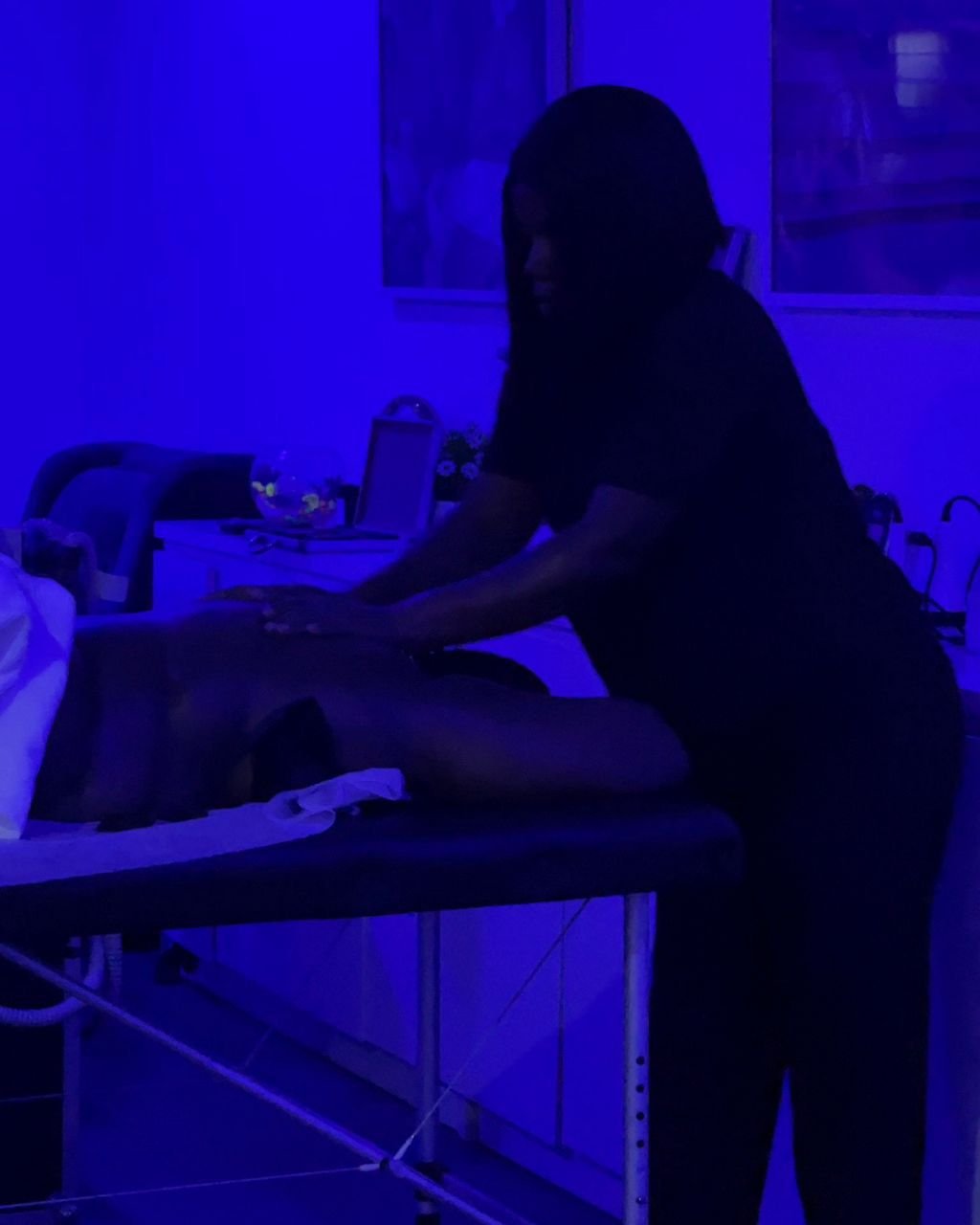
7. Understand Complications Before You Treat Patients Independently
Aesthetic practitioners need to know more than the ideal treatment pathway.
They need to understand what happens when things do not go according to plan.
Depending on the treatment area, this may include understanding:
- Expected temporary reactions
- Unwanted treatment effects
- Signs that require further assessment
- When treatment should be stopped
- When a patient needs referral
- Appropriate emergency procedures
- How to communicate with a concerned patient
This is one reason a quality aesthetics education should include safety and complication management rather than treating these subjects as an afterthought.
8. Understand Professional and Regulatory Requirements
This is an area where aspiring practitioners need to be especially careful.
The legal and professional requirements around aesthetic practice can depend on:
- Your underlying profession
- Your professional registration
- The treatment being offered
- The setting in which you practise
- The equipment or medicines involved
- Applicable professional and regulatory rules
Do not assume that completing an aesthetics certificate automatically determines what you are legally or professionally permitted to perform.
Before practising, verify the requirements applicable to your profession and the treatments you intend to offer.
For detailed regulatory questions, refer to the current requirements of the relevant Nigerian professional and regulatory authorities.
9. Build Clinical Experience
Completing a course is the beginning of your development, not necessarily the end.
Aesthetic judgement improves with experience.
As you gain experience, you begin to recognise:
- Different patient presentations
- Different facial structures
- Different skin concerns
- Unrealistic expectations
- Appropriate treatment candidates
- Situations requiring referral
- When less treatment is better
This is why ongoing mentorship can be valuable, particularly when you are early in your career.
A practitioner who is technically confident but clinically inexperienced can still make poor decisions.
10. Keep Learning
Aesthetics changes quickly.
New products, technologies, techniques and approaches continue to enter the market.
A good practitioner therefore needs a habit of continuing education.
This may include:
- Advanced courses
- Workshops
- Conferences
- Clinical education
- Peer learning
- Case review
- Manufacturer education where appropriate
- Ongoing study of anatomy and treatment safety
The goal is not to collect certificates.
It is to keep improving your clinical judgement.
Academy at BluOrchid Aesthetics, Lagos
What Should You Look for in an Aesthetic Training Course?
Before paying for an aesthetics course, ask the provider some very specific questions.
1. Who is teaching?
Look at the trainer’s professional background and clinical experience.
2. What exactly is included?
Ask for the curriculum rather than relying on a course title.
3. Is the training theoretical, practical or both?
For hands-on procedures, this distinction matters.
4. How much supervised practical experience is included?
Do not assume “hands-on” means extensive supervised practice.
Ask what it actually involves.
5. What happens after the course?
Is there mentorship, further education or a pathway for developing your skills?
6. What does the certificate actually represent?
A certificate confirms completion of a course.
It should not automatically be interpreted as a licence to practise outside your professional scope.
7. Does the training cover complications and patient safety?
It should.
8. Is the course designed for your professional background?
A course suitable for one practitioner may not be appropriate for another.
9. Can you speak to previous graduates?
Where possible, look for genuine graduate experiences and evidence of what students actually learned.
10. Does the provider explain the limitations of the qualification?
A credible training provider should be clear about what the course does and does not qualify you to do.
How Long Does It Take to Become an Aesthetic Practitioner?
There is no single answer.
The timeline depends on where you are starting and the level of aesthetic practice you want to reach.
Someone who is already a qualified healthcare professional may have a different pathway from someone starting without a clinical background.
Similarly, learning foundational aesthetics is different from developing advanced competence in a particular treatment area.
Rather than asking:
“How quickly can I become an aesthetic practitioner?”
Ask:
“How much training and supervised experience do I need to practise safely and competently?”
That is the more useful question.
How Much Does Aesthetic Training Cost in Nigeria?
The cost varies considerably depending on:
- The type of programme
- The level of training
- The treatments covered
- The amount of practical training
- The trainer
- The learning environment
- Whether mentorship is included
- Whether products and equipment are provided
At BluOrchid Academy, current training pathways include:
Beginners Aesthetics Course
Designed as an entry pathway for students beginning their aesthetics education.
Aesthetic Injector Program
₦2,500,000
Designed for more advanced injectable aesthetics training.
Your choice should depend on your background, experience and intended career path rather than simply choosing the cheapest course.
Can You Learn Aesthetics Online?
Online education can be useful for theory.
It can help you study concepts, terminology, anatomy and foundational knowledge.
But theoretical learning is not the same as hands-on clinical training.
If the skill you want to develop involves assessing patients or physically performing a procedure, practical training and supervised experience become important considerations.
A good approach is often:
Learn the theory → practise under appropriate supervision → develop competence → continue learning.
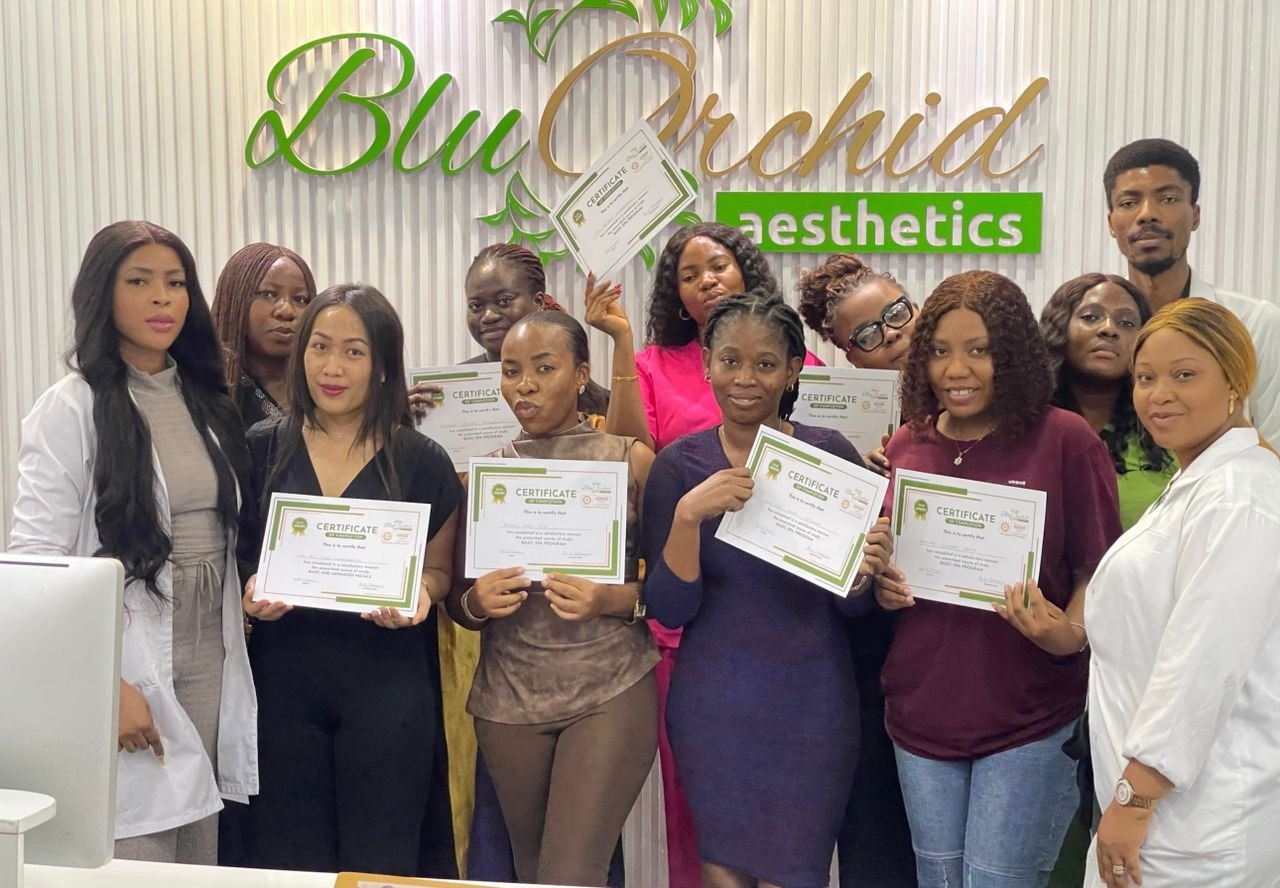
Can You Start an Aesthetics Career Without Being a Doctor?
This question needs a more careful answer than a simple yes or no.
The answer depends on:
- Your professional background
- Your training
- Your registration
- The specific treatment
- Your permitted scope of practice
- The applicable regulatory requirements
Aesthetic practice is not one single profession.
Different treatments require different levels of clinical knowledge and responsibility.
If you are not already a healthcare professional, do not assume that completing a short aesthetics course gives you the same professional scope as a doctor or another regulated healthcare professional.
Understand the boundaries before you invest in training.
Is Aesthetic Medicine a Good Career in Nigeria?
For the right person, it can be a rewarding career.
The field combines clinical knowledge, technical skill, aesthetics, communication and business.
But it is not simply a beauty career.
You are working with real people who have real expectations, concerns and vulnerabilities.
A strong practitioner needs to be comfortable with:
- Clinical responsibility
- Continuous learning
- Patient communication
- Ethical decision-making
- Attention to detail
- Managing expectations
- Developing technical skill
- Building trust
If what attracts you is simply the perceived profitability of aesthetic treatments, you may be looking at the field from the wrong direction.
If what interests you is the combination of medicine, aesthetics, precision and patient transformation, it may be a very different story.
A Practical Roadmap to Becoming an Aesthetic Practitioner in Nigeria
If you are starting today, your journey can look something like this:
Step 1
Understand your current professional qualification and scope.
Step 2
Decide which area of aesthetics interests you.
Step 3
Research reputable training providers.
Step 4
Compare their curriculum, trainers, practical training and support.
Step 5
Complete appropriate foundational education.
Step 6
Develop hands-on skills under appropriate supervision.
Step 7
Understand applicable professional and regulatory requirements.
Step 8
Build experience gradually.
Step 9
Continue your education.
Step 10
Develop your professional reputation around safety, results and patient trust.
The certificate is one part of the journey.
Competence is the destination.
Why Your Choice of Training Provider Matters
Aesthetic education is not an area where you should choose a course solely because it is inexpensive or because it promises to teach the greatest number of procedures in the shortest amount of time.
Look for depth.
Look for clinical reasoning.
Look for practical education.
Look for trainers who are willing to explain not only how a treatment is performed, but also when it should not be performed.
And look for an environment where questions are encouraged.
Because ultimately, the quality of your training affects the quality of care you can provide.
Training at BluOrchid Academy
BluOrchid Academy provides aesthetics training for people looking to develop their knowledge and practical skills within the field.
The Academy’s training pathways include:
Beginners Aesthetics Course, ₦800,000
and
Aesthetic Injector Program, ₦2,500,000
If you are unsure which pathway is appropriate for your background and goals, the best place to start is with the Academy’s course information and an understanding of your intended career direction.
Frequently asked questions
What qualifications do I need to become an aesthetic practitioner in Nigeria?
There is no single qualification that applies to every aesthetic practitioner. Your pathway depends on your professional background, registration, intended treatments and applicable scope of practice.
Can a nurse become an aesthetic practitioner in Nigeria?
Potentially, depending on the nurse’s professional status, training, scope and the treatments they intend to provide. Eligibility should be confirmed against current professional and regulatory requirements.
Can a doctor specialise in aesthetics?
Yes. Doctors can pursue additional education and training in aesthetic medicine and develop expertise in specific areas of aesthetic practice.
Do I need an aesthetics certificate to practise?
Training and certification are important, but a course certificate should not be confused with a professional licence or permission to perform every aesthetic procedure. Your underlying professional requirements and scope still apply.
How much does aesthetics training cost in Nigeria?
Costs vary by programme and provider. At BluOrchid Academy, the current Beginners Aesthetics Course is ₦800,000 and the Aesthetic Injector Program is ₦2,500,000.
How long does an aesthetics course take?
Course duration varies by programme. More importantly, consider the depth of the curriculum, practical training and opportunities for supervised learning rather than choosing a programme based solely on speed.
Can I learn Botox and fillers online?
Online education can provide theoretical knowledge, but it cannot replace appropriate hands-on training and supervised practical experience for procedures that require clinical skill.
Is aesthetic medicine a good career?
It can be a rewarding career for people who enjoy the combination of clinical knowledge, aesthetics, technical precision and patient care. It also carries professional responsibility and requires ongoing education.
What should I look for in an aesthetics academy?
Look at the trainers, curriculum, practical component, supervision, safety education, mentorship, professional suitability and what the qualification actually represents.
Can I open an aesthetics clinic after completing a course?
Completing an aesthetics course does not automatically mean you can open or operate a clinic without satisfying the other professional, regulatory, business and clinical requirements that apply to your situation.
What is the difference between an aesthetics course and becoming an aesthetic practitioner?
An aesthetics course is an educational step. Becoming a competent practitioner involves education, practical skill, appropriate professional standing, experience, patient assessment and ongoing development.
Ready to Start Your Aesthetics Career?
If you are serious about entering aesthetic medicine, start with the right question:
Not “How quickly can I get certified?”
But:
“How can I become genuinely competent?”
Choose training that gives you a strong foundation, practical understanding and a respect for the responsibility that comes with treating patients.
Your reputation in aesthetics will ultimately be built on more than the certificate on your wall.
It will be built on what you know, how you practise and how you care for your patients.
The Beginners Aesthetics Course is where this training actually happens.
Hands-on training at the BluOrchid clinic in Lekki Phase 1, Lagos, taught by the doctors who treat patients there every week. Course fee ₦800,000.
See the Beginners Aesthetics Course Small cohorts. Live models. Certificate on completion.