Who Should Inject Botox in Nigeria?
Doctor, nurse or aesthetician: learn who should inject Botox and fillers in Nigeria and what credentials, training and safety standards to check.

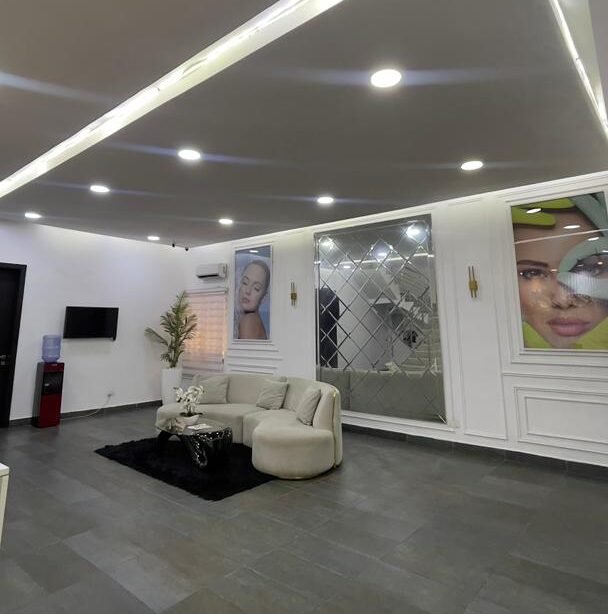
If you are considering Botox or dermal fillers in Nigeria, one of the most important questions is not simply where the treatment is being offered or how much it costs.
It is who is actually putting the needle in your face.
You may come across clinics and aesthetic businesses where injectables are performed by doctors, nurses or people described as aesthetic practitioners or aestheticians. You may also see certificates displayed on social media that suggest someone has completed Botox or filler training.
But these titles do not all mean the same thing.
A certificate in an aesthetic procedure is not the same thing as a professional licence. And being a registered healthcare professional does not, by itself, tell you how experienced someone is with facial injectables.
For a patient, the better question is:
Is this person appropriately qualified, licensed, specifically trained and competent to perform this particular injectable treatment, in a properly regulated clinical setting?
That is the standard worth applying.
Is there one profession that is automatically allowed to inject Botox in Nigeria?
There is an important distinction here.
Nigeria has professional regulatory bodies for doctors and nurses. The Medical and Dental Council of Nigeria (MDCN) regulates medical and dental practice, including the registration and professional standards applicable to medical practitioners.
The Nursing and Midwifery Council of Nigeria (NMCN) regulates nursing and midwifery education and practice and maintains the professional registers and practising licences for nurses.
That means a person calling themselves a doctor or nurse should be able to demonstrate the relevant professional registration and current licence.
But injectable aesthetics require another layer of consideration: specific competence in the procedure being performed.
A general medical or nursing qualification is not the same thing as advanced training in facial anatomy, injectable technique, patient selection, complication recognition and complication management.
This is why simply asking, “Are you a doctor?” is not enough.
And equally, simply asking, “Do you have a Botox certificate?” is not enough.
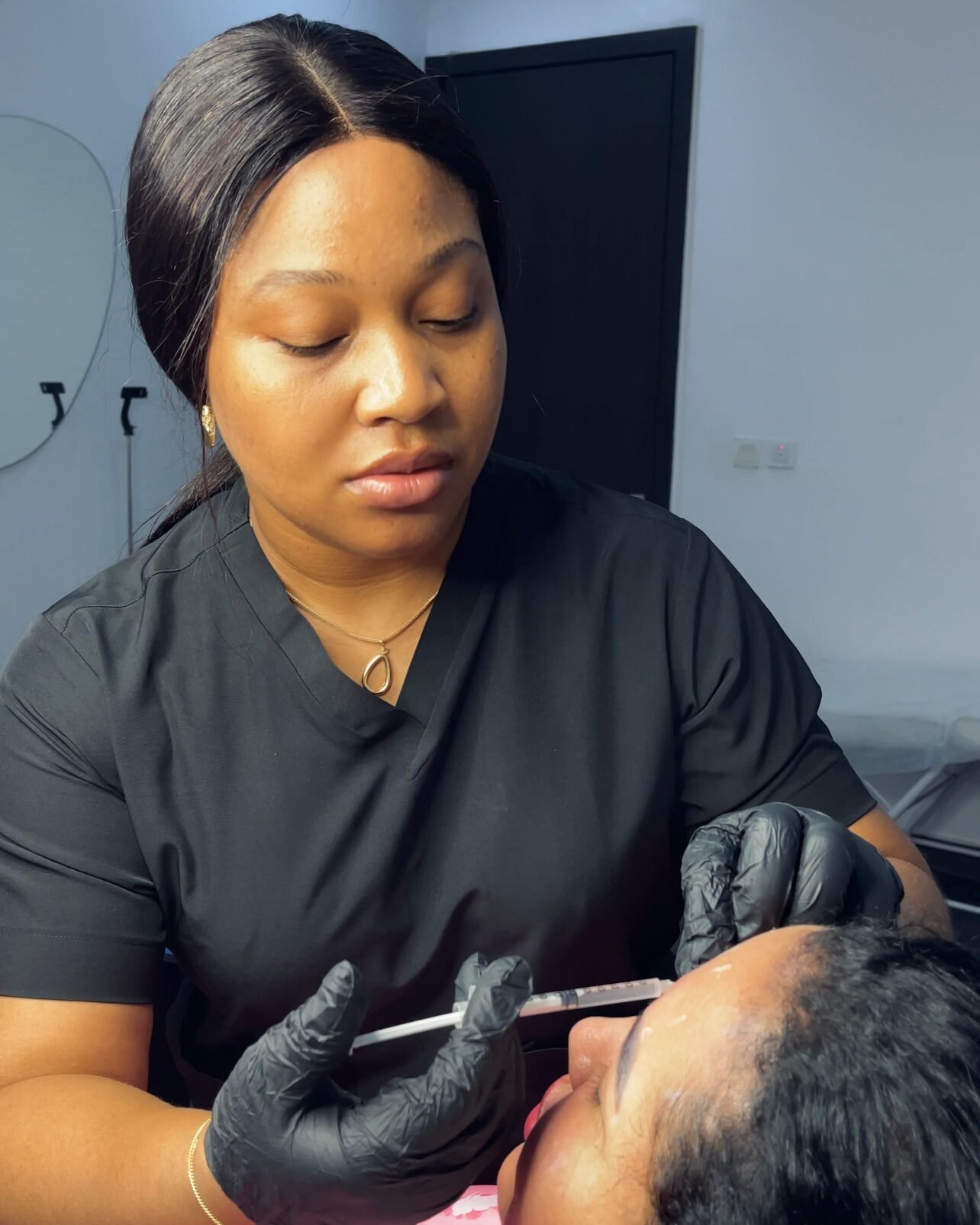
Doctor vs nurse vs aesthetician: what should you actually look for?
1. A medical doctor
For medical injectables such as Botox and dermal fillers, a doctor with current professional registration, appropriate aesthetic training and substantial experience with the procedure offers an important advantage: medical training is built around assessing patients, diagnosing conditions, understanding anatomy and physiology, considering contraindications and managing medical complications.
The MDCN states that it regulates medical practice in Nigeria and maintains the register of persons entitled to practise medicine. It also makes clear that registration and appropriate licensure are necessary for legal medical practice.
That does not mean every doctor is automatically a good injector.
A doctor who has never developed competence in aesthetic medicine is not necessarily preferable to a properly trained practitioner with substantial experience in injectables.
So if you are choosing a doctor, ask about aesthetic-specific training and experience, not just the MBBS qualification.
2. A registered nurse
Nurses are highly trained healthcare professionals, and nursing practice in Nigeria is regulated by the NMCN.
The NMCN’s professional code states that nurses are accountable for the care they provide and must practise safely, avoid negligence and malpractice, and work according to appropriate professional standards.
A registered nurse working in an aesthetic setting may therefore have an important clinical role.
But there is a distinction between being a registered nurse and being appropriately trained and authorised to independently perform a particular aesthetic injectable procedure.
A nursing licence should not be treated as an automatic Botox or dermal-filler qualification.
If a nurse is going to perform an injectable treatment, you should be comfortable asking:
- Is the nurse currently registered and licensed?
- What aesthetic-specific training have they completed?
- What injectable procedures are they trained and competent to perform?
- How much experience do they have with the specific treatment?
- Who provides clinical oversight?
- What happens if a complication occurs?
- Is a qualified medical practitioner available when needed?
The fact that someone is a nurse is reassuring in one respect, but it should not end your due diligence.
What about an aesthetician?
This is where patients need to be particularly careful with terminology.
“Aesthetician” can describe someone working in the aesthetics and beauty industry, but the title itself does not tell you the person’s underlying professional registration, medical qualification or scope of practice.
A short course in Botox or dermal fillers does not automatically make someone equivalent to a registered medical practitioner.
This is particularly important because injectables are not simply cosmetic products being applied to the surface of the skin. They involve needles, anatomy, medicines or medical devices, patient assessment and the possibility of adverse events.
In Lagos, HEFAMAA’s published framework distinguishes facilities providing injectable medications from those that do not. Its own meeting record notes that facilities providing injectable medications need to have a nurse or doctor present, while also discussing the need to verify the credentials and competence of practitioners involved.
The practical lesson for patients is simple:
Do not choose an injector based on the word “aesthetician” alone.
Find out what their underlying professional qualification is, what regulator they are registered with, what training they have completed and what clinical structure supports their work.
Why the injector’s training matters more than the certificate on the wall
Aesthetic injection training should go considerably beyond learning where to place a needle.
Good training should develop an understanding of:
- Facial anatomy
- Facial proportions and assessment
- Patient selection
- Contraindications and precautions
- Product handling
- Injection technique
- Treatment planning
- Sterile and infection-control principles
- Recognising adverse events
- Managing complications
- Knowing when to stop treatment or refer a patient
This distinction matters because an injector can be technically capable of placing a needle without necessarily being capable of making the clinical decisions that should come before or after the injection.
The best aesthetic practitioners understand that the injection is only one part of the treatment.
The assessment beforehand matters.
The treatment plan matters.
The product matters.
The environment matters.
And the ability to recognise something going wrong matters.
The clinic matters too
You should not evaluate an injector separately from the facility in which they work.
In Lagos State, HEFAMAA states that health facilities must be registered and that it monitors and accredits health facilities to ensure compliance with required standards.
Its requirements for private clinics include appropriate treatment areas, handwashing facilities, medical waste management and sharps safety, as well as defined medical staffing requirements.
So before an injectable treatment, look around.
Is this a proper clinical environment?
Are patient records being maintained?
Are appropriate infection-control measures visible?
Are sharps disposed of correctly?
Is there an appropriate process for dealing with complications?
Does the facility appear to operate within its registered scope?
These questions can tell you considerably more than an Instagram page filled with before-and-after photographs.
What should you ask before allowing anyone to inject you?
You do not need to be confrontational.
A reputable practitioner should understand why a patient wants to verify their credentials.
Ask these questions before treatment:
1. What is your professional qualification?
Do not settle for “I’m an aesthetic practitioner.”
Ask what the person’s underlying professional qualification is.
2. Which professional body are you registered with?
For doctors, this means asking about MDCN registration and current practising status.
For nurses, it means asking about NMCN registration and current practising licence.
The relevant professional bodies exist specifically to regulate professional practice and maintain registers of qualified practitioners.
3. What specific training have you completed in Botox or dermal fillers?
Ask for the name of the training programme and what it covered.
A certificate should be evidence of training, not a substitute for professional competence.
4. How often do you perform this treatment?
Experience matters.
Someone may have completed a course several years ago but perform very few injectable treatments.
Another practitioner may have built substantial experience in the procedure.
You are entitled to ask.
5. What happens if there is a complication?
This may be the most revealing question of all.
A responsible practitioner should be able to explain what happens if a patient develops an unexpected problem and who is responsible for managing it.
Marionette lines at BluOrchid Aesthetics, Lagos
What about someone who says, “I’ve been injecting for years”?
Experience is valuable, but experience should not exist in isolation from professional accountability.
A person can perform the same procedure repeatedly without necessarily having the appropriate clinical framework behind it.
You should be looking for the combination of:
Professional registration + relevant training + practical experience + appropriate facility + complication preparedness.
None of those elements should be treated as interchangeable.
Be especially careful with social-media credentials
Aesthetic medicine is highly visual.
A practitioner may have thousands of followers, beautiful treatment rooms and impressive-looking results online.
None of those things establishes professional registration or clinical competence.
Likewise, a photograph of a certificate does not tell you:
- Whether the certificate is genuine
- Who issued it
- What the course actually covered
- Whether practical training was included
- Whether the practitioner is professionally licensed
- Whether the practitioner maintains current competence
- Whether there is proper medical oversight
This is why patients should look beyond the Instagram bio.
And do not forget the product
Even a properly trained injector can only work safely within a proper clinical and product-supply system.
NAFDAC has issued public alerts concerning falsified injectable medicines and advises healthcare professionals and consumers to obtain medicines and medical devices from authorised or licensed suppliers and to check product authenticity and physical condition.
NAFDAC has also previously alerted the public about falsified DYSPORT, a botulinum toxin product, after discrepancies were identified in packaging and product information.
So it is reasonable to ask a clinic about the product being used, its source and how it is stored.
A good injector is important.
A legitimate product is important.
A properly regulated clinical environment is important.
You need all three.
So, who should inject you?
If you are asking for the safest way to approach the decision, do not reduce it to doctor versus nurse versus aesthetician.
Instead, use this hierarchy:
Look first for professional legitimacy
Is the person appropriately registered and licensed for their profession?
Then look for aesthetic-specific competence
Have they been properly trained in the treatment you are considering?
Then look for experience
Do they regularly perform the procedure?
Then look at the clinical environment
Is the facility properly registered and equipped for the services being provided?
Finally, ask about complications
Does the practitioner have a clear process for recognising and managing complications?
When these factors are considered together, a qualified, appropriately trained medical injector working within a properly regulated clinical environment is a very different proposition from someone whose only credential is a short aesthetics certificate.
The bottom line
The right question is not:
“Should I choose a doctor, nurse or aesthetician?”
It is:
“Who is appropriately qualified, licensed, specifically trained and clinically competent to perform this treatment on me?”
For Botox and dermal fillers, your injector should be able to demonstrate professional credentials, relevant aesthetic training, meaningful experience and a safe clinical framework around the procedure.
If you are unsure about your suitability for an injectable treatment, the safest starting point is a proper medical consultation rather than choosing an injector based on price, social-media popularity or a certificate alone.
At BluOrchid Aesthetics, treatment begins with assessment rather than a predetermined injection plan. If you would like to understand what may be appropriate for your face, you can Book a Consultation. You can also learn more about Facial Profiling and how treatment planning can be approached around facial proportion and balance.
Frequently asked questions
Can a nurse inject Botox in Nigeria?
A nurse is a regulated healthcare professional in Nigeria when appropriately registered and licensed with the Nursing and Midwifery Council of Nigeria. However, a nursing licence should not automatically be treated as proof of competence for every aesthetic injectable procedure. Patients should verify the nurse’s specific aesthetic training, competence, experience and clinical setting.
Can an aesthetician inject Botox in Nigeria?
The title “aesthetician” alone does not establish a person’s professional registration, medical qualification or competence to perform injectable medical treatments. Patients should establish the individual’s underlying professional credentials, aesthetic training, scope of practice and the regulatory status of the facility.
Should I choose a doctor for dermal fillers?
A doctor with current professional registration and specific training and experience in aesthetic injectables can be an appropriate choice. However, the title “doctor” alone does not guarantee aesthetic competence. Ask about specific injectable training and experience.
How can I check whether a doctor is registered in Nigeria?
The Medical and Dental Council of Nigeria maintains professional registration and provides services for confirming doctor status.
How can I check whether a nurse is properly licensed?
The Nursing and Midwifery Council of Nigeria maintains registers and professional practising licences for nurses and midwives.
What should I ask before getting Botox?
Ask who will perform the treatment, their professional qualification and registration, their aesthetic-specific training, their experience with the treatment, what product will be used, where the product was obtained and what happens if a complication occurs.
Is a Botox certificate enough?
No. A course certificate can demonstrate that someone has completed training, but it does not by itself establish professional registration, scope of practice, clinical competence or experience.
A consultation at BluOrchid begins with exactly this assessment.
One hour with our doctors. An honest assessment. A plan built around you. ₦50,000, credited in full toward your first treatment.
Book your consultation Doctor-led assessment at Lekki Phase 1, Lagos.