Fake Botox and Counterfeit Fillers in Nigeria
Learn how to protect yourself from fake Botox and counterfeit fillers in Nigeria, what warning signs to look for and what to ask your clinic.

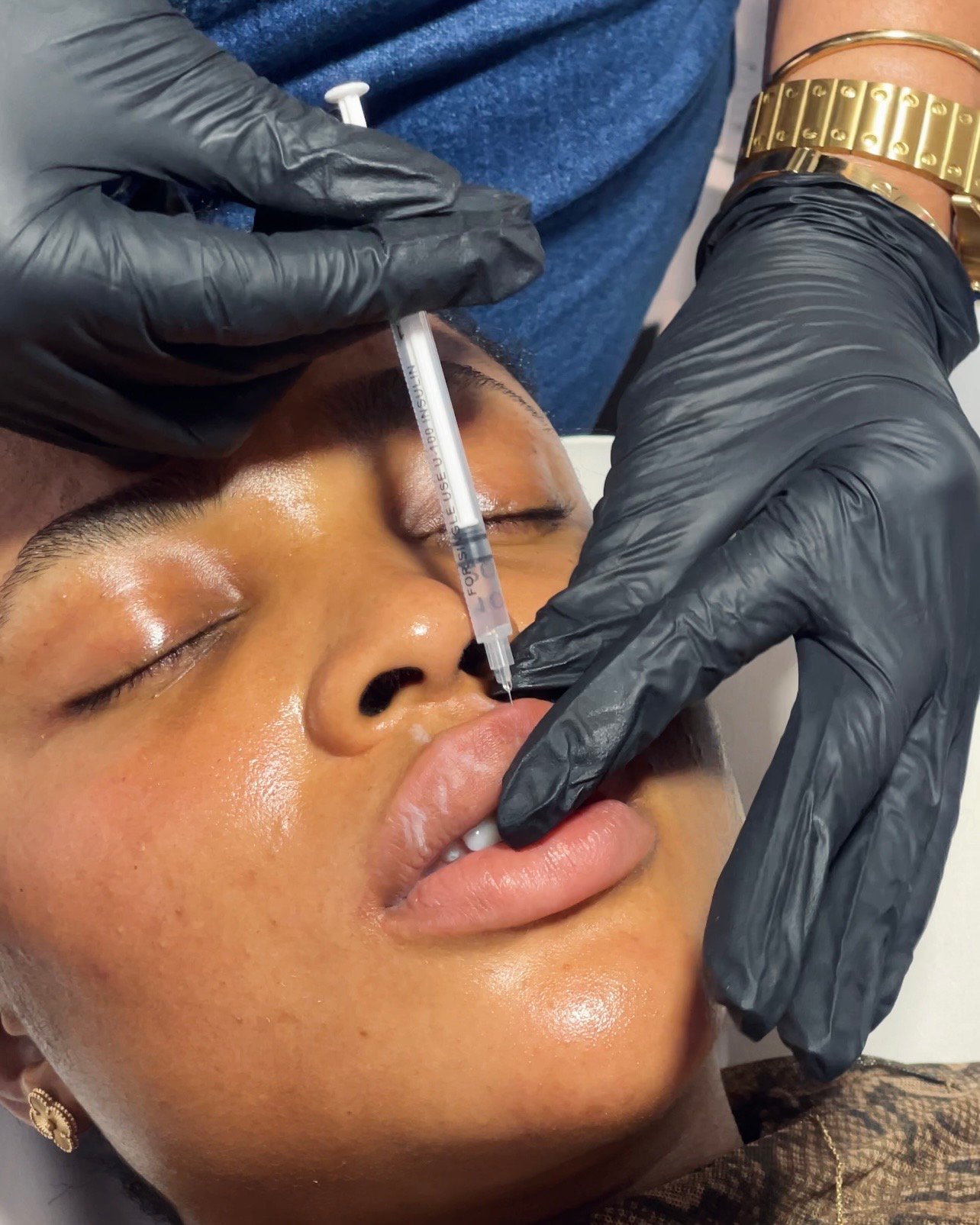
Aesthetic medicine has become increasingly accessible in Nigeria. Botox, dermal fillers and other injectable treatments are now part of the conversation for people who want subtle changes without surgery.
But there is another conversation patients need to have before choosing an injectable treatment:
What exactly is being injected into your face?
Counterfeit and falsified medical products are not simply a problem of misleading packaging. A falsified product can misrepresent its identity, source, composition or history. NAFDAC’s current post-marketing surveillance guidance recognises counterfeit and falsified medical products as a genuine regulatory and public-health concern.
NAFDAC has also issued alerts involving falsified injectable products, including a 2022 alert concerning falsified DYSPORT. The agency noted that the safety, sterility and quality of the falsified product were unknown and potentially posed a high risk to patients.
For anyone considering Botox or dermal fillers in Nigeria, this makes one principle especially important:
Do not choose an injectable treatment based on price alone.
What is fake or counterfeit Botox?
When people talk about “fake Botox”, they may be referring to several different problems.
A product may be deliberately falsified to look like a legitimate branded product. It may have misleading packaging, a false manufacturer or batch information, or a composition that does not correspond to what the packaging claims.
A product can also be substandard without necessarily being deliberately counterfeit.
For example, a legitimate product can become unsuitable if it has been improperly stored, handled or transported.
These distinctions matter, but the patient does not need to become a pharmaceutical detective.
Your responsibility is to choose a clinic that takes product sourcing, storage, clinical governance and documentation seriously.

What about counterfeit dermal fillers?
Dermal fillers require the same level of caution.
Unlike Botox, which is a prescription medicine, dermal fillers are injectable products that are placed into tissue for purposes such as restoring or enhancing volume and contour.
The word “filler” alone tells you very little.
Different products have different compositions, indications, characteristics and manufacturers.
A clinic should therefore be able to tell you what product is being used rather than simply saying that you are receiving “filler”.
The packaging should also be appropriate, intact and traceable.
Why counterfeit injectables are particularly concerning
With an injectable treatment, the product is being introduced directly into the body.
That makes questions of identity, quality, sterility, storage and handling particularly important.
With a falsified product, you may not know with confidence:
- What the product actually contains
- Whether the stated strength is accurate
- Where it was manufactured
- Whether the product has been stored appropriately
- Whether the packaging accurately represents the contents
- Whether the product has been contaminated or compromised
This is why a suspiciously cheap injectable should never be dismissed as simply a “good deal”.
The price warning sign
Price is not proof of authenticity.
A more expensive treatment is not automatically safer, and a cheaper treatment is not automatically counterfeit.
However, an unusually low price should make you ask more questions.
If a clinic is offering Botox or filler at a price that is dramatically below comparable providers, ask what explains the difference.
Is the quote:
- Per unit?
- Per treatment area?
- For a smaller amount of product?
- For a different product?
- Excluding consultation?
- Part of a temporary promotion?
- Based on a product whose sourcing is unclear?
The price alone cannot tell you whether a treatment is safe.
The explanation behind the price matters.
Five questions to ask before having Botox or fillers
You do not need to interrogate your injector.
A few straightforward questions can tell you a great deal about how seriously a clinic approaches injectable medicine.
1. What product are you using?
Do not be satisfied with “Botox” or “filler” as the entire answer.
Ask for the product name and manufacturer.
You should know what is being used before it is injected.
2. Can I see the packaging?
A professional clinic should not find it unusual for a patient to want to understand what product is being used.
Look at the packaging before treatment where appropriate.
Check that it is intact and that the product information is consistent.
3. How do you verify your products?
Ask where the clinic obtains its products and how it verifies them.
A legitimate clinical environment should have a clear procurement and inventory process rather than relying on informal sourcing.
4. How is the product stored?
Storage can affect the quality of certain medical products.
Ask how products are stored and handled before treatment.
This is particularly relevant for products with specific storage requirements.
5. Who is performing the injection?
The product is only one part of the safety equation.
You also need to know who is assessing you and performing the treatment.
A responsible injectable service should involve appropriate clinical assessment rather than treating an injection as a simple beauty appointment.
What should you look for on the packaging?
Packaging can provide useful clues, but patients should be careful about assuming that they can authenticate a product simply by looking at a box.
Counterfeit products can be made to resemble genuine products.
Still, obvious irregularities deserve attention.
Look for things such as:
- Spelling or printing errors
- Damaged or suspicious packaging
- Inconsistent labels
- Altered dates
- Missing or questionable product information
- Inconsistent batch or lot details
- Packaging that looks different from the manufacturer’s normal presentation
- Missing documentation where it would ordinarily be expected
NAFDAC has highlighted unusual packaging, altered expiry dates and missing or questionable registration information among warning signs that should prompt vigilance.
If something does not look right, pause the treatment and ask questions.
Can you check a NAFDAC registration number?
Where applicable, patients should ask about the regulatory status of the product rather than assuming that a number printed on a package proves authenticity.
NAFDAC provides regulatory services that allow users to verify certain product registrations and regulatory documents through its online portal.
However, a printed registration number should not be treated as the only test of authenticity.
A sophisticated counterfeit can copy information from a genuine product.
That is why traceable sourcing and professional clinical procurement matter alongside product verification.
Lip filler at BluOrchid Aesthetics, Lagos
Be careful with products bought online
One of the most important precautions is also one of the simplest:
Do not buy injectable products from informal online sellers and then take them to someone to inject.
NAFDAC has advised the public to avoid purchasing medicines through the internet and to obtain medical products through appropriate, reliable channels.
Social media can make injectable products look deceptively easy to purchase.
A photograph of a branded box does not tell you:
- Where the product came from
- Whether it is genuine
- How it was transported
- How it was stored
- Whether it has been tampered with
- Whether the contents match the packaging
For injectable treatments, the supply chain is part of patient safety.
What if a clinic refuses to show you the product?
A patient should feel comfortable asking reasonable questions about an injectable treatment.
If a provider becomes evasive about what is being injected, where it came from or how it is handled, that should give you pause.
You do not have to proceed simply because you have already paid a deposit or arrived for an appointment.
It is completely reasonable to say:
“I’d like to understand what product is being used before we proceed.”
If you are still uncomfortable after the explanation, you can choose not to have the treatment.
What if the price seems too good to be true?
Do not automatically conclude that the product is fake.
Instead, investigate the difference.
A clinic may have a legitimate reason for charging less. Different treatment areas, quantities, products and pricing models can all affect the final cost.
But if a provider cannot clearly explain the price and cannot clearly explain the product, sourcing and clinical process, there are multiple reasons to reconsider.
This is particularly important when the treatment involves an injectable product.
What should a reputable clinic be able to explain?
Before an injectable treatment, you should be able to understand:
What is being injected.
Why it is being recommended.
Who is performing the treatment.
Where the product comes from.
How the product is handled and stored.
What the treatment involves.
What the relevant risks and alternatives are.
You do not need to understand every technical detail.
But you should not be expected to make a medical decision while knowing almost nothing about what is being injected into you.
What if you suspect you have received a counterfeit product?
Do not panic, but do not ignore the situation either.
If you have concerns about the authenticity of a product, contact the clinic and ask for the product details, including the name, batch or lot information and other identifying details available from the packaging or treatment record.
If you experience an unexpected or concerning reaction after an injectable treatment, seek medical attention promptly.
Suspected substandard or falsified medical products can also be reported to NAFDAC. The agency’s current Med Safety system allows members of the public and healthcare professionals to report suspected substandard and falsified medical products and adverse reactions.
NAFDAC currently provides reporting channels including its Med Safety platform and its dedicated contact channels for suspected substandard and falsified products.
The safest approach is prevention
Once a counterfeit injectable has been administered, the patient may have very little information about what was actually used.
It is much better to ask questions before treatment.
Choose a clinic where injectable treatments are treated as medical procedures rather than casual beauty services.
Look for:
- Appropriate clinical assessment
- Qualified practitioners
- Traceable products
- Professional product handling
- Clear treatment records
- Transparent communication
- A clinical environment where questions are welcomed
And remember that “natural-looking” treatment is not simply about how subtle the final result appears.
It begins with making good decisions about who treats you and what goes into your body.
A final word on Botox and fillers in Nigeria
The growth of aesthetic medicine gives patients more choices than ever.
That is a positive development, but more choice also means more responsibility when selecting a provider.
Do not let a heavily discounted price rush your decision.
Do not assume that an attractive social-media presence proves clinical quality.
And do not be afraid to ask what is inside the syringe.
A trustworthy aesthetic clinic should be able to explain its products, clinical process and treatment recommendations clearly.
Your face is not the place to gamble on an unknown product.
If you are considering Botox, dermal fillers or another injectable treatment, start with a proper consultation and make sure you understand the proposed treatment before deciding to proceed.
Book a Consultation with BluOrchid Aesthetics to discuss your concerns and receive an individual clinical assessment.
Frequently asked questions
What if the price seems too good to be true?
Do not automatically conclude that the product is fake. Instead, investigate the difference. A clinic may have a legitimate reason for charging less. Different treatment areas, quantities, products and pricing models can all affect the final cost.
Who is performing the injection?
The product is only one part of the safety equation. You also need to know who is assessing you and performing the treatment. A responsible injectable service should involve appropriate clinical assessment rather than treating an injection as a simple beauty appointment.
What is fake or counterfeit Botox?
When people talk about "fake Botox", they may be referring to several different problems. A product may be deliberately falsified to look like a legitimate branded product. It may have misleading packaging, a false manufacturer or batch information, or a composition that does not correspond to what the packaging claims.
How do you verify your products?
Ask where the clinic obtains its products and how it verifies them. A legitimate clinical environment should have a clear procurement and inventory process rather than relying on informal sourcing.
A consultation at BluOrchid begins with exactly this assessment.
One hour with our doctors. An honest assessment. A plan built around you. ₦50,000, credited in full toward your first treatment.
Book your consultation Doctor-led assessment at Lekki Phase 1, Lagos.