Bleaching Cream Side Effects: What They Do to Skin
Bleaching cream can change skin colour while damaging the skin barrier. Dr Gigi explains the side effects and how to repair affected skin.

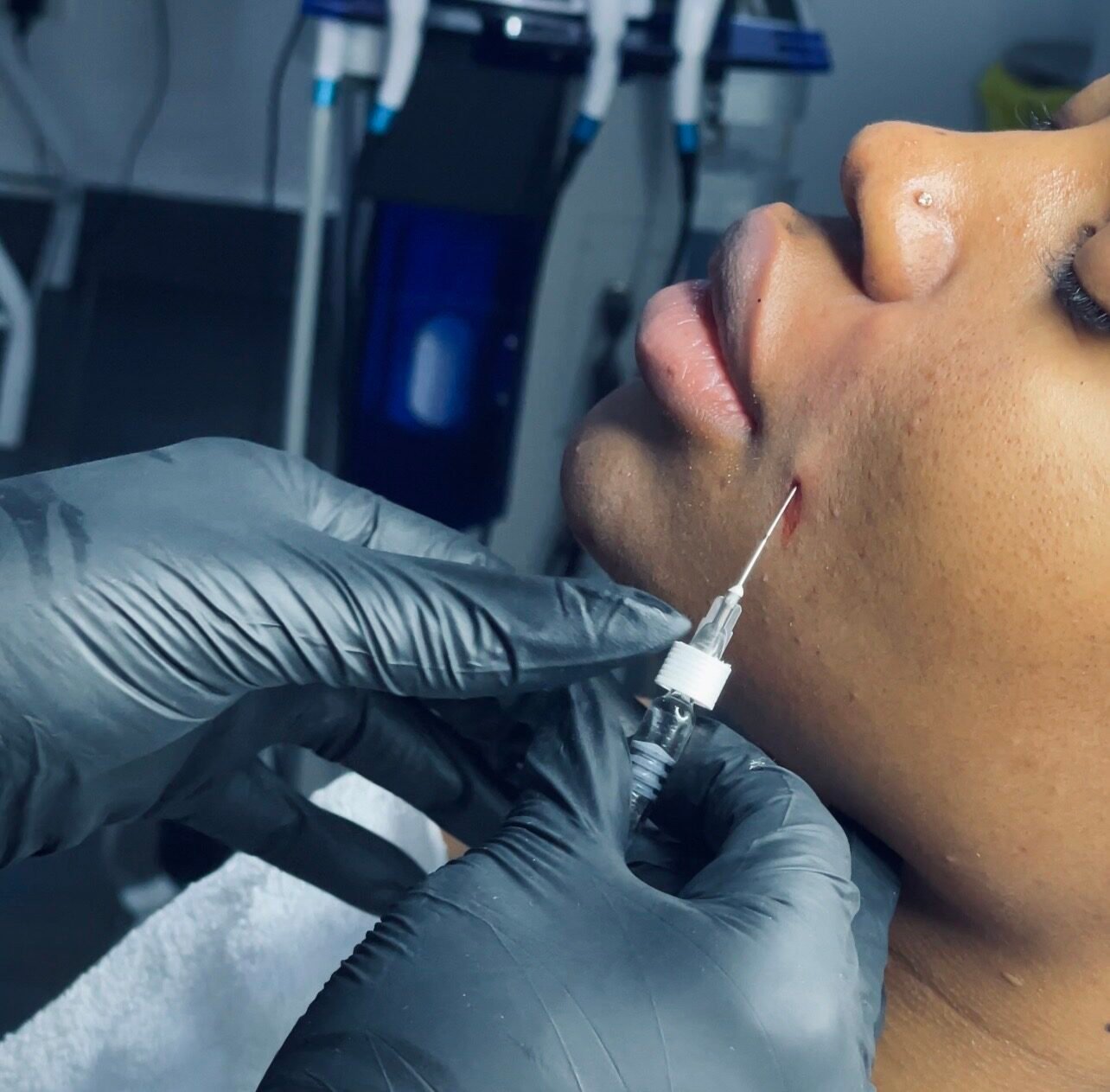
There is a difference between treating pigmentation and trying to make your natural skin tone lighter.
That distinction is important.
In Nigeria, skin-lightening products are widely available, and many are marketed with promises of a brighter complexion, fewer dark spots, a more even skin tone or a “glow”.
But when a product is aggressively altering the colour of your skin, the question should not only be:
“Is my skin getting lighter?”
It should also be:
“What is happening to my skin while it is getting lighter?”
As a doctor, this is one of the concerns I see when patients come to the clinic after using skin-lightening products for months or years.
Sometimes they are concerned about pigmentation.
Sometimes their skin has become unusually sensitive.
Sometimes they have developed patches of uneven colour that are much harder to correct than the original concern.
And sometimes they simply know that something has changed, but they do not know what.
The problem is not wanting clearer, more even-looking skin.
The problem begins when achieving that appearance comes at the expense of the health and stability of the skin.
What is skin bleaching?
“Skin bleaching” is a broad term commonly used for products or routines intended to make the skin lighter.
These products may contain ingredients that interfere with melanin production or alter how pigment appears in the skin.
Some products are deliberately formulated as skin-lightening treatments.
Others may be marketed as ordinary creams for acne, dark spots, “brightening” or complexion correction but contain ingredients that can have significant effects on the skin when used incorrectly, excessively or for prolonged periods.
This is why the word bleaching can be misleading.
Not every product marketed as a brightening cream is the same.
And not every person using a lightening product realises what is actually inside it.

Why do people use bleaching creams?
The reasons are usually more complicated than simply wanting to be lighter.
A patient may start using a lightening cream because of:
- Dark spots left after acne
- Uneven pigmentation
- Melasma
- Dark knuckles, elbows or knees
- A desire for a brighter complexion
- Acne marks
- Social pressure around skin tone
- Advice from friends or family
- Recommendations from a beauty seller
- A previous treatment that did not produce the expected result
For some people, the original goal is completely understandable:
They want their skin to look more even.
The problem is that a product designed or used to lighten the entire complexion is very different from a properly planned approach to treating localised pigmentation.
At BluOrchid, the goal is not to make dark skin “better” by making it lighter.
The goal is to help the skin become healthier, clearer and more even while respecting its natural tone.
What bleaching creams can actually do to your skin
The effects depend on what the product contains, how frequently it is used, how long it is used for and the condition of your skin.
But prolonged or inappropriate use of skin-lightening products can contribute to several problems.
1. Your skin can become more sensitive
Some aggressive lightening routines can make the skin more reactive.
You may notice:
- Burning
- Stinging
- Redness
- Irritation
- Increased sensitivity to skincare products
- Discomfort when applying products that previously felt fine
This can create a frustrating cycle.
The person uses a cream to improve their appearance, develops irritation, and then adds more products to try to correct the irritation.
The skin becomes progressively harder to manage.
2. Your skin barrier can become compromised
Your skin has a protective barrier.
It helps regulate moisture and protects the underlying skin from external irritants.
When that barrier is repeatedly irritated or damaged, the skin may become:
- Dry
- Tight
- Flaky
- Easily irritated
- More reactive
- Less tolerant of active ingredients
This is one reason why a person who has used strong products for a long time may suddenly find that their skincare routine “stopped working”.
The issue may not be that they need stronger products.
Their skin may need less.
Pigmentation at BluOrchid Aesthetics, Lagos
3. You can develop uneven pigmentation
This is one of the most frustrating consequences.
A person may start using a bleaching cream because they want to get rid of dark areas.
Instead, they can end up with a complexion that is uneven in a completely different way.
You may see:
- Lighter patches
- Darker patches
- Areas of different colour
- Patchy pigmentation around the mouth
- Uneven pigmentation on the cheeks
- Darkening after irritation
In darker skin tones, inflammation can itself trigger or worsen pigmentation.
So the very process intended to create an even complexion can sometimes contribute to further unevenness.
4. Your skin can become thinner and more fragile
Certain ingredients, particularly when used improperly or for prolonged periods, can cause significant changes to the skin.
The result may be skin that feels unusually delicate or fragile.
This is particularly concerning when potent ingredients are used without medical supervision or when products are layered together without understanding how they interact.
A cream being sold over the counter does not automatically mean that it is appropriate for long-term use on your face.
5. You may develop visible blood vessels
Long-term misuse of certain potent topical products can make small blood vessels more visible.
You may begin to notice fine red or prominent vessels that were not previously apparent.
Once these changes develop, simply stopping the cream does not necessarily mean the skin immediately returns to how it looked before.
This is one reason early intervention matters.
6. Acne and other skin problems can become harder to manage
Some people begin lightening products because they have acne marks.
But the products they use may not be appropriate for acne-prone skin.
Others combine multiple products in an attempt to achieve faster results.
The result can be irritation, breakouts and inflammation, which can then leave behind more pigmentation.
That creates the cycle many patients find themselves trapped in:
Acne → marks → bleaching cream → irritation → more pigmentation → more products.
Breaking that cycle requires treating the underlying skin problem rather than continually trying to change the colour of the skin.
The ingredients matter
One of the biggest mistakes people make is judging a cream by its packaging.
A product can look sophisticated, expensive or “natural” and still contain ingredients that are inappropriate for unsupervised long-term use.
Conversely, the word “brightening” does not automatically mean that a product is harmful.
The important questions are:
What is in the product?
What concentration is being used?
How often is it being applied?
For how long?
What is it actually treating?
Is there a medical reason for using it?
This is why ingredient awareness matters more than marketing language.

Why darker skin needs a different conversation about pigmentation
Dark skin is not a problem to be corrected.
But darker skin can be particularly prone to visible pigmentation after inflammation or injury.
A pimple can disappear while leaving a dark mark.
An irritated skincare product can leave pigmentation behind.
A peel that is too aggressive can trigger unwanted colour changes.
This means pigmentation treatment needs to be carefully considered.
The goal should not be:
“How do I become lighter?”
It should be:
“How do I make my skin tone more even and healthy?”
That is a completely different treatment philosophy.
What happens when you stop bleaching?
There is no single recovery timeline because it depends on what was used, how long it was used and what changes have occurred in the skin.
Some people experience significant improvement after stopping an irritating product and simplifying their routine.
Others may continue to have:
- Uneven pigmentation
- Sensitivity
- Persistent dryness
- Acne
- Visible blood vessels
- Texture changes
In some cases, the skin requires a structured treatment plan rather than simply stopping the product and hoping everything returns to normal.
The first step is understanding what has actually happened to the skin.
Should you stop using your bleaching cream immediately?
If you suspect that a product is causing irritation or other unwanted changes, do not continue using it simply because you have already invested money in it.
However, if you have been using a prescription-strength product or a product containing a potent active ingredient regularly, it is sensible to seek professional advice about how to transition your routine.
The important thing is not to respond by immediately adding another aggressive product.
If your skin is already compromised, more treatment is not necessarily better treatment.
What should you use instead?
If your real concern is pigmentation, the answer is not necessarily another “brightening” cream.
It may be a combination of:
- A gentle skincare routine
- Appropriate sun protection
- Treatment of acne or inflammation
- Targeted pigmentation treatment
- Carefully selected topical ingredients
- Professionally supervised procedures where appropriate
- Ongoing maintenance
The treatment should match the cause.
Melasma is not treated exactly like post-acne pigmentation.
Dark knuckles are not treated exactly like facial hyperpigmentation.
And skin affected by years of aggressive product use may need a different approach again.

Can damaged skin from bleaching recover?
In many cases, the skin can improve significantly once the source of irritation is addressed.
But recovery is not always immediate.
Some changes resolve relatively quickly.
Others, particularly pigmentation and certain structural changes, can take considerably longer to improve.
This is why I tell patients not to expect a “detox” product to reverse years of aggressive skincare in a few weeks.
Healthy skin is rebuilt through consistency.
The objective is to restore stability first, then progressively address the concerns that remain.
When you should see a doctor
You should consider professional assessment if you have been using a skin-lightening product and notice:
- Persistent burning or stinging
- Severe dryness or peeling
- Unusual sensitivity
- Rapid changes in skin colour
- Patchy lightening
- New or worsening pigmentation
- Persistent acne or inflammation
- Visible blood vessels
- Skin that feels unusually thin or fragile
- A reaction that does not settle after stopping the product
Bring the products you are using with you if possible.
The packaging and ingredient list can provide useful information about what your skin has been exposed to.
What I want Nigerian women to understand about “brightening”
There is nothing wrong with wanting your skin to look radiant.
There is nothing wrong with wanting dark marks to fade.
There is nothing wrong with wanting your complexion to look more even.
But radiance does not require changing your natural skin tone.
Healthy skin can be luminous at every shade.
When I assess pigmentation, I am not asking how much lighter we can make someone’s skin.
I am asking:
Why is this pigmentation happening?
What is making it worse?
What does the skin need to recover?
And what can we safely do to make the complexion more even?
That is a much more sustainable way to approach skin health.
If you have been bleaching your skin, do not be ashamed to ask for help
Many people do not tell their doctor about everything they have been using on their skin because they are embarrassed.
You do not need to be.
The purpose of a consultation is not to judge you for what you have tried.
It is to understand what your skin has been exposed to and work out what it needs now.
Bring your creams.
Bring your serums.
Bring the products you bought from the beauty shop, pharmacy, social media seller or friend.
The more accurately we understand your routine, the better we can understand your skin.
How BluOrchid approaches pigmentation
At BluOrchid Aesthetics, pigmentation is approached as a skin-health concern rather than a skin-lightening project.
The aim is to help you achieve a clearer, more even complexion while preserving the character of your natural skin tone.
Depending on the cause and condition of your skin, your treatment plan may involve professional skincare, targeted pigmentation treatments or other clinically appropriate options.
There is no universal pigmentation treatment.
Your skin needs to be assessed first.
Book a consultation if you are concerned about pigmentation, irritation or changes following prolonged use of skin-lightening products.
The consultation fee is ₦50,000, credited toward selected treatment if you proceed.
Frequently asked questions
What are the side effects of bleaching creams?
Potential side effects depend on the ingredients and how the product is used. They can include irritation, dryness, increased sensitivity, uneven pigmentation and other changes to the skin.
Can bleaching cream permanently damage your skin?
Some unwanted changes may persist, particularly after prolonged or inappropriate use of potent ingredients. The extent of recovery depends on the product, duration of use and changes that have occurred.
Can bleaching cream cause dark spots?
Yes. Skin irritation and inflammation can contribute to post-inflammatory pigmentation, potentially leaving darker areas behind.
Can bleaching cream cause lighter patches?
Yes. Products intended to alter pigmentation can sometimes produce uneven lightening, particularly when used aggressively or inconsistently.
How do I repair my skin after bleaching?
Start by identifying what has been used and what changes have occurred. A gentle skincare routine and appropriate professional assessment can help determine what your skin needs next.
Will my skin return to normal after stopping bleaching cream?
That depends on the extent and type of changes. Some effects may improve after stopping the offending product, while pigmentation or other changes can take much longer.
Is skin brightening the same as skin bleaching?
Not necessarily. Skin brightening can refer to improving the appearance of dullness or uneven pigmentation. Skin bleaching generally refers to intentionally lightening the overall skin tone.
Is bleaching safe for dark skin?
Dark skin is not inherently unsafe to treat, but aggressive or inappropriate skin-lightening practices can create significant pigmentation and barrier problems. Treatment should be based on the actual skin concern.
Can I treat pigmentation without bleaching my skin?
Yes. Pigmentation can be approached by identifying its cause and using appropriate skincare and professional treatments aimed at creating a more even complexion rather than changing your natural skin tone.
When should I see a dermatologist or aesthetic doctor?
If you have persistent irritation, unusual changes in pigmentation, severe dryness, visible blood vessels, acne or other changes after using a skin-lightening product, professional assessment can help determine the next step.
Your skin does not need to become lighter to become healthier
If your goal is clearer, brighter and more even-looking skin, you do not need to erase your natural complexion to get there.
The better approach is to understand your skin, identify what is causing the pigmentation and treat the underlying problem carefully.
Healthy skin is the goal. Not lighter skin.
A consultation at BluOrchid begins with exactly this assessment.
One hour with our doctors. An honest assessment. A plan built around you. ₦50,000, credited in full toward your first treatment.
Book your consultation Doctor-led assessment at Lekki Phase 1, Lagos.