Masseter Botox for Teeth Grinding and Jaw Clenching
Can masseter Botox help teeth grinding and jaw clenching? Learn how it works, who may benefit, limitations, risks and other treatment options.


You wake up with a tired jaw. Your teeth feel sore. Perhaps your partner has noticed that you grind your teeth at night, or you catch yourself clenching your jaw during stressful moments.
Over time, persistent clenching and grinding can become more than an annoying habit. It can contribute to jaw muscle fatigue, facial tension, headaches and dental wear.
One treatment increasingly discussed for this is masseter Botox.
But there is an important distinction between using Botox to reduce excessive muscle activity and treating the underlying cause of bruxism.
Masseter Botox may be appropriate for some people. It is not the right answer for everyone, and it should not replace a proper assessment of why you are clenching or grinding in the first place.
What is teeth grinding and jaw clenching?
Teeth grinding and jaw clenching are forms of bruxism.
Bruxism can occur while you are awake or during sleep. Some people grind their teeth. Others mainly clench their jaw without obvious grinding.
You may not even realise you are doing it.
Signs can include:
- Waking with a tired, tight or painful jaw.
- Soreness around the cheeks or temples.
- Frequent headaches.
- Tooth sensitivity or visible tooth wear.
- Jaw fatigue when chewing.
- Clicking or other jaw symptoms.
- A noticeably stronger or wider jaw caused by enlarged masseter muscles.
- Someone telling you that you grind your teeth at night.
Bruxism can have several contributing factors, so identifying the pattern matters before deciding how to manage it.

What does the masseter muscle have to do with it?
The masseter is one of the major muscles responsible for closing the jaw.
When someone repeatedly clenches or grinds their teeth, the masseter muscles may become highly active. In some people, repeated muscle activity is also associated with increased muscle bulk, which can make the lower face appear wider or more square.
This is where masseter Botox comes into the conversation.
Botulinum toxin temporarily reduces the ability of the injected muscle to contract as strongly. In research on sleep bruxism, botulinum toxin has consistently reduced measurable masticatory muscle activity, although the evidence is less consistent when researchers look specifically at how often people actually experience bruxism episodes.
That distinction is important.
Reducing muscle activity is not necessarily the same thing as eliminating bruxism.
How does masseter Botox work for jaw clenching?
During treatment, a trained practitioner identifies the masseter muscles and injects botulinum toxin into selected points.
The aim is not to paralyse the jaw.
Instead, the treatment is intended to reduce excessive contraction of the targeted muscle.
As the muscle becomes less active, some patients may experience less intense jaw tension or clenching-related symptoms. The muscle may also gradually become less prominent when excessive muscle activity has contributed to its bulk.
The treatment is temporary. The effect wears off as neuromuscular activity returns, meaning repeat treatment may be considered in appropriate patients.
However, the exact treatment approach should be individualised rather than based on a fixed number of injections or units for everyone.
Can Botox stop teeth grinding?
This is where expectations matter.
Masseter Botox should not be described as a guaranteed cure for bruxism.
The most recent systematic review and meta-analysis found that botulinum toxin reduced measurable masticatory muscle activity in people with sleep bruxism. However, reductions in muscle activity did not consistently translate into fewer bruxism episodes when assessed using questionnaires, clinical assessment or sleep studies. The authors rated the evidence for a precise clinical effect as limited by differences between studies and relatively small sample sizes.
So a more accurate way to describe the treatment is:
Masseter Botox may reduce excessive activity in the muscles involved in clenching and grinding, but it does not necessarily eliminate the underlying tendency to brux.
That distinction protects patients from expecting more than the treatment can deliver.
Masseter Botox at BluOrchid Aesthetics, Lagos
Who might consider masseter Botox?
Masseter Botox may be worth discussing if you have:
- Significant jaw-muscle tension associated with clenching.
- Prominent or enlarged masseter muscles.
- Recurrent muscle-related discomfort.
- Bruxism that has not been adequately managed with conservative approaches.
- A combination of functional and aesthetic concerns related to masseter hypertrophy.
It is particularly important to distinguish muscle-related jaw pain from pain caused by problems inside the temporomandibular joint or other dental conditions.
Botox does not treat every cause of jaw pain.
When might Botox not be the first choice?
Bruxism can be complex.
A clinician may first consider approaches such as dental assessment, behavioural strategies, physical therapy, stress management, sleep-related assessment or an oral appliance where appropriate.
A recent clinical review of botulinum toxin for myogenous temporomandibular disorders notes that Botox is not considered first-line or standard treatment for TMD and that conventional approaches should be considered before it.
Similarly, an earlier systematic review concluded that conservative options such as self-management and physical therapies should generally be exhausted before Botox is considered.
This does not mean Botox has no place.
It means the diagnosis should come before the injection.
Masseter Botox is not a substitute for dental care
If you are grinding your teeth, the teeth themselves need attention too.
Persistent bruxism can contribute to tooth wear and other dental problems. Reducing masseter activity does not repair existing dental damage.
If you have:
- Significant tooth wear.
- Cracked or damaged teeth.
- Persistent tooth sensitivity.
- Jaw locking.
- Significant difficulty opening your mouth.
- Persistent or unexplained facial pain.
a dental or appropriate medical assessment may be necessary.
The goal should be to understand the whole problem rather than simply suppress one part of it.
Can masseter Botox slim the jaw?
Yes, the treatment can have an aesthetic effect when a wider lower face is partly caused by enlarged masseter muscles.
As the muscle activity decreases, the muscle can gradually become less prominent, potentially creating a softer or narrower appearance through the lower face.
But this is not the same as removing facial fat or changing the bone structure of the jaw.
Your facial shape can be influenced by several things, including:
- Bone structure.
- Muscle bulk.
- Fat distribution.
- Skin and soft tissue.
- Overall facial proportions.
That is why the aesthetic question should not simply be, “Can Botox make my jaw smaller?”
A better question is:
“Is my lower-face width actually being created by the masseter muscles?”
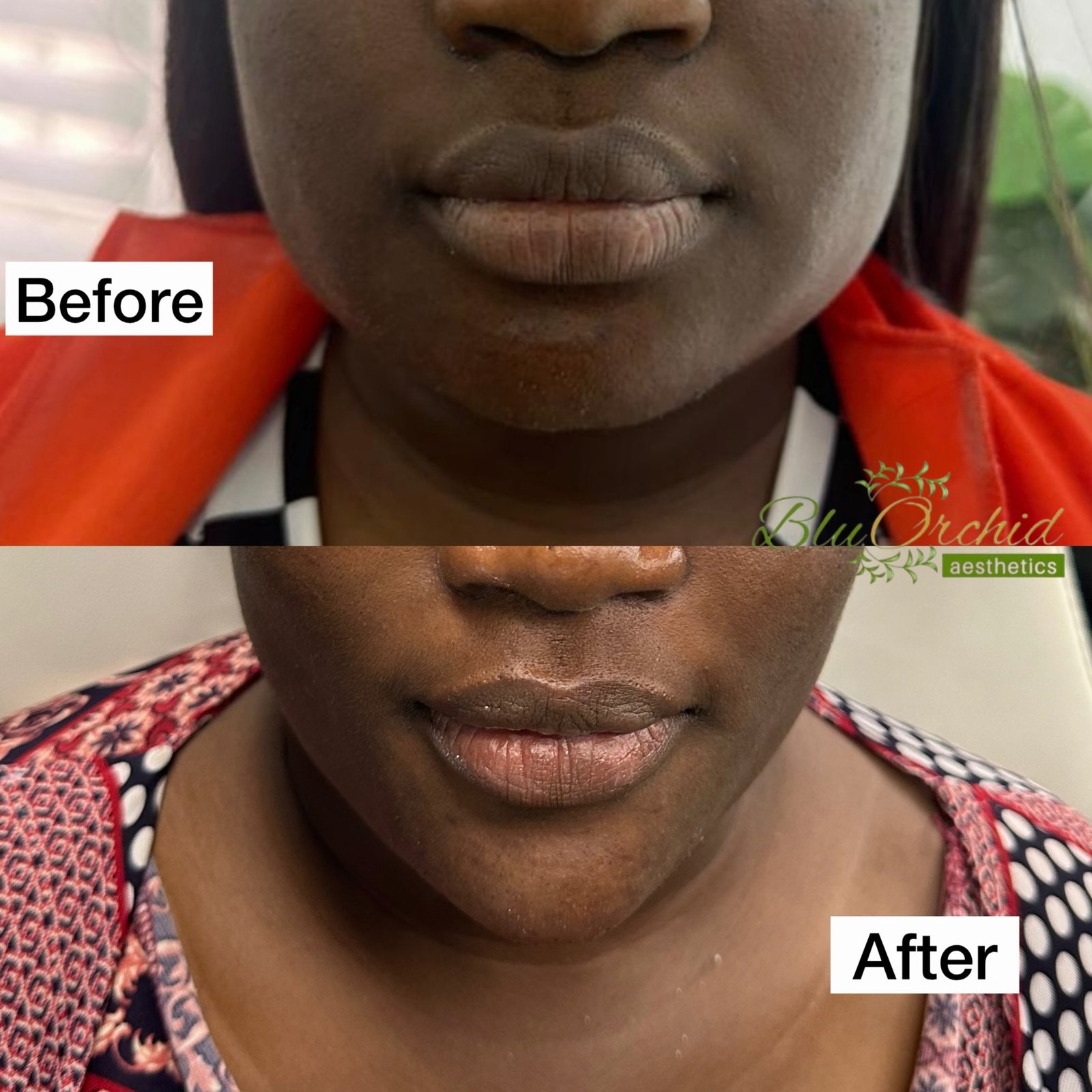
Masseter Botox for clenching vs jaw slimming
These two goals often overlap, but they are not identical.
Someone seeking treatment because they wake up with a painful, tense jaw has a primarily functional concern.
Someone seeking a softer lower-face appearance has a primarily aesthetic concern.
A patient may have both.
The assessment should therefore consider both what the muscles are doing and how their size relates to the rest of the face.
This is particularly relevant when treatment forms part of a broader facial-profiling assessment.
What are the risks of masseter Botox?
Botulinum toxin injections are medical procedures and should not be treated as a routine beauty treatment simply because they involve a small number of injections.
Potential issues can include:
- Temporary weakness of the treated muscle.
- Changes in bite force or chewing strength.
- Asymmetry.
- Unintended effects if the toxin affects nearby muscles.
- Bruising or discomfort at injection sites.
- Changes in facial appearance as the masseter becomes smaller.
- The possibility that symptoms may persist because the underlying cause has not been addressed.
There are also questions around repeated, long-term injections into the masticatory muscles. Research has investigated potential effects on muscle structure and mandibular bone, but the long-term clinical significance remains uncertain. A systematic review identified studies examining bone-density and bone-resorption effects and highlighted the need for better evidence.
This is another reason why repeated treatment should be based on clinical assessment rather than an automatic schedule.
What should you ask before having masseter Botox?
Before treatment, ask:
- What is causing my jaw clenching or grinding?
- Is the masseter actually the main muscle involved?
- Do I need a dental assessment first?
- Could an oral appliance or another conservative treatment be appropriate?
- What is the purpose of treating my masseter, symptom management, facial slimming, or both?
- What changes should I realistically expect?
- What are the risks for my particular anatomy?
- What happens if my symptoms do not improve?
- How will my response be assessed before considering repeat treatment?
A good consultation should be comfortable discussing alternatives, including situations where Botox is not recommended.
Is masseter Botox right for you?
The answer depends on what is actually driving your symptoms.
If your jaw muscles are excessively active and enlarged, masseter Botox may be one option worth discussing.
If your problem is primarily dental, joint-related or driven by another underlying condition, a different approach may be more appropriate.
And if you simply want a slimmer jawline, it is important to establish whether the masseter muscles are actually responsible for the width you see.
At BluOrchid, the aim is not to inject first and ask questions later.
A proper assessment considers your facial anatomy, muscle activity, aesthetic goals and clinical concerns before deciding whether masseter Botox is appropriate.
You can book a consultation to discuss your jaw clenching, teeth grinding or concerns about a prominent masseter and determine whether treatment is appropriate for you.
Frequently asked questions
Does masseter Botox help with teeth grinding?
It may help reduce excessive activity in the masseter and other masticatory muscles. Current evidence suggests botulinum toxin can reduce measurable muscle activity, but it does not consistently eliminate bruxism episodes.
Does masseter Botox stop jaw clenching?
It may reduce the strength of contraction of the treated muscle, which can be helpful for selected patients. However, clenching can have multiple contributing factors, so Botox should not be presented as a guaranteed cure.
Is masseter Botox painful?
The injections are performed with a fine needle and may cause temporary discomfort, tenderness or bruising. Your practitioner should discuss what to expect before treatment.
Will masseter Botox make my face slimmer?
It can reduce the prominence of the masseter muscles over time when muscle bulk contributes significantly to lower-face width. It will not remove facial fat or change the underlying jawbone.
How long does masseter Botox last?
The effect is temporary and gradually wears off as neuromuscular activity returns. The timing varies between individuals, so repeat treatment should be based on clinical assessment rather than a fixed assumption.
Is Botox better than a night guard for teeth grinding?
They serve different purposes and should not be treated as universally interchangeable. An oral appliance may be appropriate for some patients, while Botox may be considered in selected cases, particularly where excessive muscle activity is a significant part of the problem. A clinician or dentist should help determine the appropriate approach.
Can I have masseter Botox just for jaw slimming?
Yes, masseter reduction can be an aesthetic goal in appropriately selected patients. However, your facial structure should be assessed first to determine whether the masseter muscles are actually contributing to the appearance you want to change.
Should I see a dentist before getting Botox for teeth grinding?
If you have significant tooth wear, dental pain, damaged teeth or other dental concerns, a dental assessment is sensible. Bruxism management may require attention to both the muscles and the teeth rather than treating the muscle alone.
Is masseter Botox safe?
It can be performed safely in appropriately selected patients by a suitably trained practitioner, but it is not risk-free. Muscle weakness, changes in chewing or bite force, asymmetry and other effects are possible. Long-term repeated use in the masticatory muscles also remains an area where further research is needed.
A consultation at BluOrchid begins with exactly this assessment.
One hour with our doctors. An honest assessment. A plan built around you. ₦50,000, credited in full toward your first treatment.
Book your consultation Doctor-led assessment at Lekki Phase 1, Lagos.