Tired-Looking Face: Which Treatment Actually Helps?
Why does your face look tired when you are not? Which treatment helps dull skin, dark circles or under-eye hollowing, by cause.

You slept well.
You feel fine.
But when you look in the mirror, your face still looks tired.
Maybe your eyes look sunken.
Maybe your cheeks seem flatter.
Perhaps your skin looks dull or uneven.
You may have developed deeper lines around your mouth, or your face simply looks less fresh than it used to.
This is one of the most common reasons people start considering aesthetic treatments.
But there is a problem with the phrase “tired-looking face.”
It describes an appearance, not a single cause.
And that means there is no single treatment that makes every tired-looking face look more refreshed.
The right treatment depends on what is creating the tired appearance in the first place.
Sometimes it is skin quality.
Sometimes it is pigmentation.
Sometimes it is loss of facial volume.
Sometimes it is the under-eye area.
Sometimes it is facial movement.
And sometimes the best treatment is no injectable at all.
Why Can Your Face Look Tired When You Are Not?
A tired-looking appearance can come from several different facial features occurring together.
For example, you might notice:
- Darker skin around the eyes.
- Under-eye hollowness or shadowing.
- Facial volume changes.
- Flattening or loss of cheek definition.
- Lines around the eyes or forehead.
- Lines around the mouth.
- Uneven pigmentation.
- Dull or uneven skin texture.
- Changes in skin laxity.
- A combination of several of these.
That is why simply asking:
“What treatment makes me look less tired?”
is not quite enough.
A better question is:
“Which feature is making me look tired?”
Once you answer that, the treatment options become much clearer.
1. If Your Skin Looks Dull or Uneven
Sometimes the face looks tired because the skin itself looks tired.
You may notice:
- Uneven texture.
- Dullness.
- Uneven tone.
- Dehydrated-looking skin.
- Fine lines.
- Pigmentation.
In this situation, adding filler may not address the actual problem.
A skin-focused approach may make more sense.
Depending on your skin and the concern, this might include:
- Medical skincare.
- Chemical peels.
- Microneedling.
- Selected skin-rejuvenation treatments.
- Other professionally selected treatments.
The appropriate option depends on the specific skin concern and your skin type.
The goal is not simply to make your skin look “glowy.”
It is to identify what is making the skin appear less healthy or even.
2. If Dark Circles Are Making You Look Tired
Under-eye darkness is another major contributor to a tired-looking face.
But dark circles are not all caused by the same thing.
They can involve:
- Pigmentation.
- Visible blood vessels.
- Under-eye hollowing and shadowing.
- Thin or translucent skin.
- Under-eye bags or laxity.
- A combination of these factors.
That distinction matters.
If pigmentation is the main problem, adding filler is unlikely to solve it.
If hollowing is creating a shadow beneath the eye, a completely different treatment discussion may be appropriate.
And if prominent bags or laxity are the main issue, filler may not be the best answer.
This is why “dark circles” should be assessed rather than automatically treated as a filler problem.
3. If Under-Eye Hollowing Is Creating a Shadow
Sometimes what looks like darkness is partly a shadow.
A hollow beneath the eye can create a transition between the lower eyelid and cheek that makes the face look more tired.
In selected patients, tear-trough filler may be considered to address volume-related shadowing.
But this is an area where assessment matters particularly strongly.
Not everyone with under-eye hollowness is an appropriate candidate for filler.
If the appearance is primarily related to pigmentation, swelling, prominent fat pads or other factors, another approach may be more appropriate.
The question should therefore be:
“Is volume loss actually the reason this area looks tired?”
Not:
“Can I put filler under my eyes?”
4. If Your Cheeks Look Flatter Than They Used To
The middle of the face can have a significant effect on how refreshed the face appears.
If there has been a change in cheek volume or definition, the face may appear flatter or less structured.
For an appropriate patient, cheek filler may be considered to restore or enhance selected areas of facial volume.
But the objective should not be to create enormous cheeks.
A natural-looking result is about restoring or improving proportion.
This is where facial assessment becomes particularly valuable.
The amount of filler appropriate for one face may be completely inappropriate for another.
5. If Your Face Looks Tired Because of Facial Movement
Sometimes the issue is not volume at all.
It is movement.
Repeated facial expressions can contribute to dynamic lines, particularly around:
- The forehead.
- The frown area.
- The outer corners of the eyes.
If these lines are contributing to a tired or tense appearance, Botox may be worth discussing.
Botulinum toxin works by reducing muscle activity, making it more appropriate for dynamic lines than problems caused primarily by pigmentation, volume loss or skin texture.
This distinction is important.
If your face looks tired because of a particular pattern of facial movement, Botox may help.
If the problem is under-eye hollowing, Botox is not a substitute for addressing the hollow.
6. If Your Face Looks Heavy or Tense
Sometimes what someone describes as “tired” is actually a face that looks tense or overactive.
The frown area can contribute to a more serious or stressed appearance.
Appropriately planned Botox may soften this expression by reducing the relevant muscle activity.
But the goal should not be to eliminate expression.
A good aesthetic result should still look like you.
The aim is to soften the feature that is contributing to the appearance, not erase your personality from your face.
7. If Your Jawline Has Changed
A less defined lower face can also contribute to the perception of ageing or tiredness.
But the cause matters.
A change in jawline appearance can relate to:
- Facial structure.
- Volume distribution.
- Skin laxity.
- Muscle size.
- Overall facial proportions.
That means there is no single “jawline treatment.”
Depending on the cause, different treatments may be considered.
For some patients, filler may have a role in defining selected areas.
For others, the issue may not be something filler can meaningfully correct.
Again:
Cause first. Treatment second.
8. If Your Face Looks Tired Because of Volume Loss
Volume changes can affect how light and shadow fall across the face.
A reduction in volume in certain areas may make the face look more hollow, flatter or less youthful.
Dermal fillers can be used to restore or enhance volume in selected areas.
But this does not mean that every hollow needs filling.
Sometimes adding volume to one area can make another feature look less balanced.
That is why a good injector does not simply fill every indentation.
They look at the relationship between different parts of the face.
9. If Your Face Looks Tired Because of Skin Laxity
Sometimes the issue is not volume.
It is looseness.
As the skin and underlying tissues change with age, the face can develop a less defined appearance.
Depending on the degree and cause of laxity, different treatment options may be considered.
But it is important to have realistic expectations.
Non-surgical treatments are not interchangeable with surgery, and a treatment marketed as a “lift” does not necessarily reproduce the effect of a surgical facelift.
A good consultation should explain what a treatment can realistically change.
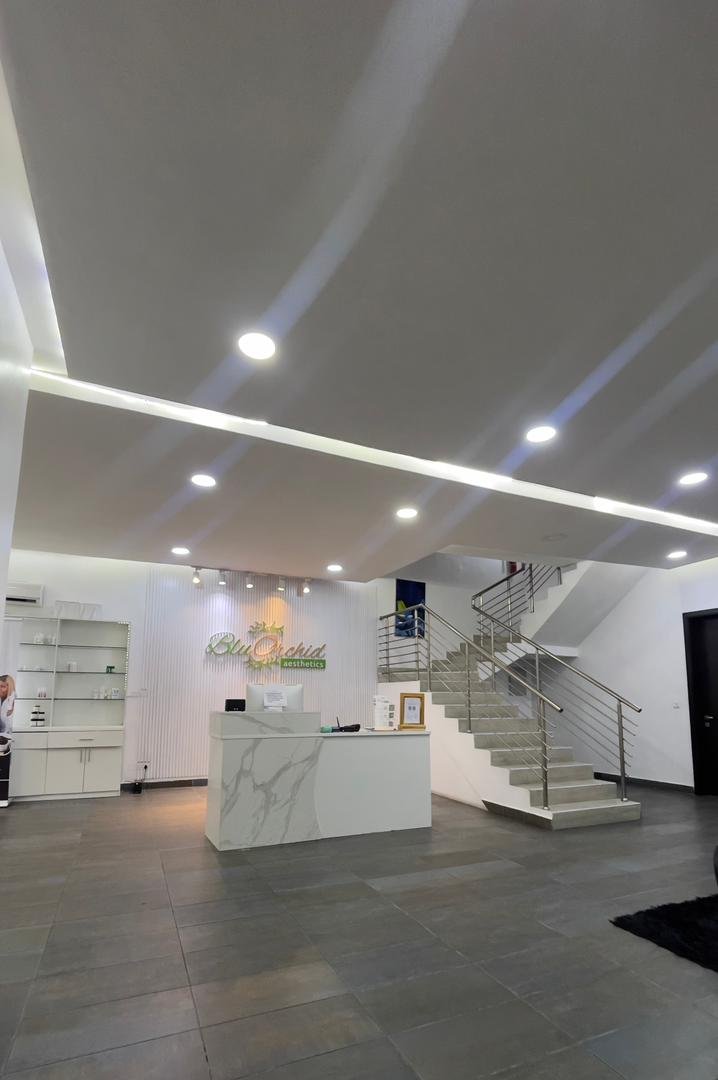
Brand at BluOrchid Aesthetics, Lagos
10. What About Threads?
Thread lifts are sometimes considered when someone is concerned about facial laxity or changes in facial contour.
But they should not automatically be presented as the answer to a tired-looking face.
Threads and Botox work in very different ways.
And neither is a universal treatment for every type of facial ageing.
If the concern is primarily dynamic muscle activity, Botox may be more relevant.
If the concern is selected tissue laxity or repositioning, a thread-based approach may be considered in an appropriate patient.
And sometimes neither is the right answer.
The important question is:
What exactly are we trying to change?
11. What If Your Face Looks Tired Because of More Than One Thing?
This is extremely common.
You might have:
- Under-eye shadowing.
- Mild pigmentation.
- Dynamic forehead lines.
- Some cheek volume change.
- Dull skin.
Trying to solve all of these with one treatment would be unrealistic.
A better approach may be a sequenced treatment plan.
For example, the priority may be:
- Improve skin quality.
- Address a specific pigmentation concern.
- Treat a dynamic line if appropriate.
- Consider carefully selected volume correction.
The order matters.
You do not necessarily need to do everything at once.
Why “Tired-Looking” Does Not Mean “You Need Filler”
This is an important distinction.
Filler is one tool.
It is not a universal anti-ageing treatment.
If the problem is pigmentation, filler will not remove the pigment.
If the problem is muscle activity, filler is not the treatment that addresses muscle movement.
If the problem is skin texture, adding volume does not automatically improve the skin.
And if the problem is significant laxity, adding more filler may not produce the result you imagine.
This is why an assessment-led approach can save you from spending money on treatments that do not address your actual concern.
What About Botox and Filler Together?
Sometimes the most natural result comes from combining treatments.
But “combination treatment” should not mean:
“Let’s inject everything.”
It should mean that different treatments are addressing different components of the overall concern.
For example:
Botox may address selected dynamic lines.
Filler may address appropriate volume or contour concerns.
Skin treatments may address texture or pigmentation.
The combination only makes sense if each component has a clear purpose.
How Do You Know What You Actually Need?
Before choosing a treatment, ask yourself:
What do I mean when I say I look tired?
Is it:
- My eyes?
- My skin?
- My cheeks?
- My jawline?
- My expression?
- My pigmentation?
- My facial shape?
Does the concern change when I make an expression?
If yes, muscle activity may be contributing.
Is the concern visible when my face is completely relaxed?
If yes, other factors may be involved.
Is the problem mainly colour or shadow?
That distinction can be particularly important around the eyes.
Is the issue volume or skin quality?
They require very different approaches.
These questions can help you move from a vague concern to a specific treatment discussion.
What a Good Facial Assessment Should Look At
A proper consultation should not be based only on the feature you point to.
If you say:
“My eyes make me look tired.”
the practitioner should not automatically reach for an under-eye treatment.
They should consider the surrounding anatomy and overall facial proportions.
If you say:
“My cheeks look tired.”
the question should not automatically be:
“How much filler do you want?”
It should be:
“What has changed, and what would improve it?”
That is the difference between selling a procedure and planning a treatment.
Which Treatment Is Best for a Tired-Looking Face?
There is no universal answer.
A useful way to think about it is:
| What is making you look tired? | Treatment category that may be considered |
|---|---|
| Dynamic forehead or frown lines | Botox |
| Selected volume loss | Dermal filler |
| Under-eye hollowing/shadowing | Assessment for selected tear-trough treatment |
| Pigmentation | Pigmentation-focused skincare or professional treatment |
| Uneven texture | Skin-rejuvenation treatment |
| Selected skin laxity | Appropriate tightening/lifting approach |
| Multiple concerns | Individualised, staged combination plan |
This table is not a prescription.
It is a starting point for understanding why the same treatment should not be given to everyone who says they look tired.
What Should You Avoid?
Be cautious if a clinic immediately recommends a treatment without asking what you want to change.
Be cautious if:
- Everyone receives the same anti-ageing package.
- The consultation focuses on how much product you want.
- You are encouraged to treat several areas you had not considered.
- You are promised a guaranteed “younger” appearance.
- The practitioner cannot explain why a treatment is appropriate.
- You feel pressured to decide immediately.
You should be able to ask questions and understand the reasoning behind the recommendation.
The Most Natural-Looking Results Usually Start With Diagnosis
When someone says:
“I look tired.”
the temptation is to start treating the face immediately.
But the better starting point is observation.
What is creating the tired appearance?
Is it shadow?
Pigment?
Volume?
Movement?
Texture?
Laxity?
Or several things together?
Once that is understood, the treatment becomes much easier to choose.
And sometimes the most effective treatment is considerably more subtle than the patient initially imagined.
Tired-Looking Face? Start With an Assessment in Lagos
If your face looks tired even when you feel well-rested, you do not necessarily need Botox, filler or an elaborate treatment package.
At BluOrchid Aesthetics, Dr Gladys Emokpaire-Oni (Dr Gigi) takes an assessment-led approach to facial enhancement, looking at your facial features, proportions, skin quality, movement and individual concerns before recommending treatment.
The goal is not to make you look like someone else.
It is to identify what is making you look tired and address that specific concern in a way that still looks like you.
Book a consultation to find out which treatment, if any, is actually appropriate for you.
Frequently asked questions
Why Can Your Face Look Tired When You Are Not?
A tired-looking appearance can come from several different facial features occurring together. For example, you might notice: That is why simply asking: is not quite enough. A better question is: Once you answer that, the treatment options become much clearer.
What About Threads?
Thread lifts are sometimes considered when someone is concerned about facial laxity or changes in facial contour. But they should not automatically be presented as the answer to a tired-looking face. Threads and Botox work in very different ways.
What If Your Face Looks Tired Because of More Than One Thing?
This is extremely common. You might have: Trying to solve all of these with one treatment would be unrealistic. A better approach may be a sequenced treatment plan. For example, the priority may be: 1.
What About Botox and Filler Together?
Sometimes the most natural result comes from combining treatments. But “combination treatment” should not mean: It should mean that different treatments are addressing different components of the overall concern. For example: The combination only makes sense if each component has a clear purpose.
A consultation at BluOrchid begins with exactly this assessment.
One hour with our doctors. An honest assessment. A plan built around you. ₦50,000, credited in full toward your first treatment.
Book your consultation Doctor-led assessment at Lekki Phase 1, Lagos.