Sun Damage on Dark Skin: Which Treatments Improve It?
Sun damage on dark skin: what it actually looks like, why sunscreen is part of the treatment, and which treatments improve it.

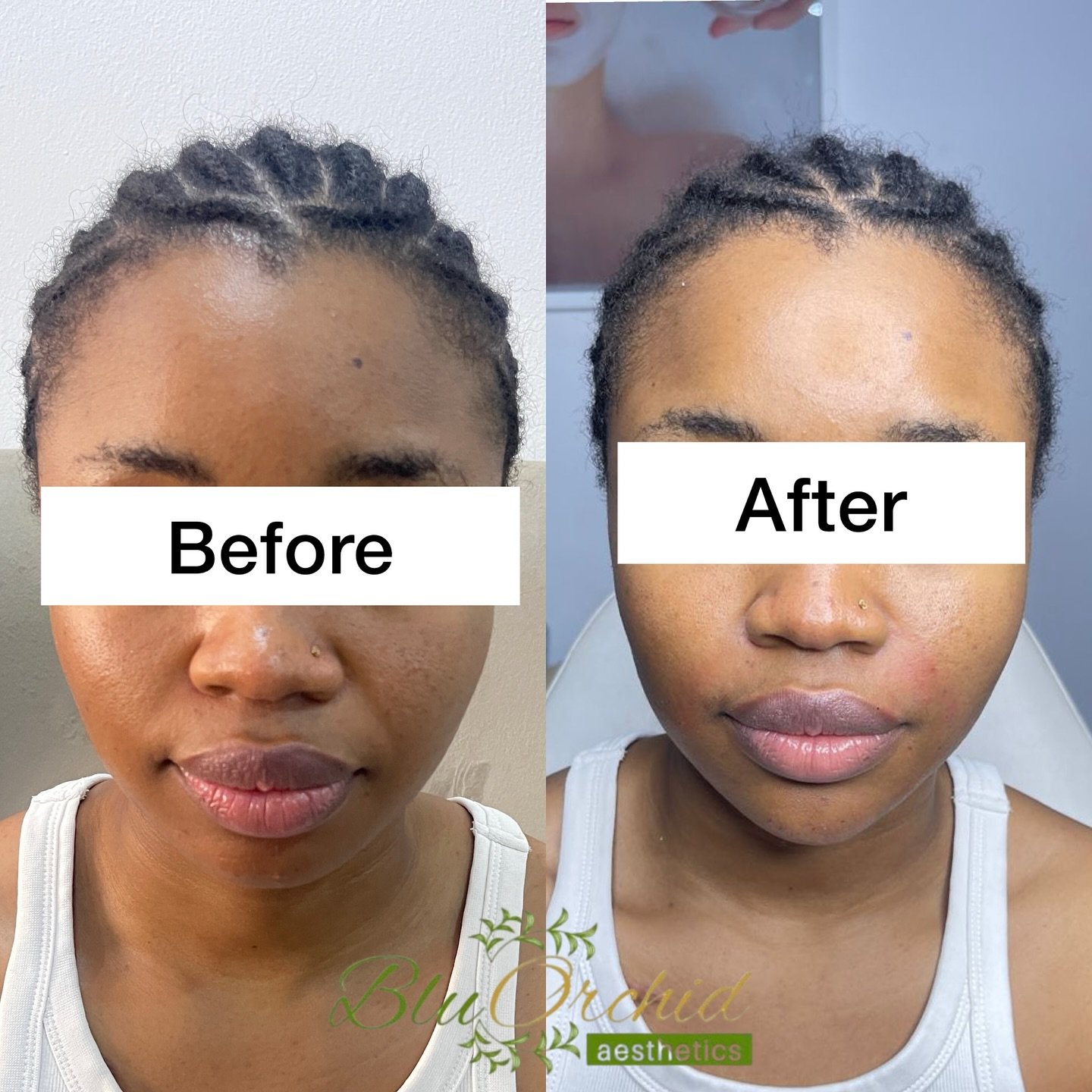
Dark skin has more natural melanin protection than lighter skin.
But that does not mean it is protected from the effects of the sun.
Over time, sun and visible-light exposure can contribute to uneven pigmentation, melasma, post-inflammatory hyperpigmentation, changes in skin texture and other signs of photoageing.
The challenge is that treating sun damage on dark skin requires more than simply choosing the strongest peel or laser.
Darker skin is more prone to pigmentary complications after inflammation or injury. That means an aggressive treatment can sometimes create more pigmentation while you are trying to remove it.
So if you are looking in the mirror and thinking:
“My skin has been damaged by the sun. What treatment will fix it?”
the first question should actually be:
“What type of sun-related change am I dealing with?”
Because the treatment for pigmentation is not necessarily the treatment for texture.
And the treatment for photoageing is not necessarily the treatment for melasma.
What Does Sun Damage Look Like on Dark Skin?
Sun damage can show up differently from person to person.
You may notice:
- Dark spots.
- Uneven pigmentation.
- Melasma.
- Persistent post-inflammatory dark marks.
- Uneven skin tone.
- Rougher texture.
- Fine lines.
- Loss of skin smoothness.
- A generally dull or uneven appearance.
Pigmentation can be particularly important in darker skin because people with skin of colour are more susceptible to conditions such as melasma and post-inflammatory hyperpigmentation.
And there is another important point:
Not every dark mark is simply “sun damage.”
Acne, inflammation, hormones, irritation and other skin conditions can contribute to pigmentation.
That is why diagnosis matters before treatment.

Why Dark Skin Needs a Different Approach to Sun Damage
It is a mistake to think:
“Dark skin doesn’t need sunscreen because it doesn’t burn easily.”
Melanin provides some natural protection, but it does not eliminate the effects of ultraviolet or visible light.
Photoprotection remains important for darker skin because sun exposure can contribute to photoageing and pigmentary disorders.
There is also growing evidence that visible light can contribute to persistent pigmentation in darker phototypes.
That is particularly relevant if you are prone to:
- Melasma.
- Post-inflammatory hyperpigmentation.
- Other hyperpigmentation disorders.
For pigment-prone skin, the goal is therefore not simply to prevent sunburn.
It is also to reduce the stimulation that keeps pigmentation active.
1. Sunscreen Is Part of the Treatment
If you already have sun-related pigmentation, sunscreen is not something you add after treatment.
It is part of the treatment strategy.
A systematic review of post-inflammatory hyperpigmentation prevention in skin of colour found that sunscreen was the intervention that consistently prevented PIH in the studies reviewed.
For darker skin, broad-spectrum protection is important, and tinted sunscreens containing pigments such as iron oxides can offer additional protection against visible light that can worsen pigmentation.
This is especially relevant if pigmentation is your main concern.
What Should You Look For?
Look for:
- Broad-spectrum protection.
- At least SPF 30.
- Good UVA protection.
- A formulation you will actually use consistently.
- Tint containing iron oxides if pigmentation and visible-light exposure are important concerns.
The best sunscreen is not the one with the most impressive marketing.
It is the one that provides appropriate protection and that you will use consistently.
2. Treat the Cause of the Pigmentation
Before trying to remove a dark patch, you need to understand why it is there.
For example, pigmentation could be associated with:
Sun exposure
Repeated UV and visible-light exposure can worsen pigmentation.
Melasma
This is a chronic pigmentary condition that can be influenced by UV and visible light.
Post-inflammatory hyperpigmentation
Dark marks can remain after acne, irritation, burns, procedures or other inflammation.
Other pigmentary conditions
Not every pattern of pigmentation is melasma or PIH.
That distinction matters because treatment needs to be matched to the diagnosis.
If you keep treating pigmentation without addressing the trigger, you may keep getting the same problem.
3. Topical Treatments Can Be a Good Starting Point
For many pigmentary concerns, topical treatment can play an important role.
Depending on the diagnosis and the individual patient, clinicians may consider ingredients such as:
- Retinoids.
- Hydroquinone.
- Azelaic acid.
- Niacinamide.
- Tranexamic acid.
- Other pigment-modulating agents.
The appropriate ingredient, strength and duration depend on the condition being treated.
Recent reviews of PIH in skin of colour describe topical therapies as an important part of management, while also emphasising that evidence quality varies between treatments.
This is one reason not to build your entire treatment plan around a single ingredient you saw recommended online.
4. Retinoids Can Help With More Than Fine Lines
Retinoids are often discussed as anti-ageing ingredients.
But they can also play a role in managing certain pigmentation concerns.
They can help improve aspects of:
- Uneven texture.
- Fine lines.
- Pigmentation.
- Overall skin appearance.
However, there is an important warning for darker skin:
Irritation can itself trigger pigmentation.
If a retinoid causes significant inflammation, peeling or irritation, the resulting pigmentation may become a bigger problem.
So stronger does not automatically mean better.
A gradual, tolerable routine is often more useful than an aggressive routine that you cannot maintain.
Brand at BluOrchid Aesthetics, Lagos
5. Chemical Peels Can Improve Pigmentation, If They Are Chosen Carefully
Chemical peels are commonly used for pigmentation and uneven skin tone.
But dark skin requires careful selection.
A peel intentionally creates a controlled injury to the skin.
If that injury is excessive for the individual patient, post-inflammatory hyperpigmentation can occur.
This does not mean:
“Dark skin should never have chemical peels.”
It means:
“The peel needs to be appropriate for the patient’s skin and condition.”
The type, concentration, number of treatments and preparation should be determined according to the patient’s skin and treatment goal.
Some evidence supports the use of chemical peels as part of PIH management, but current reviews also emphasise the risk of pigmentary worsening and the limitations of the evidence base.
So the strongest peel is not necessarily the best peel.
6. Microneedling May Have a Role
Microneedling is another treatment that may be considered for selected skin concerns.
It can be used in aesthetic dermatology for concerns including texture and some forms of pigmentation or acne scarring.
But it still creates controlled injury.
That means your history matters.
If you are someone who develops dark marks easily after:
- Acne.
- Cuts.
- Burns.
- Waxing.
- Procedures.
- Skin irritation.
your practitioner should know this before recommending a treatment that intentionally stimulates the skin.
The question is not simply:
“Can microneedling improve pigmentation?”
It is:
“Is microneedling appropriate for this particular pigmentation problem and this particular skin?”
7. Lasers Can Work, But This Is Where You Need to Be More Careful
Laser treatment can improve selected pigmentary and photoageing concerns.
But this is also an area where dark skin requires particularly careful treatment planning.
Melanin can absorb energy from certain devices.
That means inappropriate device selection or settings can increase the risk of pigmentary complications.
Reviews of photoprotection and procedures in skin of colour highlight the increased risk of post-inflammatory hyperpigmentation and other pigmentary changes following procedures that cause significant skin injury.
This does not mean that laser treatment is off-limits for dark skin.
It means you should ask:
- Which device is being used?
- What exactly is it treating?
- Why is it appropriate for my skin?
- What is the risk of hyperpigmentation?
- How will my skin be prepared?
- What happens after the procedure?
- Does the practitioner regularly treat darker skin?
Those questions are more useful than simply asking:
“Is this laser safe for dark skin?”
8. Some Lasers Are More Appropriate Than Others
“Laser treatment” is not one treatment.
Different devices operate differently and target different concerns.
A device that may be appropriate for one pigmentation problem may not be appropriate for another.
Similarly, a treatment that works well in lighter skin cannot simply be transferred to darker skin without considering the different risk of pigmentary complications.
This is why experience with skin of colour matters.
The treatment needs to be selected around:
the diagnosis + the skin type + the device + the settings + the patient’s history.
9. What About IPL?
IPL is also used for certain pigmentation and photoageing concerns.
But, like laser treatment, it is an energy-based procedure.
The fact that a treatment is popular does not automatically make it appropriate for every skin tone.
If you have darker skin or a history of hyperpigmentation, the potential benefit needs to be weighed against the risk of triggering additional pigmentation.
A proper assessment should happen before treatment rather than after a complication develops.
10. What If Your Main Problem Is Melasma?
Melasma deserves special attention.
It is not simply a collection of sunspots that can be permanently “lasered off.”
It is a chronic pigmentary condition influenced by factors including ultraviolet and visible-light exposure.
That means treatment usually needs to involve ongoing management, not simply one procedure.
Photoprotection is particularly important.
Topical pigment-modulating treatments may also be used, depending on the individual.
Procedures may sometimes have a role, but aggressive treatment can also trigger or worsen pigmentation.
So if you suspect you have melasma, seek an assessment rather than treating it like ordinary sunspots.

11. What If You Have Dark Marks After Acne?
This is another situation where “sun damage” can be misleading.
The acne may have gone.
But the pigmentation remains.
That is often post-inflammatory hyperpigmentation.
Sun exposure can make those marks darker or more persistent, which is why photoprotection remains important.
But the first step is also to control the underlying inflammatory condition.
If you continue to develop acne while treating the marks left by previous acne, you are effectively trying to empty a bucket while continuing to fill it.
Treating the trigger matters.
12. What About Sunspots?
Individual sun-related spots can sometimes be treated with targeted procedures.
Depending on the diagnosis, options may include selected topical treatments, chemical peels or energy-based treatments.
But a dark spot should be assessed before treatment rather than automatically assumed to be a harmless sunspot.
This is particularly important when pigmentation is:
- New.
- Changing.
- Unusual in appearance.
- Different from the surrounding spots.
- Associated with other concerning changes.
Cosmetic treatment should not replace appropriate medical assessment.
13. Can Anti-Ageing Treatments Improve Sun Damage?
Sometimes.
But it depends on what you mean by sun damage.
If the concern is:
Fine lines and wrinkles
→ selected anti-ageing treatments may help.
If the concern is:
Pigmentation
→ pigmentation-focused treatment is more appropriate.
If the concern is:
Texture
→ skin-rejuvenation treatments may be considered.
If the concern is:
Loss of facial volume
→ that is a different problem entirely and may require a different approach.
The mistake is assuming that every visible change caused by ageing or sun exposure should be treated with the same procedure.
14. What About Botox?
Botox is not a treatment for sun damage itself.
It can help with dynamic facial lines caused by muscle movement.
So if you have forehead lines and your main concern is that repeated facial movement has made them more noticeable, Botox may be appropriate.
But Botox will not treat:
- Brown pigmentation.
- Melasma.
- Sunspots.
- Uneven skin tone.
- Most forms of skin texture damage.
This distinction matters because aesthetic treatment should be chosen according to the problem.
15. What About Dermal Fillers?
The same principle applies to filler.
Dermal filler can address selected volume and contour concerns.
It does not remove pigmentation.
If your face looks older because of volume changes, filler may have a role.
If your face looks older because of uneven pigmentation, filler is not the answer.
Sometimes patients need a combination of approaches because different aspects of facial ageing have different causes.
But each treatment should have a clear reason for being included.
16. The Best Approach May Be a Combination
Sun-related skin changes rarely exist in isolation.
You may have:
- Pigmentation.
- Fine lines.
- Uneven texture.
- Mild laxity.
- Previous acne marks.
Trying to fix everything with one treatment is unlikely to produce the best plan.
A clinician may instead recommend a sequence.
For example:
First: establish consistent photoprotection.
Then: manage active pigmentation.
Then: address texture or other residual concerns.
Finally: consider targeted aesthetic treatments if there are remaining structural or dynamic concerns.
The exact sequence depends on the patient.
The important principle is:
Do not keep adding procedures before the fundamentals are under control.

17. What Should You Be Careful About?
Be cautious with treatments marketed as:
- “Permanent pigmentation removal.”
- “One-session sun damage removal.”
- “Guaranteed whitening.”
- “Zero-risk laser.”
- “No downtime for everyone.”
- “Works on every skin tone.”
Skin does not always respond predictably.
And darker skin can be particularly vulnerable to pigmentary changes after inflammation.
A responsible practitioner should be willing to discuss the potential for:
- Pigmentation.
- Irritation.
- Inflammation.
- Uneven results.
- Recurrence.
- The possibility that a treatment is not appropriate.
What Actually Works Best for Sun Damage on Dark Skin?
There is no single procedure that wins for everyone.
A sensible framework is:
| Main concern | Treatment category that may be considered |
|---|---|
| Prevention of further pigmentation | Consistent broad-spectrum photoprotection |
| Visible-light-related pigmentation | Tinted sunscreen with appropriate pigment filters |
| Post-inflammatory hyperpigmentation | Cause control + appropriate topical treatment + photoprotection |
| Melasma | Long-term pigment management + photoprotection |
| Uneven texture | Selected topical or professional skin treatments |
| Fine lines | Appropriate skincare and selected anti-ageing procedures |
| Resistant pigmentation | Carefully selected professional procedures |
| Volume loss | Assessment for appropriate filler treatment |
This is a decision framework, not a prescription.
Your diagnosis, skin type, history and previous response to treatment all matter.
The Biggest Mistake Is Treating Dark Skin Too Aggressively
There is a persistent misconception that dark skin is difficult to treat.
I would put it differently.
Dark skin can respond very well to treatment, but it needs to be treated intelligently.
The objective is not to avoid procedures completely.
It is to avoid unnecessary inflammation and choose treatments that have a reasonable balance between benefit and pigmentary risk.
That means:
Assess first.
Protect the skin.
Treat the underlying condition.
Choose the least aggressive effective option.
Monitor the response.
And only escalate when there is a reason to do so.
How to Choose a Clinic for Sun Damage Treatment in Lagos
If you are considering treatment for sun damage, especially if you have dark or pigmentation-prone skin, ask:
“What exactly is causing my pigmentation?”
You should have a diagnosis or at least a clear clinical explanation of the concern being treated.
“Have you treated my skin type before?”
Experience matters.
“What is the risk of post-inflammatory hyperpigmentation?”
The answer should not be:
“There is no risk.”
“Why have you chosen this treatment?”
You should understand the reasoning.
“What happens if my pigmentation becomes darker?”
A good clinic should have a plan for unexpected responses.
“Do I need to prepare my skin first?”
Sometimes preparation and consistent photoprotection are important parts of treatment.
“How will we know whether the treatment is working?”
You should have realistic expectations rather than a promise of instant perfection.
The Goal Is Not Perfectly Pigment-Free Skin
There is a difference between improving sun-related pigmentation and trying to erase every trace of natural variation from your skin.
Healthy skin does not need to look artificially uniform.
The goal should be:
- More even.
- Healthier-looking.
- Better protected.
- More comfortable.
- Appropriate for your natural skin tone.
And if you have dark skin, there is no reason your treatment plan should be built around trying to make you lighter.
The goal is to improve unwanted pigmentation while preserving your natural complexion.
Considering Sun-Damage Treatment in Lagos?
If you are dealing with uneven pigmentation, sun spots, melasma, post-acne marks or other signs of photoageing, the first step should be understanding exactly what you are treating.
At BluOrchid Aesthetics, Dr Gladys Emokpaire-Oni (Dr Gigi) takes an assessment-led approach to skin and aesthetic treatments, considering your skin type, pigmentation history and specific concern before recommending a treatment.
If you have dark skin and want to improve sun-related pigmentation or other signs of photoageing, book a consultation before choosing a peel, laser or other procedure.
The goal is not to treat your skin more aggressively.
It is to treat it more intelligently.
Frequently asked questions
What Does Sun Damage Look Like on Dark Skin?
Sun damage can show up differently from person to person. You may notice: Pigmentation can be particularly important in darker skin because people with skin of colour are more susceptible to conditions such as melasma and post-inflammatory hyperpigmentation.
What Should You Look For?
Look for: The best sunscreen is not the one with the most impressive marketing. It is the one that provides appropriate protection and that you will use consistently.
What About IPL?
IPL is also used for certain pigmentation and photoageing concerns. But, like laser treatment, it is an energy-based procedure. The fact that a treatment is popular does not automatically make it appropriate for every skin tone.
What If Your Main Problem Is Melasma?
Melasma deserves special attention. It is not simply a collection of sunspots that can be permanently “lasered off.” It is a chronic pigmentary condition influenced by factors including ultraviolet and visible-light exposure.
A consultation at BluOrchid begins with exactly this assessment.
One hour with our doctors. An honest assessment. A plan built around you. ₦50,000, credited in full toward your first treatment.
Book your consultation Doctor-led assessment at Lekki Phase 1, Lagos.