Why Pigmentation Routines Fail at Week Three
Your pigmentation routine may not be failing. Learn why results stall around week three and how to build a routine you can actually sustain.

You start with good intentions.
You buy the products. You follow the instructions. You take your skincare seriously. For the first couple of weeks, everything feels promising.
Then week three arrives.
The dark spots are still there. Your skin does not look dramatically different. Maybe it feels a little dry. Maybe one or two areas seem darker than before. And suddenly, the routine that felt like a solution starts to feel like another skincare experiment that is not working.
This is where many pigmentation routines go wrong.
Not necessarily because the products are useless.
Often, the problem is that pigmentation requires more consistency, more patience and a better understanding of what is actually causing it.
At BluOrchid, we call this the routine problem.
The week-three problem is usually not a skincare problem
Pigmentation is rarely something that appeared overnight.
A dark mark may have followed acne, an insect bite, shaving irritation, inflammation, friction, hormonal changes or repeated sun exposure. Melasma can be influenced by several factors at once.
So it makes little sense to expect a few weeks of skincare to completely reverse months or years of pigment activity.
But skincare culture has trained us to expect visible transformation quickly.
A product promises brighter skin.
A before-and-after shows a dramatic difference.
Someone online says their dark spots disappeared in two weeks.
You look in the mirror on day 21 and wonder:
Why is mine not working?
The answer may be that you are judging the routine too early.
Or that you are treating the visible pigment without addressing what keeps triggering it.
Or that your routine has become so complicated that your skin cannot tolerate it consistently.
Sometimes, it is all three.
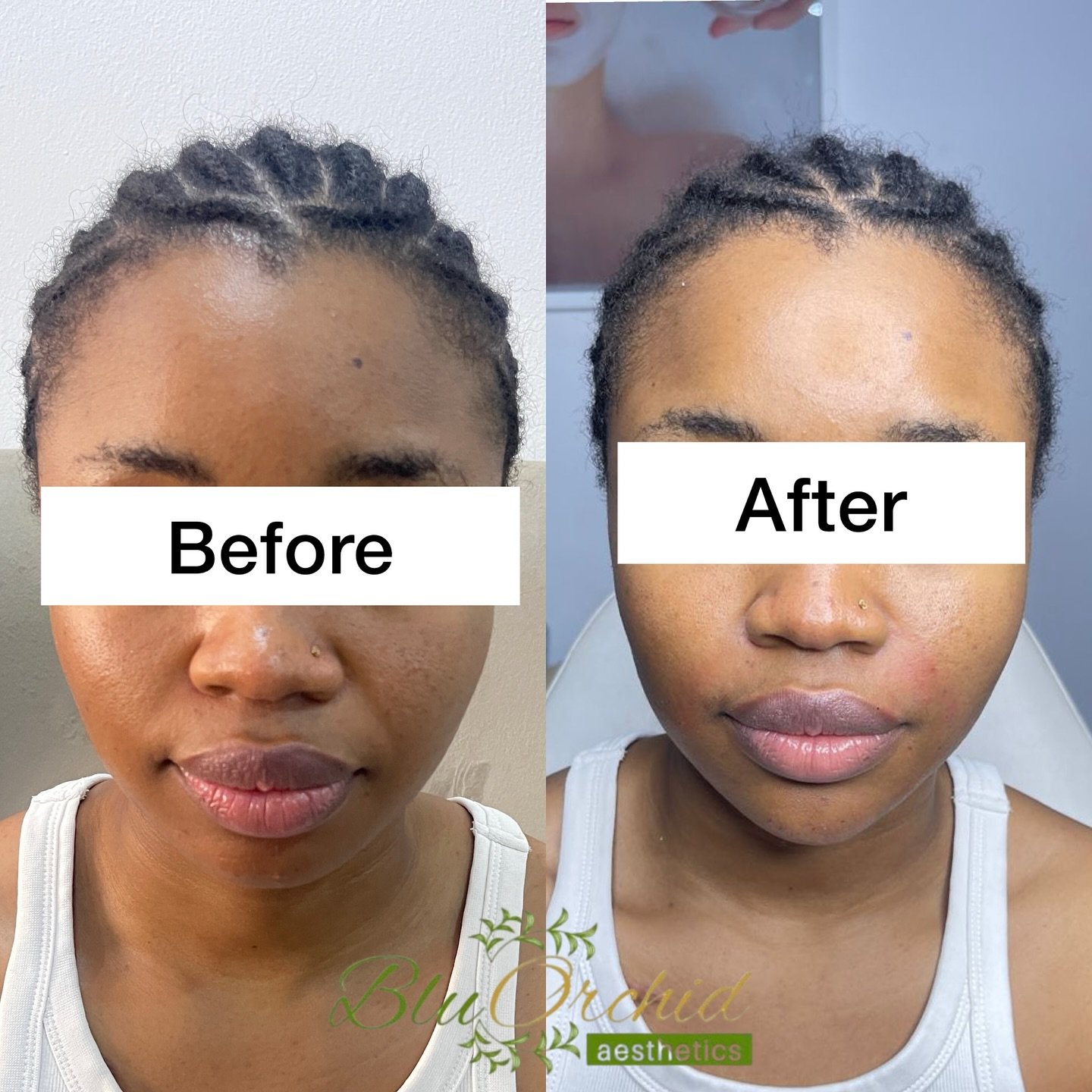
Pigmentation is not simply a surface problem
One of the biggest mistakes is thinking of pigmentation as something that sits on top of the skin waiting to be scrubbed away.
It does not work that way.
Pigmentation can develop as a response to inflammation, hormonal influences, ultraviolet exposure and other triggers. Once pigment has formed, the visible mark may remain even after the original trigger has settled.
That means a good routine has to do more than make the skin look brighter.
It has to help create conditions in which pigmentation is less likely to keep being stimulated.
That is why a sensible pigmentation strategy usually has several parts:
- identifying what is causing or maintaining the pigmentation
- reducing unnecessary inflammation and irritation
- supporting the skin barrier
- using appropriate pigment-targeting ingredients
- protecting the skin from ultraviolet exposure
- staying consistent long enough to judge the response
- adjusting the approach when the diagnosis or response calls for it
There is no single bottle that can do all of this.
Five reasons your pigmentation routine may stop feeling effective
1. You expected a six-month problem to disappear in three weeks
This is probably the most common issue.
Pigmentation is a process, not a stain.
Some superficial marks may respond relatively quickly. Others are more persistent. Melasma, for example, can require ongoing management rather than a short course followed by permanent clearance.
The important question is not:
“Why is my skin not perfect yet?”
A better question is:
“Is my skin moving in the right direction, and can I sustain this approach?”
That change in perspective matters.
A routine that gradually improves your skin while keeping it comfortable may be much more valuable than an aggressive routine that produces a brief improvement followed by irritation and recurrence.
2. You keep changing products before they have had a fair chance
Week three is often when people abandon one routine and start another.
Then another.
Then another.
A new serum appears on Instagram.
Someone recommends a different acid.
A friend says a particular cream worked for her.
So the routine changes again.
Eventually, there are too many variables to know what helped, what irritated the skin and what did nothing at all.
Pigmentation responds better to a considered strategy than constant experimentation.
If your skin is tolerating your routine and there is no obvious reason to stop, consistency can be more useful than continually searching for something stronger.
3. You are treating the pigment but ignoring the trigger
This is where many routines genuinely fail.
Imagine someone develops dark marks after shaving.
They begin using a pigment serum but continue shaving in a way that repeatedly causes irritation and ingrown hairs.
Or someone develops pigmentation after acne but focuses only on fading the marks while active acne continues.
Or someone with melasma treats the pigment but pays little attention to daily sun protection and other triggers.
The routine may not be the entire problem.
The trigger may still be active.
Pigmentation management works better when the cause and the pigment are considered together.
4. You are using too many active ingredients
More is not necessarily better.
It is easy to build a routine containing several acids, retinoids, exfoliants, brightening ingredients and spot treatments because each product promises something different.
The problem is that your skin experiences the routine as a whole.
If it becomes irritated, inflamed or uncomfortable, you may create another reason for uneven pigmentation to persist.
This is particularly important when treating pigmentation in darker skin, where inflammation can itself leave visible marks.
A sophisticated routine is not the one with the most products.
It is the one that does what your skin needs without creating a new problem.
5. You stopped protecting the progress you were trying to make
This is one of the easiest parts to underestimate.
You may use a carefully selected pigmentation routine at night, but spend your days exposed to sunlight without adequate protection.
Or you may use your products consistently for several weeks, see improvement and then become less disciplined because the skin looks better.
Pigmentation management is not only about fading existing marks.
It is also about reducing the factors that can encourage them to return.
For many people, sun protection is therefore not an optional finishing step. It is part of the pigmentation strategy.
Brand at BluOrchid Aesthetics, Lagos
The routine may need to be simpler, not stronger
When a pigmentation routine is not working, the instinct is often to add something.
Another serum.
A stronger acid.
A stronger cream.
More frequent exfoliation.
A treatment from another person’s routine.
But sometimes the better move is to simplify.
A useful pigmentation routine should be realistic enough that you can follow it on an ordinary Tuesday when you are tired, busy and not thinking about skincare.
That usually means knowing:
What am I using?
Why am I using it?
How often should I use it?
What should I stop if my skin becomes irritated?
What am I doing every day to protect the progress?
If you cannot answer those questions, adding another product is unlikely to solve the problem.
What a better pigmentation routine looks like
There is no universal routine because there is no universal type of pigmentation.
But the underlying structure should be thoughtful.
Step 1: Understand the pigmentation
Before choosing products, consider what you are actually treating.
Is it post-inflammatory pigmentation after acne?
Marks from shaving or insect bites?
Melasma?
Pigmentation caused by friction?
A reaction to a product?
A darker area that has gradually developed without an obvious trigger?
These situations can look similar in the mirror while requiring very different approaches.
Step 2: Protect the skin barrier
If your skin is constantly stinging, peeling or irritated, it is worth reassessing the routine.
Pigmentation treatment should not become a cycle of irritation followed by more pigmentation.
A calmer skin barrier can make it easier to maintain the rest of your routine consistently.
Step 3: Use targeted ingredients rather than everything at once
Ingredients such as niacinamide, azelaic acid, tranexamic acid and other pigment-targeting agents may have a role depending on the concern.
But the right ingredient is only part of the decision.
The concentration, formulation, frequency and your skin’s tolerance matter too.
And sometimes a person needs professional assessment rather than another over-the-counter active.
Step 4: Make sun protection non-negotiable
If pigmentation is your concern, daily sun protection deserves a place in the conversation.
This does not mean you need a complicated routine.
It means protecting the work you are already doing.
Step 5: Give the routine enough time to be judged
The exact timeline varies according to the type and depth of pigmentation, the trigger, the treatment approach and the individual’s skin.
The important point is that week three is not always the right time to declare failure.
Look for direction rather than perfection.
Is the pigmentation becoming less noticeable?
Is your skin tolerating the routine?
Are new marks appearing less frequently?
Are the original triggers under better control?
Those questions can tell you more than whether a dark spot has disappeared completely.
When your routine really is not working
Patience does not mean blindly continuing a routine forever.
There are situations where reassessment makes sense.
Consider professional advice if:
- the pigmentation is getting darker rather than improving
- your skin is persistently burning, peeling or irritated
- new pigmentation continues to appear
- you cannot identify what is causing it
- the pigmentation keeps returning despite consistent care
- you suspect melasma
- you have tried several routines without meaningful improvement
- you are considering prescription-strength treatment or professional procedures
Sometimes the problem is not that you need a stronger routine.
It is that you need a clearer diagnosis.
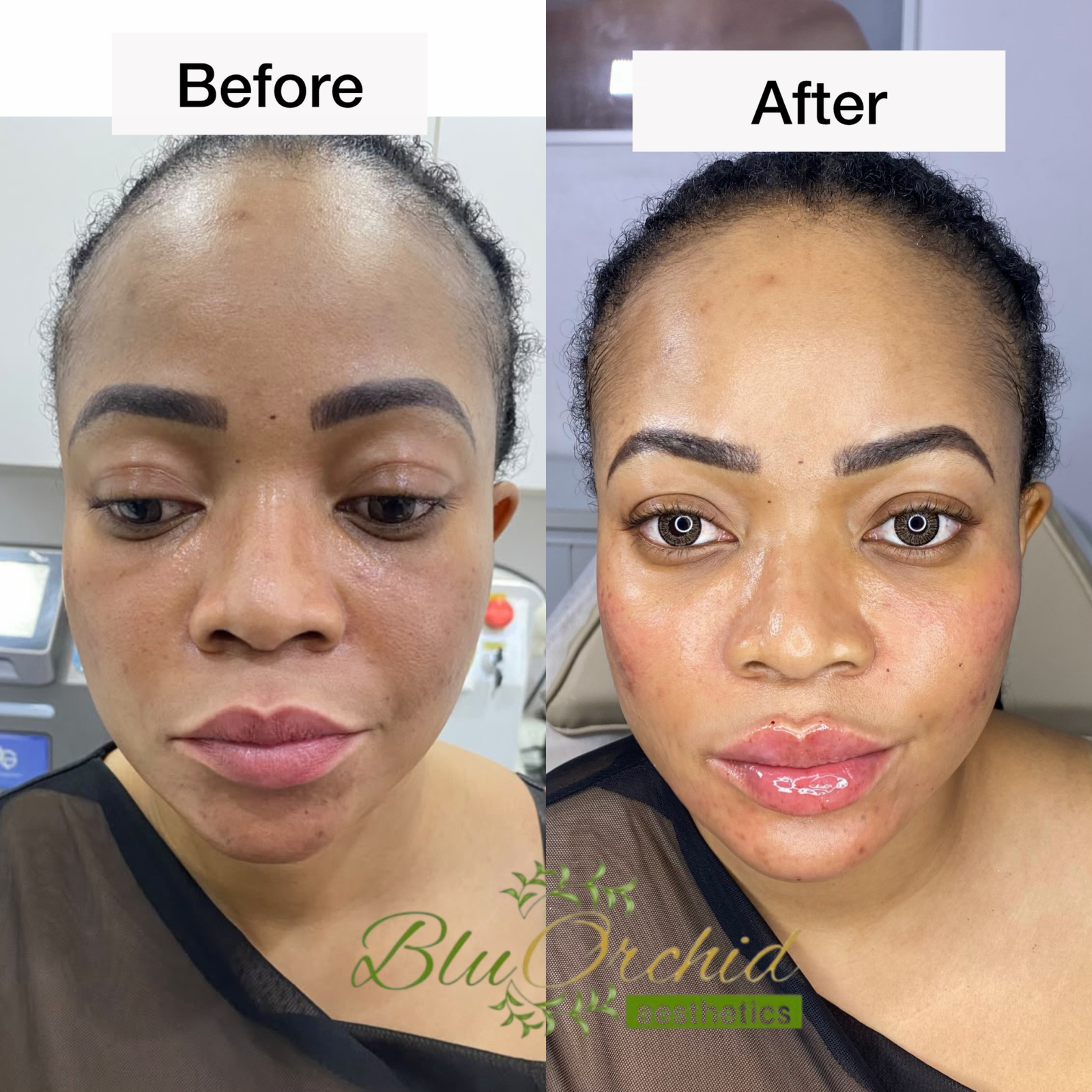
Skincare is not a race to lighter skin
There is another reason pigmentation routines can become frustrating.
People sometimes begin with the goal of making a particular area dramatically lighter.
That can lead to increasingly aggressive routines and a constant feeling that the skin is never light enough.
At BluOrchid, the goal is different.
We are interested in even skin tone, not changing your natural complexion.
Pigment correction should reduce unnecessary contrast and address the underlying concern while respecting the skin you already have.
That distinction matters.
Healthy-looking skin does not need to be lighter to be considered successful.
Where 8skinpro fits into the routine
A pigmentation strategy needs to be more than a collection of individual products.
The philosophy behind 8skinpro is built around a structured five-step approach: cleansing, toning, targeted serum, barrier support and SPF.
The point is not to overwhelm the skin with actives.
It is to create a routine that addresses different parts of the pigmentation conversation while remaining practical enough to maintain.
That matters because consistency is part of the treatment.
A routine that is theoretically perfect but too complicated to follow is not a very useful routine.
The better routine is one you can actually sustain.

What we would rather you do at week three
Before throwing everything away, pause.
Look at what has actually happened.
Ask yourself:
- Has my skin become calmer or more irritated?
- Am I developing new dark marks?
- Have I been consistent?
- Am I protecting my skin from the sun?
- Am I still exposing my skin to the trigger that caused the pigmentation?
- Am I using too many active ingredients?
- Do I actually know what type of pigmentation I am treating?
If the answers point towards a routine problem, simplify and reassess.
If they point towards a diagnosis or treatment problem, it may be time to speak to a professional.
When skincare is not enough
Some pigmentation responds well to a carefully structured home routine.
Some needs more.
At BluOrchid, pigmentation treatment begins with understanding what you are actually dealing with rather than automatically choosing the strongest available treatment.
Depending on the diagnosis and your skin, professional options may include carefully selected chemical peels, Cosmelan or other targeted approaches.
The objective is not to treat pigmentation aggressively for the sake of it.
It is to choose an appropriate pathway and then support the result with sensible home care.
That is why professional treatment and skincare should not be viewed as competing options.
They can be parts of the same strategy.
The real reason pigmentation routines fail
Sometimes, the routine genuinely is wrong.
But very often, the deeper problem is the expectation that pigmentation should behave like a stain that can simply be removed.
It does not.
Pigmentation has causes. It has triggers. It has a timeline.
And once you understand that, week three stops being the point where you panic and start again.
It becomes a point where you assess.
Is this routine working?
Is my skin tolerating it?
Are the triggers controlled?
Do I need more time, a simpler routine or a different treatment strategy?
That is a much better way to approach pigmentation.
A note from Dr Gigi
“I would rather give a patient a strategy they can maintain than a routine that produces a dramatic change for a few weeks and leaves their skin struggling afterwards.”
Pigmentation is rarely solved by doing more.
It is solved by understanding more.
Frequently asked questions
Why is my pigmentation routine not working?
There are several possible reasons. You may be judging results too early, using products that irritate your skin, treating the pigment without addressing its trigger, using too many active ingredients or dealing with a type of pigmentation that needs professional treatment.
Why does my skin look darker after starting a pigmentation routine?
Irritation can sometimes make pigmentation more noticeable, particularly in darker skin. If your skin is burning, peeling excessively or becoming increasingly irritated, stop adding more active products and seek professional advice.
How long should I use a pigmentation routine before changing it?
There is no single timeline for every type of pigmentation. Some concerns respond sooner than others. Unless your skin is reacting badly, constantly changing products can make it difficult to know whether the routine is actually helping.
Can skincare completely remove dark spots?
Some dark spots can fade significantly with appropriate care, but results depend on the cause, depth and persistence of the pigmentation. The priority should be treating the underlying problem while preventing new pigmentation from developing.
Is it better to use more products for pigmentation?
Not necessarily. A smaller, well-designed routine that your skin tolerates can be more useful than a complicated routine containing several potentially irritating active ingredients.
Can I treat pigmentation without bleaching my skin?
Yes. Pigmentation treatment and skin bleaching are not the same thing. The goal can be to reduce uneven pigmentation and restore a more balanced skin tone without trying to change your natural complexion.
When should I see a doctor about pigmentation?
Consider professional assessment when pigmentation is persistent, worsening, repeatedly returning, associated with significant irritation, or not responding to a consistent routine. A proper assessment can help determine what you are actually treating.
Your pigmentation routine should have a strategy
If you have reached week three and are tempted to throw every product away, take a breath.
You may not need another serum.
You may need more time.
You may need a simpler routine.
Or you may need to understand the pigmentation properly before deciding what to use.
At BluOrchid, our approach is built around the individual concern, the skin and the factors maintaining the pigmentation.
If your routine has stopped making sense, book a consultation.
The consultation is ₦50,000 and is credited toward your selected treatment if you decide to proceed.
A consultation at BluOrchid begins with exactly this assessment.
One hour with our doctors. An honest assessment. A plan built around you. ₦50,000, credited in full toward your first treatment.
Book your consultation Doctor-led assessment at Lekki Phase 1, Lagos.