Melasma Treatment in Nigeria: Why It Keeps Coming Back
Melasma can return even after treatment. Learn why it happens in Nigerian women and how sun, heat, hormones and maintenance affect recurrence.


You finally get your skin looking clear.
The patches have faded. Your complexion looks more even. You stop thinking about covering your cheeks before leaving the house.
Then, gradually, the pigmentation starts appearing again.
A little across the cheekbones. A darker patch around the forehead. Perhaps a shadow above the upper lip.
For many Nigerian women living with melasma, this cycle can feel frustratingly familiar.
The problem is not necessarily that the treatment failed.
Melasma is a condition that can be controlled, but it can also be highly persistent and prone to recurrence. The same factors that contribute to it in the first place can remain part of everyday life: sunlight, heat, hormonal changes and inflammation.
That is why successful melasma treatment in Nigeria should not end when the pigmentation fades.
The goal is not simply to clear the patches.
It is to understand what is driving them and build a maintenance strategy that helps keep them from returning.
What is melasma?
Melasma is a form of pigmentation that usually appears as darker, uneven patches on areas of the face such as the cheeks, forehead, nose and upper lip.
It is particularly noticeable because it often develops symmetrically.
For women with deeper skin tones, melasma can be especially frustrating because pigmentation changes can be very visible and can sometimes take longer to settle.
And unlike a temporary mark left behind by a spot, melasma tends to have a recurring pattern.
You may improve it significantly and still experience another flare later.
That does not mean you have done something wrong.
It means the underlying triggers have not necessarily disappeared.
Why does melasma keep coming back?
There is rarely one single reason.
Melasma is influenced by a combination of factors, and the balance can be different from one woman to another.
1. Sun exposure
This is one of the biggest reasons melasma can return.
You may have completed treatment and achieved beautiful improvement, but continued exposure to sunlight can stimulate pigmentation again.
And in Nigeria, avoiding sunlight completely is not realistic.
You may be exposed while driving, walking from your car into a building, sitting near windows or spending time outdoors.
This is why sun protection should not be treated as something you use only while actively treating pigmentation.
It becomes part of the maintenance plan.
2. Heat matters too
This is an important part of the conversation around melasma in Nigeria.
It is easy to think only about ultraviolet exposure, but living in a hot climate means heat can also be relevant.
For someone whose melasma is easily triggered, repeated exposure to high temperatures may make controlling pigmentation more difficult.
That means your treatment strategy has to make sense for your actual environment.
A routine designed without considering Nigerian weather may be much harder to maintain successfully.
3. Hormonal changes can play a role
Melasma is often associated with hormonal influences.
Some women notice changes during pregnancy. Others notice pigmentation around periods of hormonal fluctuation or while using certain hormonal medications.
This is one reason melasma may not behave like ordinary pigmentation.
You can be doing everything correctly and still experience changes when your hormonal environment changes.
The important point is not to blame yourself.
It is to recognise that treatment may need to account for these changes.
4. Your skin may be reacting to irritation
When pigmentation appears, the instinct is often to attack it.
Stronger acids.
More exfoliation.
Multiple brightening products.
Scrubs.
Aggressive treatments.
But irritated skin can become more difficult to manage, particularly in deeper skin tones where inflammation can leave behind additional pigmentation.
Sometimes the answer is not doing more.
It is doing less, but doing it consistently.
5. Melasma may have more than one trigger
This is where many treatment plans become frustrating.
A woman may correctly identify sunlight as a trigger, but there may also be hormonal influences, heat exposure or irritation from her skincare routine.
Removing one trigger does not necessarily remove all of them.
That is why two women can have similar-looking pigmentation but very different experiences with recurrence.
Why melasma treatment can work, and still not be the end
One of the biggest misconceptions about melasma is that successful treatment should mean permanent clearance.
In reality, improvement and maintenance are two different stages.
Treatment focuses on reducing the pigmentation you can see.
Maintenance focuses on reducing the likelihood of it returning.
Think of it less like repainting a wall and more like managing a tendency your skin has developed.
Once the pigmentation has improved, the work does not necessarily stop.
The routine changes.
The intensity may change.
But the principles remain.
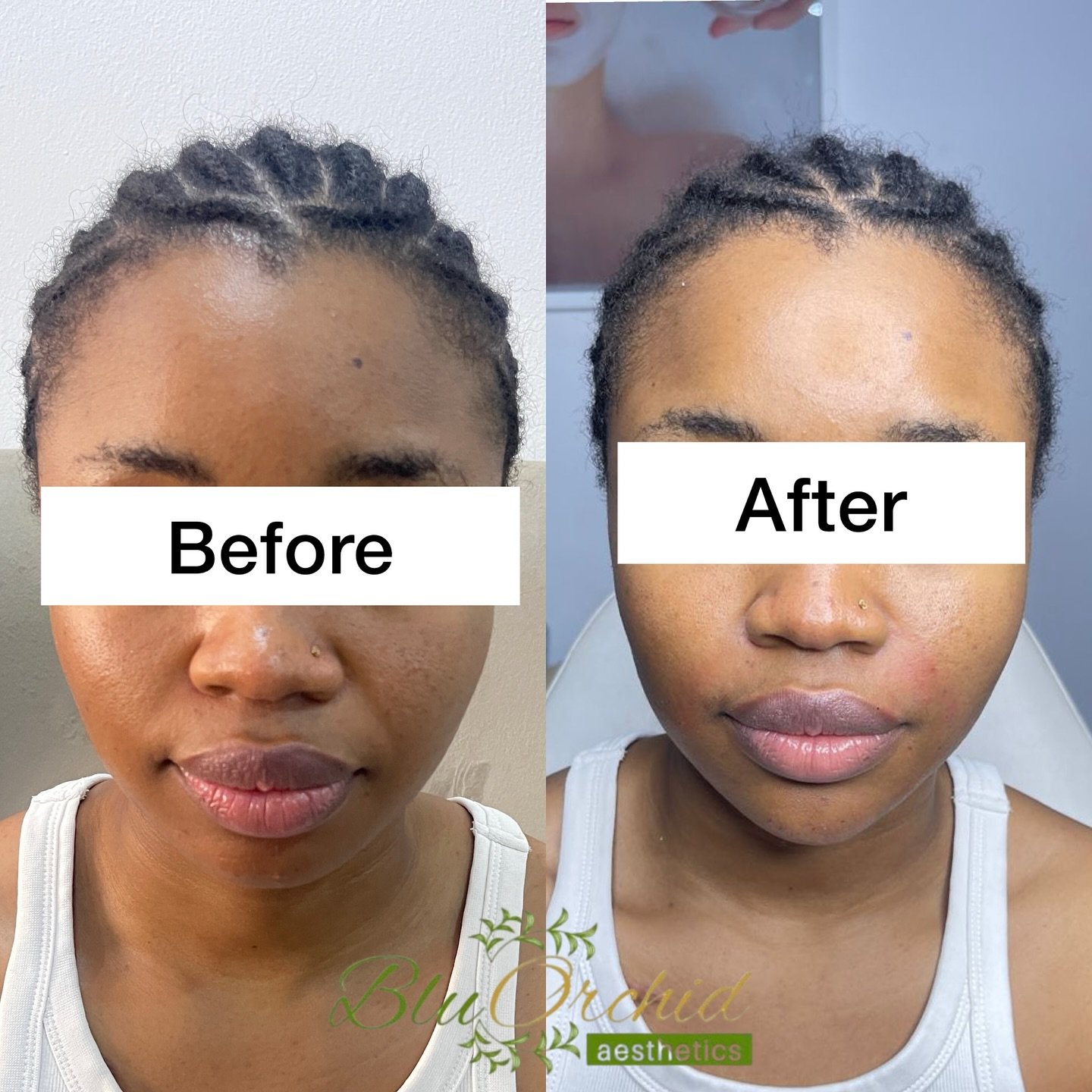
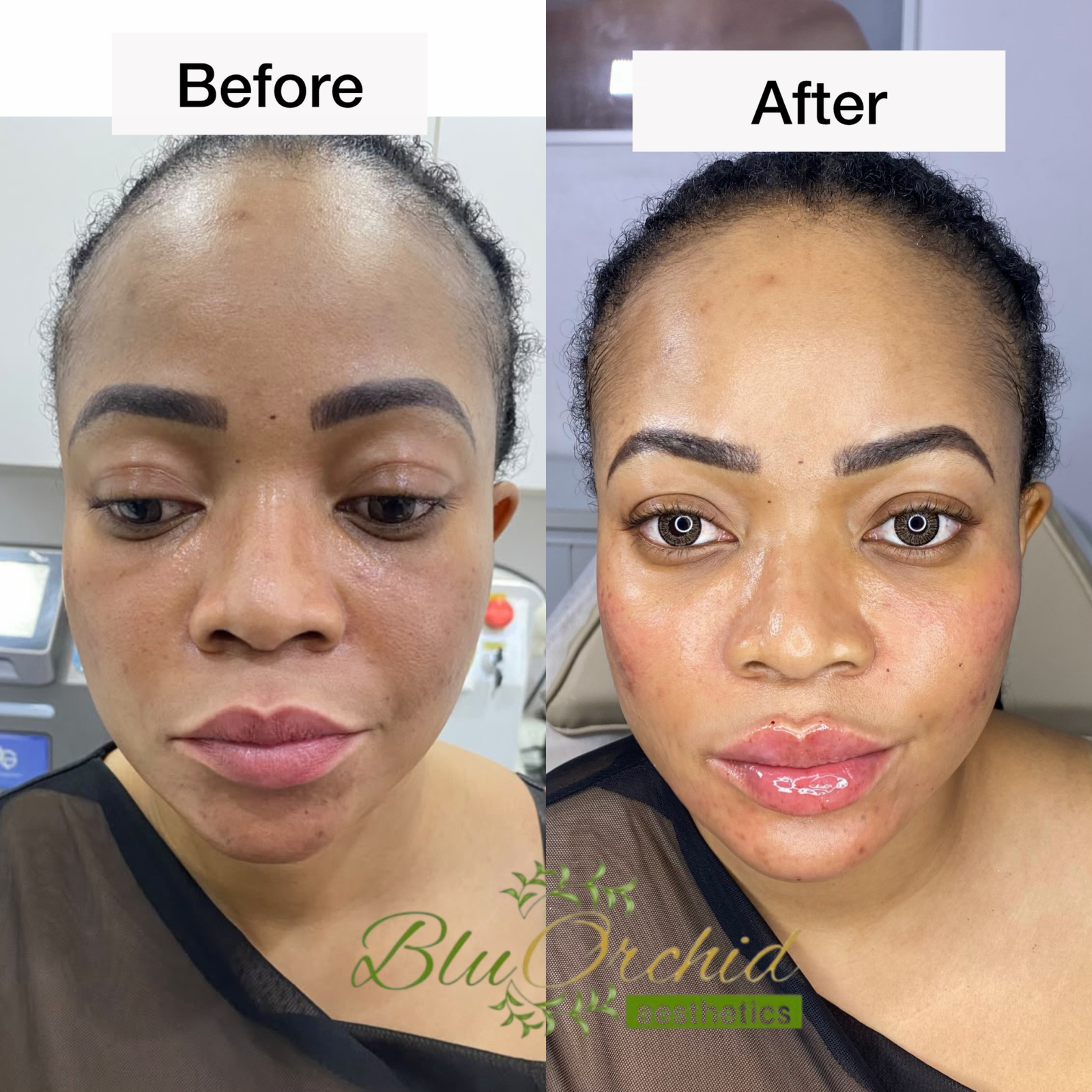
Pigmentation at BluOrchid Aesthetics, Lagos
The maintenance plan matters as much as the treatment
If you are prone to melasma, your long-term strategy should usually include four things.
Protect your skin from sunlight
Daily sun protection matters even when your skin looks clear.
This is particularly important after professional pigmentation treatments because the skin can remain vulnerable to environmental triggers while it is recovering.
Your clinician can help determine the most appropriate sunscreen and how often it should be reapplied based on your lifestyle.
Keep your skincare routine simple
A complicated routine is not automatically a better routine.
If you are constantly switching between products because you want faster results, you may make it harder to understand what your skin is responding to.
A maintenance routine should be realistic enough that you can follow it consistently.
Avoid unnecessary irritation
If a product repeatedly leaves your skin stinging, burning or visibly irritated, that is worth discussing with a professional.
Pigmentation treatment should not become a cycle of damaging the skin in an attempt to make it clearer.
Continue monitoring your pigmentation
You do not have to wait until the pigmentation becomes obvious again before addressing it.
If you notice the early signs of recurrence, that is the time to reassess your routine and treatment plan.
Early intervention can be more sensible than waiting until pigmentation has become significantly darker.
What about professional melasma treatment?
There is no single treatment that is automatically right for every woman with melasma.
The right approach depends on factors such as:
- the depth and pattern of the pigmentation
- your skin type and tone
- previous treatments
- your current skincare routine
- whether your skin is irritated
- hormonal influences
- how much sun and heat exposure you have
- how your skin has responded to previous treatments
This is why professional assessment matters.
At BluOrchid Aesthetics, pigmentation concerns are assessed rather than treated as though every dark patch requires the same procedure.
Depending on the individual case, a treatment plan may involve targeted skincare, professional peels or other pigmentation-focused treatments.
The objective is not simply to make the skin look lighter.
It is to create a more even, healthier-looking complexion while respecting the characteristics of your natural skin tone.
What if your melasma keeps returning?
If you have treated your pigmentation several times and it keeps coming back, it may be time to stop asking:
“What treatment will remove it?”
and start asking:
“What is causing it to return?”
That change in perspective can make a significant difference.
You may need to look more closely at your daily sun exposure.
Your skincare products.
Your heat exposure.
Your hormonal history.
Previous pigmentation treatments.
Or whether your maintenance routine disappeared as soon as your skin improved.
The answer may not be another aggressive treatment.
It may be a better long-term strategy.

Melasma treatment in Nigeria needs to account for Nigerian skin and climate
There is an important difference between treating pigmentation in theory and treating it in real life.
Your skin does not exist in a laboratory.
You live in Lagos.
You may commute through intense sunlight, spend time outdoors, experience significant heat and humidity, and use products marketed specifically for skin lightening or brightening.
Your treatment plan needs to work within that reality.
That is especially important for melasma because clearing the visible pigmentation is only one part of the process.
The other part is keeping the skin calm, protected and supported after improvement.
What not to do when melasma returns
When you notice pigmentation returning, resist the urge to panic.
And resist the urge to immediately add five new products.
Avoid:
- repeatedly changing your skincare routine
- aggressively exfoliating the affected areas
- using unverified skin-lightening products
- buying products simply because they promise fast results
- combining multiple strong active ingredients without professional guidance
- assuming darker pigmentation means you need a stronger treatment
More intensity does not always mean better results.
For pigmentation-prone skin, sometimes the most sophisticated approach is the most measured one.
Can melasma ever be permanently cured?
This is one of the most important questions to ask.
There is no honest promise of permanent, never-to-return clearance for everyone with melasma.
The more realistic goal is long-term control.
That means reducing visible pigmentation, identifying your triggers and maintaining the improvements you achieve.
Some women may experience long periods with very little visible pigmentation.
Others may have occasional flare-ups, particularly around periods of hormonal change or increased environmental exposure.
The important thing is having a plan for both.
A more realistic way to think about melasma
If you have been dealing with melasma for years, it is understandable to feel exhausted by the cycle.
Treatment.
Improvement.
Relax.
Recurrence.
Treatment again.
But recurrence does not mean you have failed.
And it does not automatically mean your previous treatment was ineffective.
Melasma is often a condition that requires ongoing management rather than a single intervention.
The goal is to get your skin to a place where pigmentation is controlled, your routine is manageable and you understand what tends to trigger your flare-ups.
That is a much more realistic definition of success.
Dr Gigi’s approach to treating pigmentation
At BluOrchid Aesthetics, pigmentation is approached with the understanding that darker skin requires thoughtful treatment.
The objective is not to chase an artificially lighter complexion.
It is to improve uneven pigmentation while preserving the character of your natural skin.
For someone with recurring melasma, that means looking beyond the pigmentation itself.
What has triggered it?
What has already been tried?
How does the skin respond?
What is your current routine?
What will realistically fit into your life?
Those questions matter because the best treatment is not necessarily the most aggressive treatment.
It is the one that makes sense for your skin and can be supported over time.
Frequently asked questions
What causes melasma in Nigerian women?
Melasma can be influenced by several factors, including sunlight, heat, hormonal changes and skin irritation. The combination varies from person to person, which is why treatment needs to be individualised.
Why does my melasma keep coming back?
Melasma is prone to recurrence. Even after successful treatment, continued sun and heat exposure, hormonal changes or irritation can contribute to pigmentation returning.
Is melasma common in dark skin?
Melasma can occur in all skin types and is particularly important to manage carefully in deeper skin tones because pigmentation changes can be very noticeable.
Can sunlight make melasma worse?
Yes. Sun exposure can stimulate pigmentation and make melasma more difficult to control. Consistent sun protection is therefore an important part of both treatment and maintenance.
Does heat make melasma worse?
Heat may contribute to worsening melasma for some people. This is particularly relevant in hot climates, making environmental management an important consideration alongside skincare and professional treatment.
Can hormones cause melasma?
Hormonal influences can contribute to melasma. Some women notice changes during pregnancy or other periods of hormonal fluctuation.
What is the best melasma treatment in Nigeria?
There is no single treatment that is best for every person. A suitable approach depends on the type and pattern of pigmentation, your skin, previous treatments, triggers and current skincare routine. A professional assessment can help determine an appropriate plan.
Should I keep treating melasma after it clears?
Usually, yes. Maintenance is an important part of managing melasma because the tendency toward recurrence can remain even after the visible pigmentation has improved.
Can I use skin-lightening creams for melasma?
It is important to distinguish treating pigmentation from trying to make your overall skin tone lighter. Unverified or inappropriate skin-lightening products can irritate or damage the skin and may ultimately make pigmentation more difficult to manage.
When should I see a doctor about recurring melasma?
If pigmentation keeps returning, is becoming more extensive, or is not responding to your current routine, professional assessment can help identify possible triggers and determine whether your treatment plan needs to change.
If your melasma keeps coming back, change the strategy, not just the treatment
Melasma can be frustrating precisely because it does not always behave like a problem you can treat once and forget.
But recurrence does not mean there is no solution.
It means your skin may need a longer-term strategy.
If you have been treating pigmentation repeatedly without understanding why it returns, a consultation can help you step back, assess the pattern and build a more considered plan.
At BluOrchid Aesthetics, consultations are designed around your individual skin and concerns rather than a predetermined package.
The consultation fee is credited toward your selected treatment if you decide to proceed.
Book a Consultation to have your pigmentation assessed and discuss a treatment and maintenance plan designed around your skin, lifestyle and goals.
A consultation at BluOrchid begins with exactly this assessment.
One hour with our doctors. An honest assessment. A plan built around you. ₦50,000, credited in full toward your first treatment.
Book your consultation Doctor-led assessment at Lekki Phase 1, Lagos.