Loose Skin After Weight Loss: What Actually Helps
Lost weight but have loose skin? Learn what causes excess skin, what may improve mild laxity and when body contouring surgery may help.

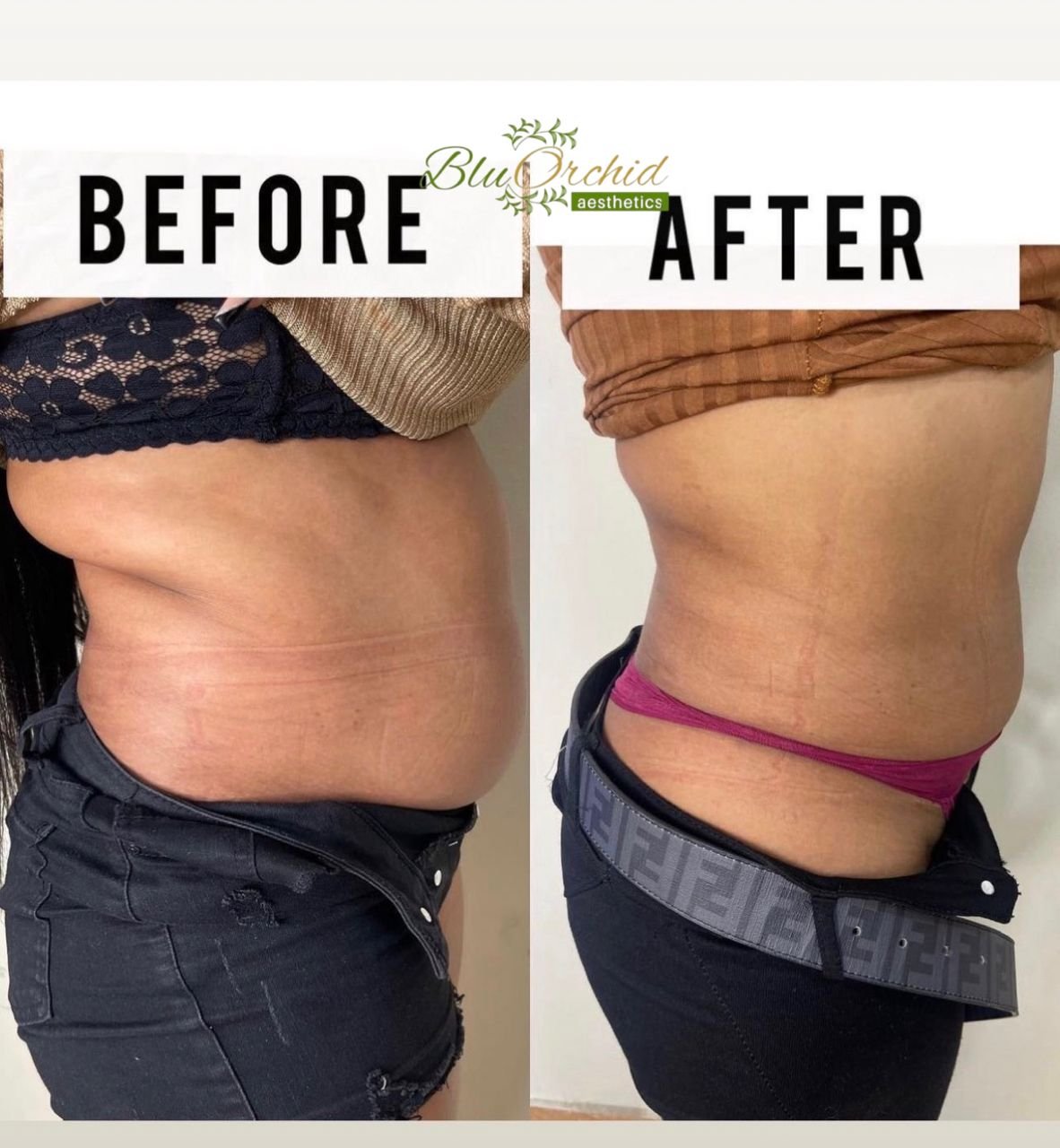
Losing a significant amount of weight can change your body in ways you may have wanted for years.
But sometimes there is a part nobody talks about until you get there:
The weight is gone. The skin remains.
You may notice loose skin around your abdomen, upper arms, thighs, breasts, lower back or other areas.
Sometimes it is a small amount of laxity that is mainly noticeable when you bend or move.
Sometimes the skin hangs in folds and changes how clothes fit.
And sometimes what looks like “loose skin” is actually a combination of excess skin, remaining fat and reduced muscle tone.
That distinction matters because the right solution depends on what is actually causing the appearance.
There is no cream, exercise or body-contouring treatment that can reliably remove a substantial fold of excess skin.
But there are things that can help, and the best option depends on how much skin is present, where it is, whether your weight has stabilised and what you want to change.
Why Does Loose Skin Happen After Weight Loss?
Your skin has to stretch as your body increases in size.
When you lose a significant amount of weight, the underlying volume decreases. Skin with enough elasticity may retract to some degree.
But stretched skin does not always return completely to its previous shape.
After substantial weight loss, the skin and supporting tissues may not have enough elasticity to conform fully to the body’s smaller size.
Several factors can influence how much loose skin you develop, including:
- How much weight you lost
- How long you carried the additional weight
- Your age
- Your skin’s elasticity
- Genetics
- The area of the body affected
- Pregnancy and previous changes in body size
- How quickly the weight was lost
- Your overall health and skin condition
This is why two people can lose a similar amount of weight and have very different amounts of loose skin.
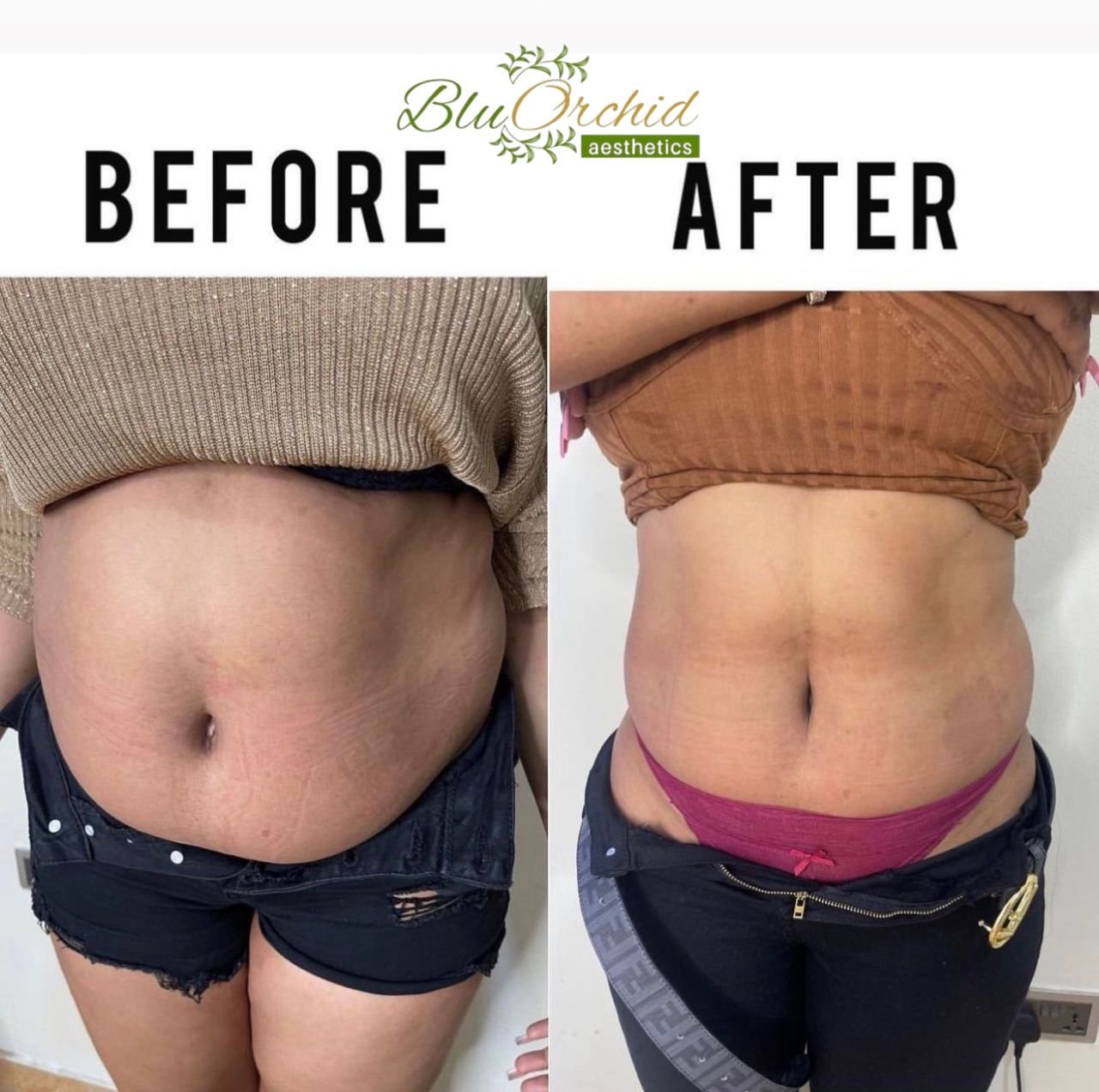
Is It Actually Loose Skin, or Remaining Fat?
This is one of the most important questions.
A soft or hanging area after weight loss does not automatically mean you have excess skin.
You could have:
Loose skin
The tissue appears thin, lax or folded and may hang when standing or moving.
Remaining subcutaneous fat
There is still a noticeable layer of fat beneath the skin.
Both
This is extremely common.
You can lose substantial weight and still have localised fat underneath loose skin.
Reduced muscle tone
A flatter or softer appearance can sometimes reflect changes in muscle mass or tone rather than excess skin alone.
A combination of changes
For example, after pregnancy or significant weight loss, the abdomen may involve fat, loose skin and changes in the abdominal wall.
This is why simply asking:
“What treatment removes loose skin?”
is not always the right starting point.
The better question is:
“What exactly is creating the appearance I want to change?”
Can Exercise Tighten Loose Skin?
Exercise is still valuable after weight loss.
Strength training can help build or preserve muscle underneath the skin, which may improve the overall shape and firmness of an area.
It can also help you maintain your weight and support your general health.
But there is an important limitation:
Exercise cannot remove a substantial amount of excess skin.
If the issue is a significant fold of skin hanging from the abdomen or upper arms, building muscle underneath it will not make that excess tissue disappear.
This is one reason it is useful to separate body composition from skin excess.
Exercise may improve the former.
It cannot surgically remove the latter.
Can Losing More Weight Get Rid of Loose Skin?
Not necessarily.
If you still have excess body fat, further medically appropriate weight loss may reduce your overall size.
But continuing to lose weight simply because you hope the loose skin will disappear can sometimes leave you with less fat and the same, or more obvious, skin laxity.
This is especially important if you have already reached a healthy or intended weight.
Before trying to lose additional weight, it is worth determining whether the remaining concern is actually fat.
What About Protein and Nutrition?
Good nutrition matters, particularly during and after significant weight loss.
Adequate protein supports muscle maintenance and normal tissue repair.
A balanced diet also provides nutrients needed for general health and skin function.
But nutrition should not be presented as a way to “rebuild” severely stretched skin.
If the skin has significant structural laxity, eating more protein will not physically remove the excess tissue.
Think of nutrition as part of maintaining healthy tissue and supporting your body, rather than as a replacement for treatment when substantial excess skin is present.
This becomes particularly important if you are considering surgery, because nutritional status and overall health can affect healing.
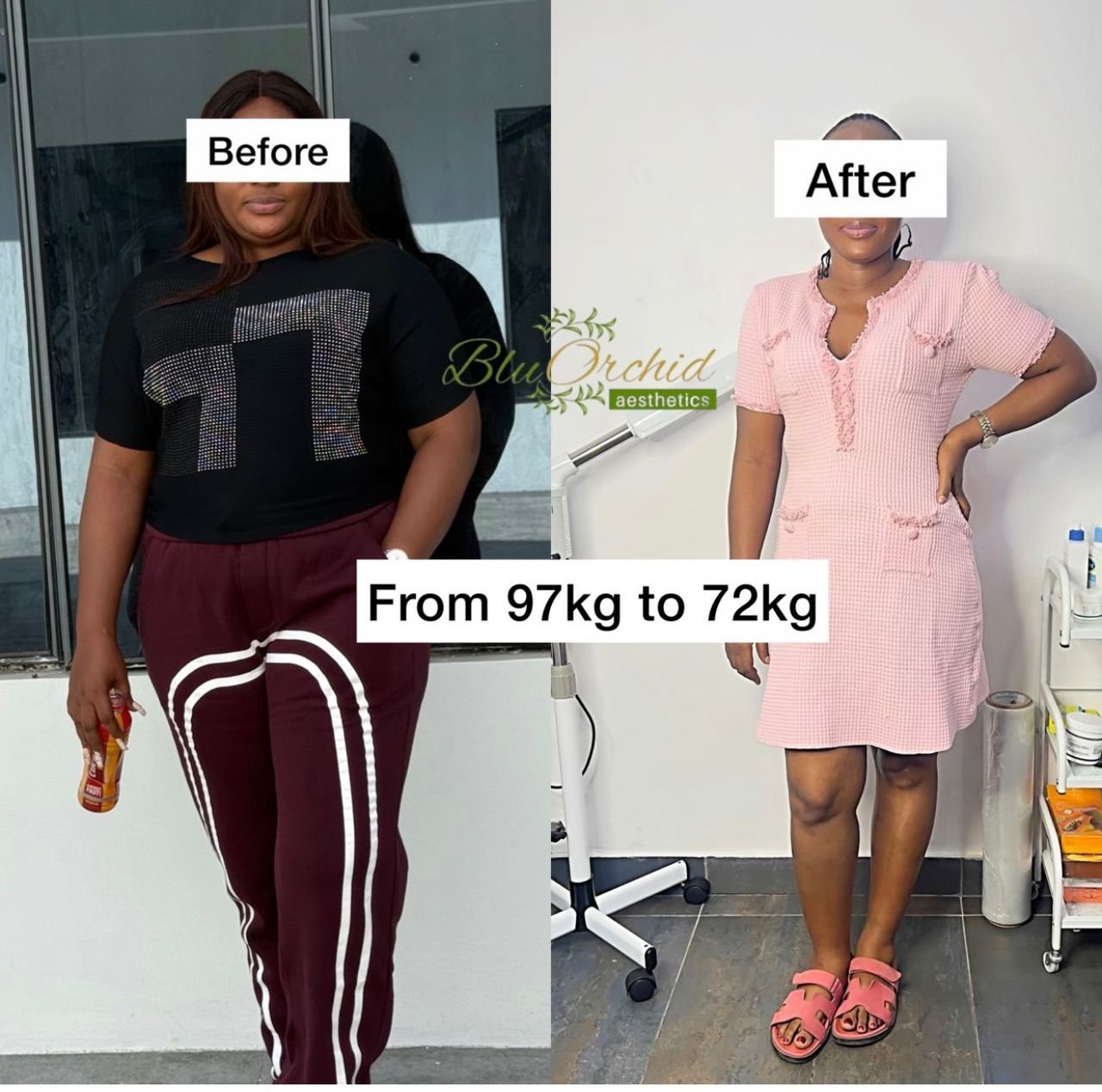
Weight loss at BluOrchid Aesthetics, Lagos
What About Collagen Supplements?
Collagen supplements are often marketed with claims about tightening loose skin.
The evidence around oral collagen supplements is not strong enough to present them as a treatment for significant post-weight-loss excess skin.
And there is an important distinction between:
supporting skin health
and
removing excess skin.
A supplement cannot perform the job of a skin-removal procedure.
If you are considering supplements, discuss them with your healthcare professional, particularly if you take medication or are preparing for a procedure.
Do Creams Tighten Loose Skin?
Moisturising can improve the way skin feels and looks on the surface.
A well-moisturised skin barrier may appear smoother and feel more comfortable.
But topical skincare does not remove a substantial fold of excess skin.
Be cautious about products marketed as being able to “melt” loose skin or dramatically tighten significant post-weight-loss skin.
The biology is much more complicated than that.
If you can physically pinch or pull a significant amount of excess skin away from the body, a cream cannot simply make that tissue disappear.
What About Non-Surgical Skin Tightening?
This is where things become more nuanced.
Some non-invasive body-contouring technologies use energy such as radiofrequency or other technologies to affect tissue and may improve the appearance of firmness in selected patients.
The FDA notes that some non-invasive body-contouring technologies are designed to change body shape or improve the appearance of tissue, and that heat-based technologies can be intended to stimulate collagen or produce some skin contraction.
But these treatments have limits.
They are not equivalent to surgically removing excess skin.
ASPS notes that nonsurgical approaches are generally more limited when the fundamental problem is substantial excess skin, and that more significant laxity may require surgery.
So non-surgical skin tightening may be more relevant when:
- Skin laxity is mild
- There is not a large amount of hanging skin
- You are near your stable weight
- Your expectations are realistic
- A qualified clinician considers the technology appropriate
It becomes less likely to be enough when you have a significant fold of excess skin.
What About Radiofrequency Treatments?
Radiofrequency uses controlled energy to heat tissue.
Some body-contouring technologies use RF energy with the goal of improving firmness or contour.
The FDA recognises radiofrequency as one of the technologies used in non-invasive body contouring, while also emphasising that these procedures have risks and do not produce weight loss.
The important word here is selected.
A person with mild laxity is very different from someone with a large abdominal apron of skin.
The treatment that makes sense for one may not make sense for the other.
And the exact device, treatment parameters, patient factors and clinical indication matter.
What About HIFU?
HIFU, or high-intensity focused ultrasound, is another energy-based treatment used in some aesthetic settings.
Depending on the device and indication, focused ultrasound can be used to target tissue at specific depths.
But again, this should not be confused with surgical skin removal.
If you have mild skin laxity, a clinician may determine that an energy-based treatment is worth considering.
If you have significant hanging skin, however, a non-surgical treatment may not produce the degree of change you are looking for.
The specific device and its approved or intended use should always be confirmed before treatment.
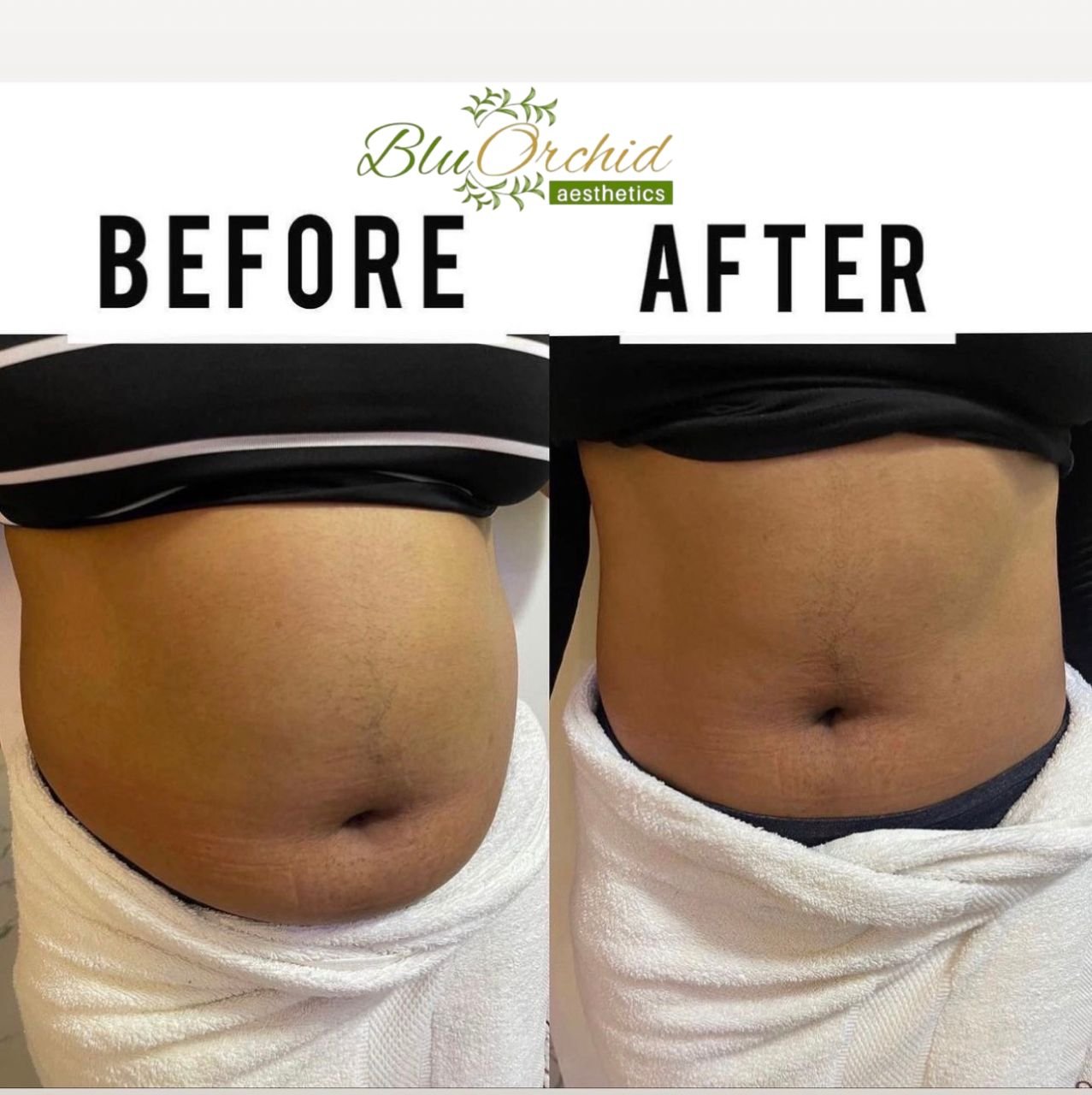
What About Body Contouring?
“Body contouring” can mean several different things.
It may refer to:
- Non-invasive treatments designed to improve body shape
- Treatments that reduce small amounts of localised fat
- Skin-tightening procedures
- Surgical removal of excess skin
- A combination of procedures
This is why simply asking for “body contouring” is not enough.
For significant excess skin after major weight loss, surgical body contouring may involve removing excess skin and sometimes excess fat while reshaping the underlying tissues.
Procedures can include:
- Tummy tuck (abdominoplasty)
- Panniculectomy
- Arm lift (brachioplasty)
- Thigh lift
- Lower body lift
- Breast lift or breast reshaping after major weight loss
The appropriate procedure depends on where the excess skin is and what needs to be changed.
When Is Surgery the More Appropriate Option?
Surgery becomes more relevant when the problem is actual excess skin rather than simply mild laxity.
For example, you may have:
- A lower-abdominal fold hanging over the pubic region
- Significant upper-arm skin that hangs below the arm
- Inner-thigh skin that rubs when walking
- Loose skin around the abdomen and flanks
- Significant post-weight-loss tissue around the lower body
- Skin folds that cause recurrent irritation or difficulty with clothing
In these situations, removing the excess tissue may be the most direct way to address the problem.
ASPS describes surgical body contouring after major weight loss as a way to remove excess sagging skin and fat and improve the underlying body contour.
What Is a Tummy Tuck?
A tummy tuck, or abdominoplasty, is a surgical procedure that removes selected excess abdominal skin and fat and may address the underlying abdominal wall depending on the patient’s needs.
It is particularly relevant when the abdomen has:
- Excess hanging skin
- Abdominal laxity
- Some remaining localised fat
- Changes following pregnancy or major weight loss
It is not simply another name for liposuction.
Liposuction primarily removes fat.
A tummy tuck addresses excess skin and can also address underlying tissue in selected patients.
That distinction is important.
What Is a Panniculectomy?
A panniculectomy focuses on removing the overhanging apron of excess skin and fat from the lower abdomen.
It is different from a cosmetic abdominoplasty, which can involve additional reshaping and tightening.
The two procedures can sometimes be discussed together, but they are not identical.
Your surgeon should explain exactly what procedure is being proposed and why.
What About Loose Skin on the Arms?
Significant loose skin on the upper arms after weight loss is often called “bat wings.”
If there is only mild laxity, strengthening the arms and potentially selected non-surgical treatments may improve the overall appearance.
If there is substantial hanging skin, an arm lift (brachioplasty) is the surgical procedure designed to remove that excess tissue.
Again, the distinction is:
mild laxity → potentially consider tightening
substantial excess skin → consider whether surgical removal is appropriate
Weight loss at BluOrchid Aesthetics, Lagos
What About Loose Skin on the Thighs?
The inner thighs can be particularly noticeable after major weight loss.
Loose skin may:
- Rub together
- Cause discomfort
- Make clothing difficult to fit
- Create folds
- Affect confidence when wearing certain clothes
A thigh lift can remove excess skin and improve the contour of the thigh in appropriately selected patients.
But it is still surgery and comes with scars and a meaningful recovery period.
Can Liposuction Fix Loose Skin?
Not by itself.
This is an important misconception.
Liposuction removes fat.
It does not remove a large amount of excess skin.
In fact, if the skin has poor elasticity, removing more fat without addressing the skin can sometimes make laxity more apparent.
ASPS notes that skin elasticity is an important consideration when planning body contouring and that additional skin-tightening or surgical procedures may be appropriate when significant laxity is present.
So if you have both:
excess fat + loose skin
the treatment plan may need to address both problems rather than assuming that removing fat will solve everything.
What If You Lost Weight With Mounjaro or Another GLP-1 Medication?
This question has become increasingly common.
Significant weight loss, regardless of whether it comes from lifestyle changes, bariatric surgery or medication-assisted weight management, can leave some people with excess skin.
Recent ASPS guidance and commentary specifically discuss patients seeking body-contouring surgery after substantial weight loss associated with GLP-1 medications.
The important point is not that Mounjaro itself “causes” loose skin.
Rather:
When body volume decreases substantially, the skin may not fully contract around the new body size.
If you are still actively losing weight, it may make sense to discuss timing before pursuing definitive skin-removal surgery.
Should You Wait Until Your Weight Stabilises?
Generally, yes, if you are considering surgical body contouring after significant weight loss.
ASPS identifies stable weight as one of the general characteristics of a good body-contouring candidate.
The reason is simple.
If you undergo surgery while still losing a substantial amount of weight, additional weight loss can create new areas of laxity.
On the other hand, significant weight regain can also change the result.
Your clinician can help determine when your weight and health are sufficiently stable for an appropriate procedure.
What About Pregnancy After a Tummy Tuck?
If you are considering abdominal surgery and plan to have another pregnancy, this should be part of the consultation.
Pregnancy can stretch the abdominal tissues again and may alter the result of a previous tummy tuck.
That does not mean pregnancy is impossible after surgery.
It means timing matters.
If you are still planning pregnancies, discuss that before committing to an abdominal body-contouring procedure.
When Loose Skin Is More Than a Cosmetic Concern
For some people, excess skin is not simply about appearance.
Large skin folds can contribute to:
- Chafing
- Difficulty with clothing
- Moisture accumulation
- Skin irritation
- Recurrent infections
- Difficulty exercising comfortably
ASPS notes that excess skin after significant weight loss can cause practical and physical problems in addition to aesthetic concerns.
If you are experiencing persistent irritation, pain, recurrent infections or other symptoms beneath a skin fold, speak with a healthcare professional rather than treating it purely as a cosmetic issue.
What Actually Helps? A Practical Guide
| Your concern | What may help |
|---|---|
| Mild skin laxity | Strength training, stable weight, selected non-surgical tightening |
| Small amount of remaining fat | Appropriate body-contouring treatment after assessment |
| Moderate skin laxity | Individual assessment; energy-based treatment may be considered |
| Significant hanging skin | Surgical body contouring may be more appropriate |
| Excess abdominal skin | Tummy tuck or other abdominal contouring procedure |
| Lower-abdominal skin apron | Panniculectomy or abdominoplasty depending on the situation |
| Upper-arm excess skin | Arm lift |
| Inner-thigh excess skin | Thigh lift |
| Multiple areas after major weight loss | Comprehensive body-contouring assessment |
This is a guide, not a treatment prescription.
What You Should Not Expect From Treatment
Be cautious if someone promises that a treatment will:
- Completely remove loose skin without surgery
- Give you the same result as a tummy tuck without surgery
- Permanently tighten severe excess skin with one session
- “Melt” loose skin
- Replace exercise and weight management
- Guarantee a specific result
Non-invasive body contouring can have benefits for selected patients, but the FDA emphasises that results can vary, may be temporary and may require more than one treatment.
And when the underlying problem is substantial excess skin, a procedure that does not remove skin cannot simply reproduce the effect of removing it.
What Should You Do Before Choosing a Treatment?
Start with an assessment.
A clinician should look at:
- Your current weight
- Whether your weight has stabilised
- How much skin laxity you have
- How much fat remains underneath
- Skin quality and elasticity
- The area you want to change
- Whether you have had pregnancy or previous surgery
- Your medical history
- Your goals
- Whether you are considering future pregnancy or further weight loss
Only after those questions are answered does it make sense to discuss treatment.
The Bottom Line
If you have loose skin after weight loss, you have not failed at weight loss.
Your body has simply changed in a way that diet and exercise cannot always reverse.
Mild laxity may improve with time, stable weight, muscle development and selected non-surgical treatments.
But significant excess skin is different.
When the problem is a substantial amount of skin that has lost its ability to retract adequately, surgical body contouring is the most direct way to remove that tissue.
The goal should not be to find the most aggressive treatment.
It should be to correctly identify whether you have:
fat, loose skin, reduced muscle tone, or a combination of all three.
Once you know that, the treatment decision becomes much clearer.
Frequently asked questions
Will loose skin go away on its own after weight loss?
Some skin may gradually retract after weight loss, particularly when laxity is mild. However, significant excess skin may not fully contract because the skin and supporting tissues may have limited elasticity.
How long should I wait after losing weight before treating loose skin?
There is no single timeline for everyone. If you are considering surgery, it is generally important that your weight has stabilised rather than continuing to lose significant amounts of weight.
Can exercise tighten loose skin after weight loss?
Exercise can build or preserve muscle and improve body composition, but it cannot remove a significant amount of excess skin.
Can creams remove loose skin?
No cream should be expected to remove substantial excess skin. Moisturising can improve skin comfort and surface appearance, but it is not equivalent to removing excess tissue.
Does collagen tighten loose skin?
Collagen is important to skin structure, but collagen supplements should not be presented as a treatment for substantial post-weight-loss excess skin.
Can HIFU tighten loose skin?
Some ultrasound-based technologies are used for tissue tightening or body contouring, but suitability depends on the specific device, treatment area and degree of laxity. They should not be considered equivalent to surgical skin removal.
Can radiofrequency tighten loose skin?
Some RF-based body-contouring technologies are intended to improve firmness or skin contraction. Results vary, and significant excess skin may require a surgical approach.
Does liposuction remove loose skin?
No. Liposuction primarily removes fat. If substantial excess skin is present, removing fat alone may not address the problem and can sometimes make laxity more noticeable.
What is the best treatment for loose belly skin after weight loss?
There is no single best treatment. Mild laxity and significant hanging abdominal skin are very different problems. Depending on the assessment, options may range from lifestyle measures and selected non-surgical treatments to surgical body contouring.
Can I have a tummy tuck after losing weight with Mounjaro?
Potentially, but timing and medical suitability matter. If you are still actively losing weight, discuss when your weight is sufficiently stable before pursuing surgery.
Does body contouring help after major weight loss?
Yes, surgical body contouring is specifically used to remove excess skin and improve body contours after substantial weight loss.
Is loose skin after weight loss dangerous?
Usually, loose skin itself is not dangerous. However, large skin folds can contribute to chafing, irritation and moisture-related skin problems. Persistent symptoms should be medically assessed.
Does body contouring leave scars?
Surgical skin removal requires incisions and therefore leaves scars. The location and extent of scarring depend on the procedure. This is an important part of the consultation and decision-making process. ASPS notes that visible scars are an expected consideration with post-weight-loss body contouring.
Considering Treatment After Weight Loss?
If you have lost weight and are unsure whether what remains is loose skin, stubborn fat or a combination, a proper assessment is more useful than choosing a procedure based on a photo or treatment advertisement.
At BluOrchid Aesthetics, the starting point should be understanding the concern and determining which treatment category is appropriate.
Book a Consultation to discuss your options.
- Medical Weight Loss in Lagos: weightloss
- HIFU in Lagos: hifu lagos
- Book a Consultation: consultation
A consultation at BluOrchid begins with exactly this assessment.
One hour with our doctors. An honest assessment. A plan built around you. ₦50,000, credited in full toward your first treatment.
Book your consultation Doctor-led assessment at Lekki Phase 1, Lagos.