How Long Do Dermal Fillers Last in Each Area?
How long do dermal fillers last? Expected duration by area, from lips and cheeks to chin and jaw, and what makes results fade sooner.


One of the most important questions to ask before getting dermal fillers is: How long will the result last?
The answer is not the same for every part of the face.
Dermal filler longevity can vary depending on where the filler is placed, the product used, the amount injected, your individual characteristics, and how your body responds to the treatment.
This means that asking how long “filler” lasts without specifying the treatment area can give you an incomplete answer.
Lip filler, cheek filler, chin filler and other facial filler treatments may not have exactly the same longevity.
How long do dermal fillers generally last?
Many modern dermal fillers are temporary and gradually break down over time.
However, there is no single expiry date that applies to every patient.
The same filler product can produce different durations in different people, and the treatment area can also make a difference.
Your practitioner should therefore give you an expected range rather than promise that your filler will last for a precise number of months.
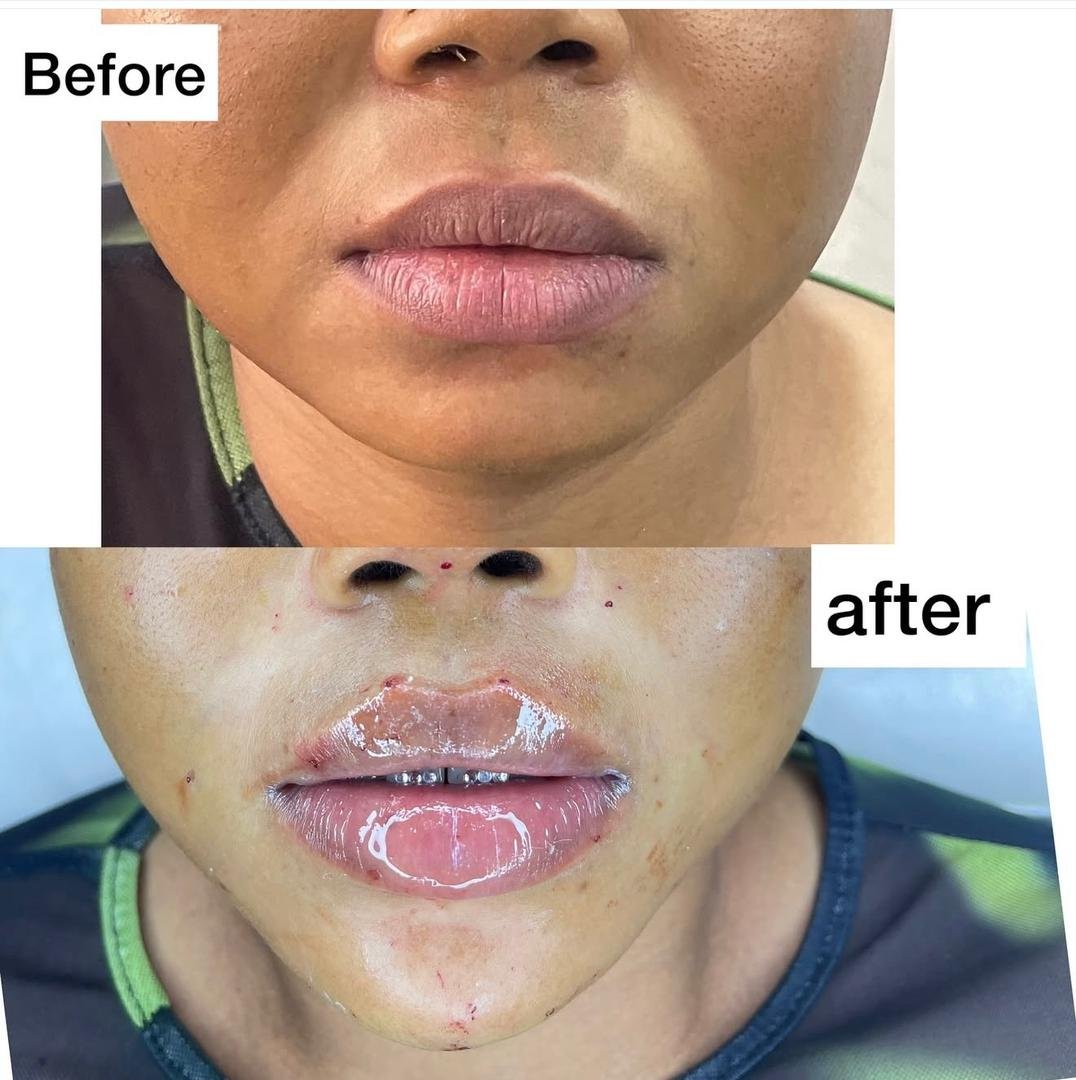
How long does lip filler last?
Lip filler is one of the areas where patients often expect a straightforward answer.
In reality, longevity can vary considerably.
The lips are highly mobile, and factors such as your individual metabolism, the product selected, the amount used and your treatment history can influence how long the result remains noticeable.
Some people may notice a gradual reduction in volume before the filler has completely disappeared.
This is why you should not assume that your lips will suddenly return to their original appearance on a particular date.
What can affect lip filler longevity?
Your practitioner may consider:
- The filler product used
- The amount injected
- Your natural lip anatomy
- Your individual response to the filler
- Previous lip filler treatments
- Your treatment goals
If maintaining a particular result is important to you, ask your practitioner what sort of longevity they would reasonably expect for your specific treatment.
How long does cheek filler last?
Cheek filler can have a different longevity profile from lip filler.
The cheeks generally experience less movement than the lips, and the treatment may be designed to restore or create volume, improve facial proportions or provide structural support.
How long the result remains noticeable will still depend on the product, amount, placement and individual patient.
Importantly, the fact that a filler is still present does not necessarily mean the result will look exactly the same as it did immediately after treatment.
The appearance can change gradually over time.
How long does chin filler last?
Chin filler is commonly used to influence the appearance of the chin and lower face.
Its longevity depends on the same broad factors that affect other filler treatments, including the product used, the amount injected and individual patient characteristics.
The treatment objective also matters.
Someone having a small amount of filler for subtle refinement may have a different treatment plan from someone requiring more substantial structural enhancement.
Your practitioner should assess your facial proportions before recommending the amount and type of filler.
How long does jawline filler last?
Jawline filler is another area where patients often want to know exactly how long the result will remain.
The answer depends on the individual treatment.
The amount of filler required, the product selected, the anatomy of the jawline and the patient’s response can all influence longevity.
Because jawline treatment can involve treating more than one point along the lower face, the overall treatment plan should be considered rather than focusing only on how long one syringe of filler lasts.
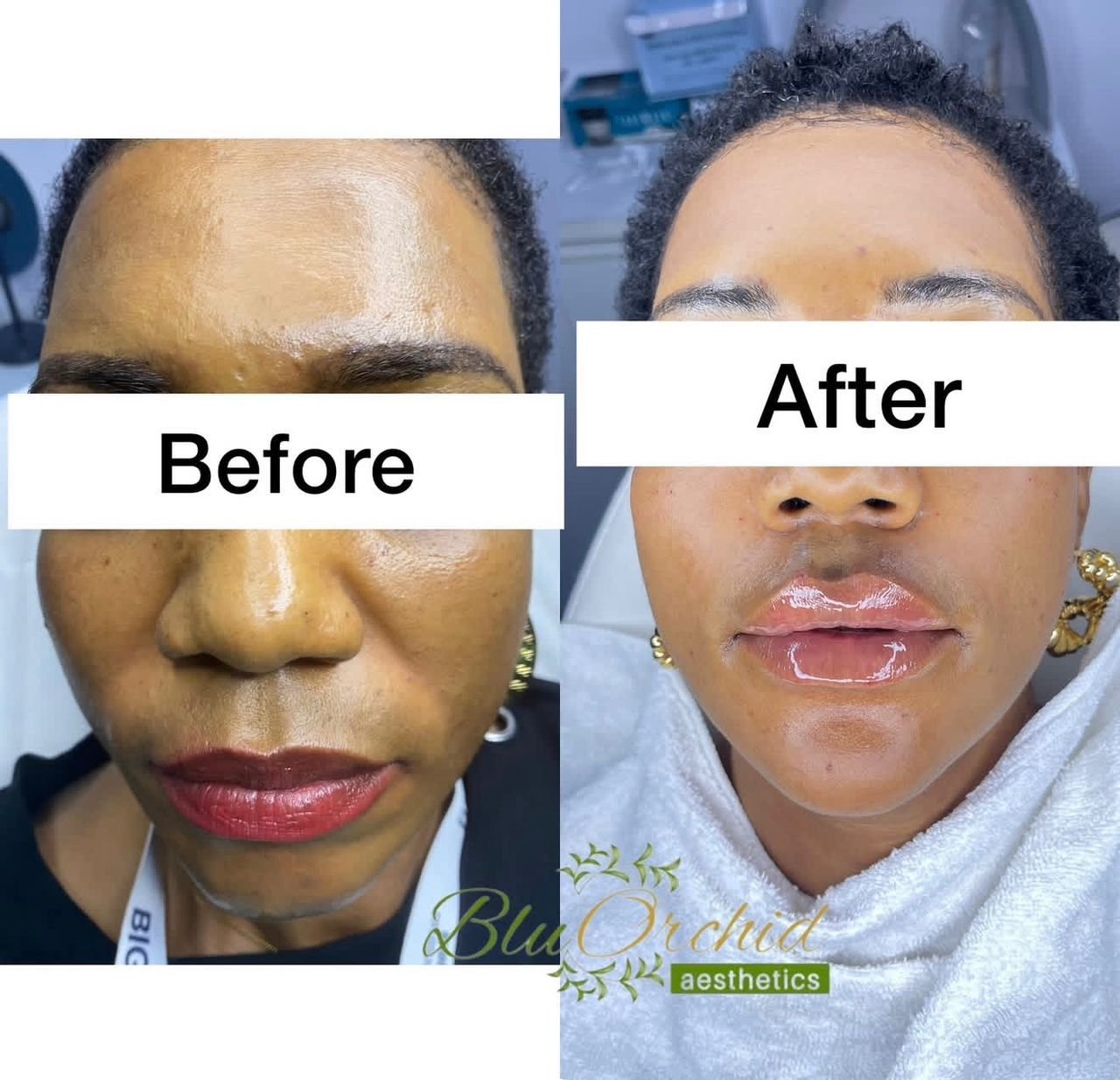
Lip filler at BluOrchid Aesthetics, Lagos
How long does nasolabial fold filler last?
Nasolabial folds are the lines that run from the sides of the nose towards the corners of the mouth.
Filler may sometimes be used in this area, depending on the patient’s facial anatomy and the cause of the concern.
However, the best treatment plan is not necessarily to simply fill the fold itself.
Your practitioner should assess the surrounding facial structure and determine what approach is appropriate.
Longevity will depend on the product, placement and individual response.
How long does tear trough filler last?
The under-eye area requires particular care because it is a delicate and anatomically complex area.
Not everyone with under-eye hollows is an appropriate candidate for filler.
If filler is being considered, the practitioner should assess the area carefully and discuss whether the potential benefits are appropriate for you.
You should also be cautious about assuming that a filler treatment in one facial area will have the same longevity as the same product used elsewhere.
Why does filler last longer in some areas than others?
There are several reasons.
Movement
Areas that move frequently may behave differently from areas that are relatively stable.
The lips, for example, are constantly involved in talking, eating and facial expression.
Product selection
Different fillers have different characteristics and are designed for different treatment purposes.
The product selected should be appropriate for the area and the intended result.
Amount and placement
The amount used and where it is placed can influence the overall treatment.
A treatment designed to create subtle definition may be very different from one designed to restore a larger amount of lost volume.
Individual response
Everyone’s body responds differently.
Your metabolism, tissue characteristics and other individual factors can influence how long a filler remains noticeable.
This is one reason a responsible practitioner should give you an expected range rather than guarantee an exact duration.
Does more filler make it last longer?
Not necessarily.
Using more filler does not automatically mean that the result will last proportionally longer.
The appropriate amount should be based on the treatment objective and your anatomy, not simply on the desire to make the result last as long as possible.
Trying to extend longevity by having an unnecessarily large amount of filler placed is not the same thing as having a well-planned treatment.
What happens when dermal filler starts to wear off?
Filler generally does not have a switch that suddenly turns the result off.
As the product gradually breaks down, you may notice that the original effect becomes less pronounced.
For example, your lips may gradually lose some of the additional volume or facial definition may become less noticeable.
This does not necessarily mean that you need another treatment immediately.
The appropriate time for further treatment depends on your goals and how you feel about the result.
Do you need to have filler topped up every few months?
Not necessarily.
There is no universal schedule that every filler patient should follow.
Your practitioner should assess the result and discuss whether further treatment is actually necessary.
If you are happy with your appearance, there may be no reason to add more filler simply because a certain amount of time has passed.
This is particularly important when the goal is a natural-looking result.
The objective should be to maintain an appropriate result rather than continually adding volume.
Can filler last longer than expected?
Yes, individual experiences can vary.
A patient may continue to have some visible effect after the timeframe they were initially expecting.
This is another reason not to treat published longevity estimates as an exact expiry date.
When discussing filler, ask your practitioner:
“How long would you reasonably expect this treatment to remain noticeable in my case?”
That is a much more useful question than asking for a guaranteed number of months.
Does the area matter more than the filler brand?
Both matter.
The product selected should be appropriate for the area and the treatment objective, while the location of the treatment can also influence how long the result remains noticeable.
This is why a practitioner should not choose a filler solely because it is popular or because it lasted a certain amount of time for another patient.
The right product is the one that is appropriate for the specific treatment.
What should you ask before getting dermal filler?
Before treatment, ask your practitioner:
- Which filler are you recommending?
- Why is it appropriate for this area?
- How long would you reasonably expect the result to last?
- How much filler are you recommending?
- What result are you trying to achieve?
- What happens as the filler gradually wears off?
- Will I need another treatment?
- Is this area appropriate for filler in my case?
These questions help you understand the treatment rather than making your decision based solely on price or longevity.
So, how long do dermal fillers last?
There is no single answer for every area or every patient.
Lip, cheek, chin, jawline and other facial fillers can have different expected durations, and individual results vary.
The longevity of your filler can depend on:
- The treatment area
- The filler product
- The amount used
- Where it is placed
- Your individual response
- Your treatment history
- Your aesthetic goals
A good consultation should therefore give you a realistic expectation rather than a guarantee.
If you are considering dermal filler in Lagos, the most important question is not simply “How long will it last?”
It is:
“Is this the right treatment for me, and what should I realistically expect from it?”
Considering dermal fillers in Lagos?
At BluOrchid Aesthetics, filler treatment is approached as an individual facial assessment rather than a one-size-fits-all procedure. The aim is to understand your facial structure, concerns and desired outcome before deciding whether filler, and how much, is appropriate.
If you are considering lip, cheek, chin, jawline or other dermal filler treatment, book a consultation with Dr Gigi to discuss your options and what you can realistically expect from treatment.
Frequently asked questions
How long do dermal fillers generally last?
Many modern dermal fillers are temporary and gradually break down over time. However, there is no single expiry date that applies to every patient. The same filler product can produce different durations in different people, and the treatment area can also make a difference.
How long does lip filler last?
Lip filler is one of the areas where patients often expect a straightforward answer. In reality, longevity can vary considerably. The lips are highly mobile, and factors such as your individual metabolism, the product selected, the amount used and your treatment history can influence how long the result remains noticeable.
How long does cheek filler last?
Cheek filler can have a different longevity profile from lip filler. The cheeks generally experience less movement than the lips, and the treatment may be designed to restore or create volume, improve facial proportions or provide structural support.
How long does chin filler last?
Chin filler is commonly used to influence the appearance of the chin and lower face. Its longevity depends on the same broad factors that affect other filler treatments, including the product used, the amount injected and individual patient characteristics.
A consultation at BluOrchid begins with exactly this assessment.
One hour with our doctors. An honest assessment. A plan built around you. ₦50,000, credited in full toward your first treatment.
Book your consultation Doctor-led assessment at Lekki Phase 1, Lagos.