Home Remedies for Dark Spots: What Actually Works
Do black soap, lemon and turmeric fade dark spots? Learn which home remedies can help, which can irritate skin and what works better.


If you have ever searched for home remedies for dark spots, you have probably come across the same familiar suggestions: African black soap, lemon juice, turmeric, sugar scrubs, baking soda, or a mixture of whatever happens to be in the kitchen.
Some of these remedies come from generations of skincare tradition. Others spread through social media because they appear inexpensive, natural and easy to try.
But there is an important question that often gets missed:
Is the remedy actually treating the pigmentation, or is it simply irritating the skin and making the problem harder to treat?
For darker skin, that distinction matters.
At BluOrchid Aesthetics, we see patients who have spent months moving from one DIY remedy to another, trying to fade marks left by acne, insect bites, shaving, irritation or other causes. Sometimes the routine itself becomes part of the problem.
The goal should not be to make naturally dark skin lighter.
The goal is to understand why the area became darker and restore a more even, healthy-looking skin tone.
So, do home remedies fade dark spots?
Some ingredients used in home remedies may have skincare properties, but that does not mean the homemade treatment is an effective or predictable way to treat hyperpigmentation.
Dark spots are usually a response to something that has happened to the skin.
A pimple becomes inflamed. An insect bite is scratched. A razor bump develops. A product irritates the skin. The skin is exposed to sunlight. Hormonal changes contribute to pigmentation.
The skin can respond by producing more melanin, leaving a darker area behind.
This is one reason dark spots can be particularly persistent in darker skin tones. And if a home remedy repeatedly irritates the skin, it can potentially create another inflammatory trigger rather than removing the original one. Dermatologists similarly recommend identifying the cause of pigmentation and using gentle skincare rather than irritating products.
So before asking, “What can I put on this dark spot?”, ask:
“Why is this spot dark in the first place?”
That is where effective treatment begins.

What about African black soap?
African black soap has a long history of use as a cleansing product, and many people enjoy the way it leaves their skin feeling clean.
But cleaner is not necessarily clearer.
Some black soaps can be quite drying or irritating, particularly when they are used frequently or when the skin barrier is already compromised.
And if your objective is to fade pigmentation, repeatedly stripping or irritating the skin is not necessarily helpful.
This is especially relevant if your dark spots developed after:
- Acne
- Shaving or razor bumps
- Insect bites
- Eczema or irritation
- Aggressive exfoliation
- Using strong skincare products
- Previous bleaching products
If the skin is already reactive, a harsh cleansing routine can keep inflammation going.
Should you stop using black soap?
Not necessarily because the ingredient is automatically “bad”.
The better question is:
How does your skin respond to the particular product you are using?
If your skin feels tight, burning, excessively dry or irritated after cleansing, it may be time to reconsider the cleanser.
For pigmentation-prone skin, gentle cleansing is usually a better foundation than trying to scrub the colour away.
What about lemon juice for dark spots?
This is one of the home remedies I would be most cautious about.
Lemon can feel like an obvious choice because it is acidic and people associate acidity with exfoliation or brightening.
But lemon juice is not a controlled skincare treatment.
Putting citrus juice directly onto your skin can cause irritation. Certain citrus compounds can also interact with sunlight and cause a phototoxic reaction known as phytophotodermatitis. That reaction can leave behind post-inflammatory pigmentation, sometimes making the original concern worse rather than better.
This matters even more if you live somewhere with significant daily sun exposure.
So the classic advice to:
“Put lemon on the dark spot and go about your day”
is not advice I would recommend.
A dark spot does not need to be burned, peeled or aggressively stripped to disappear.
It needs the underlying trigger addressed and the skin treated appropriately.
Brand at BluOrchid Aesthetics, Lagos
Can turmeric fade dark spots?
Turmeric is different.
Curcumin, one of turmeric’s major compounds, has attracted interest for its anti-inflammatory and antioxidant properties. Turmeric is also widely used in traditional beauty practices.
But there is a difference between an ingredient having interesting biological properties and a homemade turmeric paste being a reliable treatment for hyperpigmentation.
The concentration, formulation, stability and penetration are not controlled in a kitchen mixture.
You also have to consider what else is being added to the mixture.
Turmeric plus lemon.
Turmeric plus baking soda.
Turmeric plus a harsh scrub.
Turmeric plus an irritating soap.
At that point, you may have created a treatment that is much more aggressive than the original dark spot requires.
And turmeric can temporarily stain the skin yellow-orange, which can make it difficult to judge whether the pigmentation itself has actually improved.
So should turmeric never touch your skin?
That would be too simplistic.
The point is not that every traditional ingredient is dangerous.
The point is that “natural” does not automatically mean effective, gentle or appropriate for every skin concern.
The bigger problem with DIY pigmentation treatments
The problem with many home remedies is not simply that they “don’t work.”
It is that they can make it difficult to know what your skin is responding to.
You may start with a dark mark.
Then you apply lemon.
Your skin becomes irritated.
You scrub it because you think the irritation means the product is working.
The skin becomes more inflamed.
The pigmentation becomes more noticeable.
You then add another remedy.
And the cycle continues.
For darker skin, inflammation can itself leave behind more pigmentation.
That is why treating pigmentation is not a competition to find the strongest ingredient.
More aggressive does not automatically mean more effective.
What actually helps dark spots?
A better approach starts with four questions.
1. What caused the pigmentation?
Was it:
- Acne?
- An insect bite?
- A razor bump?
- Friction?
- Sun exposure?
- Hormonal changes?
- An irritating skincare product?
- A previous chemical or bleaching product?
- Another skin condition?
If the trigger is still present, fading the mark becomes much harder.
2. Is your skincare routine irritating your skin?
If a product repeatedly burns, stings, dries or inflames your skin, it deserves a second look.
The aim is to create an environment where the skin can recover rather than constantly triggering inflammation.
3. Are you protecting the skin from the sun?
Sun exposure can make pigmentation more noticeable and can interfere with attempts to even out the skin tone.
Daily sunscreen is therefore not an optional extra when pigmentation is your concern. Dermatologists recommend broad-spectrum SPF 30 or higher, with tinted sunscreen containing iron oxide being particularly useful for pigmentation concerns in darker skin because visible light can also contribute to darkening.
4. Does the pigmentation need professional treatment?
Some marks will gradually fade once the original trigger has stopped.
Others are more persistent.
If the pigmentation is widespread, repeatedly returning, unusually dark, associated with another skin problem, or simply not responding to a sensible skincare routine, professional assessment can help determine what you are actually treating.
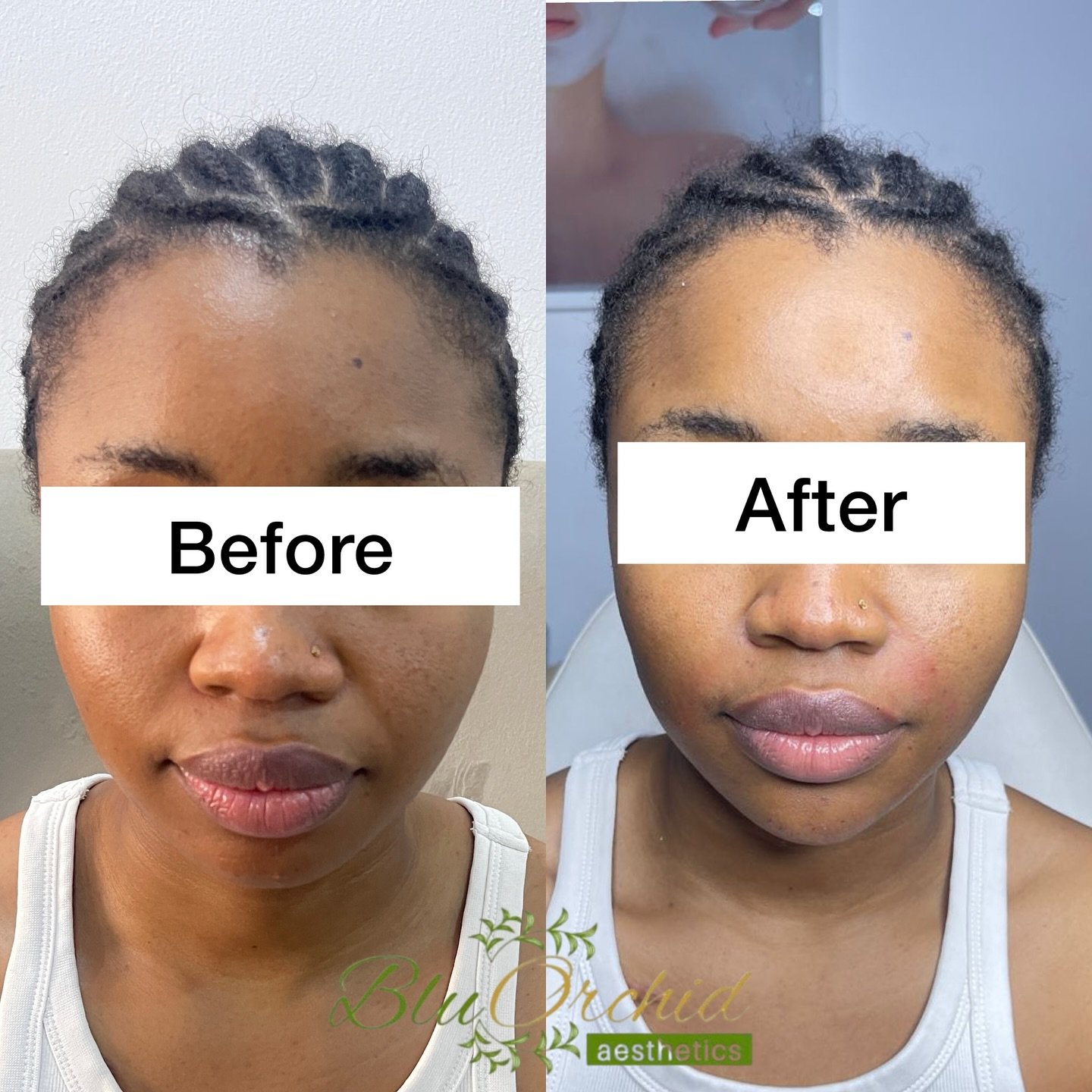
What can you use instead of kitchen remedies?
The answer depends on the type of pigmentation.
For some people, a simple routine built around:
gentle cleansing → appropriate pigmentation treatment → moisturising → sun protection
may be enough to create gradual improvement.
Certain evidence-based ingredients can also help with dark spots, including ingredients such as azelaic acid, kojic acid and vitamin C. The right choice depends on the skin concern, tolerance and overall routine.
For more persistent pigmentation, professional treatment may be appropriate.
At BluOrchid, that can include carefully selected chemical peels, Cosmelan or other treatment approaches, depending on the diagnosis and the patient’s skin.
The treatment should follow the pigmentation, rather than forcing every patient into the same protocol.
You can learn more about professional options through our Hyperpigmentation Treatment service.
What if you have already tried lemon, black soap or turmeric?
First, don’t panic.
You do not need to “counteract” a home remedy by immediately applying another strong product.
Instead:
Stop anything that is clearly irritating your skin.
If a product burns, stings or causes significant redness, give your skin a chance to settle.
Keep your routine simple.
Gentle cleansing, moisturising and appropriate sun protection can provide a better foundation than layering multiple DIY treatments.
Don’t scrub the pigmentation away.
Dark spots are not dirt sitting on top of the skin.
Scrubbing harder does not mean the pigment will disappear faster.
Don’t switch to a bleaching cream.
If a home remedy has failed, moving to an unregulated skin-lightening product is not the logical next step.
Fast lightening is not the same thing as healthy pigment correction.
Give the skin time.
Pigmentation can take weeks or months to fade, depending on its cause and depth. Once the trigger has been removed, some pigmentation gradually becomes less noticeable over time.
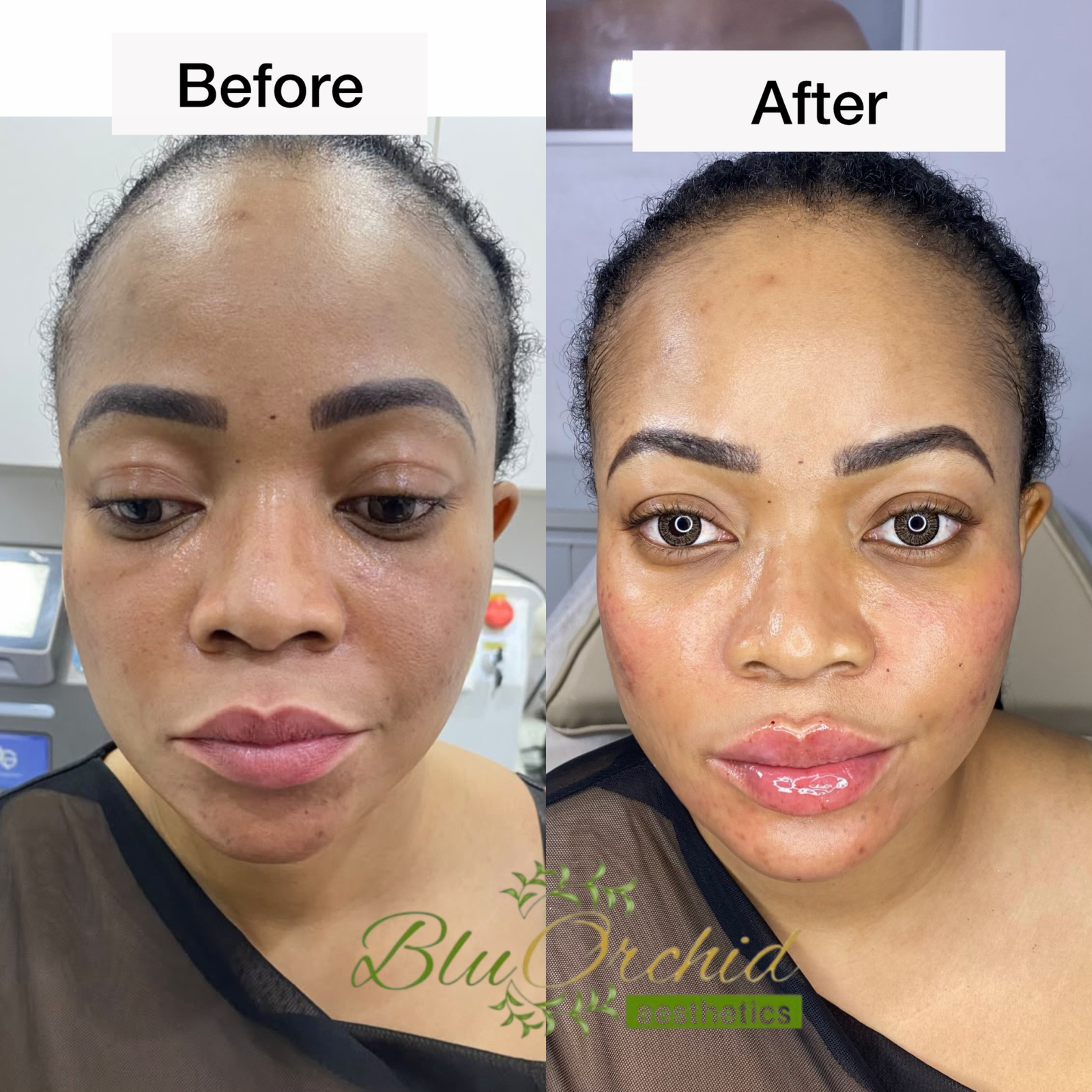
The lesson from Ada’s story
One of the reasons we wanted to include this conversation in our pigmentation education is because this is how skincare often happens in real life.
You notice a dark mark.
Someone recommends black soap.
Someone else recommends lemon.
A friend says turmeric worked for her.
Social media introduces another mixture.
And suddenly you have a bathroom shelf full of remedies, but no clear understanding of what caused the pigmentation in the first place.
That is the routine problem.
The answer is not necessarily another product.
Sometimes the most important step is stopping the cycle and asking a better question.
What is causing this pigmentation, and what does my skin actually need?
That is the approach we take at BluOrchid.
Even skin tone is not the same as lighter skin
This distinction matters.
Pigmentation treatment should not be about changing someone’s natural complexion.
Dark skin is not a problem that needs to be corrected.
When we talk about treating hyperpigmentation, we are talking about reducing unwanted contrast between areas of the skin and helping the complexion look more even.
That may mean treating marks left by acne.
It may mean addressing pigmentation after inflammation.
It may mean managing recurring melasma.
It may mean improving the appearance of pigmentation caused by shaving, insect bites or irritation.
The objective is an even skin tone, not a lighter identity.
When should you see a doctor about dark spots?
Consider professional assessment if:
- The pigmentation keeps returning.
- It is spreading or changing.
- You are not sure what caused it.
- It is accompanied by itching, scaling, pain or persistent inflammation.
- Your skin has become unusually sensitive after using skincare products.
- You have tried several remedies without improvement.
- You are considering chemical peels, lasers or other procedures.
- You have a history of using strong bleaching or unregulated products.
- You are tempted to use increasingly aggressive treatments because the marks are not fading.
Sometimes what looks like a simple dark spot is part of a larger skin condition.
The first step is getting the diagnosis right.
Frequently asked questions
Does lemon remove dark spots?
Lemon juice is not a recommended treatment for dark spots. Citrus applied to skin can cause irritation and, with sunlight exposure, certain citrus compounds can cause phototoxic reactions that may leave additional pigmentation.
Is black soap good for pigmentation?
Black soap may be useful as a cleanser for some people, but it is not a dedicated pigmentation treatment. If the product leaves your skin dry or irritated, it may be counterproductive for pigmentation-prone skin.
Does turmeric remove dark spots?
Turmeric contains compounds with interesting biological properties, but a homemade turmeric mixture is not a predictable treatment for hyperpigmentation. A properly formulated skincare product or clinically appropriate treatment is generally easier to assess and control.
Can home remedies make dark spots worse?
Yes. Irritation or inflammation can contribute to post-inflammatory hyperpigmentation, particularly in darker skin. This is why aggressive DIY treatments can sometimes create another problem while trying to solve the first one.
How long do dark spots take to fade naturally?
There is no single timeline. Some superficial marks gradually fade once their trigger is removed, while deeper or persistent pigmentation can take considerably longer. The underlying cause, depth and continued exposure to triggers all matter.
What is better than home remedies for dark spots?
Start by identifying the cause, reducing irritation, protecting the skin from sunlight and using evidence-based skincare appropriate for your skin. Persistent pigmentation may benefit from professional assessment and treatment.
Should I bleach my skin if home remedies don't work?
No. Pigment correction and skin bleaching are not the same goal. If pigmentation is persistent, the better next step is to determine why it is happening and choose an appropriate treatment rather than escalating to unregulated lightening products.
The Bottom Line
Black soap, lemon and turmeric are familiar names in conversations about home remedies for dark spots.
But familiar does not necessarily mean effective.
And natural does not necessarily mean gentle.
The most important step is to stop treating pigmentation as something that simply needs to be scrubbed, peeled or bleached away.
Understand the cause. Protect the skin. Reduce irritation. Use appropriate ingredients. And seek professional help when the pigmentation is persistent or difficult to understand.
At BluOrchid, our approach is centred on restoring a more even, healthy-looking complexion rather than changing your natural skin colour.
If you have tried multiple home remedies and still cannot understand why your pigmentation persists, Book a Consultation. The consultation fee is ₦50,000 and is credited toward selected treatment if you decide to proceed.
A consultation at BluOrchid begins with exactly this assessment.
One hour with our doctors. An honest assessment. A plan built around you. ₦50,000, credited in full toward your first treatment.
Book your consultation Doctor-led assessment at Lekki Phase 1, Lagos.