HIFU vs Thread Lift vs Facelift: Which Is Right?
HIFU vs thread lift vs facelift: compare how each works, what it can realistically change, downtime, longevity and who each option suits.

When the face starts to look less defined, the first question is often:
“What can I do about the sagging?”
But that question can lead you into a confusing world of HIFU, thread lifts, skin tightening, “non-surgical facelifts” and, eventually, surgical facelifts.
They are not interchangeable.
HIFU, a thread lift and a facelift work in fundamentally different ways.
HIFU uses focused ultrasound energy.
A thread lift uses absorbable threads placed beneath the skin to provide mechanical support and repositioning.
A facelift is surgery that physically repositions and removes excess tissue.
So which one is best?
There is no universal answer.
The better question is:
How much laxity do you have, what are you trying to change, and how much downtime and invasiveness are you willing to accept?
HIFU vs Thread Lift vs Facelift at a glance
| Item | HIFU | Thread Lift | Facelift |
|---|---|---|---|
| Type | Energy-based treatment | Minimally invasive procedure | Surgery |
| Main approach | Tissue tightening/remodelling | Mechanical support and repositioning | Surgical lifting and tissue repositioning |
| Incisions | No surgical incision | Small insertion points | Surgical incisions |
| Anaesthesia | Depends on treatment | Local anaesthesia or other approach depending on procedure | Usually anaesthesia appropriate to surgery |
| Downtime | Generally limited | Usually more than HIFU | Significantly greater |
| Best suited to | Mild to moderate laxity in selected patients | Selected mild to moderate laxity where some lift is appropriate | More significant facial and neck laxity |
| Result | Gradual tightening/skin-quality improvement | More immediate visible lift with subsequent changes as tissues settle | More substantial structural correction |
| Longevity | Variable | Temporary; threads eventually absorb | Generally longer-lasting than non-surgical options |
| Surgery | No | No, but invasive | Yes |
The exact experience and result depend on the individual treatment, technique, anatomy and practitioner.
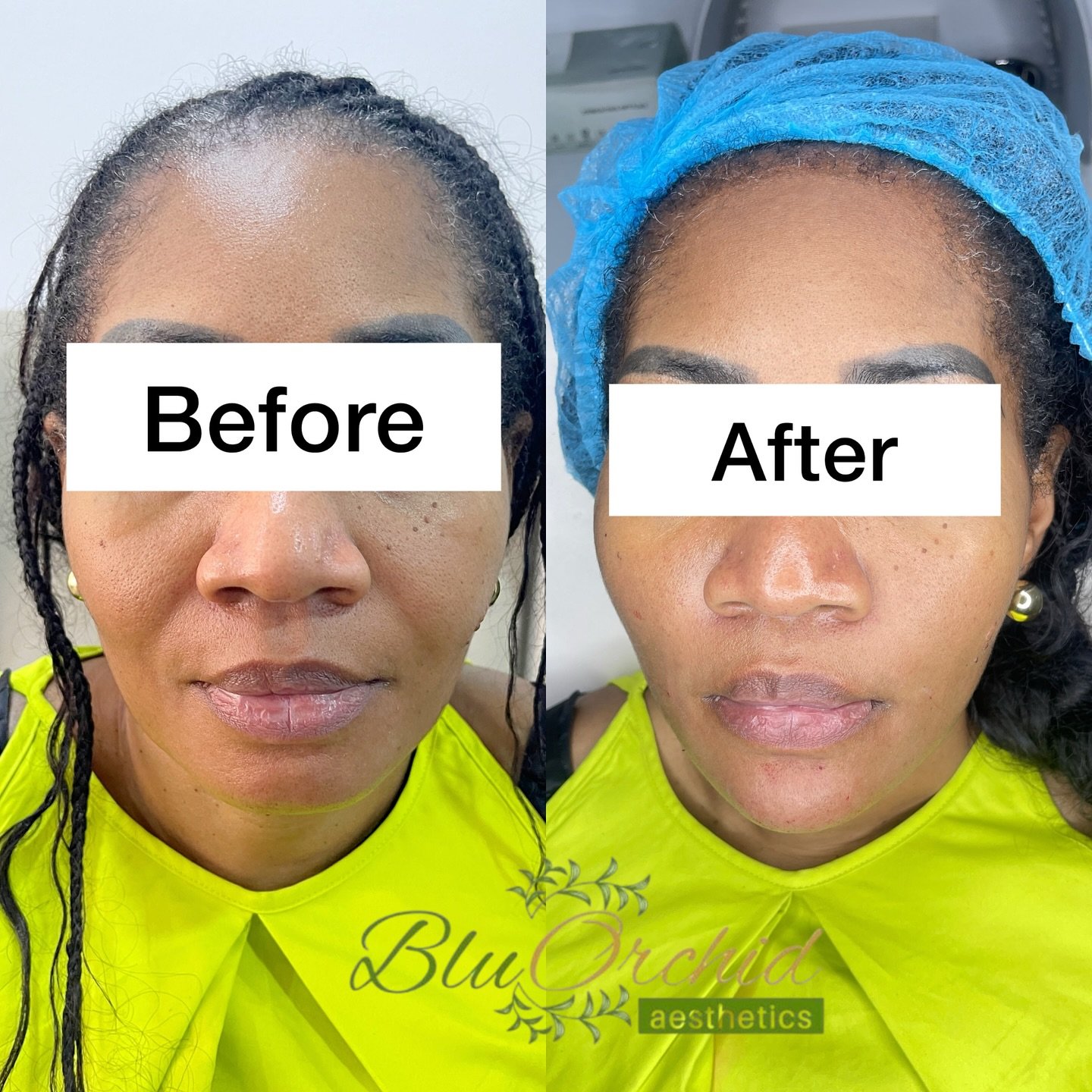
What is HIFU?
HIFU stands for high-intensity focused ultrasound.
In aesthetic medicine, focused ultrasound can be used to deliver energy beneath the skin at selected depths.
The goal is to create controlled tissue effects that can contribute to tightening and collagen remodelling.
Unlike a facelift, HIFU does not involve surgically removing or repositioning excess skin.
That distinction is important.
HIFU is therefore better understood as a non-surgical skin-tightening approach, not a surgical facelift performed without an incision.
What can HIFU help with?
Depending on the device, treatment area and patient, HIFU may be considered for concerns such as:
- Mild skin laxity
- Loss of definition
- Early jowling
- Selected neck laxity
- General skin tightening
It is not designed to reproduce the degree of tissue repositioning achieved through surgery.
If you have substantial excess skin, a non-surgical treatment may simply not be capable of producing the correction you want.
What is a thread lift?
A thread lift is a minimally invasive procedure in which absorbable threads are inserted beneath the skin.
Depending on the technique and thread used, the threads can provide mechanical support or reposition selected tissues.
The procedure is therefore fundamentally different from HIFU.
HIFU delivers energy.
A thread lift physically places a material beneath the skin.
What can a thread lift help with?
A thread lift may be considered when there is:
- Selected facial laxity
- Early jowling
- Loss of definition
- Mild tissue descent
- A desire for some lifting without undergoing a surgical facelift
Patient selection matters.
A thread lift is not simply a “mini facelift.”
It does not reproduce every component of facelift surgery.
What is a facelift?
A facelift, or rhytidectomy, is a surgical procedure.
Unlike HIFU or a thread lift, facelift surgery allows the surgeon to directly address facial tissues through surgical access.
Depending on the operation, this may involve repositioning deeper tissues and removing or redraping excess skin.
That makes it the most invasive option of the three.
It also means it can address a degree of laxity that non-surgical treatments cannot realistically correct.
HIFU at BluOrchid Aesthetics, Lagos
When is a facelift considered?
A facelift may be considered when there is more substantial:
- Facial skin laxity
- Jowling
- Lower-face descent
- Neck laxity
- Excess skin
It is not simply the “strongest” version of HIFU.
It is a different category of treatment.
Which gives the biggest lift?
If by “lift” you mean the ability to physically reposition significantly descended facial tissues, surgery has the greatest capacity.
That is precisely because a facelift is surgery.
HIFU cannot remove excess skin.
A thread lift cannot reproduce every aspect of surgical tissue repositioning.
This is why comparing the three only by the word “lifting” can be misleading.
A person with mild laxity may not need surgery.
A person with significant excess skin may not be satisfied with a non-surgical treatment.
The amount and type of laxity matter.
Which has the least downtime?
Generally, HIFU has less recovery than a thread lift, while a facelift has substantially more recovery.
But “no downtime” should not be interpreted as “nothing happens afterwards.”
After HIFU, some people may experience temporary:
- Redness
- Swelling
- Tenderness
- Tingling
- Sensitivity
A thread lift can produce more noticeable swelling, bruising, tenderness or asymmetry while tissues settle.
Facelift surgery naturally involves a longer recovery period.
Your practitioner should explain the expected recovery for the specific procedure being proposed.
Which gives the most natural result?
“Natural” is not determined solely by whether a treatment is surgical or non-surgical.
A natural result depends on:
- Appropriate patient selection
- Understanding facial anatomy
- Treatment planning
- Technique
- The amount of correction attempted
- The relationship between the treatment and the patient’s existing features
A poorly selected non-surgical treatment can look unnatural.
A well-planned surgical result can look very natural.
The goal should not be to make the face look “lifted.”
It should be to improve the concern without losing the character of the face.
HIFU vs thread lift: what is the difference?
This is the comparison most people are trying to make when searching for these treatments.
The simplest distinction is:
HIFU = energy-based tightening.
Thread lift = mechanical support and repositioning using absorbable threads.
HIFU does not place threads underneath the skin.
A thread lift does.
That means the procedures have different mechanisms, different risks and different recovery experiences.
Neither is automatically better.
For someone with mild laxity who wants a non-invasive approach, HIFU may be considered.
For someone with selected tissue descent who wants more mechanical lifting without surgery, a thread lift may be considered.
But neither is automatically appropriate simply because someone wants a “facelift without surgery.”
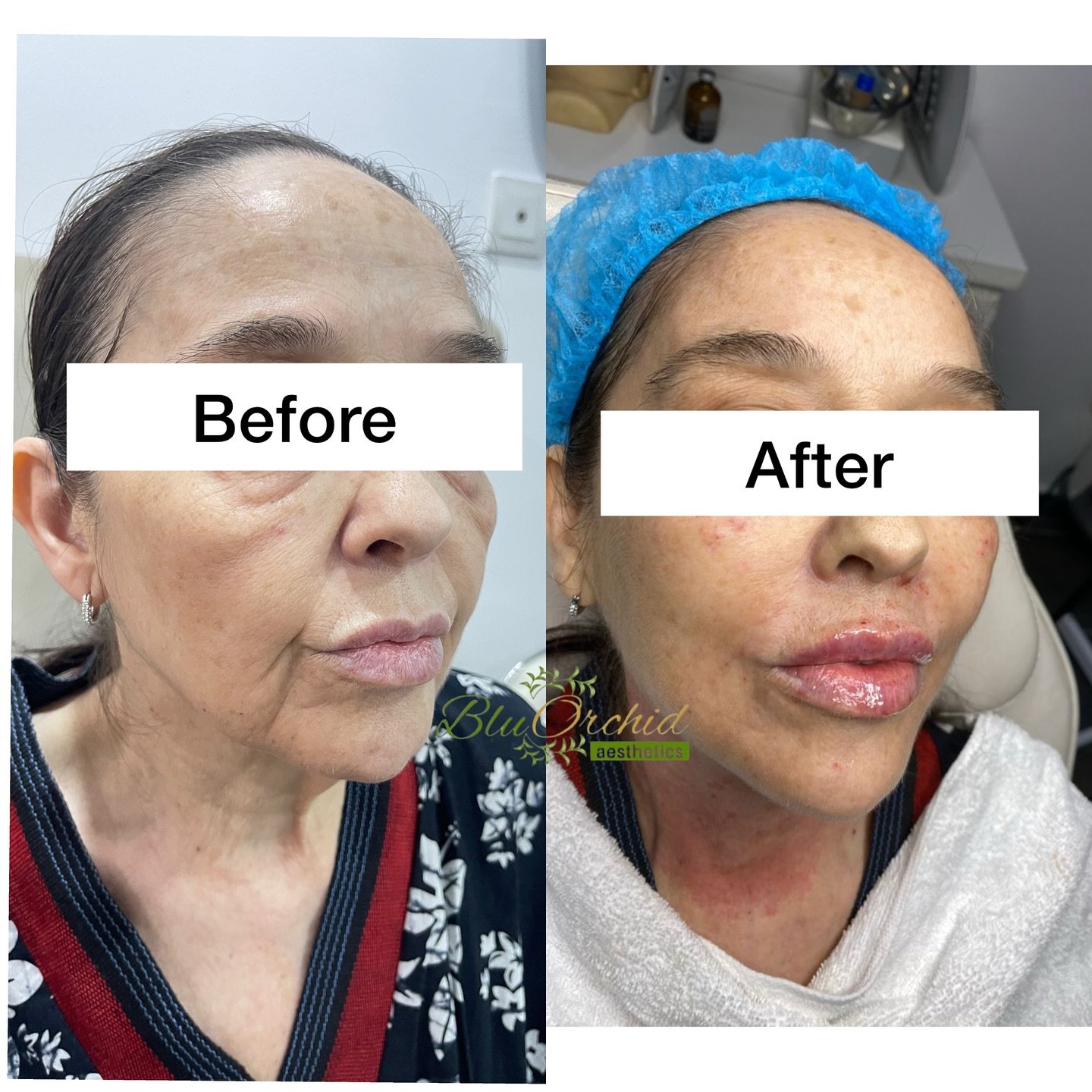
HIFU vs facelift
This is a much bigger difference.
HIFU is non-surgical.
A facelift is surgical.
HIFU can be considered when the concern is relatively mild and the patient accepts that the treatment will not reproduce surgical correction.
A facelift becomes more relevant when there is substantial laxity or excess skin and the patient is willing to undergo surgery and recovery for a more significant structural correction.
If someone has pronounced jowls and substantial excess skin, repeatedly escalating non-surgical treatments may not produce the result they expect.
Sometimes the most honest recommendation is to discuss surgery.
Thread lift vs facelift
A thread lift sits somewhere between the two in terms of invasiveness, but it should not be thought of as a halfway version of facelift surgery.
A thread lift may provide selected lifting and support without surgical incisions.
A facelift can address a much broader degree of tissue descent and excess skin.
The trade-off is that surgery involves:
- Greater invasiveness
- More recovery
- Surgical risks
- More significant aftercare
The decision therefore depends on what you are trying to correct and how much intervention you are prepared to accept.
What about jowls?
Jowling is one of the concerns that often leads people to search for HIFU, thread lifts and facelifts.
But “jowls” can mean different things.
They may relate to:
- Skin laxity
- Descent of facial tissues
- Loss of facial volume
- Changes around the jawline
- A combination of factors
That means there is no single jowl treatment.
A person whose main problem is mild skin laxity may be considered for a non-surgical tightening treatment.
Someone with more substantial tissue descent may require a different approach.
This is why looking at the face before recommending the treatment matters.
What about the neck?
The same principle applies to the neck.
Mild skin laxity may sometimes be managed with non-surgical approaches.
More significant skin excess or structural laxity may require surgical consideration.
If the neck is the main concern, the assessment should consider the skin, underlying tissues and the overall relationship between the jawline and neck.
Which treatment lasts the longest?
This is another area where simplistic comparisons can be misleading.
HIFU results are not permanent.
Thread-lift effects are also temporary, and the threads themselves are absorbable.
A facelift generally produces a more durable structural change than non-surgical treatments, although it does not stop the natural ageing process.
The correct question is therefore not:
“Which lasts forever?”
None of these treatments stops ageing.
The better question is:
“What level of correction am I looking for, and what level of maintenance am I comfortable with?”
Which treatment is safest?
There is no universally “safest” option independent of the patient and procedure.
A treatment’s risks depend on:
- The procedure
- The area being treated
- Your anatomy
- Your medical history
- The practitioner
- The equipment or materials used
- The technique
Non-surgical does not mean risk-free.
HIFU can have adverse effects.
Thread lifts involve placing material beneath the skin and have their own procedural risks.
Surgery carries surgical and anaesthetic risks.
The appropriate comparison is not simply “safe versus dangerous.”
It is which risks are acceptable for the benefit you are seeking.
What about dark skin?
People with darker skin can undergo aesthetic procedures, but treatment planning should take skin type and the risk of pigmentary changes into account.
With energy-based treatments such as HIFU, appropriate device selection, treatment parameters and practitioner experience matter.
If you are prone to post-inflammatory hyperpigmentation, tell your practitioner.
Dark skin should not automatically exclude you from treatment.
But it should be part of the treatment assessment.
How do you choose between HIFU, thread lift and facelift?
Start with the problem rather than the treatment.
Ask:
How much laxity do I actually have?
Mild laxity is a different clinical situation from substantial excess skin.
What do I want to change?
Do you want:
- Better skin tightness?
- A sharper jawline?
- Less visible jowling?
- Neck tightening?
- A more noticeable lift?
How much downtime can I accept?
If you cannot accommodate surgical recovery, that significantly affects your options.
How long do you want the result to last?
Non-surgical treatments generally require a different maintenance mindset from surgery.
Am I willing to have surgery?
This is ultimately one of the biggest dividing lines.
A simple decision framework
Consider HIFU when:
You have relatively mild laxity, want a non-surgical approach and understand that the result will be more subtle than surgery.
Consider a thread lift when:
You have selected facial laxity or tissue descent and want a minimally invasive lifting approach, with an understanding of its limitations and procedural risks.
Consider discussing a facelift when:
You have more substantial laxity or excess skin and want a more significant structural correction and are prepared for surgery and recovery.
This is a framework, not a treatment recommendation.
Your anatomy may point in a different direction.
What if you want a “non-surgical facelift”?
Be careful with the phrase.
“Non-surgical facelift” is often used as a marketing umbrella for several different procedures.
It does not mean that a non-surgical procedure can reproduce everything a facelift does.
HIFU, thread lifts, fillers and other treatments may each address different aspects of facial ageing.
A good consultation should explain what the treatment can change, and what it cannot.
That distinction protects you from unrealistic expectations.
The importance of facial assessment
Two people of the same age can have completely different facial ageing patterns.
One person may have:
- Mild skin laxity
- Good volume
- Early jowling
Another may have:
- Significant skin excess
- Deeper tissue descent
- Neck laxity
- Volume changes
Putting both people into the same treatment simply because they are both “sagging” does not make sense.
A proper assessment looks at the face as a whole.
That is particularly important if you are considering combining treatments.
Frequently asked questions
Is HIFU better than a thread lift?
Not universally. HIFU and thread lifts work differently. HIFU uses focused ultrasound energy, while a thread lift uses absorbable threads for mechanical support and lifting. The appropriate option depends on your degree of laxity and treatment goals.
Is a thread lift the same as a facelift?
No. A thread lift is minimally invasive and uses absorbable threads. A facelift is surgical and can address more substantial tissue descent and excess skin.
Can HIFU replace a facelift?
No. HIFU can provide non-surgical tightening for selected patients, but it cannot reproduce the structural correction possible with facelift surgery.
Which lasts longer, HIFU or a thread lift?
Both are temporary approaches, and longevity varies. HIFU results and thread-lift effects depend on the treatment, patient and technique. A facelift generally produces a more durable structural change.
Which is better for jowls?
It depends on what is causing the jowling and how pronounced it is. Mild laxity may be suitable for a non-surgical approach, while more substantial tissue descent or excess skin may require surgical consideration.
Can HIFU tighten the neck?
HIFU may be considered for selected cases of neck laxity, depending on the device and treatment plan. Significant excess skin may require a different approach.
Is HIFU painful?
Some people experience discomfort, warmth, tingling or tenderness during or after treatment. The experience varies between individuals and treatment protocols.
Is a thread lift painful?
Local anaesthesia or another appropriate form of anaesthesia may be used depending on the procedure. Some discomfort, swelling or tenderness can occur afterwards.
How long is facelift recovery?
Recovery varies according to the surgery performed and the individual. Your surgeon should give you specific instructions about expected swelling, bruising, activity restrictions and return to normal activities.
Can you combine HIFU and a thread lift?
Sometimes treatments may be combined, but they should not automatically be combined simply because they are available. Timing, treatment areas, tissue response and your overall plan need to be assessed by the practitioner.
The bottom line
HIFU, thread lifts and facelifts are not three different prices for the same procedure.
They represent three different levels and mechanisms of intervention.
HIFU uses focused ultrasound energy to create tissue effects associated with tightening and remodelling.
A thread lift uses absorbable threads to provide mechanical support and lifting in selected patients.
A facelift is surgery and provides the greatest ability to physically reposition tissues and address excess skin.
The right choice is therefore not the treatment with the most impressive name.
It is the treatment that matches your anatomy, degree of laxity, goals, tolerance for downtime and expectations.
If you are unsure which category you fall into, a consultation is the appropriate starting point.
At BluOrchid Aesthetics, the treatment decision should begin with assessing the face, not choosing a procedure from a menu.
A consultation at BluOrchid begins with exactly this assessment.
One hour with our doctors. An honest assessment. A plan built around you. ₦50,000, credited in full toward your first treatment.
Book your consultation Doctor-led assessment at Lekki Phase 1, Lagos.