Harmattan Skincare: Dryness, Ash and Dark Patches
Harmattan can leave skin dry, ashy and uneven. Learn how to protect your skin barrier and manage dark patches during Nigeria's dry season.


There is a particular moment every Harmattan when your skin seems to change overnight.
Your face feels tighter.
Your lips become dry.
Your arms and legs look ashy.
Suddenly, the skin around your mouth seems darker. Old dark spots look more noticeable. Areas that were already uneven appear even more uneven.
And the instinct is often to scrub.
More exfoliation. More brightening products. More aggressive cleansing.
But Harmattan skin usually needs the opposite approach.
Less irritation. More barrier support. More consistency.
For people managing pigmentation, this matters even more. When dry, irritated skin is repeatedly disturbed, the problem can become more complicated than simple dryness.
What Harmattan does to your skin
Harmattan brings a combination of dry air, dust and environmental changes that can make the skin feel less comfortable.
The result can be:
- dryness
- rough or flaky texture
- tightness
- visible ashiness
- chapped lips
- increased sensitivity
- irritation around the nose and mouth
- a duller-looking complexion
If you already have pigmentation, the change in texture can also make dark areas appear more obvious.
But there is an important distinction:
Dry skin does not mean that your skin has suddenly become darker.
Sometimes what you are seeing is a combination of dryness, surface flaking, irritation and existing pigmentation becoming more noticeable.

Why dry skin can become a pigmentation problem
The skin barrier helps protect the skin from external stressors and helps keep moisture in.
When the barrier becomes compromised, skin can become more sensitive and easier to irritate.
That matters because repeated irritation can contribute to post-inflammatory pigmentation in susceptible skin.
So the Harmattan pigmentation problem is not necessarily:
“My skin is dry, so I need a stronger brightening product.”
It may actually be:
“My skin is irritated, and I need to restore the conditions that allow it to recover.”
This distinction can completely change your skincare routine.
The Harmattan mistake: trying to scrub away the ash
If your skin looks dull or ashy, scrubbing can feel satisfying.
But aggressively rubbing the skin does not solve the underlying problem.
The same applies to using rough exfoliating gloves, harsh scrubs or repeated acid treatments simply because your skin looks flaky.
You may temporarily remove some surface flakes.
But if you keep irritating the skin, you can end up with a more uncomfortable barrier and potentially more visible uneven pigmentation.
Ashiness is not dirt.
Your skin does not need to be scrubbed clean of Harmattan.
It needs to be supported through it.
A better Harmattan skincare routine
The goal is to make your routine more protective without turning it into a collection of heavy products.
Morning
1. Cleanse gently
If your skin is feeling particularly dry or sensitive, reconsider how aggressively you cleanse.
Your cleanser should remove what needs to be removed without leaving your face feeling stripped.
You do not need that tight, squeaky sensation to know that your skin is clean.
2. Keep your pigmentation treatment simple
If you are already using a pigmentation-targeting routine, you may not need to abandon it during Harmattan.
But this is also not the time to start layering multiple strong actives because your skin looks dull.
If your skin is becoming irritated, simplify.
The priority is to maintain a routine your skin can tolerate.
3. Moisturise
This is the step that often becomes more important during Harmattan.
Choose a moisturiser that leaves your skin comfortable and helps reduce that tight, dry feeling.
If you have oily skin, you do not necessarily need an extremely heavy cream.
The texture can be adjusted to your skin type.
4. Sunscreen
Harmattan does not mean you can stop using sunscreen.
If you are treating pigmentation, daily sun protection remains part of the routine.
Choose a sunscreen that you can wear comfortably and consistently.
If you are outdoors for extended periods, reapply as appropriate.
Evening: repair rather than attack
Your evening routine can be even simpler.
Cleanse → Treat → Moisturise
That may be enough.
If your usual routine contains several exfoliating products, consider whether all of them are still necessary when your skin is dry or irritated.
A pigmentation routine does not have to feel aggressive to be effective.
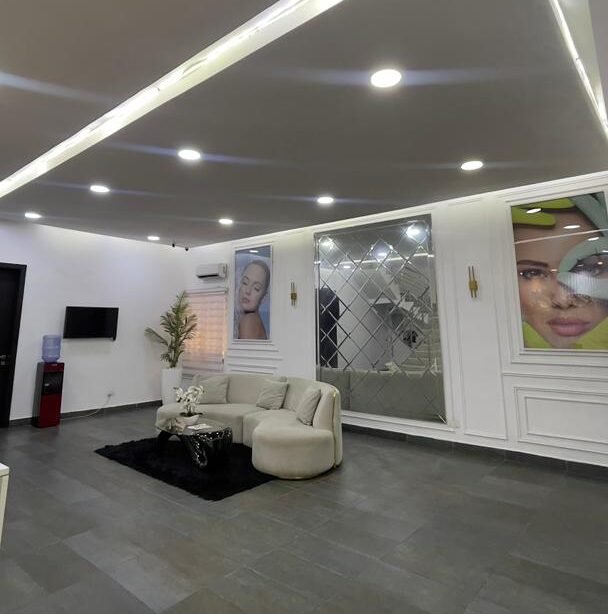
Trust at BluOrchid Aesthetics, Lagos
What about 8skinpro?
A structured home-care routine can be particularly useful during a season when it is tempting to keep changing products.
8skinpro follows a five-step approach:
Cleanse → Tone → Treat → Support the barrier → Protect
The philosophy is not to throw every possible active at pigmentation.
It is to create a consistent system that addresses pigment concerns while supporting the skin.
During Harmattan, that balance becomes particularly relevant.
The aim is not simply to make the skin look brighter.
It is to maintain an even, comfortable and healthy-looking complexion without creating unnecessary irritation.
Why your dark patches may look worse during Harmattan
There are several reasons this can happen.
Dryness can make contrast more visible
Flaky or rough skin can make differences in colour appear more pronounced.
Irritation can trigger more pigmentation
If dry skin becomes inflamed or irritated, that inflammation may contribute to post-inflammatory pigmentation in susceptible skin.
You may be over-treating the skin
When the skin looks dull, people often respond by adding stronger products.
That can create a cycle:
Dryness → more exfoliation → irritation → more pigmentation → stronger products → more irritation.
Breaking that cycle may be more useful than adding another brightening product.
Existing pigmentation has not actually changed
Sometimes the pigment itself has not dramatically worsened.
The surrounding skin has simply become drier, making the contrast easier to see.
Harmattan and the skin around your mouth
The area around the mouth is particularly prone to feeling dry.
Frequent licking, wiping, rubbing and exposure to dry air can make it uncomfortable.
If the area becomes irritated, avoid responding with harsh exfoliation or aggressive brightening products.
Keep the area moisturised and reduce unnecessary friction.
If persistent darkening or irritation continues, it is worth having the area assessed rather than assuming it is simply Harmattan dryness.
Do you need to change your entire skincare routine?
Not necessarily.
One of the easiest mistakes is to completely replace your routine every time the weather changes.
Instead, ask:
What does my skin need more of right now?
For many people during Harmattan, the answer is better barrier support.
That might mean:
- a gentler cleanser
- a more comfortable moisturiser
- reducing unnecessary exfoliation
- maintaining sunscreen
- avoiding harsh DIY treatments
- keeping pigmentation actives at a tolerable level
You may not need ten new products.
You may simply need to make your existing routine kinder.
What to avoid during Harmattan
Harsh physical scrubs
If your skin is already dry and sensitive, aggressive scrubbing can add unnecessary irritation.
Lemon and DIY acidic treatments
Lemon is not a professional pigmentation treatment.
Putting acidic kitchen ingredients on irritated skin can make the situation worse.
Excessive exfoliation
Using an exfoliating acid every night because your skin looks dull is not automatically a good strategy.
Bleaching products
Harmattan is not a reason to reach for a fast-lightening cream.
If your goal is to improve pigmentation, the objective should be even tone, not changing your natural complexion.
Constantly changing products
If you change your routine every few days, it becomes difficult to know what is helping and what is irritating your skin.
Very hot water
If your skin is already dry, very hot showers and prolonged exposure to hot water can make the dryness feel worse.
What about oily skin during Harmattan?
Harmattan does not automatically mean that oily skin becomes dry.
You can have oily skin and still have a compromised or dehydrated-feeling skin barrier.
This is why simply adding a very heavy cream may not be the answer.
Instead, look at how your skin feels and behaves.
If your skin is oily but tight, irritated or flaky, the solution may be better barrier support rather than more oil-control products.
And if you continue experiencing acne alongside pigmentation, the routine needs to account for both concerns.
What if your pigmentation is genuinely getting darker?
This is where you should look beyond the weather.
If a dark patch is becoming progressively darker, spreading, becoming itchy or changing in another noticeable way, do not automatically blame Harmattan.
Pigmentation can have different causes, including inflammation, acne, friction, hormonal influences and other skin conditions.
Persistent or unexplained pigmentation deserves proper assessment.
When to see a doctor
Consider professional assessment if:
- your pigmentation keeps getting darker
- new patches are appearing without an obvious cause
- your skin is persistently irritated
- you have significant peeling or sensitivity
- dark patches keep returning
- your pigmentation is not responding to a sensible routine
- you are unsure what type of pigmentation you have
Sometimes the most useful skincare decision is not buying another product.
It is finding out what you are actually treating.
Can you still treat pigmentation during Harmattan?
Yes, but the approach may need to be more thoughtful.
The fact that your skin is dry does not mean pigmentation treatment has to stop completely.
It means your skin’s tolerance needs to be considered.
Depending on the type of pigmentation, a treatment plan may include appropriate home care, professional chemical peels, Cosmelan or other targeted options.
The sequence matters.
A professional should determine whether your skin is ready for treatment, which treatment is appropriate and what your home routine should look like around it.
The objective is not to treat pigmentation at any cost.
It is to improve the skin without creating a new problem.
Harmattan skin is asking for balance
The temptation during Harmattan is to think that dull, ashy skin needs more exfoliation and more brightening.
Sometimes it needs the opposite.
It needs:
gentler cleansing, better moisturisation, less irritation, consistent protection and a routine you can actually maintain.
Once the skin is comfortable again, pigmentation can be addressed more deliberately.
That is a much better strategy than fighting every dry patch with another product.
Frequently asked questions
What is the best skincare for Harmattan in Nigeria?
A simple routine focused on gentle cleansing, moisturisation, appropriate treatment products and daily sunscreen is a good starting point. The exact routine should be adjusted to your skin type and concerns.
Why does my skin look ashy during Harmattan?
Dry air and reduced moisture can make the surface of the skin look rough, flaky or greyish-white, particularly on darker skin. Ashiness does not necessarily mean that your skin has become darker.
Can Harmattan make pigmentation worse?
Harmattan itself is not necessarily the direct cause of every dark patch. However, dryness, irritation and changes in your skincare routine can contribute to inflammation, which may make some forms of pigmentation more noticeable or persistent.
Should I exfoliate more during Harmattan?
Usually, you should not exfoliate more simply because your skin looks flaky. Excessive exfoliation can increase irritation. Your routine should be based on your skin’s condition rather than the appearance of surface flakes alone.
Should I stop my pigmentation products during Harmattan?
Not automatically. If your skin is tolerating your routine well, you may be able to continue it. If you develop dryness, burning, excessive peeling or irritation, your routine may need to be simplified and adjusted.
Can I use 8skinpro during Harmattan?
8skinpro is structured around cleansing, treatment, barrier support and protection. Whether it is appropriate for your skin during Harmattan depends on your individual skin condition and how your skin is responding. A consistent, tolerable routine is more important than using products aggressively.
Why are my dark spots more visible in Harmattan?
Dryness and flaking can increase the contrast between areas of pigmentation and surrounding skin. Irritation can also contribute to pigmentation in susceptible skin.
Can I use body lotion on my face during Harmattan?
Not necessarily. Facial skin can have different needs from the skin on the body, and some body products may be too heavy or irritating for the face. Choose products according to the area and your skin type.
Does dark skin need sunscreen during Harmattan?
Yes. Dark skin still benefits from daily sun protection, particularly when managing pigmentation.
When should I see a doctor about dark patches?
If a patch is persistent, spreading, repeatedly returning, changing noticeably or accompanied by other skin symptoms, professional assessment can help determine the cause.
The Harmattan rule: protect first, correct second
Your skin does not need to be punished because the weather has changed.
If Harmattan has left your skin dry, ashy and uncomfortable, start by restoring comfort and reducing irritation.
Then look at the pigmentation.
Because the goal is not simply to have lighter-looking skin.
It is to have skin that looks even, healthy, comfortable and cared for.
If your dark patches persist despite a sensible routine, it may be time to stop experimenting and have them properly assessed.
Book a Consultation with BluOrchid Aesthetics.
A BluOrchid consultation is ₦50,000, credited toward your selected treatment if you proceed.
A consultation at BluOrchid begins with exactly this assessment.
One hour with our doctors. An honest assessment. A plan built around you. ₦50,000, credited in full toward your first treatment.
Book your consultation Doctor-led assessment at Lekki Phase 1, Lagos.