Filler or Fat Transfer in Nigeria: Which One Is Right for You?
Filler or fat transfer in Nigeria? How the two differ, which gives more volume, how long each lasts, and which suits your goal.


If you want to restore facial volume or create more fullness in a particular area, you may find yourself comparing two very different options: dermal filler and fat transfer.
Both can be used to add volume, but they are not the same treatment.
Dermal filler is an injectable treatment that uses a filler product to add volume or influence the shape and proportions of selected areas.
Fat transfer involves taking fat from another part of the body and transferring it to another area.
So the question is not simply:
“Which one lasts longer?”
It is:
“Which approach makes sense for the change I want, the amount of volume I need and the type of treatment I am comfortable having?”
For someone considering facial enhancement in Nigeria, understanding that difference can make the decision much clearer.
What Is Dermal Filler?
Dermal filler is an injectable treatment used to add volume, enhance contours or influence the appearance of selected facial areas.
Depending on the treatment plan, filler may be considered for areas such as:
- Lips.
- Cheeks.
- Chin.
- Jawline.
- Certain facial folds.
- Other areas where volume or contour is the concern.
The amount and placement should be determined according to the individual rather than simply choosing a standard number of syringes.
The objective should be to create an appropriate improvement while maintaining facial balance.
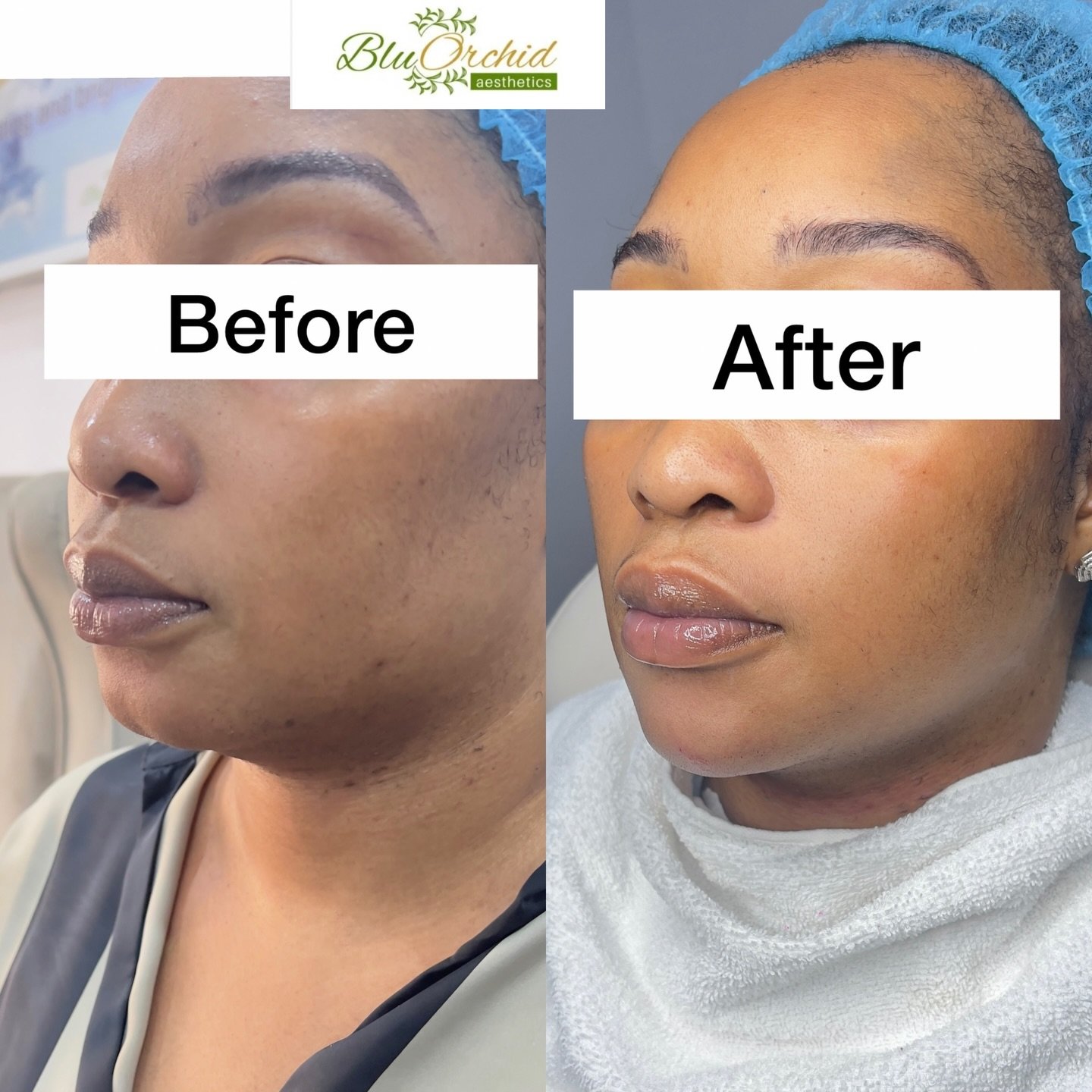
What Is Fat Transfer?
Fat transfer is a different approach to adding volume.
Fat is taken from another area of the body and transferred to the area where additional volume is desired.
Unlike an injectable filler treatment, this is a procedure involving the harvesting and transfer of the person’s own fat.
That makes fat transfer a significantly different proposition in terms of treatment process, planning and recovery.
It is not simply a longer-lasting version of filler.
Filler vs Fat Transfer: The Main Difference
The easiest way to understand the distinction is:
Filler adds volume using an injectable product.
Fat transfer adds volume using fat taken from another part of your own body.
That difference affects almost everything about the treatment decision.
| Dermal Filler | Fat Transfer |
|---|---|
| Injectable treatment | Procedure involving fat harvesting and transfer |
| Uses a filler product | Uses the patient’s own fat |
| Can be used for targeted areas | Can be used when greater volume transfer is appropriate |
| No need to harvest fat from another area | Requires a suitable donor area |
| Treatment can be more targeted | Involves a more involved procedure |
| Can be adjusted as part of ongoing treatment planning | Involves a different approach to long-term volume restoration |
Neither is automatically better.
They are simply different ways of approaching facial volume.
Which One Gives More Volume?
This depends on the area being treated and the objective.
Filler can be used for targeted volume enhancement.
Fat transfer can be considered when a patient wants or needs a different type of volume restoration and is suitable for the procedure.
The important question is not simply:
“How much volume can I add?”
More volume is not automatically better.
The amount of volume that looks appropriate depends on the face, the area being treated and the desired result.
Which One Looks More Natural?
Natural-looking enhancement is not determined simply by whether you choose filler or fat.
It depends on how the treatment is planned and how the resulting volume fits the patient’s facial structure.
With filler, the practitioner can plan where and how much product is appropriate.
With fat transfer, the transferred volume also needs to be considered in relation to the patient’s facial proportions and the desired outcome.
In both cases, the goal should be to avoid treating volume as the objective by itself.
The objective is balance.
Which One Lasts Longer?
This is one of the most common reasons people compare the two treatments.
But longevity should not be the only deciding factor.
Filler and transferred fat behave differently, and the longevity of either approach can vary depending on the treatment, area, individual response and other factors.
Fat transfer may be considered attractive to some patients because it uses their own fat rather than relying on a filler product.
However, that does not mean every transferred fat cell will necessarily remain permanently.
Likewise, choosing filler does not automatically mean you will need to keep adding more indefinitely in exactly the same way.
The right treatment should be selected based on the overall objective rather than longevity alone.
What If You Only Want a Small Change?
If your goal is a relatively targeted or subtle change, filler may be attractive because it can be used in a focused treatment plan.
For example, someone who wants a subtle change in lip shape or a small amount of additional facial definition may not need a procedure involving fat harvesting.
But the appropriate option depends on the area and the desired result.
A small change does not automatically mean filler is right.
It means the treatment should be proportionate to the goal.
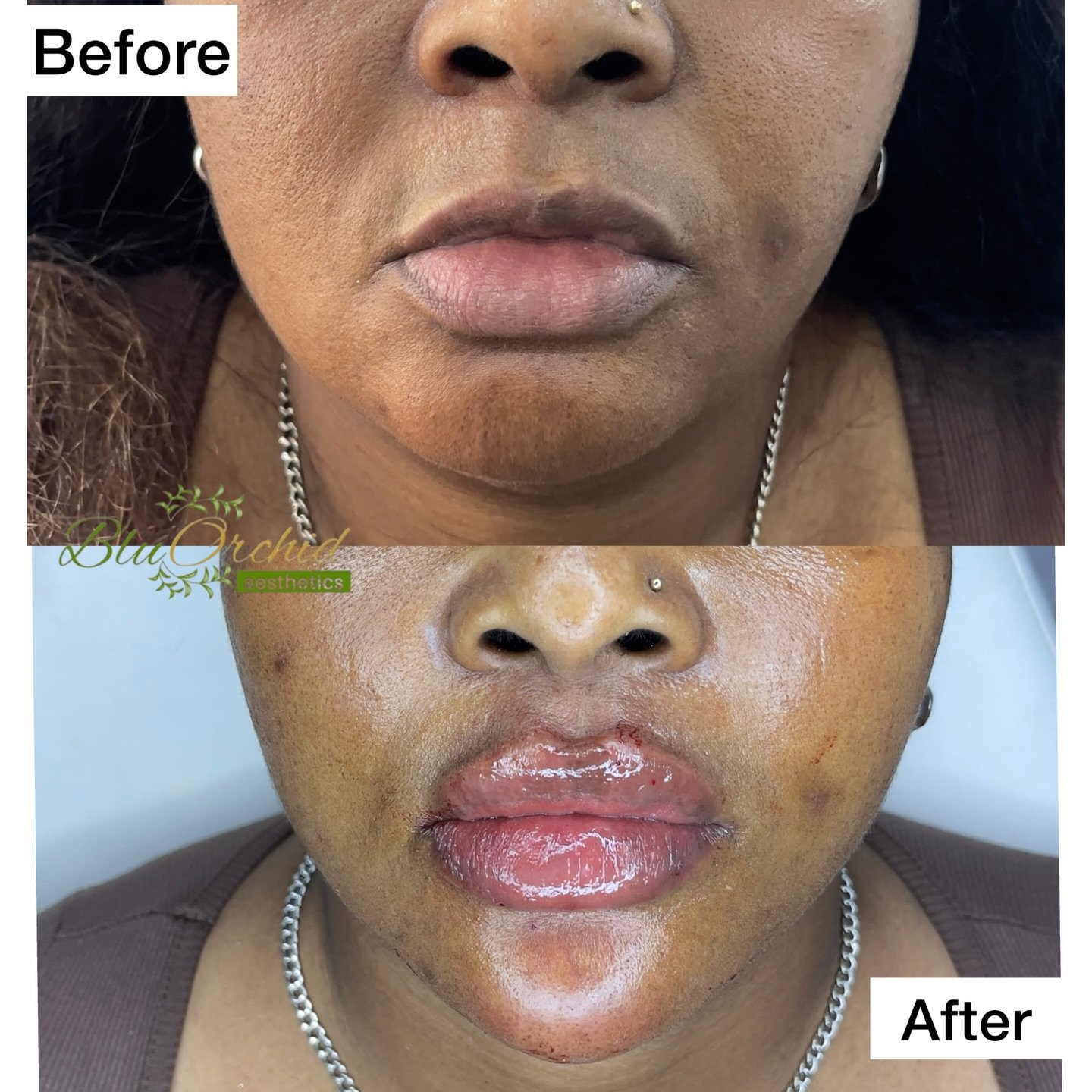
Lip filler at BluOrchid Aesthetics, Lagos
What If You Want More Significant Volume Restoration?
Fat transfer may be considered when a patient is looking for a different type of volume restoration and is suitable for the procedure.
It can also be relevant when there is an appropriate donor area from which fat can be harvested.
However, wanting more volume does not automatically mean that fat transfer is necessary.
The first question should still be:
What is causing the concern, and what type of correction would actually improve it?
Do You Have to Have Enough Body Fat for Fat Transfer?
Fat transfer requires a suitable donor area.
This is one of the practical differences between fat transfer and filler.
With filler, there is no requirement to harvest material from another part of your body.
With fat transfer, the practitioner needs to assess whether there is an appropriate source of fat for the planned procedure.
That assessment is part of determining whether fat transfer is suitable for you.
Which One Is Less Invasive?
This is another important distinction.
Dermal filler is an injectable treatment.
Fat transfer is a more involved procedure because it requires harvesting fat and transferring it to another area.
Therefore, the two should not be compared as though they are simply two versions of the same treatment.
If you are looking for the least involved approach to a particular facial-volume concern, that should form part of the consultation.
What About Recovery?
Recovery can differ significantly between injectable filler and fat transfer.
Filler generally involves a different recovery experience from a procedure that requires fat harvesting and transfer.
With fat transfer, you are dealing with both the area from which fat is taken and the area receiving the transferred fat.
This means the recovery discussion should be part of the decision, not an afterthought.
If you have work, travel, social commitments or other plans, discuss the expected recovery before choosing a procedure.
Which One Is More Reversible?
This is an important consideration when comparing treatments, but it should not be reduced to a simple “yes” or “no” answer.
Different filler products and fat-transfer procedures have different characteristics.
The practitioner should explain what can and cannot be changed if you are unhappy with the result.
This is one reason choosing an experienced practitioner and having a clear consultation before treatment matters.
Do not choose a treatment simply because you assume you can easily undo it later.
Filler or Fat Transfer: What About Cost in Nigeria?
Cost is another major factor.
The two treatments involve very different processes, so comparing the price of one syringe of filler with the cost of a fat-transfer procedure does not necessarily tell you which is better value.
Filler cost can depend on:
- The filler product used.
- The amount required.
- The treatment area.
- The complexity of the treatment plan.
- Whether previous filler needs to be assessed.
Fat-transfer cost can reflect the more involved nature of the procedure, including the harvesting and transfer process.
If you are comparing prices, make sure you understand exactly what is included rather than comparing headline numbers alone.
Which One Is Better for Cheeks?
Both filler and fat transfer may be considered for facial volume restoration, but the appropriate choice depends on the patient’s anatomy, the amount of volume required and the desired outcome.
Someone wanting a relatively targeted change may have a different treatment plan from someone seeking broader facial volume restoration.
The right question is not:
“Which one is best for cheek volume?”
It is:
“Which approach gives the appropriate amount and distribution of volume for my face?”
Which One Is Better for Lips?
For lip enhancement, dermal filler is a commonly considered injectable option because it can be used to influence both volume and shape.
Fat transfer is a different procedure and is not simply an alternative version of standard lip filler.
If your goal is subtle lip enhancement, definition or a specific change in lip proportions, the treatment should be chosen according to that objective.
Trying to choose based only on longevity can lead you away from what you actually want.
Can You Combine Filler and Fat Transfer?
In some circumstances, different approaches may be considered as part of a broader aesthetic plan.
But combining treatments should never be assumed to be necessary.
If one approach can adequately address the concern, adding another does not automatically create a better result.
A good treatment plan should explain:
- What is being treated.
- Why it is being treated.
- What is not being treated.
- Why the chosen approach is appropriate.
Which One Should You Choose?
Start with the result you want.
Choose the conversation about filler if:
- You want a targeted injectable treatment.
- You want to influence volume or shape in a specific area.
- You prefer an approach that does not require fat harvesting.
- You are looking for a relatively focused enhancement.
Consider discussing fat transfer if:
- You want a different approach to facial volume restoration.
- You are comfortable with a more involved procedure.
- You have a suitable donor area.
- Your goals are appropriate for fat transfer.
But these are not rules.
Your facial structure, treatment area, desired outcome and suitability all matter.
Questions to Ask Before Choosing
Before deciding between filler and fat transfer, ask your practitioner:
- What is actually causing the change in my face?
- Do I need additional volume at all?
- Would filler adequately address my concern?
- Would fat transfer offer a meaningful advantage for my goals?
- Do I have a suitable donor area for fat transfer?
- How much volume would you recommend, and why?
- What would you leave untreated?
- What is the expected recovery for each option?
- What are the limitations of each approach?
- What exactly is included in the treatment cost?
These questions help move the conversation away from simply choosing a procedure and towards choosing an appropriate treatment plan.
Filler or Fat Transfer in Nigeria: The Right Choice Is Personal
There is no universal answer to whether filler or fat transfer is better.
For some people, a targeted injectable treatment may make more sense.
For others, a more involved approach to facial volume restoration may be worth considering.
And for some people, neither may be necessary.
The goal of aesthetic treatment should not be to add as much volume as possible or to choose whichever treatment lasts the longest.
It should be to make an appropriate change that fits your face, your goals and your comfort with the treatment process.
Considering Facial Volume Treatment in Nigeria?
At BluOrchid Aesthetics, treatment planning starts with understanding what you want to change and assessing whether additional volume is actually the right solution.
If you are deciding between dermal filler and fat transfer, a consultation with Dr Gladys Emokpaire-Oni (Dr Gigi) can help you understand which approach, if any, is appropriate for your facial structure and desired result.
Book a consultation before choosing the procedure. The right treatment is the one that solves the right problem, not simply the one that promises the most volume or the longest-lasting result.
Frequently asked questions
Filler or Fat Transfer: What About Cost in Nigeria?
Cost is another major factor. The two treatments involve very different processes, so comparing the price of one syringe of filler with the cost of a fat-transfer procedure does not necessarily tell you which is better value.
What Is Dermal Filler?
Dermal filler is an injectable treatment used to add volume, enhance contours or influence the appearance of selected facial areas. Depending on the treatment plan, filler may be considered for areas such as: The amount and placement should be determined according to the individual rather than simply choosing a standard number of syringes.
What Is Fat Transfer?
Fat transfer is a different approach to adding volume. Fat is taken from another area of the body and transferred to the area where additional volume is desired. Unlike an injectable filler treatment, this is a procedure involving the harvesting and transfer of the person's own fat.
Do You Have to Have Enough Body Fat for Fat Transfer?
Fat transfer requires a suitable donor area. This is one of the practical differences between fat transfer and filler. With filler, there is no requirement to harvest material from another part of your body.
A consultation at BluOrchid begins with exactly this assessment.
One hour with our doctors. An honest assessment. A plan built around you. ₦50,000, credited in full toward your first treatment.
Book your consultation Doctor-led assessment at Lekki Phase 1, Lagos.