Best Ingredients for Dark Spots on Dark Skin
Discover the best ingredients for dark spots on dark skin, including niacinamide, azelaic acid, kojic acid, arbutin and vitamin C.


When you have dark spots, it is tempting to reach for the strongest brightening product you can find.
But darker skin does not need to be bleached to look clearer or more even.
In fact, an overly aggressive approach can create a frustrating cycle: irritation causes inflammation, inflammation triggers more pigmentation, and the skin ends up looking more uneven than before.
The better question is not “What is the strongest brightening ingredient?”
It is:
“Which ingredient is appropriate for the type of pigmentation I have, and can I use it without irritating my skin?”
Several ingredients have a useful role in managing uneven pigmentation. Among the most commonly discussed are niacinamide, azelaic acid, kojic acid, arbutin and vitamin C.
But they do not all work in the same way.
Why dark skin needs a thoughtful approach to brightening
Darker skin contains more melanin, which is one reason it can be more prone to visible post-inflammatory pigmentation after acne, irritation, shaving, burns or other forms of inflammation.
That does not mean dark skin is inherently difficult to treat.
It means the treatment strategy matters.
If a product repeatedly irritates your skin, simply increasing its strength may make the pigmentation worse.
This is why effective pigmentation care is usually built around three things:
- Identifying what is causing the pigmentation
- Reducing ongoing inflammation and pigment triggers
- Using ingredients that target excess pigmentation without unnecessarily irritating the skin
1. Niacinamide
Niacinamide is one of the more versatile ingredients for uneven skin tone.
It is a form of vitamin B3 and is used in skincare for several reasons, including supporting the skin barrier and helping with the appearance of uneven pigmentation.
One of its pigmentation-related actions involves reducing the transfer of melanin-containing pigment from melanocytes to surrounding skin cells.
This makes niacinamide particularly useful when you want a brightening ingredient that can fit into a broader skincare routine without making the routine unnecessarily aggressive.
Who might benefit?
Niacinamide may be useful for people dealing with:
- Uneven skin tone
- Post-acne marks
- Mild pigmentation
- Skin barrier concerns
- Oiliness alongside pigmentation
It is often a sensible starting point when the skin is easily irritated.
2. Azelaic Acid
Azelaic acid is particularly interesting for darker skin because it can address more than pigmentation.
It is also used in the management of acne and inflammation, both of which can contribute to post-inflammatory hyperpigmentation.
That makes it useful when the story behind your dark spots is something like:
acne → inflammation → dark mark.
Rather than focusing only on the mark, azelaic acid can be part of an approach that addresses some of the underlying skin concerns as well.
It may be especially useful for people whose pigmentation and acne tend to appear together.
3. Kojic Acid
Kojic acid is another ingredient commonly used in pigmentation-focused skincare.
It works by interfering with tyrosinase, an enzyme involved in melanin production.
This is why kojic acid appears in many products designed to improve the appearance of dark spots and uneven skin tone.
But stronger is not necessarily better.
Kojic acid can be irritating for some people, particularly when combined with several other active ingredients.
If your skin becomes red, stings or starts peeling, the answer is not necessarily to push through.
Irritated skin can become more pigmented.
4. Alpha-Arbutin
Arbutin is another ingredient used for pigmentation.
It is a derivative of hydroquinone and is commonly included in cosmetic formulations designed to target uneven skin tone.
Alpha-arbutin is often chosen because it can provide a more targeted brightening approach without being positioned as a bleaching treatment.
As with any active ingredient, however, the formulation, concentration and overall routine matter.
A product containing arbutin is not automatically appropriate simply because the ingredient has a good reputation.
5. Vitamin C
Vitamin C is probably one of the most recognisable ingredients in brightening skincare.
Its appeal goes beyond pigmentation.
Vitamin C has antioxidant properties and can help protect the skin from oxidative stress while supporting a more even-looking complexion.
For pigmentation, it can form part of a broader routine designed to reduce the appearance of dark spots and support brighter, more even skin.
The challenge is formulation.
Vitamin C products vary considerably in their stability, concentration and delivery systems. Some can also irritate sensitive skin.
If your skin is reactive, introducing vitamin C gradually may make more sense than immediately choosing the strongest formula available.
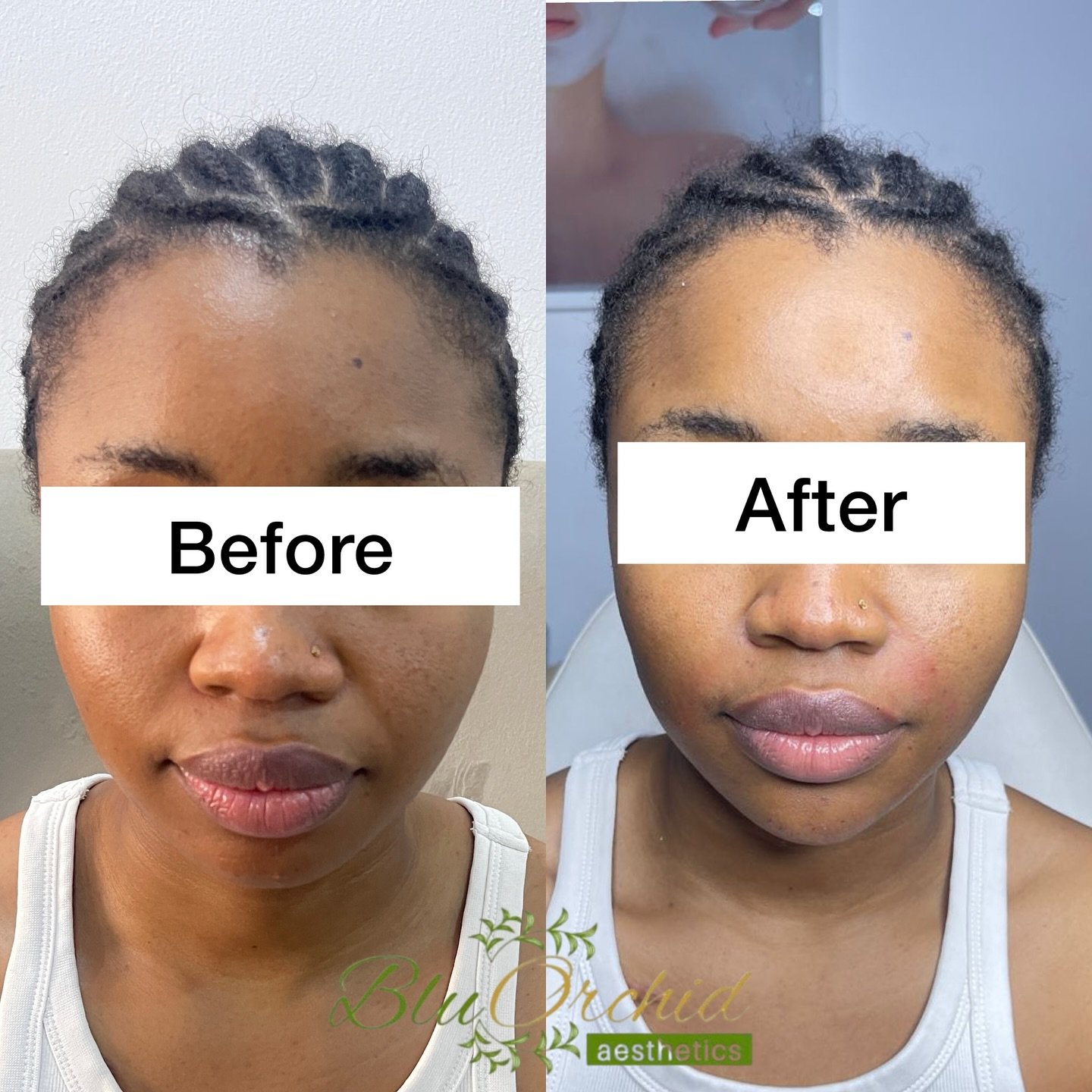
Pigmentation at BluOrchid Aesthetics, Lagos
So which ingredient is best?
There is no single winner.
The “best ingredients for dark spots” depend on why you have the pigmentation in the first place.
| Ingredient | Particularly useful for | What to consider |
|---|---|---|
| Niacinamide | Uneven tone, post-acne marks, barrier support | Generally versatile and easy to incorporate |
| Azelaic acid | Pigmentation associated with acne and inflammation | Useful when acne and pigmentation coexist |
| Kojic acid | Pigmentation and uneven tone | Can be irritating for some skin |
| Alpha-arbutin | Dark spots and uneven tone | Works best as part of a considered routine |
| Vitamin C | Uneven tone and antioxidant support | Formulation and skin tolerance matter |
The important point is that these ingredients are tools, not interchangeable solutions.
What about tranexamic acid?
Tranexamic acid is another ingredient that has become increasingly relevant in pigmentation treatment, particularly for melasma.
It works differently from many conventional brightening ingredients and has been studied in both topical and oral forms.
For a deeper explanation, read our guide to Tranexamic Acid for Dark Spots: How It Works.
The important distinction is that oral tranexamic acid is a medication and should not be treated like an ordinary skincare supplement.
What about hydroquinone?
Hydroquinone is a more potent pigmentation treatment and is sometimes used medically for specific pigmentation conditions.
It should not be confused with cosmetic “bleaching” products sold without appropriate oversight.
Its suitability depends on the condition being treated, the formulation, the duration of use and medical supervision.
For the Nigerian regulatory position and the distinction between medical use and cosmetic skin-lightening products, see our guide to Hydroquinone in Nigeria: Safe, Banned or Misunderstood?
Brightening is not the same as bleaching
This distinction is important.
Brightening aims to reduce excess pigmentation and bring the skin closer to a more even appearance.
Bleaching is often used to describe attempts to make naturally darker skin progressively lighter.
They are not the same objective.
At BluOrchid Aesthetics, the goal is not to erase the natural character of dark skin.
It is to address unwanted pigmentation while preserving the skin’s natural tone.
Why your brightening routine may not be working
Sometimes the problem is not the ingredient.
It is the trigger.
If you continue to experience acne, irritation, friction, excessive sun exposure or another source of inflammation, new pigmentation may continue appearing while you are trying to fade the old marks.
This can make it feel as though your skincare “isn’t working.”
For example:
Active acne → new inflammation → new dark marks
or
Irritating skincare → inflammation → more pigmentation
In these situations, adding another brightening serum may not solve the underlying problem.

Sunscreen still matters
Brightening ingredients cannot do all the work.
UV exposure can worsen pigmentation, particularly conditions such as melasma and post-inflammatory hyperpigmentation.
That means daily sun protection should be considered part of pigmentation management, not an optional extra.
This is especially relevant in Lagos, where strong sunlight is a regular part of the environment.
If you spend time outdoors, reapplication also matters.
And if you have been avoiding sunscreen because you are worried about a white cast, look for formulations that are designed with deeper skin tones in mind.
Do not combine everything at once
One of the most common skincare mistakes is building a routine that contains:
- Vitamin C
- Kojic acid
- Arbutin
- Exfoliating acids
- Retinoids
- Scrubs
- Multiple brightening serums
all at the same time.
More actives do not necessarily mean faster results.
They can mean more irritation.
And for dark skin, unnecessary inflammation can leave behind more pigmentation.
A better routine is often simpler: introduce one active at a time, monitor how your skin responds and build from there.
What if your dark spots are stubborn?
Persistent pigmentation deserves a closer look.
Dark spots can come from very different causes, and some require more than home skincare.
A professional assessment can help determine whether you are dealing with:
- Post-inflammatory hyperpigmentation
- Melasma
- Acne-related pigmentation
- Pigmentation from irritation
- Pigmentation associated with another skin condition
Depending on the diagnosis, treatment may involve a combination of skincare and professional procedures.
At BluOrchid Aesthetics, pigmentation treatment is approached according to the skin rather than simply prescribing the strongest available brightening product.
When should you see a doctor?
Consider professional assessment if:
- Your pigmentation keeps returning
- You have tried several products without improvement
- Your skin is becoming irritated or increasingly sensitive
- You have persistent acne alongside the pigmentation
- The pigmentation appeared suddenly or is changing
- You are unsure what is causing the dark spots
- You are considering prescription-strength pigmentation treatment
- You have been using unregulated bleaching products
Sometimes the most effective next step is not another product.
It is a diagnosis.
The goal is even skin, not lighter skin
For dark skin, good pigmentation treatment should not be about chasing a lighter complexion.
It should be about restoring balance.
The right ingredient can help. But the right diagnosis, consistent sun protection, controlled inflammation and a realistic treatment plan matter just as much.
Niacinamide, azelaic acid, kojic acid, arbutin and vitamin C all have a place in pigmentation-focused skincare.
The question is which one belongs in your routine.
For more comprehensive treatment options, see our Hyperpigmentation Treatment in Lagos guide.
Frequently asked questions
What is the best ingredient for dark spots on dark skin?
There is no single best ingredient for everyone. Niacinamide, azelaic acid, kojic acid, arbutin, vitamin C and tranexamic acid can all have roles depending on the cause and type of pigmentation.
Is vitamin C good for dark skin?
Yes. Vitamin C can support a more even-looking complexion and provides antioxidant benefits. The formulation and your skin’s tolerance are important.
Is niacinamide good for hyperpigmentation?
Niacinamide can help improve the appearance of uneven pigmentation and is also useful for supporting the skin barrier, making it a versatile ingredient in a pigmentation routine.
Which is better for dark spots, kojic acid or arbutin?
Neither is universally better. They work through different mechanisms and may suit different skin types and pigmentation concerns.
Can azelaic acid remove dark spots?
Azelaic acid can help improve pigmentation, particularly when acne or inflammation is also present. It is not an instant spot remover, and improvement takes time.
Can I use multiple brightening ingredients together?
You can sometimes combine compatible ingredients, but doing so is not automatically better. Introducing too many actives can irritate the skin and potentially worsen pigmentation.
Does brightening mean bleaching?
No. Brightening treatment should focus on reducing excess pigmentation and evening the complexion rather than changing someone’s natural skin colour.
Do I need sunscreen if I have dark skin?
Yes. Melanin provides some natural protection, but it does not make dark skin immune to UV-related damage or pigmentation. Sunscreen remains an important part of managing uneven skin tone.
What if skincare is not fading my dark spots?
If pigmentation persists despite a consistent routine, the cause may need to be reassessed. A professional consultation can help determine whether you need a different skincare approach or a clinic-based treatment.
When your skin needs more than another serum
If you have been cycling through brightening products without understanding why the pigmentation keeps returning, it may be time to stop experimenting.
At BluOrchid Aesthetics, consultations are ₦50,000, credited toward your selected treatment if you decide to proceed.
Book a Consultation to have your pigmentation assessed and receive a treatment plan built around your skin, rather than another generic brightening routine.
A consultation at BluOrchid begins with exactly this assessment.
One hour with our doctors. An honest assessment. A plan built around you. ₦50,000, credited in full toward your first treatment.
Book your consultation Doctor-led assessment at Lekki Phase 1, Lagos.