How to Get Natural-Looking Botox in Lagos
How to get natural-looking Botox in Lagos. What natural actually means, why anatomy matters, and how to brief your injector properly.

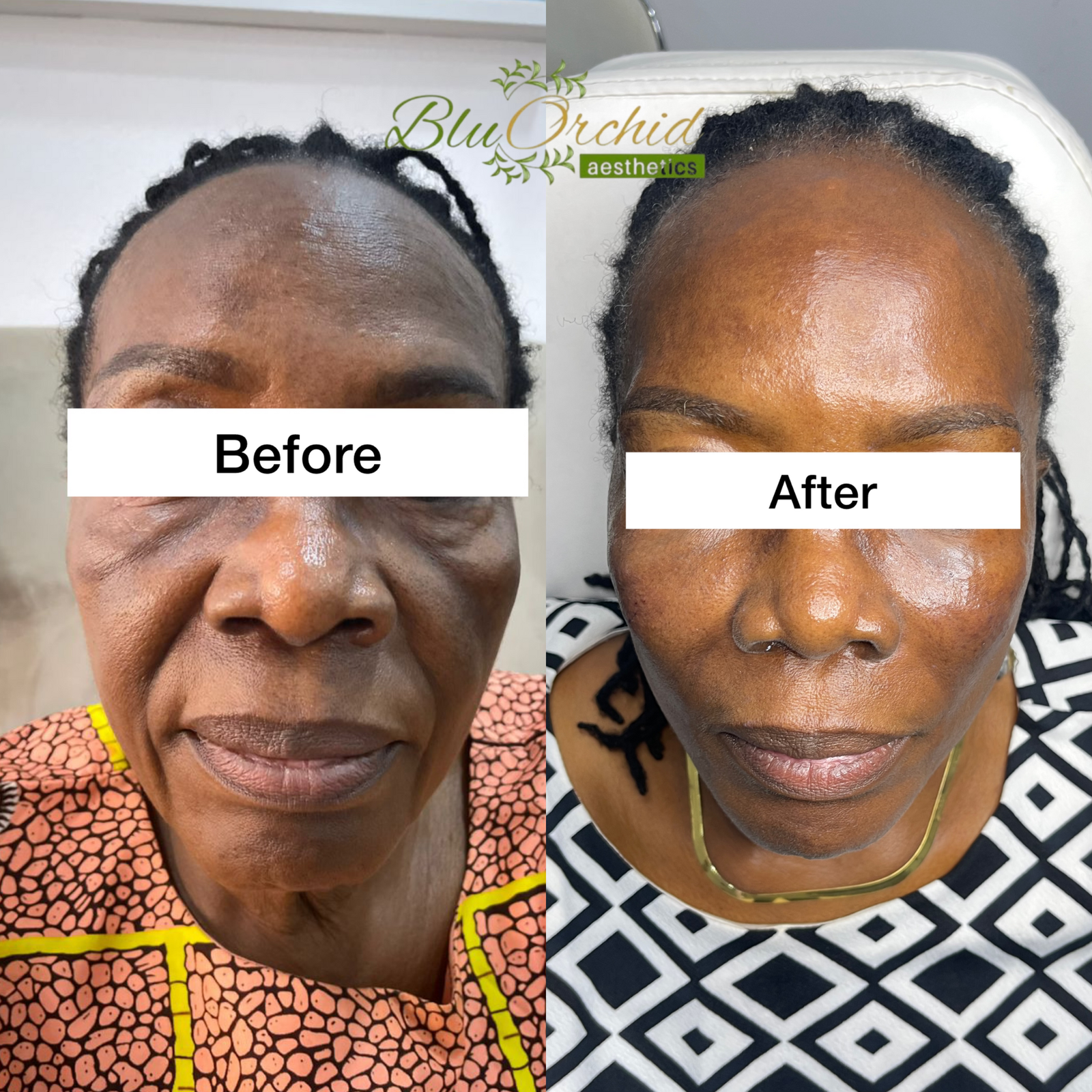
If you are considering Botox but your biggest fear is looking frozen, stiff or obviously treated, you are not alone.
For many people, the goal is not to make their face look completely different. They want to look fresher, more rested and subtly refined while still looking like themselves.
So, how do you get natural-looking Botox?
It starts with understanding that a natural result is not simply about using a small number of units.
It comes down to assessment, treatment planning, appropriate dosing, placement and understanding what you actually want your face to look like afterwards.
What makes Botox look natural?
Natural-looking Botox does not mean that every line has to disappear.
It means the treatment is planned around your face and your aesthetic goals rather than trying to achieve the most dramatic possible change.
A natural result may involve softening certain lines while retaining some facial movement and expression.
The exact approach will depend on the individual.
This is why two people can receive Botox and have completely different-looking results.

1. Choose an injector who understands facial anatomy
The person administering your Botox matters.
A good injector should understand how the relevant facial muscles move and how treatment in one area can affect the overall appearance of the face.
You should be able to discuss:
- What you want to change
- What you do not want to change
- Which areas concern you
- How much facial movement you want to retain
- Whether Botox is actually appropriate for your concern
The aim should be to create a treatment plan for your face, rather than applying the same approach to everyone.
2. Be clear about what “natural” means to you
“Make me look natural” can mean different things to different people.
You may want:
- Softer forehead lines
- A less prominent frown
- A more rested appearance
- To retain natural facial expression
- A subtle change that is difficult for other people to identify
Tell your injector.
If you are worried about looking frozen, say so before treatment.
Your aesthetic preference should be part of the treatment discussion.
3. Don’t chase a specific number of units
A common mistake is assuming that fewer units automatically means a more natural result.
It is not that simple.
The appropriate amount depends on factors including the area being treated, your facial movement, your anatomy and your desired outcome.
Someone else’s Botox dosage cannot tell you what you need.
The goal should not be:
“Use as few units as possible.”
It should be:
“Use an appropriate treatment plan for the result I want.”
Sometimes that may involve a relatively small amount. In other situations, more may be appropriate.
The number should have a reason behind it.
4. Don’t treat every line simply because it exists
One of the most important parts of achieving a natural result is knowing what not to treat.
Your face is not a collection of isolated lines.
A good consultation should consider your overall facial appearance and movement rather than automatically treating every visible crease.
Some lines are part of normal facial expression.
If a line does not bother you, there may be no reason to treat it simply because it is visible.
5. Don’t assume every facial concern needs Botox
Botox is not the answer to every aesthetic concern.
Different treatments work in different ways, and some concerns may be better addressed through another approach, or may not require treatment at all.
This is why a proper assessment matters.
An injector should be willing to tell you when Botox is not the appropriate solution.
That willingness to say no can be just as important as knowing how to inject.
Brand at BluOrchid Aesthetics, Lagos
6. Think about your whole face, not just one area
It is easy to focus on the line that bothers you most.
You may point to your forehead, for example, and say:
“I want this gone.”
But your injector should also consider how your facial features work together.
Treating one area can affect the overall appearance of your face.
A broader assessment can help your practitioner determine whether the proposed treatment makes sense in the context of your other facial features and your desired result.
7. Don’t use someone else’s Botox result as your template
Before-and-after photographs can be useful for understanding a practitioner’s work, but they cannot tell you exactly what treatment you need.
Your face may have different:
- Facial proportions
- Muscle activity
- Skin characteristics
- Existing lines
- Treatment history
- Aesthetic goals
A result that looks natural on someone else may not be the right result for you.
Use photographs to understand the injector’s approach, not to prescribe your own treatment.
8. Tell your injector what you don’t want
Sometimes patients spend so much time explaining what they want that they forget to explain what they want to avoid.
If you do not want to look frozen, say it.
If you want to maintain facial expression, say it.
If you want a subtle change that other people are unlikely to notice, say it.
If you are nervous about looking different, say that too.
These conversations help your practitioner understand the outcome you are trying to achieve.
9. Be cautious about chasing a completely line-free face
A completely line-free face is not necessarily the same thing as a natural-looking face.
Facial movement is part of how people communicate and express emotion.
For some patients, the most satisfying result is not the complete elimination of every visible line.
It may be a softer appearance that still looks like them.
The right target is therefore not necessarily “zero lines.”
It is an appearance that feels appropriate for you.
10. Give your injector your previous treatment history
If you have had Botox before, tell your practitioner.
Share what you remember about:
- Where you were treated
- When you were treated
- How you responded
- What you liked
- What you disliked
- Whether you experienced any problems
If you were happy with a previous result, explain what you liked about it.
If you felt too frozen or noticed something you did not like, explain that too.
Your previous experience can help inform the next treatment discussion.
What should happen before natural-looking Botox?
The treatment should not begin with a syringe.
It should begin with a conversation and assessment.
Your practitioner should understand:
- What concerns you
- What result you want
- How your face moves
- Which areas you are considering
- Whether Botox is appropriate
- What treatment approach is being proposed
- What you can realistically expect
You should also understand the cost and what is included before deciding whether to proceed.
This gives you the information you need to make an informed decision.

Is “Baby Botox” the secret to natural Botox?
Not necessarily.
You may have heard of Baby Botox, a term commonly used to describe a more subtle approach involving smaller amounts of botulinum toxin.
But the name itself does not guarantee a natural result.
Using less product does not automatically mean the treatment is better suited to your face.
The more important question is whether the treatment plan has been properly designed around your anatomy, movement and goals.
If you want subtle Botox, tell your practitioner that your priority is a natural result rather than simply asking for “Baby Botox.”
Can Botox still look natural if you treat multiple areas?
Potentially, yes.
Treating multiple areas does not automatically mean the result will look unnatural.
What matters is whether the overall treatment plan is appropriate for you.
Someone may choose to treat several areas while still wanting to maintain a natural appearance.
The treatment should therefore be considered as part of the overall face rather than simply adding up the number of areas treated.
How do you know if a Botox injector is right for you?
Before choosing an injector in Lagos, look beyond the price.
Ask yourself:
- Do they take time to understand what I want?
- Do they assess my face before recommending treatment?
- Can they explain why they are recommending particular areas?
- Do they discuss the result I want?
- Are they comfortable telling me when treatment may not be necessary?
- Do I feel pressured to treat more areas?
- Do they explain the cost clearly?
- Do they seem focused on creating an appropriate result rather than maximising treatment?
Your consultation experience can tell you a great deal.
What should you ask before getting Botox?
If a natural result is important to you, consider asking:
“What would you recommend changing, and why?”
You can also ask:
- How much movement should I expect to retain?
- Which areas are you recommending?
- Why those areas?
- How many units are you recommending and why?
- What would a more subtle approach look like?
- Are there areas you would recommend leaving untreated?
- What can Botox realistically change in my case?
- What happens if I decide not to treat everything?
A good practitioner should be able to explain the reasoning behind the proposed treatment.
The biggest mistake? Trying to copy someone else’s Botox
There is no universal Botox formula for looking natural.
The number of units, areas treated and final appearance should not be copied from another person.
Your face is different.
Your muscles are different.
Your goals are different.
And your definition of “natural” may be different.
The best Botox treatment is therefore not necessarily the one that gives you the most dramatic transformation.
It is the one that makes sense for your face and your goals.
So, how do you get natural-looking Botox in Lagos?
Start with the right practitioner and the right conversation.
Don’t choose Botox simply because someone else your age is having it. Don’t choose your dose based on another person’s treatment. And don’t assume that more treatment, or less treatment, automatically means a better result.
Instead:
Know what you want. Choose an appropriately qualified practitioner. Have your face assessed. Ask questions. And make sure the treatment plan is designed around you.
Natural-looking Botox is not about making your face look untouched by treatment.
It is about making a considered change without losing the features and expression that make your face yours.
Looking for natural-looking Botox in Lagos?
At BluOrchid Aesthetics, the starting point is understanding the individual rather than applying a standard Botox formula. Dr Gigi assesses your facial features, movement and aesthetic goals before discussing the appropriate treatment approach.
If you want to soften facial lines without looking obviously treated, book a consultation with Dr Gigi to discuss what natural-looking Botox could mean for you.
Frequently asked questions
So, how do you get natural-looking Botox in Lagos?
Start with the right practitioner and the right conversation. Don't choose Botox simply because someone else your age is having it. Don't choose your dose based on another person's treatment. And don't assume that more treatment, or less treatment, automatically means a better result.
What makes Botox look natural?
Natural-looking Botox does not mean that every line has to disappear. It means the treatment is planned around your face and your aesthetic goals rather than trying to achieve the most dramatic possible change.
What should happen before natural-looking Botox?
The treatment should not begin with a syringe. It should begin with a conversation and assessment. Your practitioner should understand: 1. What concerns you 2. What result you want 3. How your face moves 4.
Is “Baby Botox” the secret to natural Botox?
Not necessarily. You may have heard of Baby Botox, a term commonly used to describe a more subtle approach involving smaller amounts of botulinum toxin. But the name itself does not guarantee a natural result.
A consultation at BluOrchid begins with exactly this assessment.
One hour with our doctors. An honest assessment. A plan built around you. ₦50,000, credited in full toward your first treatment.
Book your consultation Doctor-led assessment at Lekki Phase 1, Lagos.