Microdermabrasion vs Dermaplaning vs Hydrafacial
Microdermabrasion vs dermaplaning vs Hydrafacial: compare exfoliation, extraction, hydration, skin concerns, downtime and who each treatment suits.

Three treatments often appear together when people start looking for a better facial:
Microdermabrasion.
Dermaplaning.
Hydrafacial.
All three can leave the skin looking smoother and more polished.
But they are not the same treatment, and they are not designed to solve exactly the same problems.
Microdermabrasion focuses on mechanical exfoliation.
Dermaplaning uses a blade to remove surface skin cells and fine facial hair.
Hydrafacial is a branded, multi-step treatment system designed to cleanse, exfoliate, extract and hydrate the skin.
So if you are deciding between them, the better question is not:
“Which facial is best?”
It is:
“What do I actually want the treatment to do for my skin?”
Microdermabrasion vs Dermaplaning vs Hydrafacial at a glance
| Item | Microdermabrasion | Dermaplaning | Hydrafacial |
|---|---|---|---|
| Main action | Mechanical exfoliation | Blade-based surface exfoliation + hair removal | Cleansing + exfoliation + extraction + hydration |
| Removes dead skin cells | Yes | Yes | Yes |
| Removes facial hair | No | Yes | No |
| Extraction | Not the defining feature | No | Yes |
| Hydration-focused | Not primarily | No | Yes |
| Best known for | Surface texture and exfoliation | Smooth surface + peach fuzz removal | Refreshing, cleansing and hydrating |
| Can be customised | Yes, depending on device/protocol | Technique can be adjusted | Yes, depending on system/protocol |
| Main concern | Texture, dullness, uneven surface | Fine hair and surface smoothness | Congestion, hydration, texture and overall skin refresh |
| Skin-of-colour consideration | Avoid overly aggressive exfoliation | Avoid unnecessary irritation | Individual assessment still matters |
| Hair removal | No | Yes | No |
The important point is that there is no universal winner.
Each treatment has a different centre of gravity.

What is microdermabrasion?
Microdermabrasion is a non-invasive procedure that mechanically exfoliates the outermost layer of the skin.
A dermatologist may use a handheld device to gently remove the top layer of skin. The AAD describes it as a treatment that can make the complexion appear smoother, brighter and more even after a series of treatments.
It may be considered for concerns such as:
- Dull-looking skin
- Uneven texture
- Uneven tone
- Some dark spots
- Rough surface texture
- Signs of ageing
It is essentially a surface-resurfacing treatment.
One important limitation: microdermabrasion does not treat every type of acne scar. The AAD notes that it can help even out skin tone, but it does not treat acne scars themselves.
What does microdermabrasion feel like?
The AAD describes the sensation as similar to sanding, although the treatment is generally not painful.
Afterwards, some people experience temporary pinkness or redness, mild swelling or sensitivity. These effects typically settle relatively quickly.
So although it is considered a relatively gentle procedure, gentle does not mean suitable for everyone at every moment.
If your skin is already irritated, the timing may not be right.
What is dermaplaning?
Dermaplaning is a physical exfoliation technique that uses a blade to remove surface skin cells and fine vellus hair.
That gives it one major difference from the other two treatments:
It can remove facial peach fuzz.
This can leave the skin feeling exceptionally smooth and can make makeup application feel more seamless.
But dermaplaning is not simply “microdermabrasion with a different machine.”
It is a different technique with a different reason for choosing it.
You might choose dermaplaning if your priorities are:
- Removing fine facial hair
- Smoother-feeling skin
- Surface exfoliation
- A more polished-looking complexion
- Smoother makeup application
It is less appropriate to think of dermaplaning as a treatment for every pigmentation, acne or scarring concern.
Does dermaplaning make facial hair grow back thicker?
No.
Dermaplaning cuts hair at the surface.
It does not change the hair follicle or make the follicle produce thicker hair.
When the hair grows back, the blunt cut end can sometimes feel different, which can create the impression that the hair has become thicker.
But the act of shaving or dermaplaning does not biologically increase hair thickness.
What is a Hydrafacial?
Hydrafacial is a branded treatment system that uses its Vortex-Fusion technology to combine several steps in one treatment.
The manufacturer describes the core process as:
cleanse → exfoliate → extract → hydrate.
Unlike a simple exfoliation treatment, the system is designed to combine exfoliation with suction-based extraction and the delivery of hydrating or nourishing solutions.
The exact treatment can also be customised depending on the system and options available.
This makes Hydrafacial particularly different from dermaplaning.
Dermaplaning is principally about surface exfoliation and hair removal.
Hydrafacial is more of a multi-step skin-refresh treatment.
Which one is best for clogged pores?
If congestion is your main concern, Hydrafacial may have an advantage because extraction is an explicit part of the treatment process.
The manufacturer describes Hydrafacial as combining exfoliation and extraction with hydration.
Microdermabrasion primarily focuses on exfoliating the surface.
Dermaplaning primarily focuses on removing surface cells and fine hair.
That does not mean Hydrafacial is automatically the right treatment for every person with clogged pores.
Persistent or severe acne and congestion may require a proper medical assessment rather than repeated facials.
Which one is best for dry or dehydrated skin?
This is where Hydrafacial may make more sense for some people.
Hydrafacial is specifically designed to combine exfoliation with hydration, whereas microdermabrasion and dermaplaning are primarily exfoliating treatments.
If your skin is already very dry or sensitive, however, the question should not simply be:
“Which treatment gives the most exfoliation?”
It should be:
“Does my skin need more exfoliation at all?”
Over-exfoliation can leave skin irritated and uncomfortable.
The AAD recommends choosing exfoliation according to your skin type and warns that more aggressive exfoliation can increase pigmentation in some people with darker skin tones.
Which one is best for removing peach fuzz?
Dermaplaning.
This is the clearest difference.
Microdermabrasion does not remove facial hair as its primary function.
Hydrafacial does not remove facial hair as its primary function.
Dermaplaning does.
If your primary concern is facial peach fuzz and you also want surface exfoliation, dermaplaning is the most directly targeted option.
Which one is best for a smoother skin texture?
All three can contribute to a smoother-feeling surface.
But they approach it differently.
Microdermabrasion
Uses mechanical exfoliation to remove surface cells.
Dermaplaning
Uses a blade to remove surface cells and fine hair.
Hydrafacial
Combines exfoliation with cleansing, extraction and hydration.
So the best choice depends on what is making your skin look or feel uneven.
If it is primarily surface buildup, microdermabrasion may be considered.
If fine facial hair is part of the concern, dermaplaning has an additional benefit.
If congestion and dehydration are both concerns, Hydrafacial may offer a broader approach.
Which one is best for glowing skin?
This is where marketing language can become misleading.
All three can produce a fresher-looking complexion.
But “glowing skin” is not one medical diagnosis.
Your skin may look dull because of:
- Surface buildup
- Dehydration
- Congestion
- Uneven pigmentation
- Sun exposure
- Acne
- Irritation
- Underlying skin conditions
The treatment that creates the most immediate cosmetic glow may not be the treatment that addresses the reason your skin looks dull.
That is why a good facial consultation should start with the skin concern rather than the treatment menu.
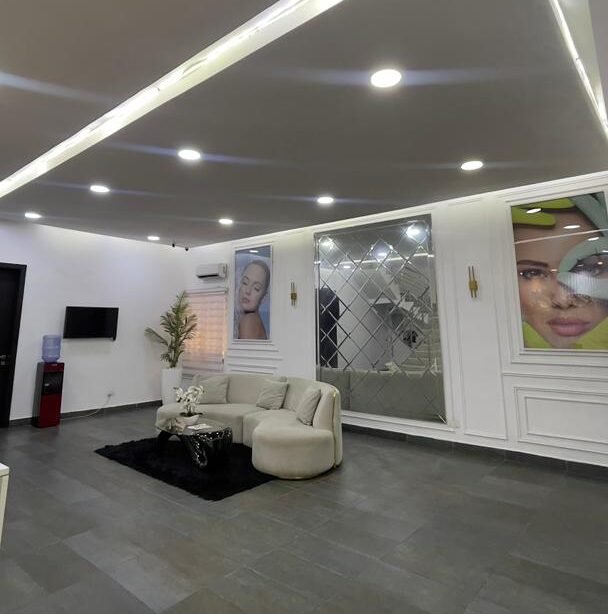
Brand at BluOrchid Aesthetics, Lagos
Which one is best for dark skin?
None should be declared universally “best” simply because someone has dark skin.
The more important issue is how much irritation the skin can tolerate and what concern is being treated.
The AAD notes that microdermabrasion can be safe for all skin colours when appropriately performed, but also warns that people who develop dark marks easily may have a greater risk of additional pigmentation after exfoliation.
The AAD also advises people with darker skin to be particularly cautious with aggressive exfoliation because irritation can trigger increased pigmentation.
That principle matters for any exfoliating facial.
If you routinely develop dark marks after acne, burns, insect bites or other skin irritation, tell your practitioner.
The goal is not to avoid exfoliation because you have dark skin.
It is to avoid unnecessary inflammation.
Microdermabrasion vs Dermaplaning vs Hydrafacial for acne
This needs some nuance.
None of these treatments should be treated as a universal acne treatment.
If you have active acne, your practitioner should first establish what type of acne you have and whether a facial treatment is appropriate.
For example:
- Microdermabrasion may provide surface exfoliation.
- Dermaplaning may not be appropriate over active inflammatory lesions.
- Hydrafacial may include cleansing and extraction, but it does not replace medical acne treatment.
If acne is persistent, painful or leaving marks, a medical assessment may be more useful than repeatedly changing facials.
What about acne scars?
This is another area where expectations matter.
None of these should be presented as a universal treatment for acne scars.
Microdermabrasion may improve surface tone and texture but does not treat structural acne scars.
Dermaplaning primarily addresses surface exfoliation and hair removal.
Hydrafacial may improve the appearance and feel of the skin temporarily, but it should not be confused with a dedicated scar-remodelling treatment.
Depressed acne scars such as ice-pick, boxcar and rolling scars are structural problems and may require other approaches.
Which has the least downtime?
All three are generally considered relatively low-downtime facial treatments, but the actual experience depends on the treatment intensity, your skin and how it responds.
Microdermabrasion can cause temporary pinkness, redness or mild swelling.
Hydrafacial is marketed by the manufacturer as a non-invasive treatment with no downtime.
Dermaplaning is also generally performed as a surface-level treatment, but temporary sensitivity or redness can still occur.
If you have an important event coming up, it is sensible not to assume that your skin will react exactly like someone else’s.
If you have never had the treatment before, give yourself some margin.
Can you combine these treatments?
Sometimes.
But more exfoliation is not automatically better.
Combining multiple exfoliating procedures without considering your skin barrier can increase irritation.
The AAD specifically recommends considering your existing skincare products and medications when deciding how to exfoliate, because retinoids, retinol and some other products can already make the skin more sensitive.
If you are considering combining treatments, let the practitioner assess your skin first.
The correct question is not:
“How many treatments can I fit into one appointment?”
It is:
“What combination gives my skin what it actually needs without unnecessary irritation?”
Which treatment should you choose?
Here’s the simplest way to think about it.
Choose microdermabrasion when your priority is:
Surface exfoliation and texture.
It may suit someone looking for a straightforward mechanical exfoliation treatment for dullness, uneven texture or surface roughness.
Choose dermaplaning when your priority is:
Smooth skin plus fine facial-hair removal.
It is particularly useful when peach fuzz is part of the reason you want a smoother-looking complexion.
Consider Hydrafacial when your priority is:
Cleansing + exfoliation + extraction + hydration.
It can be particularly appealing when congestion and dehydration are both part of the picture.
But these are starting points, not prescriptions.
A simple decision guide
| Your main concern | Treatment worth discussing |
|---|---|
| Fine facial hair | Dermaplaning |
| Surface roughness | Microdermabrasion |
| Dull-looking skin | Microdermabrasion or Hydrafacial |
| Dehydrated-looking skin | Hydrafacial |
| Congested pores | Hydrafacial |
| Smoother makeup application | Dermaplaning |
| General skin refresh | Hydrafacial |
| Uneven surface texture | Microdermabrasion |
| Active acne | Medical assessment first |
| Deep acne scars | Dedicated scar treatment assessment |
| Pigmentation on dark skin | Assessment before exfoliation |
What if you have sensitive skin?
This is where there is no universal winner.
Sensitive skin may react to mechanical exfoliation, suction, active solutions or repeated treatments.
The AAD recommends choosing exfoliation according to your individual skin type and being particularly careful not to over-exfoliate.
If your skin regularly burns, stings, becomes very red or reacts to skincare products, tell your practitioner before choosing a facial.
Sometimes the best treatment is not the strongest treatment.
Sometimes it is simply the treatment your skin can tolerate well.
What if you have hyperpigmentation?
Be careful with the assumption that exfoliation automatically equals pigmentation correction.
Hyperpigmentation can have many causes, including acne, irritation, hormonal changes and sun exposure.
In darker skin, irritation itself can contribute to new pigmentation. The AAD recommends identifying the cause and using gentle skincare while addressing the underlying problem.
So if pigmentation is your main concern, a consultation may be more useful than choosing a facial based solely on how much exfoliation it provides.
The three treatments in one sentence
If you want the shortest possible answer:
Microdermabrasion exfoliates.
Dermaplaning exfoliates and removes peach fuzz.
Hydrafacial cleanses, exfoliates, extracts and hydrates.
That’s the basic difference.
But the best choice depends on your skin rather than the treatment that sounds most impressive.
Frequently asked questions
Is microdermabrasion better than Hydrafacial?
Not universally. Microdermabrasion is primarily mechanical exfoliation, while Hydrafacial combines cleansing, exfoliation, extraction and hydration. The better option depends on your skin concerns.
Is dermaplaning better than Hydrafacial?
Neither is automatically better. Dermaplaning has the advantage if facial hair removal is important. Hydrafacial may be more appropriate when cleansing, extraction and hydration are priorities.
Is microdermabrasion better than dermaplaning?
They do different things. Microdermabrasion focuses on mechanical exfoliation, while dermaplaning also removes fine facial hair.
Which gives the best glow?
All three can produce a fresher-looking complexion, but the reason your skin looks dull matters. Hydration, congestion, surface buildup and pigmentation may require different approaches.
Which is best for clogged pores?
Hydrafacial may be particularly relevant because extraction is part of its treatment process. However, persistent acne or congestion should be medically assessed rather than managed solely with facials.
Which is best for peach fuzz?
Dermaplaning.
Which is best for dry skin?
Hydrafacial may be worth discussing when dehydration is a major concern because hydration is part of the treatment design. However, very dry or irritated skin may need barrier support before exfoliation.
Is microdermabrasion safe for dark skin?
It can be. The AAD states that dermatologist-performed microdermabrasion is safe for all skin colours, but people who develop dark marks easily should be aware of the possibility of pigmentation following irritation.
Can I have these treatments if I have acne?
It depends on the type and severity of your acne. Active inflammatory acne may require medical treatment rather than an exfoliating facial alone.
Can these treatments remove acne scars?
They should not be presented as universal acne-scar treatments. Microdermabrasion, for example, can improve surface tone but does not treat structural acne scars.
How often should I have a facial?
There is no universal schedule. Frequency should depend on the treatment, your skin type, your skincare routine and how your skin responds.
The bottom line
Microdermabrasion, dermaplaning and Hydrafacial all sit within the broader world of non-invasive skin treatments, but they are solving slightly different problems.
Microdermabrasion is primarily about mechanical exfoliation.
Dermaplaning is about surface exfoliation plus fine facial-hair removal.
Hydrafacial combines cleansing, exfoliation, extraction and hydration in a specific treatment system.
So don’t choose based on which treatment has the most impressive name.
Choose based on what your skin actually needs.
And if you are dealing with acne, persistent pigmentation, significant sensitivity or another ongoing skin concern, a professional assessment should come before deciding how aggressively to exfoliate.
At BluOrchid Aesthetics, the right facial should begin with your skin concern, your skin’s current condition and the result you actually want, not simply a treatment menu.
A consultation at BluOrchid begins with exactly this assessment.
One hour with our doctors. An honest assessment. A plan built around you. ₦50,000, credited in full toward your first treatment.
Book your consultation Doctor-led assessment at Lekki Phase 1, Lagos.