Jowls vs Double Chin: Different Problems, Different Fixes
Jowls and double chins can look similar but have different causes. Learn how to tell them apart and why the right treatment depends on your anatomy.

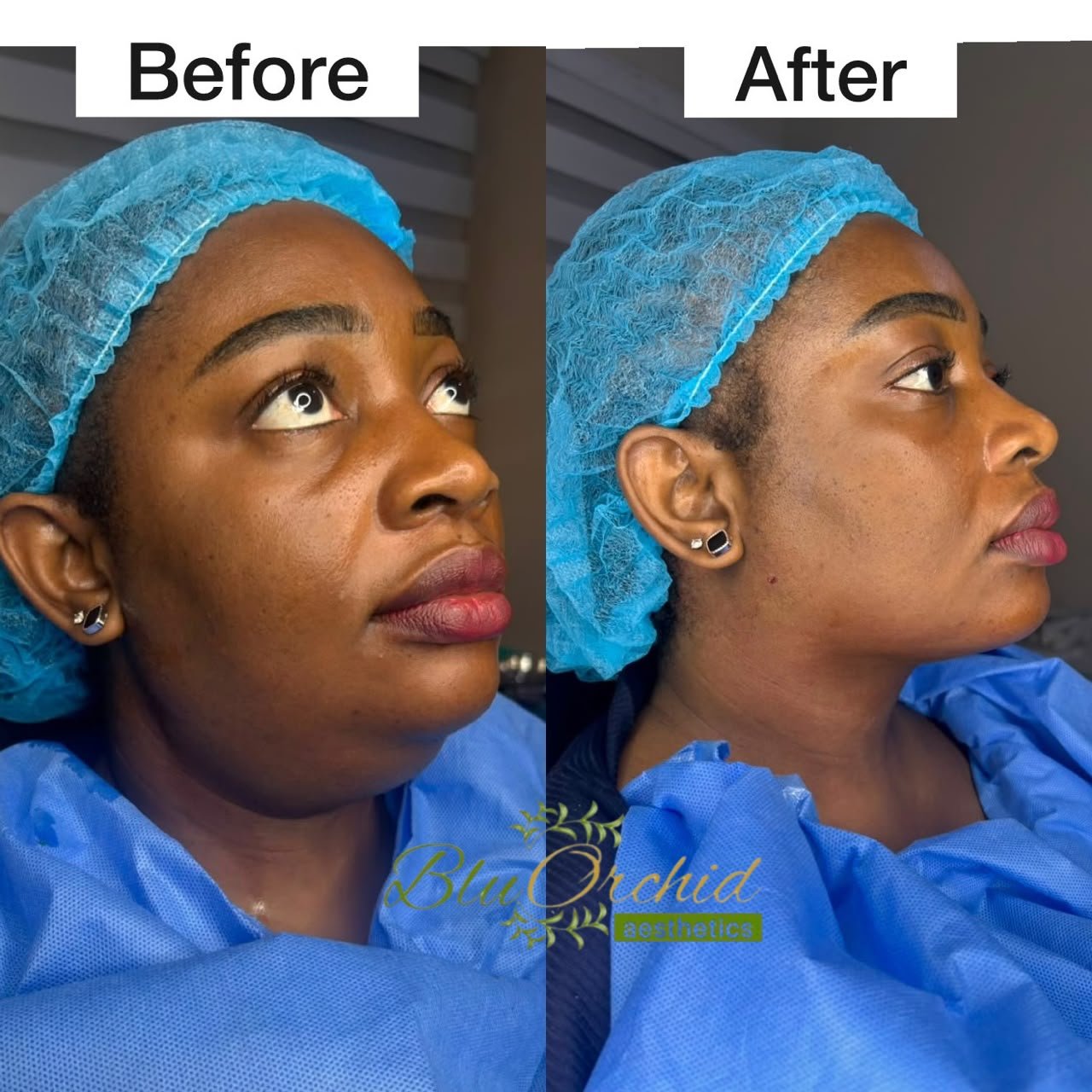
A softer jawline can be surprisingly difficult to diagnose from a photograph.
You may look in the mirror and think:
“I have a double chin.”
Or:
“My jawline is starting to disappear.”
But what you are actually seeing could be submental fullness, jowling, skin laxity, changes in facial fat distribution, or several of these at once.
That distinction matters.
A treatment designed to reduce fat beneath the chin is not automatically the right treatment for jowls.
And a treatment designed to improve lower-face laxity will not necessarily remove a pocket of submental fat.
The first step is understanding what you are actually looking at.
Jowls vs Double Chin: What’s the Difference?
The simplest distinction is where the fullness sits.
A double chin usually refers to fullness beneath the chin, in the area between the chin and upper neck. This is often called the submental area.
Jowls, by contrast, appear along the lower cheeks and jawline, usually around the area where the cheeks transition into the lower face.
They can both make the jawline appear less defined, but they are not the same anatomical concern.
| Concern | Where it appears | Common contributors |
|---|---|---|
| Double chin | Beneath the chin | Submental fat, anatomy, chin projection, skin laxity |
| Jowls | Along the lower cheeks/jawline | Age-related tissue changes, fat redistribution, reduced tissue support, skin laxity |
| Both | Chin + lower face | A combination of fat, laxity and structural changes |
This is why simply searching for “jawline treatment” does not tell you which procedure you need.

What Causes a Double Chin?
A double chin is usually associated with submental fullness.
Fat can accumulate beneath the chin even in people who are otherwise slim.
But fat is not the only factor.
The appearance can also be influenced by:
- Genetics
- Chin projection
- Facial structure
- The distribution of soft tissue
- Skin elasticity
- Ageing
- Changes in body weight
This is why someone who is relatively slim can still have a noticeable double chin.
And it is also why losing weight does not necessarily eliminate it.
If the underlying issue is primarily the anatomy of the chin and lower face, further weight loss may not create the sharper profile someone is looking for.
What Causes Jowls?
Jowls are more closely associated with changes in the lower face and jawline.
As the face ages, several things can happen simultaneously.
Skin gradually loses elasticity.
Facial fat compartments can change in volume and position.
The tissues supporting the lower face can change.
And the underlying facial framework also changes over time.
Together, these changes can soften the transition between the cheek and jawline.
The result may be a small area of fullness or drooping along the lower cheek that sits above or around the jawline.
That is what many people describe as jowls.
How Can You Tell If You Have Jowls or a Double Chin?
Look at where the fullness begins.
If the fullness is mainly beneath your chin…
You may be dealing primarily with submental fullness.
If the fullness is concentrated around the lower cheeks and along the jawline…
Jowling may be a more relevant description.
If both areas are affected…
You may have a combination of concerns.
This is one reason a side-profile photograph alone does not always tell the whole story.
Facial anatomy is three-dimensional.
The relationship between your chin, jaw, cheeks and neck matters.
Why the Difference Matters for Treatment
This is where many aesthetic treatment conversations go wrong.
A person sees a softer jawline and assumes:
“I need fat removal.”
But the problem may not primarily be fat.
Or someone sees fullness around the lower face and assumes:
“I need a thread lift.”
But if the main issue is submental fat, lifting tissue may not address the underlying concern.
Treatment needs to match the anatomy.
Treating a Double Chin
If the main concern is localised fat beneath the chin, several approaches may be considered depending on the amount of fat, skin quality and individual anatomy.
These can include:
Fat-dissolving injections
Injectable fat-reduction treatments may be considered for appropriately selected patients with localised submental fat.
The approach is non-surgical, but results develop gradually and treatment may require more than one session depending on the product and individual response.
V-Line treatment
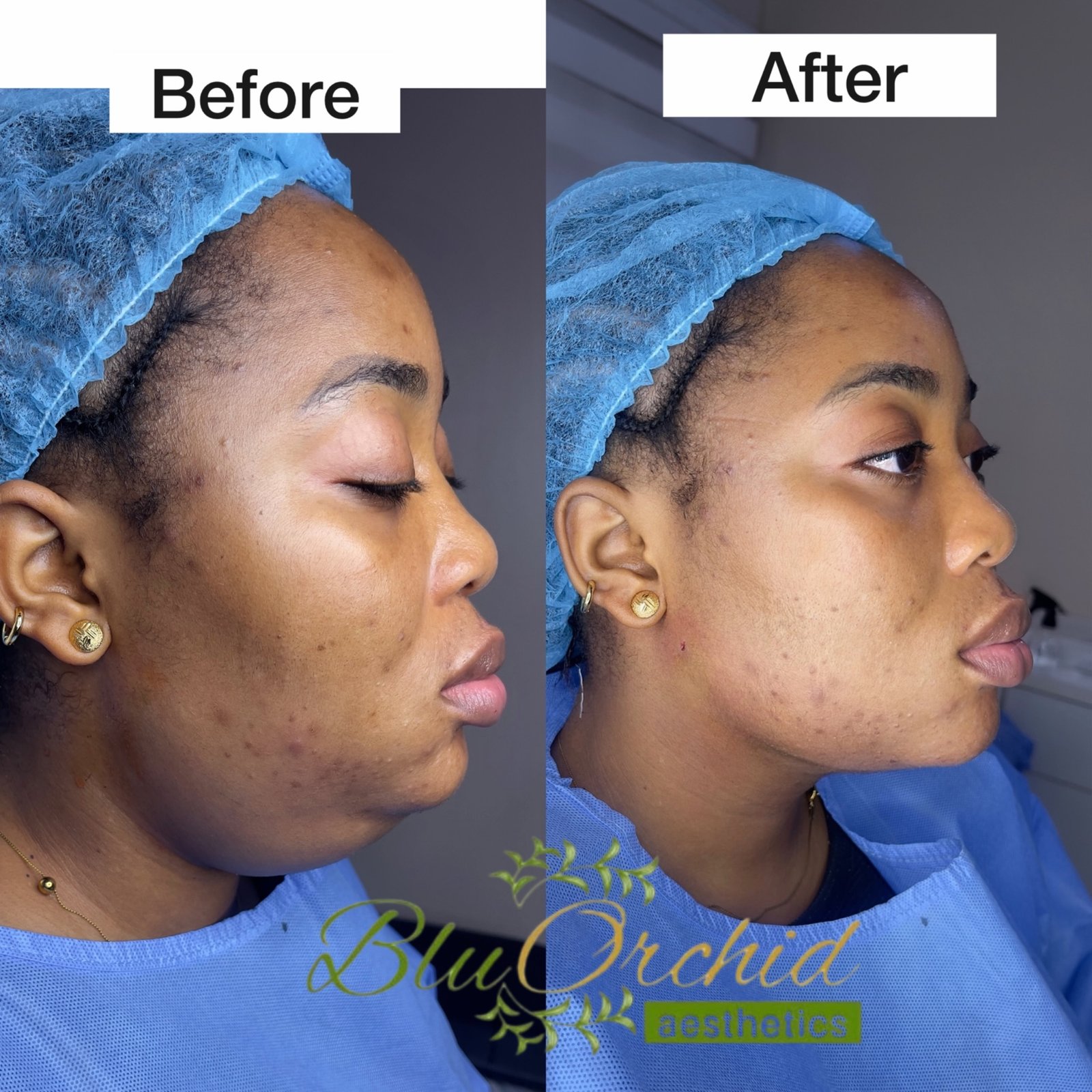
The BluOrchid V-Line is a cannula-based approach to targeted submental fat removal.
Instead of relying on an injectable treatment to gradually reduce fat, targeted fat is physically removed.
This can be considered when the anatomy and amount of submental fullness make a more comprehensive contouring approach appropriate.
Other approaches
The appropriate treatment can differ when skin laxity, chin projection or other structural factors contribute significantly to the appearance.
The point is not to remove as much tissue as possible.
It is to create a proportionate lower face.
Jaw and profile at BluOrchid Aesthetics, Lagos
Treating Jowls
Jowls require a different conversation.
If the primary concern is laxity or tissue descent along the jawline, simply removing fat may not solve the problem.
Depending on the patient’s anatomy and degree of laxity, treatment may involve approaches intended to:
- Improve tissue support
- Refine lower-face contour
- Address selected areas of excess tissue
- Restore balance between the cheek, jawline and chin
Threads may have a role in selected patients where tissue laxity is part of the concern.
Other patients may require a different approach altogether.
This is why there is no single “jowl treatment” that is appropriate for everyone.
What If You Have Both Jowls and a Double Chin?
This is more common than you might think.
Someone can have:
Submental fullness + jowling + skin laxity
at the same time.
In that situation, treating only one area may produce an incomplete change.
For example, reducing fat beneath the chin may make the area under the chin smaller while leaving fullness around the jawline.
Conversely, lifting lower-face tissue may improve the jawline while leaving a pocket of submental fat unchanged.
The treatment plan therefore needs to account for the entire lower face.
Can a Double Chin Cause Jowls?
Not directly.
They are separate anatomical concerns, although they can visually influence one another.
A prominent area of submental fullness can make the jawline look less defined.
Jowls can also make the lower face look heavier.
When both are present, it can become difficult to tell where one concern ends and the other begins without an assessment.
Can Weight Loss Fix Jowls?
Not necessarily.
Jowls are not simply a weight problem.
Weight loss may reduce facial and neck fat in some people, but it can also reveal or accentuate skin laxity in others.
If the main issue is age-related tissue descent or reduced skin elasticity, losing additional weight is unlikely to be a reliable “jowl treatment”.
This is another reason not to assume that every change in the lower face requires weight loss.
Can You Have a Double Chin Without Being Overweight?
Absolutely.
A double chin can be influenced by genetics, facial structure and localised fat distribution.
The position and projection of the chin can also affect how the area beneath it appears.
That means a person can have a noticeable double chin despite having a healthy or relatively low overall body weight.
What About a Weak or Receding Chin?
This is an important distinction.
Sometimes what appears to be a double chin is partly a consequence of chin projection.
A less projected chin can create a softer transition between the lower face and neck, making the area beneath the chin appear more prominent.
In that situation, simply removing submental fat may not create the facial balance the patient expects.
The chin itself may need to be considered as part of the assessment.
This is one reason lower-face contouring should not be planned from a single feature in isolation.
Jowls vs Double Chin: Which Treatments Address Which Problem?
| Concern | Treatment category that may be considered |
|---|---|
| Localised submental fat | Fat-dissolving injections or targeted fat removal |
| More substantial submental fullness | V-Line, where clinically appropriate |
| Mild lower-face laxity | Selected lifting/support approaches |
| Jowling caused primarily by laxity | Lifting/support-focused treatment may be considered |
| Poor chin projection | Facial balancing assessment |
| Combination of concerns | Individualised treatment plan |
This table is a starting point, not a treatment prescription.
The same visible concern can have different underlying causes in different people.
Why Facial Assessment Matters
A good lower-face assessment should not begin with:
“Which procedure do you want?”
It should begin with:
“What is actually creating this appearance?”
The clinician may look at:
- Chin projection
- Jawline definition
- Submental fullness
- Skin quality
- Lower-cheek fullness
- Tissue laxity
- Facial proportions
- Your overall aesthetic objective
That assessment helps prevent a common mistake in aesthetic medicine:
treating the feature you can see without understanding the anatomy creating it.
What Happens If You Treat the Wrong Problem?
You may get a technically successful treatment without getting the visual change you wanted.
For example:
If the concern is mainly loose skin, removing fat may not create a sharper jawline.
If the concern is primarily submental fat, lifting tissue may not remove the fullness beneath the chin.
If chin projection is contributing to the appearance, neither approach may fully address the profile.
The procedure can therefore be “successful” while the patient still feels that the original concern has not been completely addressed.
Good treatment planning is about avoiding that mismatch.
A More Useful Way to Think About Your Jawline
Instead of asking:
“What treatment removes my double chin?”
or:
“What is the best treatment for jowls?”
Ask:
“What is making my lower face look less defined?”
That question opens up a more useful clinical assessment.
Is it:
- Fat?
- Skin?
- Tissue position?
- Chin projection?
- Facial proportions?
- Or a combination?
Once that is clear, the treatment options become much easier to understand.
Frequently asked questions
Are jowls and a double chin the same thing?
No. A double chin usually refers to fullness beneath the chin, while jowls are typically associated with fullness or tissue descent along the lower cheeks and jawline.
Can you have jowls and a double chin at the same time?
Yes. The two concerns can occur together and may require different treatment considerations.
Does V-Line treat jowls?
The V-Line is designed around targeted submental fat removal and lower-face contouring. It should not be presented as a universal treatment for jowls, particularly where laxity or tissue descent is the main concern.
Can fat-dissolving injections treat jowls?
Fat-dissolving injections are designed to reduce localised fat. Whether they are appropriate around the jawline depends on the specific anatomy and the cause of the fullness. They are not a general treatment for laxity.
Are threads better for jowls?
Threads may be considered for selected patients where tissue laxity contributes to jowling, but they are not automatically the right solution for every patient with jowls.
Can losing weight get rid of a double chin?
Not necessarily. Localised submental fullness can persist even when someone is otherwise slim, particularly when anatomy and genetics contribute to the appearance.
Why does my jawline look less defined even though my weight has not changed?
Age-related changes in skin elasticity, facial fat distribution, tissue support and facial structure can affect lower-face definition independently of major changes in body weight.
How do I know whether I have jowls or a double chin?
The location of the fullness provides a useful starting point, but a clinical assessment is more reliable because several factors can coexist.
The Bottom Line
A double chin and jowls may look similar from a distance, but they are different problems.
A double chin is usually associated with the area beneath the chin and may involve localised fat, anatomy or skin laxity.
Jowls are more closely associated with changes along the lower cheeks and jawline, often involving tissue position, fat distribution and skin laxity.
And sometimes you have both.
That is why the most effective treatment plan starts with diagnosis before procedure.
At BluOrchid Aesthetics, the goal is not simply to remove fullness wherever it appears.
It is to understand the structure of your lower face and choose an approach that makes sense for your anatomy and your desired result.
A consultation at BluOrchid begins with exactly this assessment.
One hour with our doctors. An honest assessment. A plan built around you. ₦50,000, credited in full toward your first treatment.
Book your consultation Doctor-led assessment at Lekki Phase 1, Lagos.