Mounjaro for PCOS: What the Evidence Says
Can Mounjaro help with PCOS? Learn what the evidence says about weight loss injections, insulin resistance, periods, fertility and safety.

Polycystic ovary syndrome, or PCOS, is often discussed alongside weight gain. But the relationship is more complicated than simply “PCOS causes weight gain”.
PCOS is a hormonal and metabolic condition that can involve insulin resistance, changes in androgen levels, irregular ovulation and difficulty managing body weight. Not every woman with PCOS has obesity, and weight loss is not the only goal of PCOS treatment.
This is where newer weight-loss injections have attracted attention.
Medications such as semaglutide, liraglutide and tirzepatide can produce substantial weight loss in people with overweight or obesity. But does that mean they treat PCOS itself?
The short answer is: not exactly.
There is growing evidence that GLP-1-based medications can help some women with PCOS who also have overweight or obesity, particularly through weight and metabolic improvements. However, the evidence is still developing, and these medications should not be presented as a cure for PCOS or as a guaranteed way to restore periods or fertility.
What is the connection between PCOS and weight?
PCOS affects multiple systems in the body.
Some women with PCOS have insulin resistance, meaning the body does not respond to insulin as effectively as it should. The pancreas may compensate by producing more insulin.
Higher insulin levels can interact with the ovaries and contribute to increased androgen activity in some women.
At the same time, excess weight can worsen insulin resistance and may make some PCOS symptoms more difficult to manage.
This creates a relationship that can look like a cycle:
PCOS-related metabolic changes → difficulty managing weight → increased insulin resistance → potentially greater hormonal disruption.
But this does not mean that every woman with PCOS needs to lose weight.
PCOS occurs across a wide range of body sizes, and treatment should be based on the individual’s symptoms, metabolic health, reproductive goals and overall medical assessment.
So, can Mounjaro help with PCOS?
Possibly, particularly when excess weight or obesity is part of the clinical picture.
But there is an important distinction between helping with weight management in someone who has PCOS and treating PCOS itself.
Mounjaro contains tirzepatide, a medication that acts on GIP and GLP-1 pathways. Its effects on appetite, food intake and glucose metabolism can result in significant weight loss.
The strongest evidence for tirzepatide comes from obesity and type 2 diabetes research rather than from large, long-term PCOS-specific trials.
That distinction matters.
A medication can be very effective for weight loss without having been established as a treatment that directly corrects every underlying feature of PCOS.
What does the research actually show?
The evidence for weight-loss injections in PCOS has grown considerably, although it is still not as extensive as the evidence for these medications in obesity generally.
A 2023 International Evidence-based Guideline for PCOS concluded that there was insufficient evidence to recommend anti-obesity medications specifically for reproductive outcomes in PCOS outside research settings. The guideline highlighted the limited number and size of PCOS-specific studies.
Since then, additional studies have added to the picture.
A 2024 meta-analysis of randomized controlled trials involving GLP-1 receptor agonists in women with PCOS found reductions in measures including BMI, waist circumference and triglycerides, with some evidence of improvement in testosterone. However, the underlying trials were relatively small.
A newer systematic review and meta-analysis including 18 randomized controlled trials also found that GLP-1 receptor agonists reduced BMI and improved insulin resistance compared with control interventions. However, the certainty of evidence differed between outcomes, and the effect on androgen levels remained inconclusive.
Another 2026 systematic review of 11 randomized controlled trials found modest short-term BMI reductions with GLP-1 receptor agonists in women with PCOS and overweight or obesity. Importantly, the researchers concluded that evidence for metabolic, reproductive and psychological outcomes remains uncertain.
So the direction of the evidence is encouraging, but it is not the same as saying that GLP-1 medication is an established treatment for PCOS itself.
What about tirzepatide specifically?
This is where the evidence needs particularly careful interpretation.
Tirzepatide is newer in the PCOS research space than liraglutide, and historically there has been very little PCOS-specific evidence.
That is beginning to change.
A 2026 randomized study involving 60 women with PCOS and overweight or obesity compared metformin alone with low-dose tirzepatide combined with metformin over 16 weeks. The combination group experienced greater reductions in body weight and BMI, along with improvements in several metabolic and reproductive measures.
There is also newer observational evidence from a large UK digital weight-management cohort. Among women with overweight or obesity who were prescribed tirzepatide, women with self-reported PCOS had substantial weight loss that was broadly comparable to women without PCOS at the 10-month assessment. However, only a relatively small number of women with PCOS had reached that particular follow-up point, so the findings should not be treated as equivalent to a large PCOS-specific randomized trial.
In other words:
The evidence for tirzepatide in women with PCOS is promising, but it is still emerging.
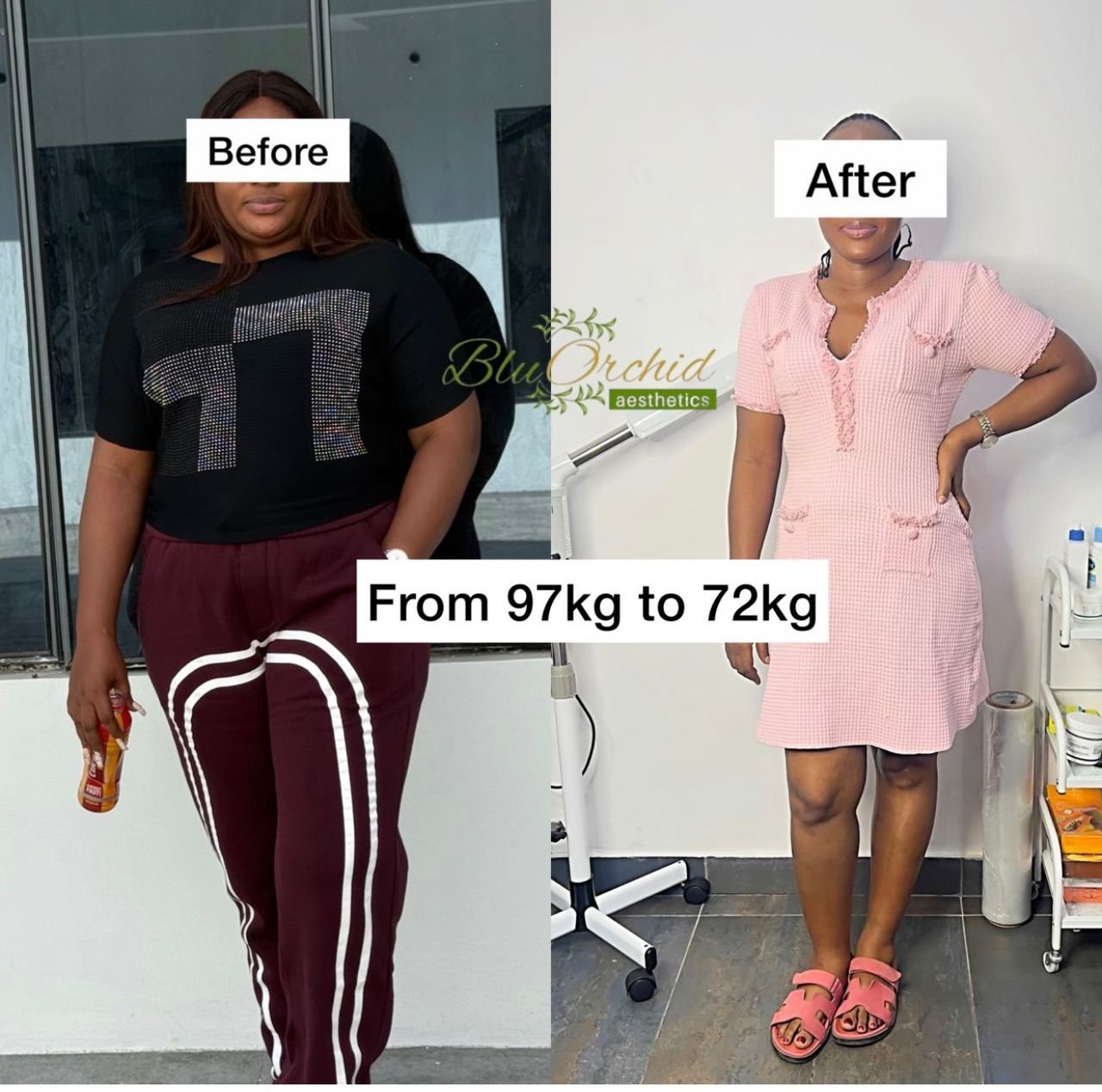
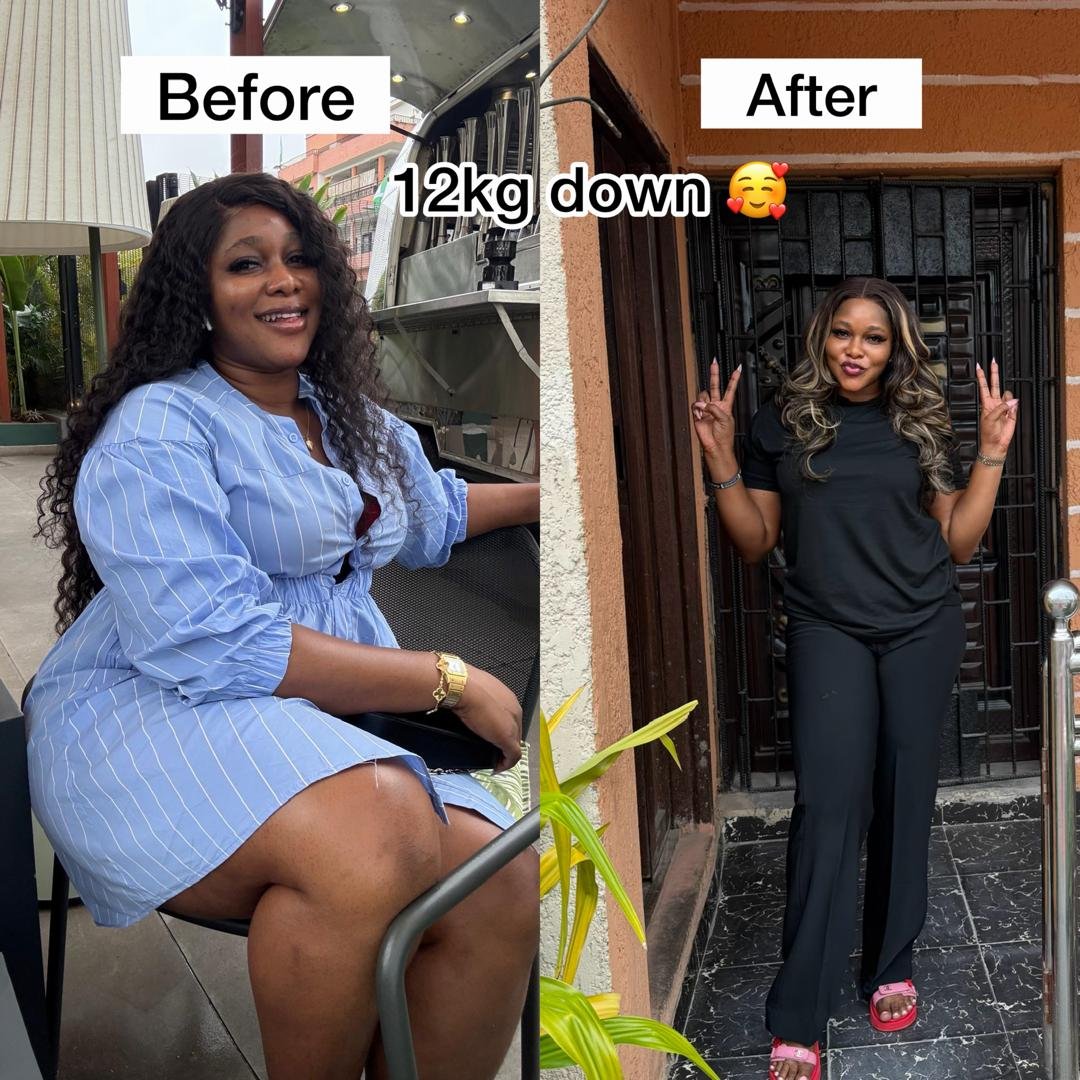
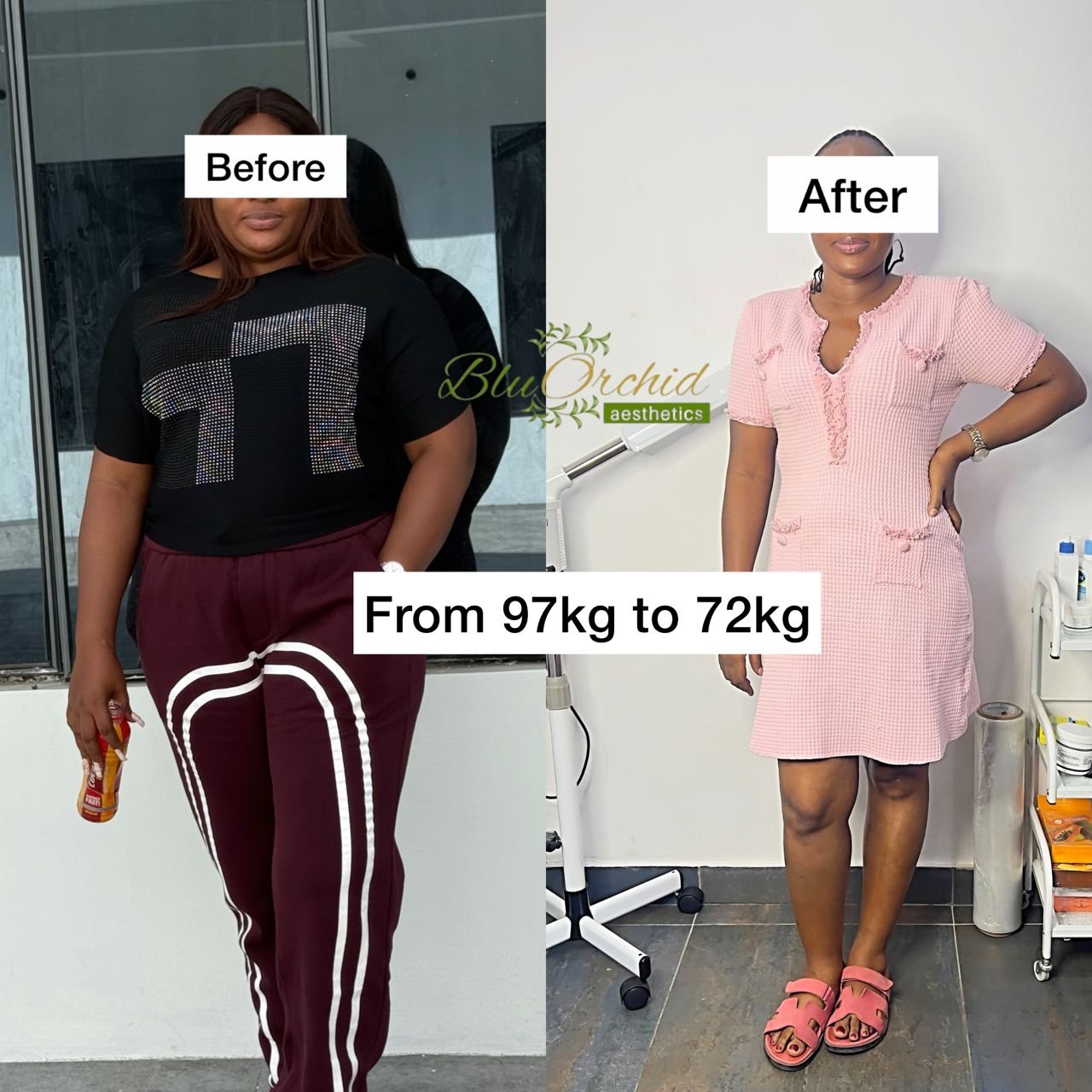
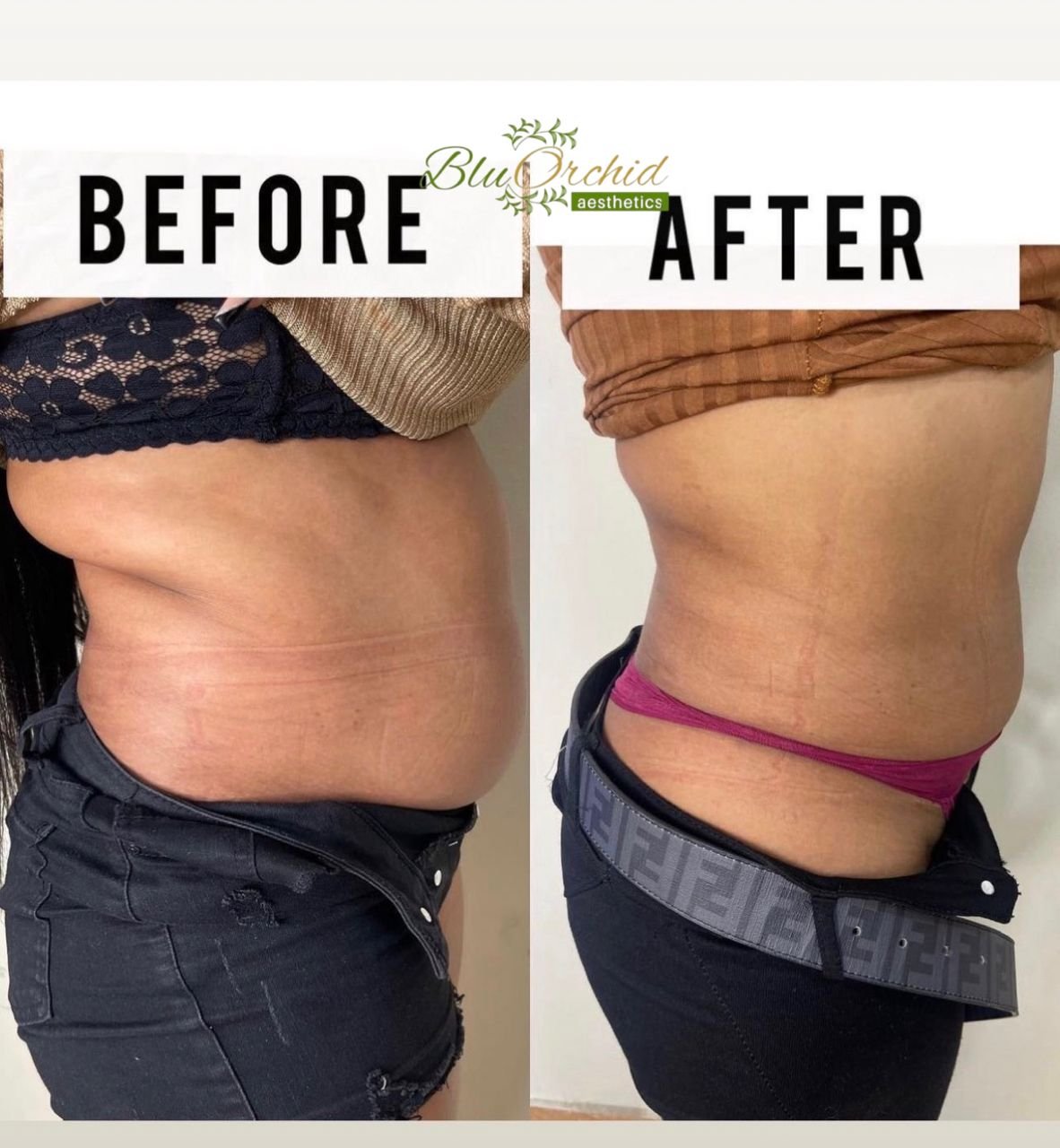
Weight loss at BluOrchid Aesthetics, Lagos
Could weight loss improve PCOS symptoms?
For some women, yes.
Weight reduction can improve aspects of metabolic health, and improving metabolic health may have positive effects on some PCOS-related features.
Research involving GLP-1 receptor agonists has reported improvements in measures such as:
- Body weight
- BMI
- Waist circumference
- Some measures of insulin resistance
- Some metabolic markers
- In some studies, androgen-related measures
There are also preliminary reports of improvements in menstrual regularity in some women.
But this is where it is important not to overstate the evidence.
A medication should not be prescribed with the promise that it will “balance your hormones”, “cure PCOS” or guarantee regular periods.
PCOS is heterogeneous. Two women with the same diagnosis can have very different symptoms and metabolic profiles.
The response to weight loss, and to medication, can therefore differ considerably.
What about fertility?
This is one of the most misunderstood areas.
Some women with PCOS have difficulty becoming pregnant because they do not ovulate regularly. If metabolic health improves and ovulation becomes more regular, weight loss may potentially contribute to improved reproductive function in some women.
But that does not mean that Mounjaro or another weight-loss injection is a fertility treatment.
The evidence for reproductive outcomes remains limited.
The 2023 international PCOS guideline specifically highlighted the lack of sufficient evidence to recommend anti-obesity medications for reproductive outcomes outside research settings.
There is also an important practical issue: weight-loss medications are generally not something to continue casually when pregnancy is being planned.
For example, the current prescribing information for semaglutide advises stopping it at least two months before a planned pregnancy because of its long half-life.
Tirzepatide also carries pregnancy-related precautions. Its prescribing information states that available human data are insufficient to establish its pregnancy safety, while animal studies identified potential fetal risks.
For women with PCOS who are considering pregnancy, reproductive plans need to be part of the treatment conversation from the beginning.
Does having PCOS mean you should take Mounjaro?
No.
A PCOS diagnosis by itself does not automatically mean that a weight-loss injection is appropriate.
A doctor may consider factors such as:
- Your current weight and BMI
- Whether you have obesity or weight-related health risks
- Blood glucose and metabolic health
- Your PCOS symptoms
- Previous attempts at weight management
- Current medications
- Gastrointestinal or other medical conditions
- Pregnancy plans
- Whether you are breastfeeding
- Your personal and family medical history
The medication should be considered as part of an overall treatment strategy rather than as a standalone solution.
Mounjaro vs metformin for PCOS
This is another question without a simple “which is better?” answer.
Metformin has been used extensively in PCOS, particularly where metabolic abnormalities or insulin resistance are relevant.
GLP-1-based medications and metformin work differently.
Some newer studies suggest GLP-1 receptor agonists can produce greater weight loss than metformin in certain women with PCOS, while other outcomes remain less certain. A 2026 meta-analysis comparing GLP-1 receptor agonists with metformin found potentially favourable effects on several hormonal and metabolic measures, but the authors also noted the small number of trials, heterogeneity and potential publication bias.
This does not make one medication universally better.
The appropriate treatment depends on what is actually being treated.
For one woman, weight management may be the priority. For another, menstrual irregularity, hyperandrogenism, glucose abnormalities or fertility may require greater attention.
What are the risks and side effects?
Weight-loss injections are medicines, not cosmetic shortcuts.
GLP-1-based medications can cause gastrointestinal symptoms such as:
- Nausea
- Vomiting
- Diarrhoea
- Constipation
- Abdominal discomfort
More significant complications can occur in some patients, and individual suitability needs to be assessed before treatment.
For example, prescribing information for semaglutide includes warnings relating to pancreatitis and gallbladder disease.
Tirzepatide prescribing information similarly includes warnings relating to gastrointestinal adverse reactions, pancreatitis, gallbladder disease and other potential complications.
This is one reason buying injections online or using medication supplied without proper medical assessment is a poor approach, particularly in a condition as complex as PCOS.
An important issue for women with PCOS: pregnancy can become less predictable
PCOS can involve irregular ovulation.
That means a woman who previously had unpredictable cycles may not know exactly when she is ovulating.
If metabolic health improves and ovulation becomes more regular, pregnancy may become possible even when periods have historically been irregular.
That makes contraception and pregnancy planning important when using weight-loss medication.
There can also be medication-specific interactions with contraception. For example, the current Mounjaro prescribing information advises women using oral hormonal contraceptives to use a non-oral method or add a barrier method for four weeks after starting tirzepatide and for four weeks after each dose escalation.
This is exactly the kind of detail that should be discussed with a clinician rather than handled through internet advice.
What weight-loss injections cannot do
It is worth being clear about what these medications are not.
They are not:
- A cure for PCOS
- A replacement for a proper PCOS assessment
- A guaranteed way to restore regular periods
- A guaranteed fertility treatment
- Appropriate for every woman with PCOS
- A substitute for nutrition, physical activity or broader medical care
- A medication that should be started simply because you have PCOS
And weight loss is not the only measure of successful PCOS management.
A good treatment plan should consider the whole person.
Who might benefit from a medical weight-management approach?
The women most likely to warrant a conversation about weight-loss medication are those for whom excess weight or obesity is itself a clinically important issue.
That might include women with PCOS who have struggled to achieve meaningful and sustainable weight reduction despite appropriate lifestyle measures, particularly when excess weight is contributing to broader metabolic risk.
But the decision should be individual.
The question is not simply:
“Do I have PCOS?”
It is:
“What are we trying to treat, what are my medical risks, and is this medication appropriate for me?”
That distinction can prevent unnecessary treatment and unrealistic expectations.
The bottom line
The evidence surrounding weight-loss injections and PCOS has become considerably more encouraging.
GLP-1-based medications can help women with PCOS and overweight or obesity lose weight, and research suggests that some metabolic measures may improve alongside that weight loss. Newer studies of tirzepatide are beginning to provide PCOS-specific evidence as well.
But the evidence is still developing.
There is not enough evidence to describe Mounjaro as a treatment that cures PCOS, and reproductive benefits such as improved ovulation or fertility should not be promised.
For a woman with PCOS, the right question is not simply whether a weight-loss injection works.
It is whether it is appropriate for her particular health profile, treatment goals and reproductive plans.
That is where medical assessment matters.
Frequently Asked Questions
Can Mounjaro help with PCOS?
It may help women with PCOS who also have overweight or obesity, particularly through weight loss and improvements in metabolic health. However, Mounjaro should not be described as a cure for PCOS, and PCOS-specific evidence for tirzepatide is still emerging.
Does Mounjaro regulate periods?
It may indirectly improve menstrual regularity in some women if metabolic health and weight improve, but this is not guaranteed and should not be considered the primary established effect of tirzepatide.
Can Mounjaro help me get pregnant if I have PCOS?
It should not be considered a fertility treatment. Some women may experience improved ovulatory function alongside improvements in metabolic health, but evidence for reproductive outcomes remains limited. Anyone planning pregnancy should discuss weight-loss medication with their doctor before treatment.
Is semaglutide better than Mounjaro for PCOS?
There is not enough PCOS-specific evidence to say that one is universally better. Both belong to the broader group of incretin-based weight-management medications, but their evidence bases and approved uses differ.
Can I take metformin and a weight-loss injection together?
Sometimes these medications may be used together, but that decision should be made by a clinician based on your medical history, treatment goals and other medications.
Should every woman with PCOS lose weight?
No. PCOS affects women across different body sizes. Treatment should focus on the individual’s symptoms, metabolic health, reproductive goals and overall wellbeing rather than assuming that weight loss is necessary for everyone.
What should I do if I have PCOS and want to start a weight-loss injection?
Start with a medical assessment rather than purchasing the medication independently. Your clinician can determine whether weight management is an appropriate treatment goal, assess potential risks and discuss your reproductive plans before deciding whether medication is suitable.
Considering medical weight management?
If you have PCOS and are considering a weight-loss injection, the most useful starting point is a proper medical assessment rather than choosing a medication based on what worked for someone else.
At BluOrchid Aesthetics, medical weight management begins with understanding the individual rather than treating a number on the scale.
Book a Consultation to discuss whether a medically supervised weight-management approach is appropriate for you.
- Book a Consultation: consultation
- Medical Weight Management: weightloss
Evidence reviewed
- 2023 International Evidence-based Guideline for the Assessment and Management of Polycystic Ovary Syndrome.
- Systematic review and meta-analysis of anti-obesity pharmacological agents in PCOS informing the international guideline.
- Systematic reviews and meta-analyses of GLP-1 receptor agonists in women with PCOS.
- 2026 randomized trial of tirzepatide plus metformin in women with PCOS and overweight/obesity.
- 2026 observational study of tirzepatide-associated weight loss in women with and without PCOS.
- Current prescribing information for semaglutide and tirzepatide.
A consultation at BluOrchid begins with exactly this assessment.
One hour with our doctors. An honest assessment. A plan built around you. ₦50,000, credited in full toward your first treatment.
Book your consultation Doctor-led assessment at Lekki Phase 1, Lagos.