How Long Does It Take to Fade Dark Spots?
How long do dark spots take to fade? Learn what affects the timeline, what to expect in the first 30 days and when to seek treatment.


There is a particular kind of frustration that comes with treating dark spots.
You do everything right.
You stop picking at your skin. You buy the recommended products. You become more careful about sun exposure. You follow your routine consistently.
Then you look in the mirror three weeks later.
The mark is still there.
Perhaps it is slightly lighter. Perhaps you cannot tell. Perhaps it looks exactly the same.
So you ask the question almost everyone asks:
How long does it actually take to fade dark spots?
The honest answer is that there is no single number.
Some marks can become noticeably less visible within several weeks. Others take several months. Some keep returning because the trigger responsible for the pigmentation has never been addressed.
The timeline depends on what caused the pigmentation, how deep or persistent it is, what you are using to treat it, how consistently you use it and whether new pigmentation is still being created.
That is why the goal should not be to promise a particular number of days.
It should be to understand what progress actually looks like.
First: dark spots do not all behave the same way
“Dark spots” is a description, not a diagnosis.
The mark left after a mosquito bite is not necessarily the same as pigmentation caused by acne.
Pigmentation from shaving irritation is different from melasma.
A dark patch caused by friction is different from pigmentation that has developed after repeated inflammation.
And a mark that has been present for several years may behave very differently from one that appeared last month.
This matters because two people can use the same skincare product and see completely different timelines.
So before asking, “How quickly can I fade this?”, it is worth asking:
“What caused it in the first place?”
That is often the more important question.
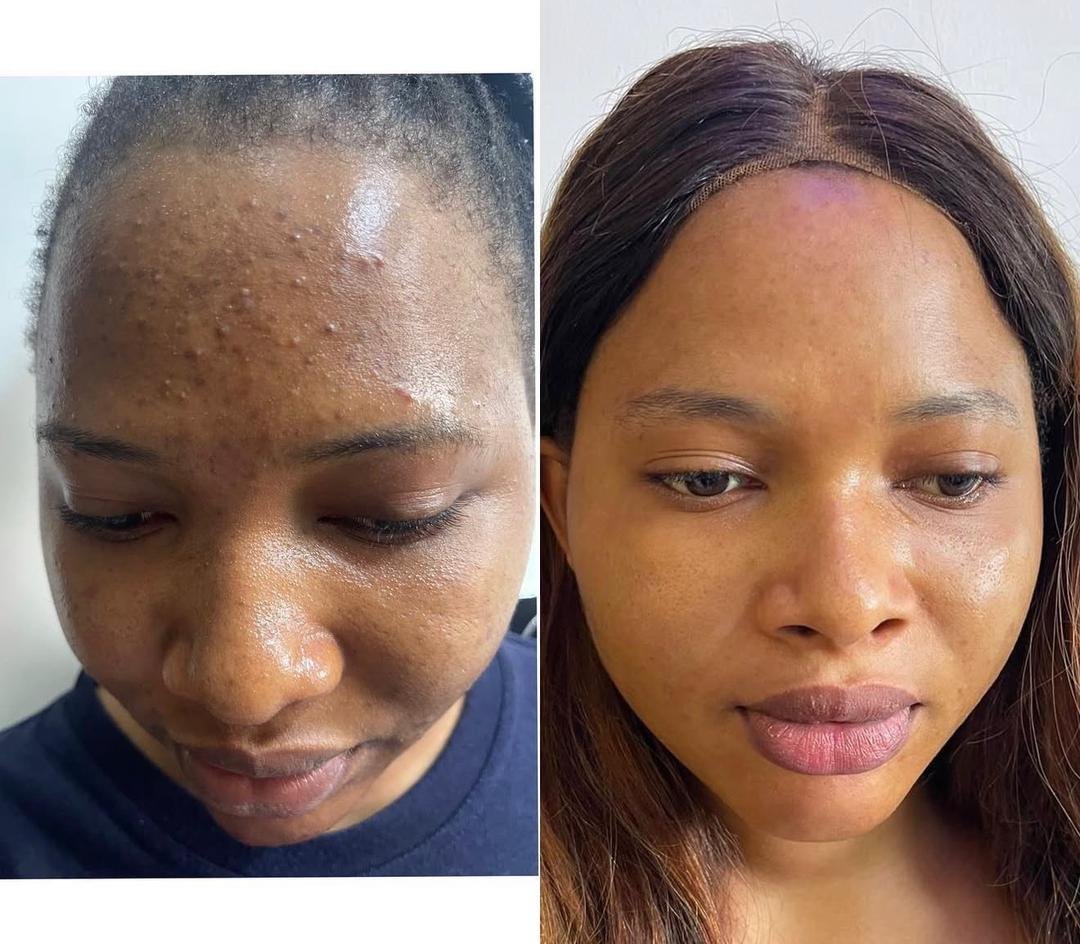
A realistic way to think about the timeline
Rather than promising that every dark spot will disappear in 30 days, it is more useful to think about pigmentation in stages.
The first few weeks: understanding and stabilising
In the early weeks, the priority is often not dramatic fading.
It is creating the right conditions for improvement.
That can mean:
- stopping the irritation that caused the mark
- simplifying an overly aggressive routine
- introducing appropriate pigment-targeting skincare
- supporting the skin barrier
- becoming consistent with sun protection
- preventing new marks from forming
You may notice that your skin feels calmer before you notice a dramatic change in pigmentation.
That is still progress.
Around the first month: looking for direction
This is where consistency starts to become meaningful.
Instead of asking whether every dark spot has disappeared, look at the overall direction.
Are some marks becoming less noticeable?
Is your complexion looking more even?
Are fewer new marks appearing?
Is your skin tolerating the routine?
Are the original triggers under better control?
These changes can be more useful indicators than expecting a completely clear complexion after four weeks.
This is also why the 8skinpro 30-Day Challenge is useful as a way of documenting progress.
The value of a 30-day period is not that every person’s pigmentation will be completely corrected within 30 days.
It is that a structured period gives you something much better than memory: a way to observe whether the skin is actually moving in the right direction.
Why some dark spots fade faster than others
Several factors can influence how quickly pigmentation improves.
1. What caused the mark
A dark mark left behind after temporary inflammation may behave differently from persistent melasma or pigmentation caused by repeated irritation.
If the trigger continues, the skin may keep producing new pigment while you are trying to fade the old marks.
That can make it look as though nothing is happening.
2. How long the pigmentation has been there
A mark that appeared recently may be easier to address than pigmentation that has been present for years.
Long-standing pigmentation may require more patience and, in some cases, professional treatment.
3. Your skin’s response to treatment
Not every skin responds to the same ingredient in the same way.
A routine that works beautifully for one person may irritate another.
And irritation is not something to ignore simply because you are trying to fade pigmentation.
A treatment strategy should improve the skin rather than constantly forcing it into a state of inflammation.
4. Whether new pigmentation is still forming
This is one of the biggest reasons people feel stuck.
Imagine you have ten dark spots.
You successfully begin fading three of them.
But during the same period, you develop five new marks from acne, shaving, insect bites or irritation.
You may look in the mirror and conclude that your treatment is doing nothing.
The real problem is that the skin is fighting two battles at once.
Fading existing pigmentation and preventing new pigmentation are both important.
5. Sun exposure
If pigmentation is your concern, protecting your skin from ultraviolet exposure matters.
This is particularly relevant in Lagos, where strong sun exposure is part of everyday life.
You can have an excellent pigmentation routine, but if your daily habits continually work against it, progress may be slower or less visible.
Consultation at BluOrchid Aesthetics, Lagos
Why week three can feel like failure
This is one of the most common points of frustration.
You have been consistent for several weeks.
Nothing dramatic has happened.
So you assume the routine has failed.
But week three is often too early to make that conclusion.
Pigmentation is not paint that can simply be lifted from the surface.
The visible colour is the result of biological processes in the skin, and the factors driving that pigmentation may continue even after you begin treatment.
This is why constantly switching products can actually make the situation harder to understand.
You start one routine.
Wait two weeks.
Change it.
Add another serum.
Try an exfoliant.
Then a home remedy.
Then something recommended by a friend.
Eventually, you have no idea which part of the routine helped, which irritated your skin and whether anything was given enough time to work.
A pigmentation routine needs consistency before it can be judged properly.
What progress should you actually look for?
Instead of taking daily photographs and searching for dramatic changes, consider looking at progress in broader intervals.
Look for:
Less contrast. The mark may still be visible but not stand out as strongly against the surrounding skin.
Fewer new marks. This can be an important sign that the underlying trigger is being controlled.
More even tone. The overall complexion may begin to look more balanced even before every individual mark disappears.
Better skin tolerance. If your skin is calmer and less irritated, that can create better conditions for continued progress.
Gradual fading. A dark mark does not need to disappear overnight for the treatment to be working.
The goal is movement in the right direction.
What if the dark spots are not fading?
This is where you should stop simply adding more products.
If you have been consistent and there is little or no improvement, consider whether you are treating the correct problem.
For example, pigmentation may continue because of:
- active acne
- repeated shaving irritation
- ingrown hairs
- friction
- inflammatory skin conditions
- hormonal influences
- sun exposure
- an unsuitable skincare routine
- ongoing use of irritating products
Sometimes the answer is not a stronger pigment serum.
It is removing the trigger.
And sometimes the pigmentation itself needs professional assessment.

When professional treatment may make sense
Skincare can be an important part of pigmentation management, but it is not the only option.
At BluOrchid, the first step is understanding the pigmentation rather than automatically choosing the most aggressive treatment.
Depending on the concern, professional options may include carefully selected chemical peels, Cosmelan or other targeted approaches.
The appropriate treatment depends on the type of pigmentation, your skin and the factors contributing to it.
This is particularly important for darker skin, where unnecessarily aggressive treatment can create another round of inflammation and pigmentation.
The objective is not simply to make the skin lighter.
It is to make the skin more even, clearer and more balanced.
A 30-day challenge is a beginning, not a finish line
Thirty days is long enough to build consistency.
It is long enough to identify whether you are actually following your routine.
It is long enough to compare photographs taken under similar conditions.
And it can be long enough to notice early changes in the overall appearance of the skin.
But it should not be treated as a universal deadline for pigmentation to disappear.
Some people will see visible progress within that period.
Others will need considerably longer.
Some may need professional treatment alongside home care.
The important thing is that the 30-day mark gives you a point from which to assess rather than a promise that every dark spot will be gone.
How to make your progress easier to judge
If you are treating pigmentation at home, take the guesswork out of monitoring it.
Photograph your skin consistently
Use similar lighting, distance and angles.
A photograph taken in bright daylight can make pigmentation look very different from one taken under warm indoor lighting.
Avoid checking every day
Daily changes are often too subtle to see.
Weekly or biweekly comparisons are usually more useful.
Track new marks
Do not only monitor the old spots.
Note whether new pigmentation is appearing.
If you are constantly developing new marks, your treatment strategy needs to address why.
Keep the routine stable
If you change several products at once, you lose the ability to understand what is helping.
Consistency creates useful information.
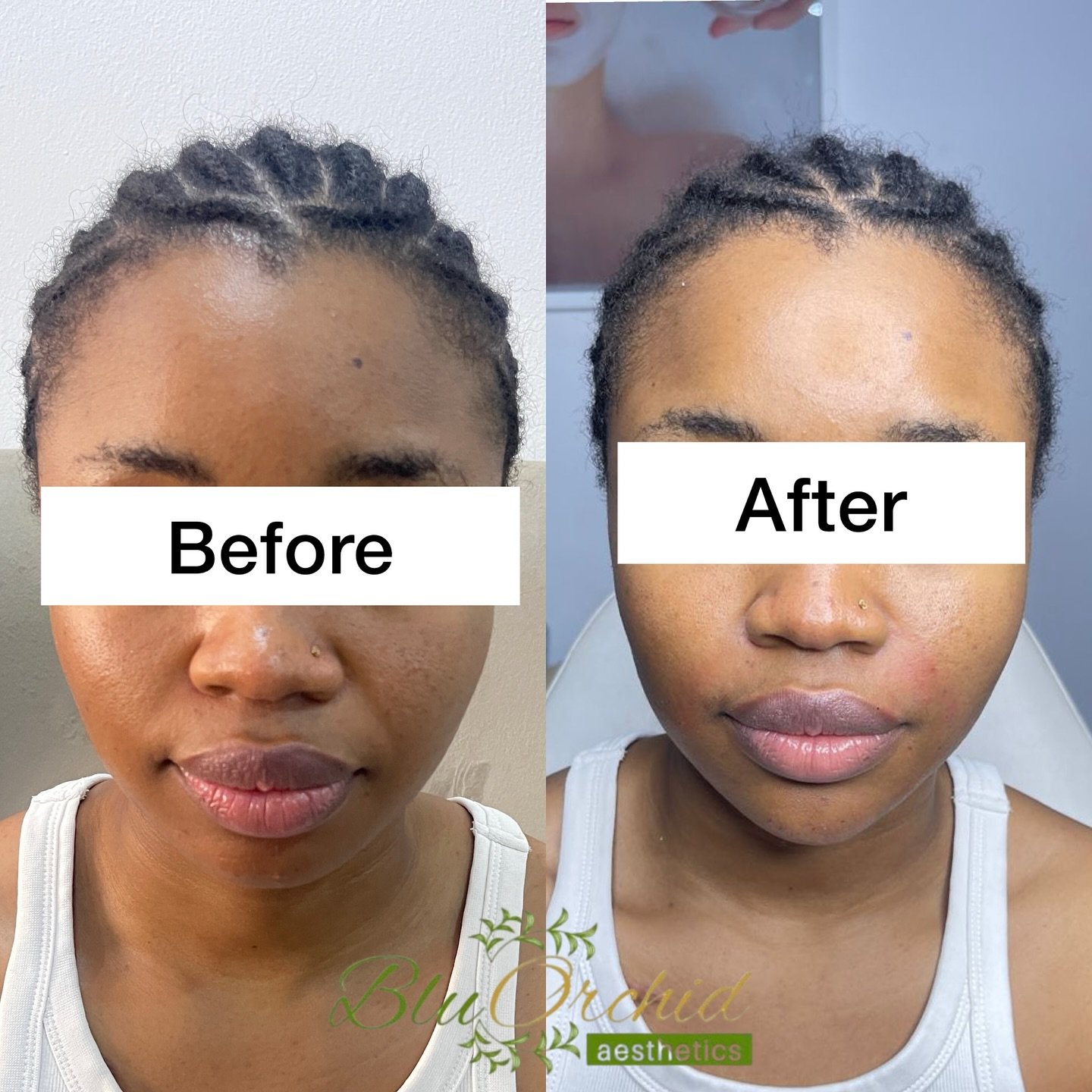
What not to do while waiting for pigmentation to fade
Frustration can make people aggressive.
That is often when problems begin.
Avoid the temptation to:
- scrub dark spots repeatedly
- use lemon or other acidic kitchen ingredients
- combine several strong exfoliants
- pick at acne or insect bites
- use unverified skin-lightening products
- increase product frequency simply because results are slow
- copy another person’s prescription or treatment routine
More irritation does not automatically mean more progress.
Sometimes it means more pigmentation.
Dark spots are not a race to lighter skin
There is an important distinction between fading unwanted pigmentation and changing your natural skin colour.
At BluOrchid, we are interested in the first.
The goal is not to make naturally deep skin lighter.
It is to address areas that have become darker than the surrounding skin and restore a more even appearance.
That means the definition of success is not:
“How much lighter did my skin become?”
It is:
“How much more even does my skin look?”
That distinction changes the entire approach to pigmentation.
So, how long does it really take?
The most honest answer is:
It depends.
A newer, superficial mark may improve within weeks.
More persistent pigmentation may take several months.
Melasma and other recurring pigmentation concerns may require ongoing maintenance rather than a single treatment period.
And if the trigger is still present, the pigmentation may continue to return regardless of how many products you use.
So rather than looking for a magic number, look for a strategy that addresses both sides of the problem:
fade what is already there and reduce what keeps creating new pigment.
That is how you move from chasing dark spots to actually managing pigmentation.
Frequently asked questions
How long does it take to fade dark spots naturally?
There is no fixed timeline. Some pigmentation becomes less visible over several weeks, while persistent marks can take several months or longer. The cause, duration and ongoing triggers all matter.
Can dark spots fade in 30 days?
Some people may see noticeable improvement within 30 days, but there is no guarantee that every dark spot will disappear in that period. A 30-day period is better viewed as a useful progress checkpoint than a universal treatment deadline.
Why are my dark spots not fading?
The pigmentation may need more time, but there may also be an ongoing trigger such as acne, shaving irritation, friction, sun exposure or an unsuitable skincare routine. Persistent pigmentation may also require professional assessment.
Does sunscreen help dark spots fade?
Sun protection can help prevent pigmentation from becoming more pronounced and can support the overall pigmentation-management strategy. It is especially important when you are actively trying to improve uneven pigmentation.
Should I stop my skincare routine if my dark spots have not faded after a few weeks?
Not necessarily. If your skin is tolerating the routine, a few weeks may not be enough to judge the result. However, persistent irritation, worsening pigmentation or a lack of meaningful improvement should prompt a reassessment rather than simply adding more products.
Can professional treatments make dark spots fade faster?
Professional treatments may be appropriate for some types of pigmentation and can complement a home-care routine. The right option depends on the diagnosis, your skin and the cause of the pigmentation.
Will dark spots come back after they fade?
They can, particularly when the original trigger remains. Maintenance therefore matters. Preventing new inflammation, protecting the skin and addressing recurring causes are all part of long-term pigmentation management.
Your timeline should be based on your skin, not someone else’s
If you are three weeks into a pigmentation routine and wondering why you cannot see a dramatic difference, do not assume you have failed.
Ask a better question.
Is my skin moving in the right direction?
If the answer is yes, consistency may be what you need.
If the answer is no, it may be time to reassess the routine, the trigger or the diagnosis.
And if you have been trying to fade persistent pigmentation without understanding why it is there, professional assessment can save you from months of changing products without a clear strategy.
At BluOrchid, pigmentation treatment begins with understanding the skin before deciding what it needs.
If your dark spots are persistent, recurring or simply not responding to the routine you have been using, book a consultation.
The consultation is ₦50,000 and is credited toward your selected treatment if you decide to proceed.
A consultation at BluOrchid begins with exactly this assessment.
One hour with our doctors. An honest assessment. A plan built around you. ₦50,000, credited in full toward your first treatment.
Book your consultation Doctor-led assessment at Lekki Phase 1, Lagos.