How to Avoid Counterfeit Botox and Aesthetic Products
Learn how aesthetic practitioners can identify counterfeit products, verify suppliers, protect patients and maintain safe clinical standards.

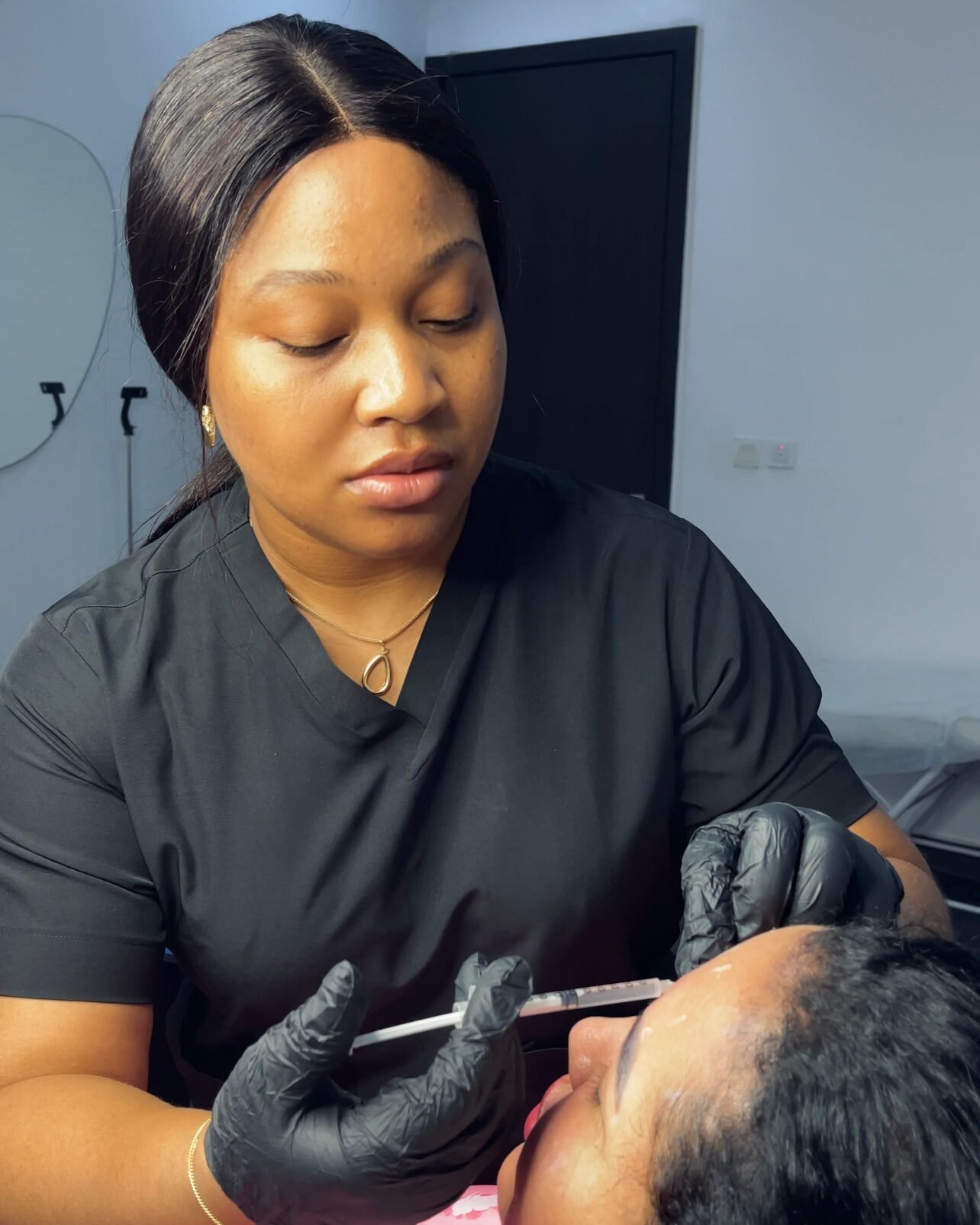
For an aesthetic practitioner, knowing how to use a product is only part of practising safely.
You also need to know where that product came from, whether it can be traced, whether it has been stored appropriately and whether the product supplied to you is what it claims to be.
This matters particularly in aesthetic medicine, where practitioners may work with injectable products, prescription medicines, medical devices, skincare preparations and other products that directly affect patient care.
A genuine product obtained through an appropriate supply chain is very different from a product purchased simply because someone says it is genuine.
For practitioners in Nigeria, learning how to identify reliable suppliers and establish a proper product-verification process should be part of professional practice, not an afterthought.
Why counterfeit products are a serious concern
Counterfeit or falsified medical products can create problems at several levels.
The practitioner may not know the true identity, strength, composition, storage history or origin of the product. That uncertainty makes it difficult to make informed clinical decisions.
There is also the patient.
A patient receiving an aesthetic treatment reasonably expects that the practitioner is using the product represented to them. If the product has been sourced through an unreliable channel, that trust is compromised.
The problem is therefore bigger than whether a product “looks real”.
A professional purchasing process should allow you to establish:
- Who supplied the product
- Where it came from
- What product it is
- Whether the packaging and labelling are consistent
- Whether the product can be traced
- Whether storage requirements have been respected
- Whether there is appropriate documentation
- What you should do if something appears suspicious

Do not confuse a low price with a good deal
One of the easiest ways for practitioners to become vulnerable to counterfeit products is to focus too heavily on price.
If one supplier offers a product at a price significantly below the price available through established channels, that should prompt questions rather than immediate excitement.
A lower price does not automatically mean a product is counterfeit. There may be legitimate commercial reasons for price differences.
But price alone should never be your main method of deciding whether a medical or aesthetic product is genuine.
The better question is:
Can I establish a credible chain of supply for this product?
If the answer is unclear, the saving may not be worth the risk.
Buy through a traceable supply chain
A practitioner should be able to identify the source of the products being used in their practice.
That means keeping proper purchasing records rather than relying on informal arrangements.
Depending on the product, useful records may include:
- Supplier name and contact details
- Invoice or purchase documentation
- Product name
- Manufacturer
- Batch or lot number
- Expiry date
- Quantity purchased
- Date of purchase
- Relevant product documentation
- Storage information where applicable
The purpose is simple: if there is ever a question about a product, you should be able to trace where it came from.
This is particularly important for injectable products.
A WhatsApp contact who says, “I have Botox available,” is not the same thing as an established, traceable supply relationship.
What should you check when a product arrives?
Do not wait until treatment day to discover that something about a product looks wrong.
Make product inspection part of your receiving process.
1. Check the packaging
Look carefully at the packaging rather than assuming that branded packaging proves authenticity.
Check for inconsistencies such as:
- Poor-quality printing
- Spelling errors
- Damaged packaging
- Unusual fonts or labelling
- Missing information
- Inconsistent packaging between units
- Signs that packaging may have been opened or altered
Packaging irregularities do not automatically prove that a product is counterfeit, but they are reasons to stop and investigate.
2. Check batch and expiry information
Where applicable, examine the batch or lot number and expiry date.
Do not accept products simply because the box looks familiar.
The information on the product should be consistent with its accompanying documentation and purchasing records.
If something does not match, do not simply assume that it is a printing mistake.
3. Check the storage requirements
Some medical products have specific storage requirements.
That means the question is not only:
“Is this the genuine product?”
It is also:
“Has this product been handled and stored appropriately?”
A product that has been exposed to inappropriate conditions may raise concerns even when its packaging appears authentic.
Practitioners should understand the manufacturer’s storage requirements for products they use and ensure their clinic has an appropriate process for maintaining those conditions.
4. Keep records
Good documentation is one of the simplest protections a practice can have.
Keep purchasing and product records in a way that allows you to trace a product back to its supplier.
Do not rely entirely on memory.
If multiple practitioners work in the same clinic, the process should be consistent across the team.
How to assess a supplier
The phrase “genuine Botox supplier in Nigeria” can produce many search results, but search visibility is not proof of legitimacy.
A supplier should be assessed based on evidence.
Ask questions such as:
Who are you?
Can the supplier clearly identify the company or organisation behind the sale?
Where did the product come from?
Can they explain the supply chain rather than simply stating that the product is “original”?
Can you provide proper documentation?
A professional supplier should be able to provide appropriate purchasing documentation.
Can the product be traced?
Ask how batch information, product identity and purchasing records can be verified where applicable.
Are the storage requirements understood?
For products requiring controlled storage conditions, ask how those conditions are maintained during storage and transportation.
Is the supplier willing to answer reasonable questions?
A supplier who becomes evasive when asked basic questions about provenance, documentation or storage should make you cautious.
Be especially careful with informal sourcing
Informal purchasing channels can be tempting.
A practitioner may receive a message from another practitioner, a distributor or an online contact offering products at an attractive price.
The problem is that the further a product moves away from a transparent supply chain, the harder it may become to establish its provenance.
This does not mean every independent distributor is illegitimate.
It means that the practitioner should verify the supply chain rather than relying on personal assurances.
“Someone I know uses this supplier” is not the same as documented verification.
Botox, sweating at BluOrchid Aesthetics, Lagos
What about Botox and dermal fillers?
Botulinum toxin products and dermal fillers deserve particular attention because they are used in procedures where product identity and appropriate handling are clinically important.
For botulinum toxin products, practitioners should establish the identity of the product, its manufacturer, its source and the relevant product information before use.
For dermal fillers, the same principle applies.
Do not assume that a familiar-looking syringe, box or logo is sufficient evidence of authenticity.
The product should be traceable to a credible source, and practitioners should follow the manufacturer’s instructions and their professional obligations regarding storage, handling and administration.
What if you suspect a counterfeit product?
Do not use it simply because a patient is already waiting.
If something about a product appears suspicious, pause.
Separate the product from stock intended for clinical use and document the concern.
Depending on the circumstances, the appropriate next step may include:
- Reviewing the purchase documentation.
- Contacting the supplier for clarification.
- Checking the product information against reliable manufacturer documentation.
- Escalating the issue through the appropriate regulatory or professional channel.
- Seeking clinical or regulatory advice where necessary.
The important principle is:
When authenticity is uncertain, uncertainty should trigger investigation, not use.
Create a product-receiving checklist
A clinic does not need a complicated system to improve product control.
A simple receiving checklist can include:
Supplier
- Supplier identified
- Contact details recorded
- Invoice or receipt retained
Product
- Product name checked
- Manufacturer checked
- Packaging inspected
- Batch or lot number recorded where applicable
- Expiry date checked
- Product documentation retained
Storage
- Storage requirements reviewed
- Product stored according to manufacturer’s instructions
- Any temperature-sensitive requirements documented where applicable
Traceability
- Purchase date recorded
- Quantity recorded
- Batch information linked to the purchase record where appropriate
Concerns
- Damaged or suspicious products isolated
- Supplier contacted where necessary
- Unresolved concerns escalated before the product is used
This type of process also makes it easier for a clinic to investigate a product later if a question arises.
Never let convenience replace verification
Aesthetic medicine is increasingly accessible, and practitioners have more ways than ever to purchase products.
That convenience comes with responsibility.
A practitioner who performs a technically excellent procedure cannot compensate for an unknown product source.
The standard should therefore be:
Know your product. Know your supplier. Know your records.
The goal is not to make purchasing unnecessarily complicated.
It is to create a clinical environment where the practitioner can confidently answer a basic question:
“What exactly am I using on this patient, and where did it come from?”
If you cannot answer that question clearly, the product should not move straight from delivery into clinical use.
Building safe purchasing habits into your practice
Product verification should become part of your standard operating procedure.
For new practitioners, this is an important habit to establish from the beginning.
For established practitioners, it can be useful to periodically review:
- Existing suppliers
- Product documentation
- Stock-control procedures
- Storage procedures
- Batch tracking
- Staff responsibilities
- Product receiving procedures
- Processes for handling suspected counterfeit products
Good clinical practice is not only about what happens during the injection or treatment.
It includes everything that happens before the patient enters the treatment room.
Final thoughts
Learning to inject, assess patients and manage aesthetic procedures requires clinical training.
Learning how to source and verify the products used in those procedures is another part of becoming a responsible practitioner.
There is no shortcut around product traceability.
When evaluating potential genuine Botox suppliers in Nigeria, look beyond price, social media presence or verbal assurances. Ask where the product came from, whether the supply chain is credible, whether the product can be traced and whether appropriate documentation and storage requirements have been maintained.
If you are considering aesthetic medicine training, your education should extend beyond treatment technique to the professional systems that support safe practice.
Book a consultation with BluOrchid if you would like to discuss your aesthetic practice or Explore the BluOrchid Academy to learn more about available training pathways.
Frequently asked questions
How can I find genuine Botox suppliers in Nigeria?
Start by looking for suppliers with a credible, traceable supply chain rather than choosing solely on price or social media presence. Verify the supplier’s identity, purchasing documentation, product information and applicable regulatory requirements.
How can I tell if Botox is counterfeit?
Do not rely on packaging alone. Examine the product and packaging for inconsistencies, verify the purchasing documentation and batch information where applicable, and investigate anything that does not match reliable product information or your supplier records.
Is a very cheap aesthetic product necessarily counterfeit?
No. A low price alone does not prove that a product is counterfeit. However, a significant unexplained price difference should prompt additional questions about the supplier, provenance, documentation and storage.
Should practitioners keep records of aesthetic products?
Yes. Appropriate purchasing and product records help establish traceability and can be important if there is ever a question about a product used in the clinic.
What should I do if I suspect a product is counterfeit?
Do not use the product while its authenticity is uncertain. Isolate it, review the purchasing documentation, contact the supplier and seek appropriate regulatory or professional guidance where necessary.
Does genuine packaging guarantee that a product is authentic?
No. Packaging should be considered alongside the product’s source, documentation, traceability and other relevant checks.
Why is supplier verification important for aesthetic practitioners?
Because practitioners are responsible for the products they use in patient care. A transparent supply chain makes it easier to establish what a product is, where it came from and whether it has been handled appropriately.
Should new aesthetic practitioners learn about product sourcing?
Yes. Product sourcing, storage, documentation and traceability are practical aspects of running a responsible aesthetic practice and should form part of professional education.
A consultation at BluOrchid begins with exactly this assessment.
One hour with our doctors. An honest assessment. A plan built around you. ₦50,000, credited in full toward your first treatment.
Book your consultation Doctor-led assessment at Lekki Phase 1, Lagos.