Fillers on Dark Skin: Keloids, Pigmentation and Myths
Are dermal fillers safe on dark skin? Learn the truth about keloids, pigmentation, scarring and what matters when treating melanin-rich skin.

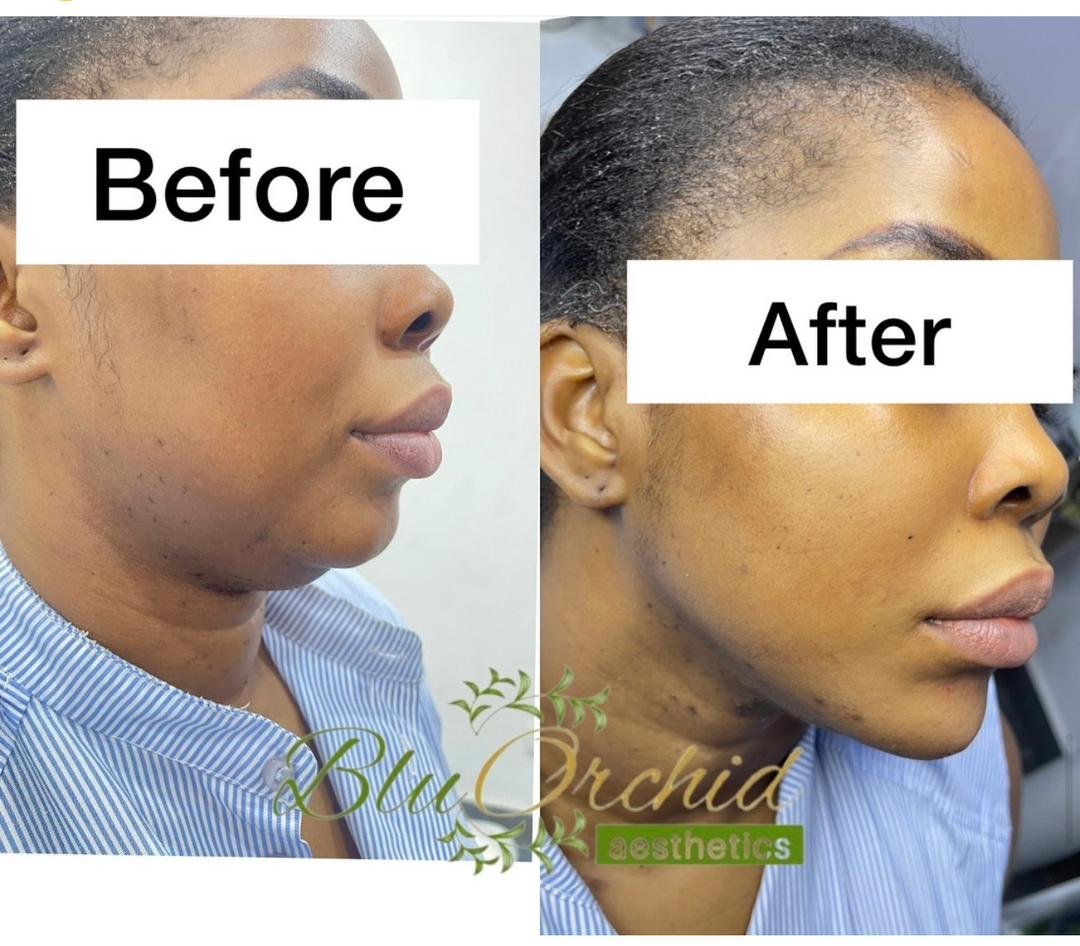
If you have dark skin, you may have heard that dermal fillers are too risky.
Perhaps you have been told that injections can cause keloids.
Or that filler will leave dark marks.
Or that aesthetic injectables are simply not suitable for people with melanin-rich skin.
These concerns are understandable.
But they are not the same thing as saying that dermal fillers are unsafe for dark skin.
People with darker skin can undergo filler treatment. The important question is whether the patient, product, technique and treatment plan are appropriate.
That distinction matters because skin of colour does have some considerations that should be taken seriously, particularly around post-inflammatory pigmentation and how complications may appear.
At the same time, some of the most persistent warnings about fillers on dark skin are based on misconceptions rather than good evidence.
So what is actually true?
Can people with dark skin have dermal fillers?
Yes.
Dermal fillers can be used in people with darker skin types.
Studies and reviews have reported that injectable treatments, including hyaluronic acid fillers, can be used safely and effectively in patients with skin of colour when appropriate products and techniques are selected.
A 2026 review specifically examining dermal fillers in skin of colour concluded that filler treatment can be performed safely and effectively when clinicians understand the characteristics of melanin-rich skin and take individual patient goals into account.
So the idea that “dark skin cannot have filler” is a myth.
But that does not mean every patient should receive the same treatment.
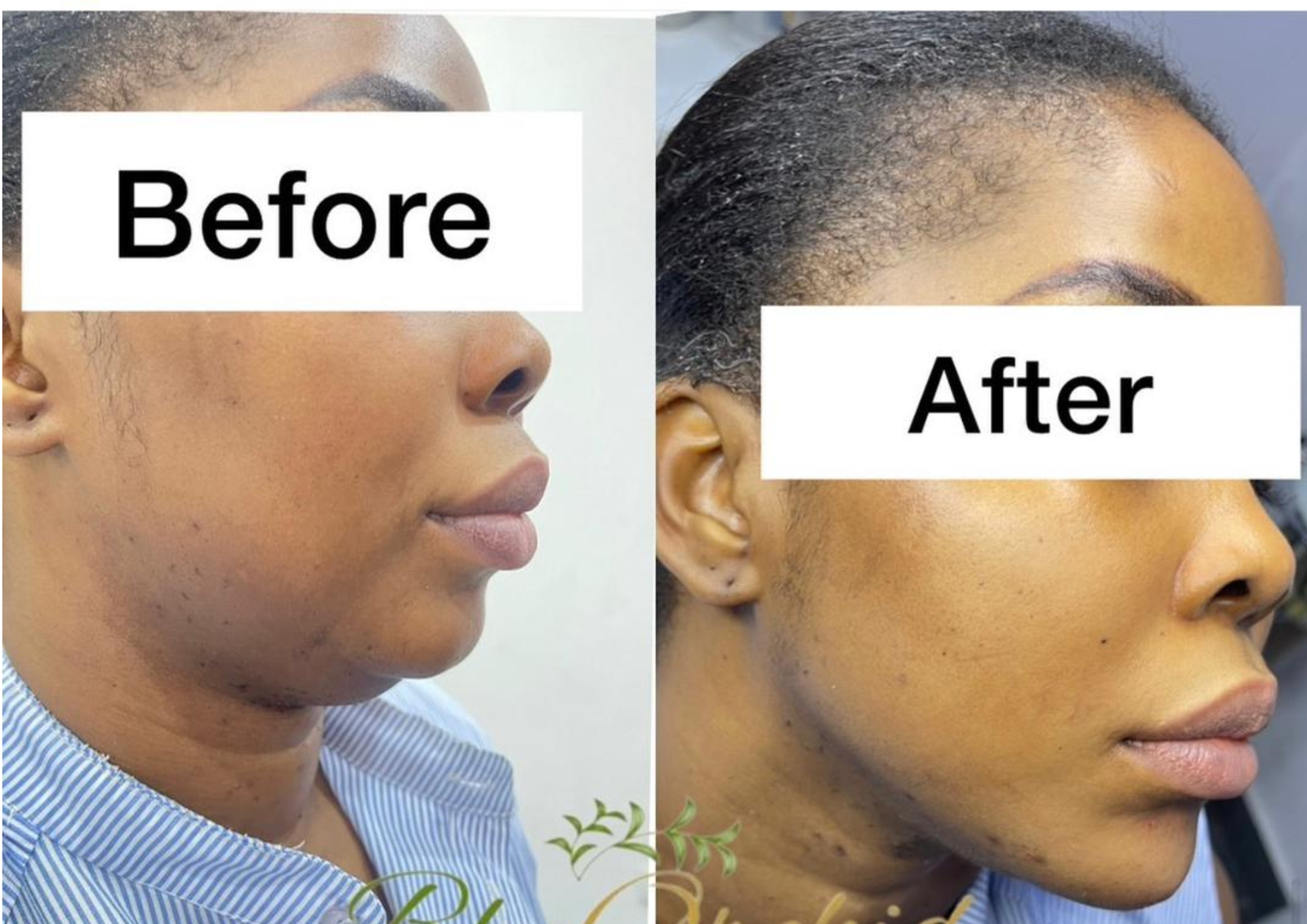
Myth 1: “Fillers cause keloids in dark skin”
This is one of the most common concerns.
And it deserves a more precise answer.
People with darker skin can have a greater predisposition to keloid and hypertrophic scar formation after certain types of skin injury. That is well recognised in dermatology.
But that does not mean a dermal filler injection automatically causes a keloid.
The available filler literature does not support the idea that patients with dark skin routinely develop keloids simply because they have received filler.
In clinical studies of hyaluronic acid fillers in patients with skin of colour, keloid formation has not been a common reported outcome. One randomised study specifically monitoring pigmentation and keloid formation reported no keloids among the treated patients.
A review of aesthetic treatment myths in skin of colour also identified the belief that injectable fillers commonly cause keloids as a knowledge gap rather than an established rule.
But what if you have a history of keloids?
That information still matters.
A personal history of significant keloid formation should be discussed with your doctor before any injectable or cosmetic procedure.
The appropriate question is not simply:
“Do people with dark skin get keloids?”
It is:
“How does this patient’s individual scarring history affect the treatment decision?”
Your doctor can then consider your history alongside the proposed treatment and injection technique.
Myth 2: “Fillers always cause dark marks on dark skin”
Again, this is too absolute.
Dark skin can be more prone to post-inflammatory hyperpigmentation, meaning an area can become darker following inflammation or injury.
Needle injections create small areas of tissue trauma.
That means temporary pigmentation changes are possible.
Dermal filler literature has reported post-injection hyperpigmentation, with some evidence suggesting it may be more relevant in Fitzpatrick skin types IV–VI.
But that does not mean every person with dark skin will develop pigmentation after filler.
A 2026 review of fillers in skin of colour similarly identified post-inflammatory hyperpigmentation as an important consideration, rather than a reason to exclude patients from treatment.
The distinction is important:
Higher consideration for pigmentation risk is not the same as an absolute contraindication.
Why does pigmentation matter more in darker skin?
Melanin-rich skin can respond differently to inflammation and injury.
When the skin becomes inflamed, melanocytes can produce or distribute more pigment, leaving a darker area behind after the original inflammation has settled.
This is one reason post-inflammatory hyperpigmentation is an important consideration across many cosmetic procedures in skin of colour.
The risk is not unique to filler.
It can also occur after acne, burns, cuts, surgery and various cosmetic procedures.
So the goal is not to eliminate every possibility of inflammation, which is impossible.
It is to minimise unnecessary tissue trauma and manage the patient appropriately.
Myth 3: “Dark skin is thicker, so filler has to be injected differently”
This is an oversimplification.
There are biological differences between skin types and individuals, but “dark skin” is not one uniform anatomical category.
People of African, Asian, Middle Eastern and other backgrounds can have very different facial structures, skin characteristics and aesthetic preferences.
Even two people with a similar skin tone can have very different:
- Facial proportions
- Fat distribution
- Soft-tissue thickness
- Bone structure
- Lip anatomy
- Muscle activity
- Age-related changes
- Previous treatment history
This is why ethnicity or skin tone should never replace individual assessment.
The 2026 review on fillers in skin of colour specifically emphasises patient-centred treatment and the importance of understanding individual anatomy and aesthetic goals.
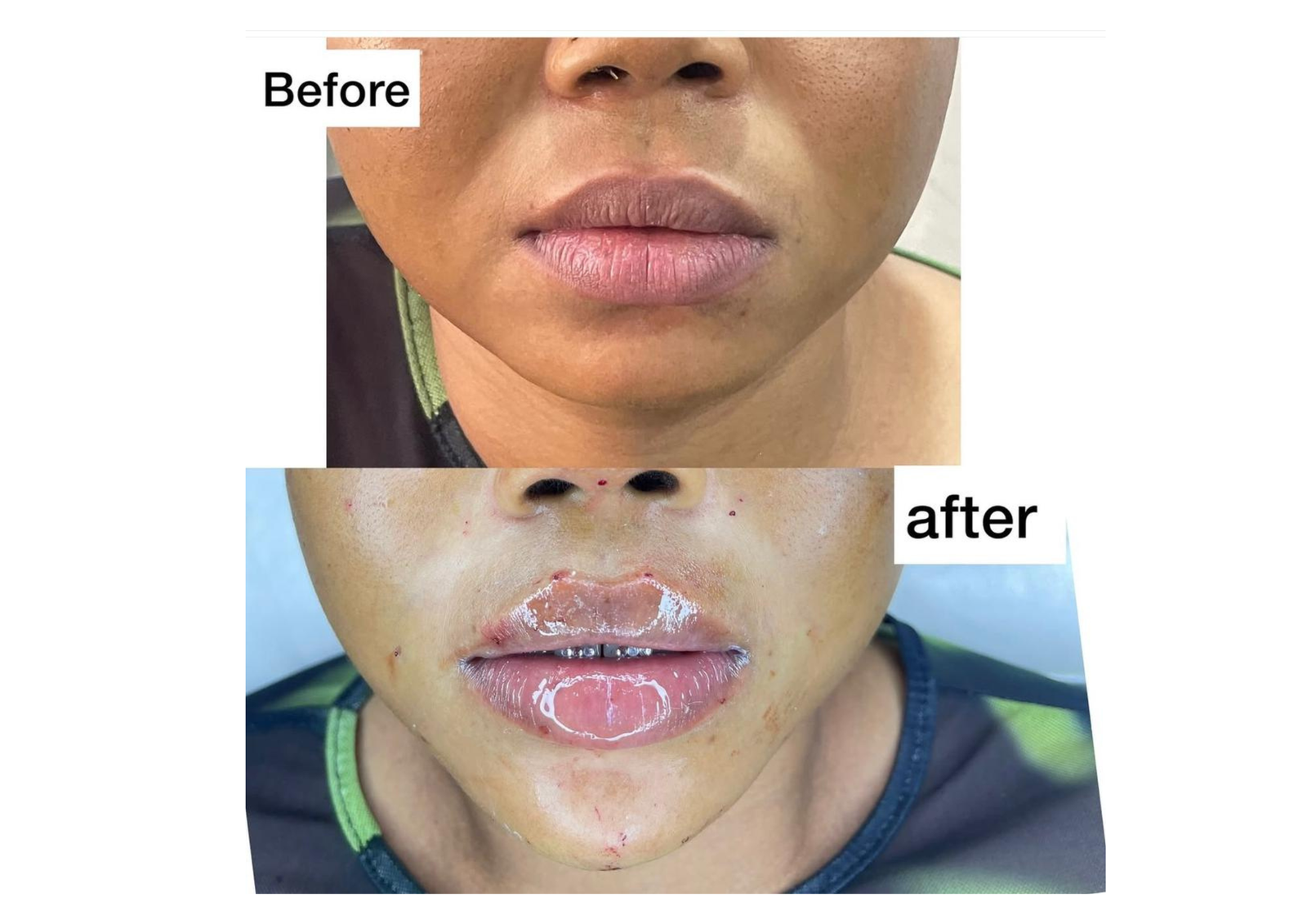
Lip filler at BluOrchid Aesthetics, Lagos
Myth 4: “Fillers do not work well on dark skin”
There is no good reason to treat darker skin as though it is inherently unsuitable for facial filler.
Hyaluronic acid fillers have been studied in people with Fitzpatrick skin types IV, V and VI, with studies reporting good tolerability and aesthetic improvement.
A randomised study of non-animal stabilised hyaluronic acid filler in patients with skin of colour found mostly mild or moderate adverse events of limited duration and no keloid formation in the study population.
The issue is not whether filler “works” on dark skin.
The issue is whether the right treatment is being performed for the right patient.
Myth 5: “You need to avoid filler if you have pigmentation”
Having pigmentation does not automatically mean you cannot have filler.
But the doctor should understand what is causing the pigmentation and whether the skin is currently inflamed or undergoing active treatment.
For example, someone with stable pigmentation and someone experiencing active inflammatory skin disease are not necessarily in the same situation.
Your clinician may decide that the timing of an injectable treatment should be adjusted depending on your skin condition.
The important principle is:
Treat the patient, not simply the skin tone.
Myth 6: “Dark skin does not need facial enhancement”
This is another assumption worth challenging.
People with dark skin age.
Facial volume changes.
Muscle movement creates dynamic lines.
The relationship between facial features changes over time.
And people with African or other ethnic backgrounds may have their own specific aesthetic goals.
The objective of aesthetic medicine should not be to make every patient conform to one facial ideal.
For patients with skin of colour, that can be particularly important.
Aesthetic treatment should take into account both individual facial anatomy and the patient’s desire to preserve their identity and natural character.
Myth 7: “More filler is needed because dark skin hides the result”
Not necessarily.
Filler should not be dosed according to skin colour.
It should be planned according to the anatomy, treatment objective, product characteristics and desired result.
This is particularly important in facial profiling.
The aim is not to keep adding product until a difference becomes obvious.
It is to understand whether adding volume, changing projection or improving definition would actually improve facial balance.
Sometimes the most natural result requires less filler than a patient initially expects.
What about lip filler on dark skin?
The same principles apply.
Dark lips are not a reason to avoid lip filler.
But the lips should be assessed as part of the face rather than treated as an isolated feature.
The doctor may consider:
- Lip proportions
- Lip shape
- Existing volume
- Definition
- Symmetry
- The relationship between the lips and chin
- The relationship between the lips and nose
- Previous lip filler
- The patient’s desired degree of change
For some patients, the goal may be more definition rather than significantly more volume.
This is one reason a Facial Profiling approach can be useful.

Can filler cause hyperpigmentation?
It can.
Post-inflammatory hyperpigmentation is a recognised possible complication of filler injections, particularly relevant when treating darker skin types.
But there is an important difference between:
“It can happen.”
and
“It will happen.”
The second statement is incorrect.
Good treatment planning aims to minimise unnecessary trauma and identify patients who may have particular risk factors.
If pigmentation does occur, it should be assessed rather than immediately treated with aggressive procedures.
What about bruising?
Bruising can occur after filler regardless of skin tone.
In darker skin, however, colour changes may be perceived differently and can sometimes be more noticeable to the patient.
Bruising itself is generally temporary.
But it can also contribute to post-inflammatory pigmentation in susceptible individuals.
This is another reason why conservative technique and appropriate aftercare matter.
What does a doctor consider before injecting filler into dark skin?
A proper consultation should go beyond asking what treatment you want.
The clinician may consider:
Your skin type
Skin tone and phototype can influence how the skin responds to inflammation and injury.
Your history of pigmentation
If you routinely develop dark marks after acne, injections, cuts or other procedures, tell your doctor.
That history is useful.
Your history of keloids or abnormal scarring
If you have developed keloids before, particularly after relatively minor injuries, tell your doctor.
It does not automatically answer whether treatment is appropriate, but it is clinically relevant.
Your facial anatomy
The injector needs to understand the anatomy of the area being treated.
Previous filler
Previous filler can affect the appearance and the treatment plan.
If you know what was previously injected, when and where, provide that information.
Your aesthetic goals
Do you want more volume?
More definition?
More projection?
Greater symmetry?
Or simply a refreshed appearance?
These are different objectives.
Does dark skin require a different filler?
There is no universal “filler for dark skin.”
Product selection should depend on the treatment area, desired result, tissue characteristics, previous treatments and the clinician’s judgement.
The fact that you have dark skin does not mean you automatically need a particular filler.
The 2026 literature review found the strongest evidence base in higher Fitzpatrick phototypes for hyaluronic acid fillers, while noting that evidence remains more limited for some other filler categories.
So the better question is:
“Which filler is appropriate for this patient and this area?”
rather than:
“Which filler is made for dark skin?”
Why injector technique matters
The injection itself creates tissue trauma.
That makes technique important for every patient, but particularly relevant when a patient is concerned about pigmentation or scarring.
The injector should understand:
- Facial anatomy
- Appropriate injection planes
- Product characteristics
- Injection depth
- Amount of product required
- Where not to inject
- How to recognise complications
- How to respond if a complication occurs
A review of cosmetic procedures in skin of colour highlights the need for clinicians to understand the specific considerations associated with fillers and other procedures in darker skin types.
The goal is not to treat dark skin as fragile.
It is to treat it intelligently.
What about serious filler complications?
The conversation about dark skin should not focus exclusively on pigmentation and keloids.
Dermal fillers have risks that apply to patients of every skin tone.
These include:
- Swelling
- Bruising
- Pain or tenderness
- Infection
- Nodules or granulomas
- Inflammatory reactions
- Filler migration
- Skin injury from vascular complications
Rarely, accidental injection into a blood vessel can result in tissue necrosis, visual impairment or blindness, or stroke. The FDA identifies these as rare but potentially serious complications.
This is one reason dermal filler should be treated as a medical procedure rather than simply a cosmetic service.
What should you tell your injector?
Before treatment, tell your doctor if you:
- Develop keloids
- Develop dark marks easily
- Have previously reacted to injectable treatments
- Have had filler before
- Have had filler complications
- Have active skin inflammation or infection
- Have undergone facial surgery
- Have another medical condition that may be relevant
- Are taking medications that your doctor needs to know about
Do not assume that something is irrelevant because it happened years ago.
Your treatment history forms part of the clinical picture.
How can you reduce the risk of pigmentation after filler?
You cannot eliminate the possibility completely.
But sensible treatment planning can help.
That may include:
Choosing an appropriately trained medical injector
The clinician should understand facial anatomy and the particular considerations of skin of colour.
Avoiding unnecessary trauma
More injections and more manipulation are not automatically better.
Using an appropriate injection technique
Placement, depth and product selection matter.
Disclosing your pigmentation history
If you know that your skin tends to darken after inflammation, tell your doctor.
Following aftercare instructions
Do not improvise with aggressive massage, acids or other products immediately after treatment.
Protecting the skin from ultraviolet exposure
Sun exposure can worsen or prolong post-inflammatory pigmentation.
Does having dark skin mean you need a different aesthetic philosophy?
In some ways, yes, but not because dark skin needs to be “corrected.”
The aesthetic goal should account for the patient’s individual anatomy, preferences and cultural context.
For patients of African descent, for example, facial features can differ considerably from the proportions represented in traditional Western aesthetic teaching.
That does not mean there is one “African face.”
It means that a treatment philosophy built around a single ideal may not be appropriate for everyone.
Good aesthetic medicine should preserve individuality rather than flatten it.
The goal is enhancement, not erasure
One of the most useful questions to ask before filler is:
“What am I trying to preserve?”
Perhaps you want a more defined chin without changing your identity.
Perhaps you want lip definition without dramatically increasing lip size.
Perhaps you want a softer transition between features rather than a visibly augmented appearance.
Those preferences matter.
The best treatment plan is not necessarily the one that creates the biggest visible change.
It is the one that makes sense for your face.
Frequently asked questions
Are dermal fillers safe for dark skin?
Dermal fillers can be used safely in people with dark skin when the patient is appropriately assessed and the treatment is performed using suitable products and technique. Darker skin does require particular attention to pigmentation and individual scarring history.
Do fillers cause keloids?
There is no evidence that dermal filler routinely causes keloids simply because a patient has dark skin. However, a personal history of keloid formation should be discussed with your doctor before treatment.
Can filler cause dark marks?
Yes. Post-inflammatory hyperpigmentation can occur after filler injections and may be particularly relevant in darker skin types.
Will every person with dark skin develop pigmentation after filler?
No. Pigmentation is a possible complication, not an inevitable outcome.
Can people with very dark skin have lip filler?
Yes. Darker skin is not itself a contraindication to lip filler. The lips and surrounding facial proportions should be assessed individually.
Is there a special filler for Black skin?
There is no single filler that is automatically appropriate for everyone with dark or Black skin. Product choice depends on the treatment area, anatomy, desired result and clinical assessment.
Does dark skin heal differently after filler?
The skin’s response to inflammation and injury can differ between individuals and skin types, with post-inflammatory pigmentation being an important consideration in darker skin. This does not mean that healing after filler is inherently unsafe.
Should people with keloids avoid filler?
A history of keloids does not automatically answer whether filler is appropriate, but it should be disclosed during consultation. Your doctor can assess your individual history and the proposed treatment.
Can filler cause permanent pigmentation?
Pigmentation changes after filler are often temporary, but persistent changes can occur. Any new or worsening pigmentation should be assessed rather than assumed to be normal.
Is filler safe for African skin?
People of African descent can benefit from dermal fillers, but treatment should account for individual facial anatomy, skin characteristics, treatment goals and cultural preferences.
Is Botox safer than filler for dark skin?
They are different treatments with different mechanisms and risks, so “safer” cannot be determined simply by skin tone. The appropriate treatment depends on the concern being addressed and the individual patient.
Dark skin is not a contraindication. Poorly planned treatment is the concern.
The biggest myth to leave behind is that dark skin is somehow unsuitable for aesthetic medicine.
It is not.
But treating skin of colour well requires more than applying a generic treatment protocol to everyone.
It requires an understanding of pigmentation.
It requires attention to scarring history.
It requires knowledge of facial anatomy.
And it requires respecting the patient’s own idea of what a natural result should look like.
Keloids are not inevitable.
Pigmentation is not inevitable.
And filler is not automatically inappropriate because your skin is dark.
The starting point should be a proper medical assessment.
At BluOrchid Aesthetics, Facial Profiling considers the whole face before deciding whether filler, or any other treatment, is appropriate.
If you are considering dermal fillers and have concerns about pigmentation, keloids or achieving a natural result on dark skin, Book a Consultation to discuss your skin, facial anatomy and treatment goals.
The consultation fee is ₦50,000 and is credited towards your selected treatment if you decide to proceed.
A consultation at BluOrchid begins with exactly this assessment.
One hour with our doctors. An honest assessment. A plan built around you. ₦50,000, credited in full toward your first treatment.
Book your consultation Doctor-led assessment at Lekki Phase 1, Lagos.