Mounjaro Face: Why Your Face Changes After Weight Loss
What is Mounjaro face? Learn why facial volume and skin can change after weight loss and which aesthetic treatments may help restore balance.

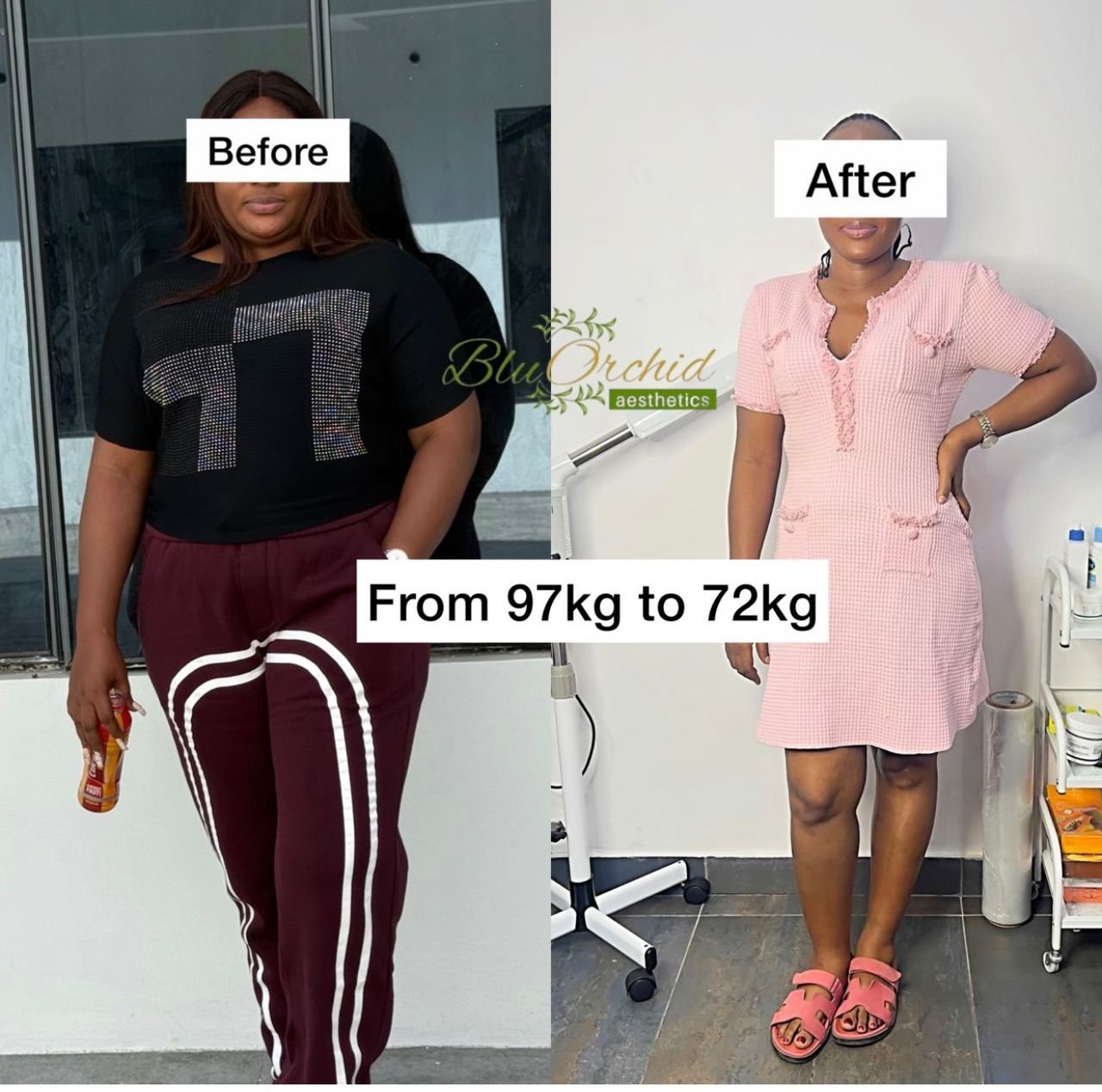
You have lost the weight you wanted to lose.
Your clothes fit differently. Your waist is smaller. Your health may have improved.
Then you look in the mirror and notice something you were not expecting.
Your face looks thinner.
Perhaps your cheeks appear less full. Your temples look more hollow. Lines around your mouth seem more noticeable. Your skin may feel looser, or your face may simply look more tired than it did before the weight loss.
This is what people increasingly call “Mounjaro face” or “Ozempic face.”
But there is an important distinction.
These terms make it sound as though the medication itself is uniquely changing the face. Current evidence suggests a more nuanced explanation: significant weight loss can reduce facial fat and alter the soft-tissue support that gives the face its fullness and contour. Similar changes can occur with substantial weight loss from other causes.
So if your face has changed after losing weight on Mounjaro, the question is not necessarily, “What did Mounjaro do to my face?”
It may be:
“What changed in my facial structure as my body became smaller, and what, if anything, would restore balance?”
What is Mounjaro face?
“Mounjaro face” is not a formal medical diagnosis.
It is a popular term used to describe facial changes that can become noticeable following significant weight loss while using tirzepatide, the active ingredient in Mounjaro.
These changes may include:
- Less fullness in the cheeks
- Hollowing around the temples
- A more pronounced tear-trough or under-eye area
- More visible nasolabial folds
- Looser-looking skin
- A less rounded facial contour
- Greater definition around the cheekbones
- A more angular or “drawn” appearance
The important point is that these changes are not necessarily exclusive to tirzepatide.
Recent reviews of GLP-1-associated facial changes describe facial hollowing, volume loss and skin laxity, while also noting that similar changes can occur following substantial weight loss by other means.
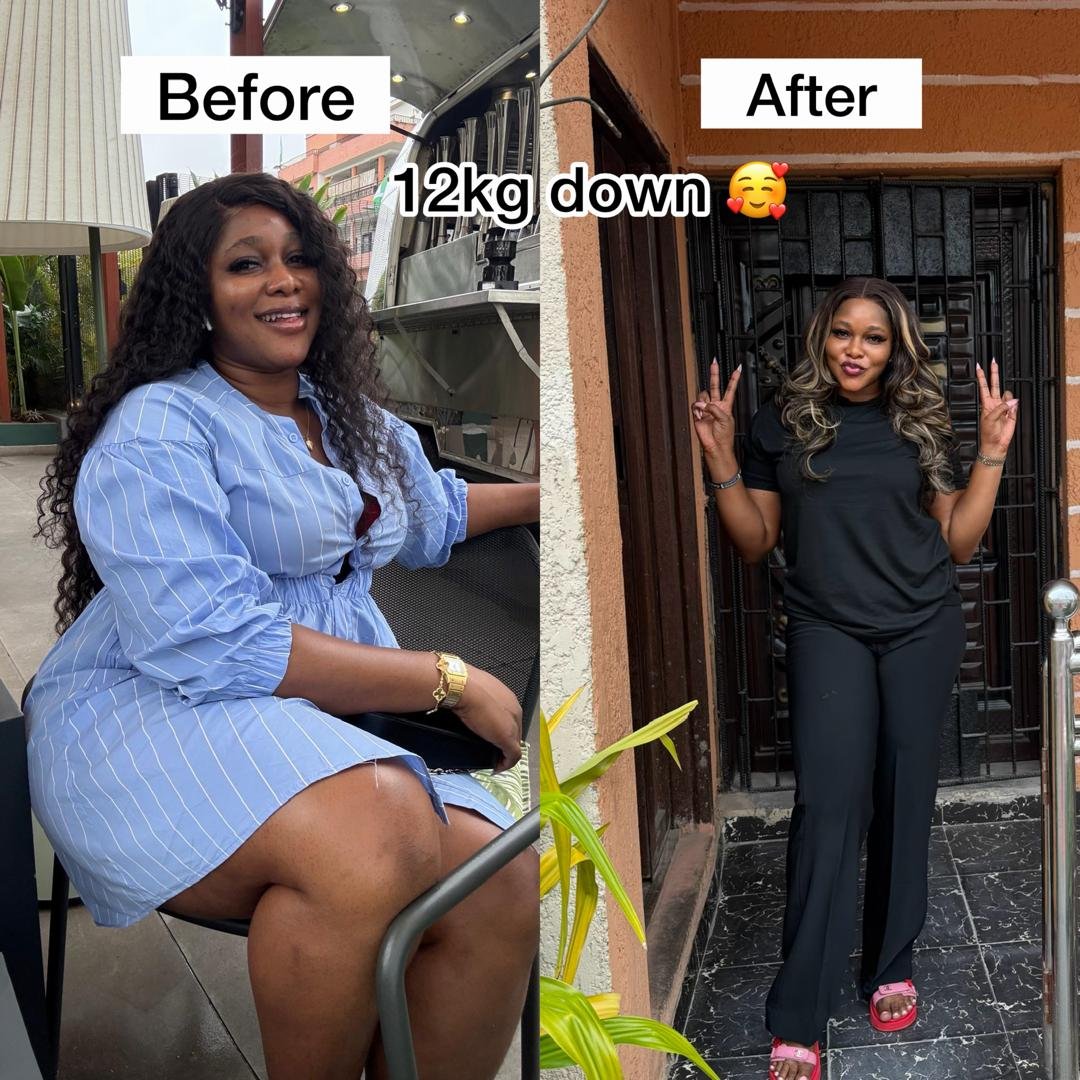
Why does your face change when you lose weight?
Your face contains fat compartments that contribute to its shape and support.
When you lose a substantial amount of body weight, some of that fat can be lost from the face as well.
The result is not simply “less fat.”
Changes in facial volume can alter the way the skin sits over underlying structures and can make certain folds, shadows and contours more visible.
A 2026 review of GLP-1-associated facial changes describes several interacting factors, including changes in superficial and deeper fat compartments, skin laxity and changes in structural support.
This is why someone can lose weight and look noticeably different in the face even when their skin itself has not developed a new problem.
The architecture underneath the skin has changed.
Is Mounjaro actually causing your face to age?
Not necessarily.
This is one of the most important distinctions to make.
Weight loss can make some signs of facial ageing more visible because there is less soft-tissue fullness supporting the skin.
If someone already had mild cheek volume loss, fine lines or skin laxity before losing weight, those features may become more apparent after the weight comes off.
That can create the impression that the face has suddenly aged.
Recent reviews describe this as weight-loss-associated facial deflation occurring on top of a person’s existing anatomy and the normal ageing process.
So “Mounjaro face” does not necessarily mean that the medication has accelerated the biological ageing of your face.
It may mean that your facial proportions have changed as part of a larger change in body composition.
Why does weight loss affect the cheeks so noticeably?
The cheeks are one of the areas where changes in facial volume can become particularly visible.
When cheek volume decreases, the transition between different areas of the face can become more pronounced.
You may notice:
- Less fullness through the mid-face
- A more visible cheekbone
- Deeper-looking folds beside the nose and mouth
- Greater shadowing beneath the cheek
- A flatter transition between the cheek and lower eyelid
Recent anatomical reviews suggest that weight-loss-associated facial changes can involve multiple layers of facial tissue, with volume depletion in superficial fat compartments contributing to midface flattening and more prominent transition lines.
But the amount and location of change varies considerably from person to person.
Two people can lose the same amount of weight and experience very different changes in their faces.
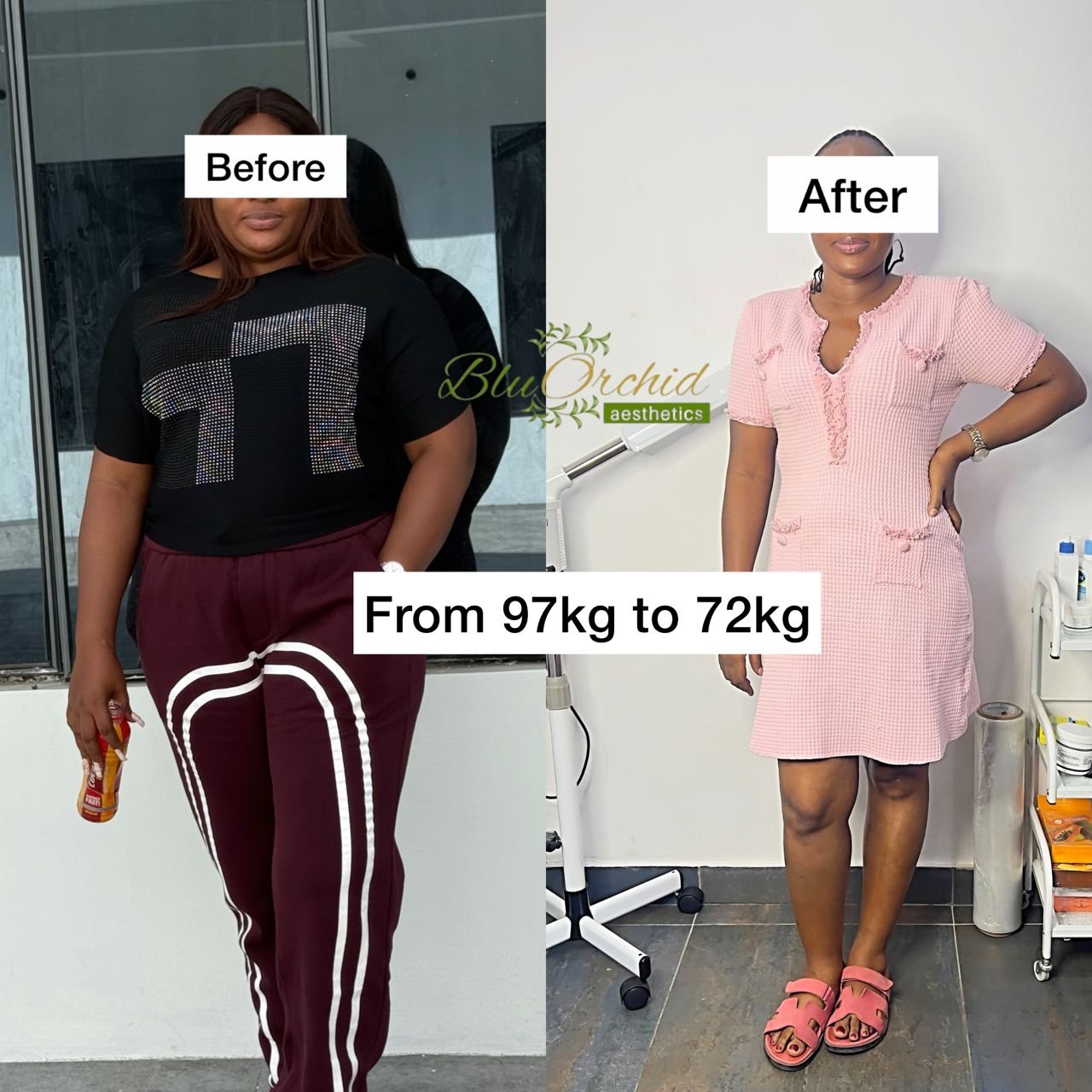
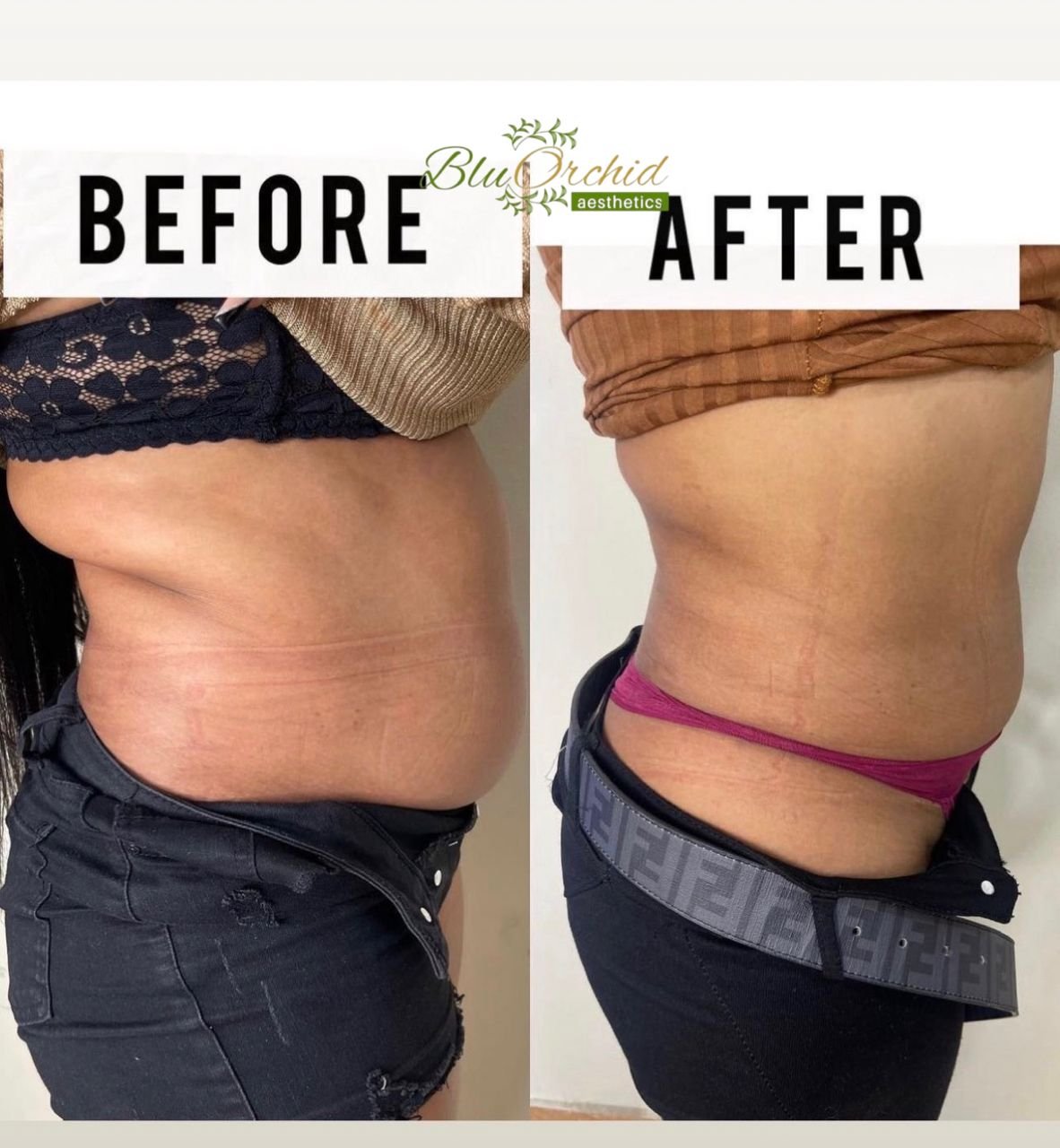
Weight loss at BluOrchid Aesthetics, Lagos
Does how much weight you lose matter?
Generally, greater weight loss creates more opportunity for visible changes in facial volume.
The relationship is not perfectly predictable, however.
A 2026 review examining facial changes associated with GLP-1 receptor agonist use reported evidence of midfacial volume reduction and found that greater overall weight loss was associated with greater reported facial volume loss and laxity. The authors also emphasised that individual factors and the rate of weight loss remain areas where more research is needed.
Your age, genetics, starting facial volume, skin quality, facial structure and the amount of weight lost can all influence what you see.
What about muscle loss?
Weight loss does not involve fat alone.
Some lean mass can also be lost during significant weight reduction.
In a substudy of the SURMOUNT-1 trial, participants receiving tirzepatide experienced reductions in both fat mass and lean mass, with approximately 75% of the weight lost coming from fat mass and 25% from lean mass in that DXA substudy.
A broader 2026 meta-analysis of incretin-based weight-loss therapies similarly found that lean mass represented a meaningful proportion of total weight lost, although the exact proportion varied between treatments and studies.
This is one reason weight management should not be viewed simply as a number on the scale.
Maintaining adequate nutrition, appropriate protein intake and resistance exercise may be important parts of preserving lean mass during weight loss, under appropriate medical guidance.
Can Mounjaro face improve on its own?
Sometimes.
Your face does not necessarily stop changing at the exact moment you reach your target weight.
If your weight is still changing, your facial appearance may continue to change as well.
This is one reason it can be sensible to assess the face in the context of the overall weight-loss journey rather than immediately treating every change with filler.
Your clinician should consider:
- Whether your weight has stabilised
- How much weight you have lost
- Whether further weight loss is planned
- Your age and skin quality
- Where volume has actually been lost
- Whether laxity or volume loss is the dominant concern
- What result you are trying to achieve
The answer is not always “replace the volume.”
Sometimes the better answer is to wait, reassess or focus on skin quality.
What is the best treatment for Mounjaro face?
There is no single treatment that is automatically best.
The appropriate approach depends on what has changed.
This is particularly important because facial volume loss and skin laxity are not the same problem.
Someone with significant volume loss may benefit from a carefully planned volumising approach.
Someone whose main concern is skin quality may need a different strategy.
Someone with both may require a combination approach.
And someone with only mild changes may not need an aesthetic procedure at all.
Recent systematic reviews of GLP-1-associated facial changes have investigated approaches including fillers, collagen-stimulating treatments and energy-based treatments. However, the evidence remains early: a 2026 systematic review found only a small number of uncontrolled clinical studies and concluded that there is not yet enough evidence to establish a validated treatment algorithm.
That is why treatment should be individualised rather than based on a trend.
Can dermal fillers help with Mounjaro face?
In selected patients, yes.
Dermal fillers can be used to restore or enhance volume in specific areas of the face.
Depending on the individual’s anatomy and concerns, treatment may focus on areas such as the cheeks, temples or other areas where volume loss has altered facial proportions.
The objective should not be to put back everything that was lost.
That can result in overfilling.
Instead, the clinician should determine where strategic volume restoration could improve the relationship between the different areas of the face.
This is particularly important after substantial weight loss because the face may have lost volume in more than one location.
The current literature supports the anatomical rationale for selective hyaluronic-acid filler use in medical-weight-loss-associated facial volume loss, but the evidence for treatment effectiveness specifically in GLP-1-related facial changes is still limited.
Can skin treatments help?
They may, depending on the problem.
If the primary issue is reduced skin quality, texture or mild laxity rather than significant volume loss, a volumising treatment may not be the first consideration.
Treatments designed to support skin quality or stimulate collagen may be considered in appropriate patients.
However, it is important to separate what a treatment can realistically do from what social media sometimes promises.
A treatment that improves skin quality does not necessarily replace lost facial volume.
And a filler that restores volume does not automatically tighten loose skin.
Different problems require different tools.
What about facial profiling?
This is where the idea of “Mounjaro face treatment” becomes more nuanced.
If weight loss has changed your facial proportions, simply identifying one hollow area may not tell the whole story.
For example, restoring cheek volume without considering the temples, lower face or overall facial proportions may not produce the most harmonious result.
Facial profiling looks at the face as a whole.
The assessment may consider:
- Facial proportions
- Volume distribution
- Cheek structure
- Chin projection
- Jawline definition
- Skin quality
- Facial symmetry
- Areas of hollowing
- The relationship between the upper, middle and lower thirds of the face
The goal is not to recreate the face you had before losing weight.
It is to determine whether your current face could benefit from carefully selected enhancement.
Should you wait until you finish losing weight?
There is no universal rule.
But if your weight is continuing to change significantly, it can be difficult to predict exactly where your facial volume will settle.
That does not mean you must avoid aesthetic treatment during weight loss.
It means the timing should be discussed with the clinician managing your weight and the clinician assessing your facial concerns.
The decision should take into account your treatment goals, current weight trajectory and the degree of facial change already present.
Can you prevent Mounjaro face?
There is no guaranteed way to prevent facial volume changes while losing a significant amount of weight.
But a health-first approach to weight loss remains important.
Your medical weight-management plan should not focus solely on achieving the lowest possible number on the scale.
Nutrition, resistance training, appropriate protein intake and monitoring of body composition may help support the preservation of lean mass during weight loss.
And if you are taking tirzepatide, it should be used according to the treatment plan provided by your prescribing clinician.
Do not stop or change a prescribed medication simply because you are unhappy with changes in your appearance without discussing it with your doctor.
Should you stop Mounjaro because of facial changes?
Not without speaking to the clinician managing your treatment.
Mounjaro is a prescription medication used for specific medical indications, and decisions about starting, continuing, changing or stopping treatment should be based on your medical circumstances, not simply on whether your face looks different after weight loss.
If your weight-loss results have been medically beneficial but you are concerned about facial changes, those concerns can be assessed separately.
You do not necessarily have to choose between your health goals and your aesthetic concerns.
What should you ask before treating Mounjaro face?
Before considering an aesthetic treatment, ask:
What exactly has changed?
Is it volume loss, skin laxity, a change in facial proportions, or several things at once?
Has my weight stabilised?
If your face is still changing because your weight is still changing, that matters when planning treatment.
Where have I actually lost volume?
The answer may not be the area you notice first.
Do I need volume restoration or skin treatment?
These are different problems.
How much enhancement would look natural on my face?
The goal should not be to replace every millilitre of volume you have lost.
What are the risks?
Every injectable treatment has potential complications and should be discussed before treatment.
What happens if I decide not to treat it?
Sometimes reassurance and observation are appropriate.
The goal is not to reverse your weight loss
This is perhaps the most important point.
You worked to change your body.
The answer to facial changes after weight loss should not automatically be to make your face look exactly as it did before.
The better question is whether the changes have created an imbalance that genuinely bothers you, and, if so, what is the smallest and safest intervention that could improve it.
For some people, that may involve carefully placed filler.
For others, it may involve treatments focused on skin quality.
For some, it may be a combination.
And for others, no treatment may be necessary.
The evidence around GLP-1-associated facial changes is still developing, and current research does not support a single standardised treatment protocol.
Frequently asked questions
What is Mounjaro face?
“Mounjaro face” is a popular term for facial changes that may become noticeable after significant weight loss while using tirzepatide. These can include facial volume loss, hollowing and skin laxity. Similar changes can occur after substantial weight loss from other causes.
Is Mounjaro face permanent?
Not necessarily. Your appearance may continue to change as your weight stabilises and your tissues adapt. Whether particular changes persist depends on factors such as the amount of weight lost, age, skin quality and individual facial anatomy.
Does Mounjaro cause facial fat loss?
Mounjaro promotes weight loss, and fat mass decreases as part of that process. Facial fat can also decrease during significant weight loss. Current evidence does not establish that tirzepatide uniquely targets facial fat.
What is the best treatment for Mounjaro face?
There is no single best treatment. The appropriate approach depends on whether the main concern is facial volume loss, skin laxity, changes in facial proportions or a combination of these. Current evidence for specific treatments after GLP-1-associated weight loss remains limited.
Can fillers fix Mounjaro face?
Fillers may help selected patients with facial volume loss by restoring volume in carefully chosen areas. The aim should be proportion and balance rather than simply replacing all lost volume.
Does Ozempic face happen with Mounjaro?
Similar facial changes can occur with substantial weight loss associated with different GLP-1 or incretin-based medications. The phenomenon is better understood as weight-loss-associated facial change rather than a problem unique to one brand or medication.
Should I get filler while taking Mounjaro?
That decision should be individualised. Your clinician may consider your current weight trajectory, facial anatomy, treatment goals and whether further weight loss is expected before recommending an aesthetic treatment.
Will gaining weight back fix Mounjaro face?
Not necessarily, and intentionally regaining weight is not an appropriate aesthetic strategy for everyone. Facial appearance is influenced by much more than total body weight, and weight regain may not restore facial volume in the exact way you expect.
When your body changes, your face can change too
Successful weight loss can be an important health achievement.
But if you notice changes in your face afterwards, you do not have to dismiss them, and you do not have to rush into treatment either.
The first step is understanding what actually changed.
At BluOrchid Aesthetics, facial enhancement is approached through assessment of the face as a whole rather than treating one isolated hollow or line.
If you have experienced noticeable facial changes after weight loss and want to understand your options, you can Book a Consultation to discuss your facial structure, concerns and appropriate treatment options.
The consultation fee is ₦50,000 and is credited towards your selected treatment if you decide to proceed.
A consultation at BluOrchid begins with exactly this assessment.
One hour with our doctors. An honest assessment. A plan built around you. ₦50,000, credited in full toward your first treatment.
Book your consultation Doctor-led assessment at Lekki Phase 1, Lagos.