Lasers and Dark Skin: What Is Safe for Pigmentation
Can lasers safely treat pigmentation on dark skin? Learn which factors matter, the risks of dark marks and how treatment should be approached.


Laser treatment has changed what is possible in aesthetic medicine.
But when the skin being treated is naturally rich in melanin, the conversation needs to be more careful.
For dark skin, laser treatment is not automatically unsafe.
It is also not automatically safe simply because a device is marketed for pigmentation.
The real question is whether the right laser, settings, treatment approach and diagnosis have been chosen for your particular skin.
This matters because the laser is interacting with pigment.
And when your skin contains more melanin, there is more natural pigment for the laser energy to interact with.
If that energy is not controlled properly, the treatment intended to reduce pigmentation can potentially cause more of it.
Why is laser treatment different on dark skin?
Melanin absorbs light energy.
That is part of what makes certain laser treatments useful: the laser can be designed to target a particular pigment or structure.
But your natural skin pigment is also present.
On darker skin, this means there can be less room for error.
A laser that delivers too much heat or energy to the surrounding skin can cause inflammation, burns or unwanted pigment changes.
The American Academy of Dermatology notes that lasers can be used on all skin types, but darker skin is more prone to burns and dark marks after laser treatment. It recommends working with a clinician experienced in treating darker skin with lasers.
That is why “laser for dark skin” is not one treatment.
Different lasers behave differently.

Can lasers safely treat pigmentation on dark skin?
Sometimes, yes.
But it depends heavily on what type of pigmentation you actually have.
That distinction comes before the machine.
Pigmentation can include:
- Post-inflammatory hyperpigmentation
- Acne marks
- Melasma
- Sun-related pigmentation
- Pigmentation caused by irritation or injury
- Certain individual pigmented lesions
These conditions do not necessarily respond to the same treatment.
And some types of pigmentation may actually become worse after an overly aggressive laser treatment.
DermNet notes that physical treatments such as lasers can sometimes help epidermal pigmentation but can also aggravate pigmentation by causing additional injury to the skin.
So the first question should not be:
“Which laser removes dark spots?”
It should be:
“What is causing these dark spots?”
Why diagnosis matters more than the machine
Imagine two patients with brown patches on their cheeks.
They may look similar in a photograph.
But one may have post-acne pigmentation.
The other may have melasma.
Their treatment strategies may be completely different.
This is particularly important with melasma.
Melasma is a recurring pigmentation condition, and procedures including lasers can sometimes worsen pigmentation or trigger post-inflammatory hyperpigmentation. DermNet specifically recommends caution with laser treatment for melasma and notes that several laser approaches require expert use because of the risk of relapse and treatment resistance.
That is why a reputable clinic should not diagnose pigmentation simply by looking at its colour.
The pattern, history, triggers and behaviour of the pigmentation matter.
Which lasers are safest for dark skin?
There is no single laser that can honestly be called the safest laser for every person with dark skin.
The answer depends on:
- The condition being treated
- Your skin tone
- The depth of the pigment
- The laser wavelength
- Pulse duration
- Energy settings
- Cooling
- Treatment area
- Your history of pigmentation
- How your skin responds during treatment
Certain longer-wavelength lasers, such as Nd, have established uses in darker skin because they can reduce the amount of energy absorbed by superficial melanin compared with some shorter wavelengths.
DermNet identifies long-pulsed Nd as the safest laser option for hair removal in skin of colour, because its 1064 nm wavelength is less strongly absorbed by epidermal melanin and allows heat to dissipate more effectively.
But that does not mean Nd is automatically the right laser for every pigmentation problem.
Hair removal and pigmentation treatment are different indications.
The wavelength that is appropriate for one problem may not be appropriate for another.
What about laser resurfacing?
This is where the distinction becomes particularly important.
Laser resurfacing can be:
- Non-ablative
- Fractional non-ablative
- Ablative fractional
- Fully ablative
The more aggressively the skin is injured, the more significant the healing response can be.
For darker skin, that can mean a greater risk of unwanted pigment changes.
DermNet notes that ablative resurfacing can cause post-inflammatory hyperpigmentation and that aggressive resurfacing requires particular caution in darker skin.
That does not mean every resurfacing laser is forbidden.
It means the treatment needs to be selected carefully.
More aggressive is not automatically more effective.
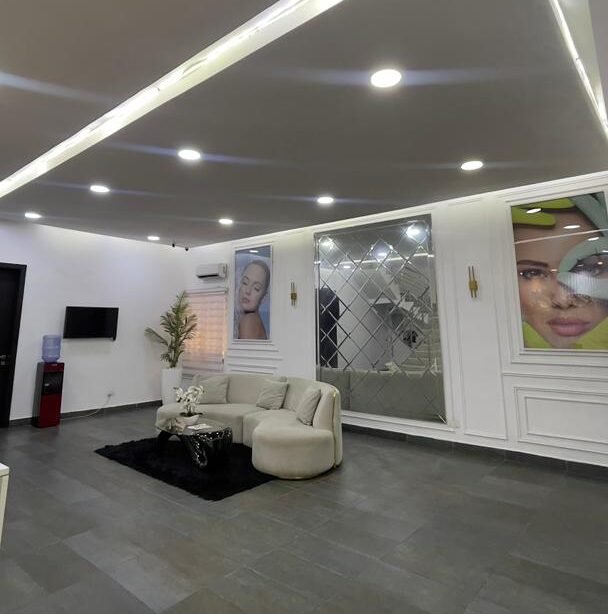
Pigmentation at BluOrchid Aesthetics, Lagos
What about lasers for melasma?
Melasma is one of the situations where caution matters most.
It is tempting to think that if pigment is the problem, destroying pigment with a laser must be the solution.
But melasma is more complicated than that.
It can be influenced by:
- Sun exposure
- Visible light
- Hormonal changes
- Heat
- Skin inflammation
- Individual susceptibility
A procedure may reduce visible pigment while leaving the underlying triggers untouched.
And if the treatment itself creates significant inflammation, the pigmentation can return or become worse.
This is why melasma is usually approached as a long-term management problem, not a one-session pigment-removal problem.
Can laser treatment cause darker skin?
Yes.
This is one of the most important things to understand before treatment.
Laser energy creates a controlled biological response.
If the skin responds with excessive inflammation, melanocytes can become more active and produce additional pigment.
The result can be post-inflammatory hyperpigmentation.
Darker skin is particularly susceptible to pigmentary changes following injury or inflammation.
That means a patient seeking treatment for dark spots can occasionally develop new dark spots after treatment.
This is not a reason to avoid all laser procedures.
It is a reason to treat the risk seriously.
Can laser treatment make skin lighter?
Laser treatment for pigmentation should not be approached as skin bleaching.
The goal is to reduce unwanted or excess pigmentation while preserving the natural colour and integrity of the surrounding skin.
There is an important difference between:
Treating uneven pigmentation
and
Trying to make naturally dark skin lighter.
At BluOrchid Aesthetics, the philosophy is the former.
The objective is healthier-looking, more even skin, not a change in your natural complexion.
What should happen before laser treatment?
A proper assessment should come before the laser.
1. Identify the pigmentation
The clinician should establish what they are actually treating.
2. Review your skin history
Previous chemical peels, lasers, bleaching products, acne, irritation and other treatments can all matter.
3. Assess your tendency to pigment
If you frequently develop dark marks after acne, cuts, burns or other irritation, that history is important.
4. Review your skincare
Some products can make the skin more sensitive or irritated.
Your clinician should know what you are using before treatment.
5. Consider sun exposure
Active tanning or significant sun exposure can affect treatment safety and pigmentation risk.
6. Consider a test spot when appropriate
For some darker-skinned patients, testing a small area before treating a larger area can help assess how the skin responds.
DermNet specifically notes test spots as a useful precaution for darker or tanned skin undergoing some laser resurfacing treatments.
Why laser settings matter
The same machine can produce very different results depending on how it is used.
Settings can include factors such as:
- Energy
- Pulse duration
- Spot size
- Number of passes
- Treatment density
- Cooling
Two clinics can technically own the same device and produce very different outcomes.
That is why asking “What machine do you use?” is not enough.
A better question is:
“Why is this device and this setting appropriate for my skin and my pigmentation?”
Cooling matters too
Laser treatment generates heat.
Cooling can help protect the surrounding skin and reduce thermal injury.
In skin of colour, controlling epidermal heating is particularly important.
DermNet describes cooling as an important technique for protecting the epidermis during laser treatment in darker skin.
This is one of those details a patient may never notice during a consultation, but it can matter greatly to treatment safety.
What about laser for acne marks?
This needs another distinction.
If by “acne marks” you mean brown marks left after acne, the problem is primarily pigmentation.
If you mean indented or raised acne scars, the problem is structural.
Those are not the same thing.
A treatment designed to improve scar texture is not necessarily the best treatment for brown pigmentation.
And in darker skin, aggressive resurfacing can itself trigger pigmentation.
This is why identifying whether you have acne marks or acne scars is an important first step.
For more on that distinction, see Acne Marks vs Acne Scars: Why They Need Different Treatment.
What about pigmentation after shaving or ingrown hairs?
This is another situation where the underlying trigger matters.
For example:
Shaving → irritation/ingrown hairs → inflammation → dark marks
In some patients, reducing the repeated irritation may be more important than repeatedly treating the pigmentation.
Laser hair removal can sometimes be considered when unwanted hair and repeated shaving-related irritation are contributing to the problem.
The objective is then not simply to “laser away” the pigmentation.
It is to interrupt the cycle that keeps creating it.
What should you do after a laser treatment?
Aftercare is part of the treatment, not an optional extra.
Your clinician may advise you to:
- Protect the treated area from direct sun
- Use the recommended sunscreen
- Avoid picking or irritating the skin
- Pause certain active skincare products temporarily
- Follow the prescribed post-treatment routine
- Report unusual blistering, severe pain or prolonged inflammation
Sun protection is especially important because UV exposure can worsen pigmentation.
For patients managing dark spots, the American Academy of Dermatology recommends broad-spectrum SPF 30 or higher and highlights tinted sunscreen containing iron oxide as useful protection against visible light, which can contribute to pigmentation.
What should you avoid before and after laser treatment?
Do not improvise.
Your clinician should tell you exactly what to stop and when.
Depending on the laser and your skin, this may include temporarily avoiding certain:
- Retinoids
- Exfoliating acids
- Scrubs
- Irritating skincare products
- Other procedures
Avoid adding a chemical peel, aggressive facial or home treatment simply because you think it will make the laser work faster.
More treatment is not necessarily better treatment.
How do you know whether a clinic understands dark skin?
Look beyond the machine.
Ask:
“What type of pigmentation do I have?”
A good answer should go beyond “dark spots.”
“Why is this laser appropriate for my skin?”
The explanation should make sense clinically, not simply rely on the device’s marketing name.
“What are the risks for my skin tone?”
The clinician should be able to discuss hyperpigmentation and hypopigmentation honestly.
“What happens if my skin becomes darker afterwards?”
There should be a plan for managing complications.
“Do you treat pigmentation regularly in darker skin?”
Experience matters.
A laser device is only one part of the equation.
The laser is not the treatment. The judgement is.
For dark skin, successful pigmentation treatment depends on more than owning an advanced machine.
It depends on knowing when not to use it.
Sometimes the best treatment is a laser.
Sometimes it is a chemical peel.
Sometimes it is topical treatment and strict sun protection.
Sometimes the most important step is treating the acne, irritation or hormonal trigger causing the pigmentation in the first place.
And sometimes the safest decision is to leave the laser alone.
That is not a failure of aesthetic medicine.
It is good clinical judgement.
Lasers and pigmentation at BluOrchid Aesthetics
At BluOrchid Aesthetics, pigmentation is approached according to the cause and character of the pigmentation, rather than treating every dark patch with the same procedure.
The clinic’s treatment options include professional pigmentation treatments such as chemical peels and Cosmelan, while laser treatment is considered only where the available device and clinical indication are appropriate.
The exact laser used should be confirmed with the clinic before treatment rather than assuming a device or wavelength that has not been verified.
That distinction matters.
A responsible clinic should never promise that a particular laser is suitable simply because it is available.
Frequently asked questions
Is laser treatment safe for dark skin?
Laser treatment can be safe for dark skin when the correct device, settings and treatment approach are used. However, darker skin has a greater risk of burns and unwanted pigmentation after some laser treatments, so experience and careful selection matter.
What is the safest laser for dark skin?
There is no single safest laser for every condition. Long-pulsed Nd lasers have an established safety profile for some treatments in darker skin, particularly hair removal, but the appropriate laser depends on the condition being treated.
Can laser remove pigmentation on dark skin?
Some lasers can improve selected forms of pigmentation. However, laser treatment can also aggravate pigmentation if the diagnosis, device or settings are inappropriate.
Can laser make hyperpigmentation worse?
Yes. Inflammation or thermal injury from laser treatment can trigger post-inflammatory hyperpigmentation, particularly in darker skin.
Is laser safe for melasma?
Laser can sometimes be used for melasma, but it requires particular caution because melasma can recur and procedures can sometimes worsen pigmentation. Treatment should be planned by a clinician experienced with the condition.
Is laser better than a chemical peel for pigmentation?
Neither is universally better. The appropriate treatment depends on the type and depth of pigmentation, your skin and how likely the treatment is to cause additional inflammation.
Can laser remove acne marks?
Some laser treatments may help selected pigmentation left after acne, but acne marks and acne scars are different problems. The correct treatment depends on whether the concern is colour or texture.
Should I use sunscreen after laser treatment?
Yes. Sun protection is an important part of protecting the treated skin and reducing the risk of further pigmentation.
Can I have a laser treatment if I have very dark skin?
Potentially, yes. Your skin tone does not automatically rule out laser treatment, but it makes appropriate device selection, settings, cooling and clinical experience particularly important.
Should I have a test spot before laser treatment?
A test spot may be appropriate for some darker-skinned patients, depending on the treatment. Your clinician can determine whether it is advisable for the specific procedure.
Dark skin does not need to be afraid of lasers. It needs the right laser.
The conversation around laser treatment for dark skin should not be “lasers are dangerous” or “lasers are completely safe.”
Both are too simplistic.
The better question is:
What are we treating, what are we using, and how are we protecting the skin?
When those questions are answered properly, laser treatment can have a place in aesthetic care for darker skin.
But pigmentation is not something to experiment with.
If you are dealing with persistent dark spots, melasma, acne marks or uneven pigmentation and want to understand whether laser treatment is appropriate for your skin, Book a Consultation at BluOrchid Aesthetics.
Consultations are ₦50,000, credited toward your selected treatment if you decide to proceed.
A consultation at BluOrchid begins with exactly this assessment.
One hour with our doctors. An honest assessment. A plan built around you. ₦50,000, credited in full toward your first treatment.
Book your consultation Doctor-led assessment at Lekki Phase 1, Lagos.