Hydroquinone in Nigeria: Safe, Banned or Misunderstood?
Is hydroquinone banned in Nigeria? Learn what NAFDAC says, when hydroquinone is restricted, and why unsupervised skin-lightening use is risky.

Hydroquinone is one of the most misunderstood ingredients in skincare.
To some people, it is a dangerous bleaching chemical that should never touch the skin.
To others, it is a proven treatment for dark spots, melasma and other pigmentation problems.
In Nigeria, the conversation becomes even more confusing because you may hear that hydroquinone is banned, while still finding creams and treatments that contain it.
So what is actually true?
The answer requires a distinction between hydroquinone as a medical treatment and hydroquinone used in cosmetic skin-lightening products.
And that distinction matters.
Is hydroquinone banned in Nigeria?
The short answer is: hydroquinone is restricted in cosmetics in Nigeria, rather than being a substance that can simply be used freely in skincare products.
NAFDAC’s Cosmetic Products (Prohibition of Bleaching Agents) Regulations state that cosmetic products containing more than 2% hydroquinone alone, or more than 1% when combined with other lightening ingredients, must not be imported, manufactured, distributed, sold or offered for sale.
NAFDAC has also stated that hydroquinone is prohibited in skincare cosmetic products and should only be used under medical supervision because inappropriate use can cause unwanted changes in skin colour and hypersensitivity reactions.
So the statement “hydroquinone is completely banned” is too simplistic.
But neither is it accurate to treat hydroquinone as an ordinary cosmetic brightening ingredient that anyone can use without professional guidance.
Why is hydroquinone used for pigmentation?
Hydroquinone works by interfering with the production of melanin, the pigment responsible for skin colour.
That ability is precisely why it has been used medically to manage certain forms of hyperpigmentation.
When used appropriately, the objective is not to change someone’s natural skin colour.
It is to reduce areas of excess pigmentation so that the skin becomes more even in tone.
That distinction is particularly important in a country where the line between treating pigmentation and skin bleaching can become blurred.
Hydroquinone is not the same thing as bleaching your skin
This is where much of the confusion begins.
A doctor may use a pigmentation treatment with a very specific objective:
There is an area of unwanted pigmentation. Let’s understand why it is there and treat it appropriately.
Skin bleaching is different.
The objective is often to make naturally darker skin lighter, sometimes using multiple products or combinations of ingredients without appropriate medical supervision.
The problem is not simply the word “lightening.”
It is the way the product is being used, what it contains, how concentrated it is, how long it is being used and whether the underlying skin problem has been properly diagnosed.
Why does NAFDAC restrict hydroquinone in cosmetics?
Hydroquinone is a potent ingredient.
Using it incorrectly can cause problems.
NAFDAC has specifically warned that inappropriate hydroquinone use can lead to skin colour changes and hypersensitivity reactions, including redness, tingling, burning and rashes.
There is also a particularly important concern with prolonged or inappropriate use: exogenous ochronosis, a condition in which the skin can develop persistent dark or blue-black discolouration.
In other words, an ingredient used in an attempt to make pigmentation better can, when misused, contribute to a different and potentially much more difficult pigmentation problem.
That is one reason “stronger” is not automatically “better.”
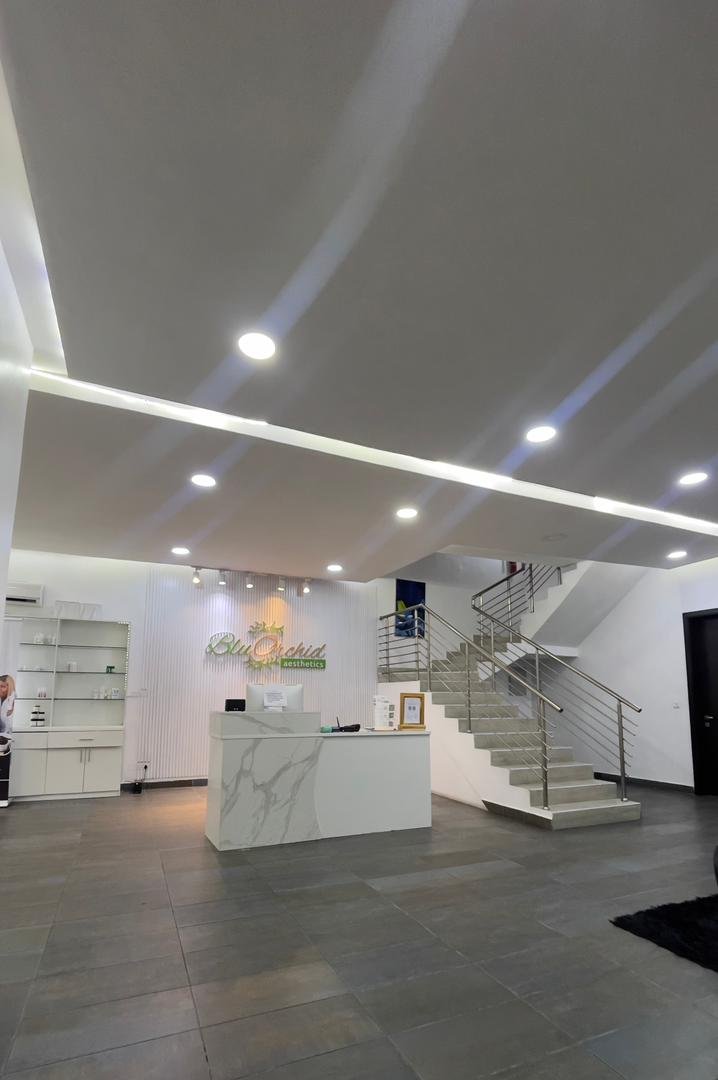
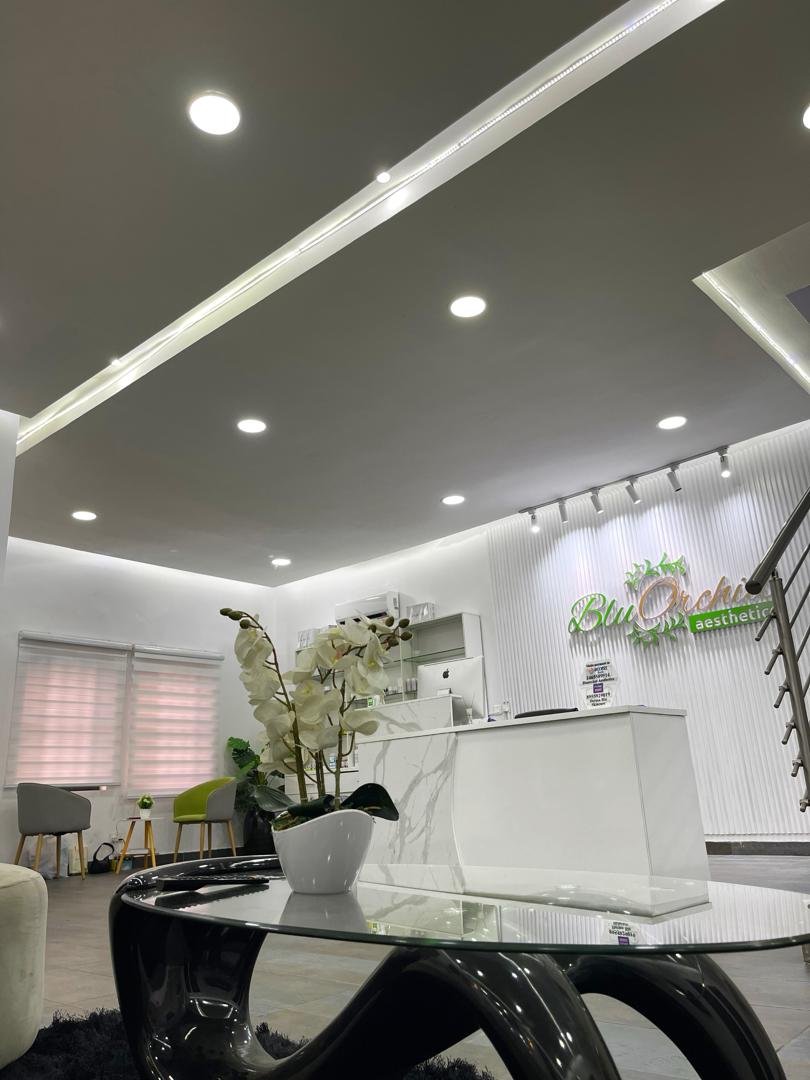
Brand at BluOrchid Aesthetics, Lagos
What does the 2% rule actually mean?
This is one of the most commonly misunderstood parts of the conversation.
NAFDAC’s cosmetic regulations specify that a cosmetic product must not contain more than:
- 2% hydroquinone when used alone
- 1% hydroquinone when combined with other lightening ingredients
under the regulation’s restrictions on cosmetic products.
That does not mean that buying a 2% hydroquinone cosmetic and applying it indefinitely without supervision is automatically appropriate.
It also does not mean that every product containing less than 2% hydroquinone is suitable for every person.
Concentration is only one part of the clinical picture.
The condition being treated, the formulation, frequency of use, duration and your skin’s response all matter.
Why do people think hydroquinone is completely banned?
Part of the confusion comes from the way “banned” is used in everyday skincare conversations.
NAFDAC’s regulations prohibit certain cosmetic uses and set restrictions around hydroquinone concentration in cosmetics. NAFDAC also describes hydroquinone as prohibited in skincare cosmetic products and says it should only be used under medical supervision.
At the same time, hydroquinone has a history of medical use for pigmentation.
So the more useful question is not:
“Is hydroquinone banned?”
It is:
“What product is being used, for what purpose, at what concentration, and under whose supervision?”
That is a much more clinically meaningful question.
What are the risks of using hydroquinone without supervision?
The risks depend on the product, concentration, frequency and duration of use.
Potential problems can include:
Irritation
Redness, burning, tingling and sensitivity can occur.
If the skin becomes irritated, continuing to apply the same product may create a cycle of inflammation and pigmentation.
Uneven pigmentation
Hydroquinone is intended to reduce excess pigment.
Improper use can instead contribute to unwanted changes in pigmentation.
Increased sensitivity
Skin may become more reactive, particularly when hydroquinone is combined with other active ingredients or irritating products.
Exogenous ochronosis
Long-term inappropriate use has been associated with exogenous ochronosis, which can cause persistent dark or blue-black pigmentation.
This is one of the reasons repeated, unsupervised use should not be treated casually.
What about hydroquinone creams sold in Nigeria?
This is where consumers need to be particularly careful.
A product being sold in a shop, market, pharmacy, Instagram store or online marketplace does not automatically mean it is appropriate for your skin.
NAFDAC states that cosmetics manufactured, imported, sold, distributed or used in Nigeria must be registered in accordance with applicable requirements.
A product should therefore not be judged solely by its marketing claims.
Look at the label.
Check the manufacturer.
Check the registration information.
And be cautious about products that promise dramatic skin lightening in an unusually short period.

What if hydroquinone is not listed on the label?
Do not assume that means the product is hydroquinone-free.
Unregulated skin-lightening products may contain ingredients that are not clearly disclosed.
This is particularly concerning when a cream produces an unexpectedly dramatic change in skin tone or comes with vague claims such as “instant whitening,” “strong bleaching” or “rapid fairness.”
The problem may not be hydroquinone alone.
Unregulated products can contain other potent ingredients that may also damage the skin when used improperly.
Should you use hydroquinone for dark spots?
That depends on why the dark spots are there.
Dark spots can result from many different conditions, including acne-related pigmentation, melasma, irritation, inflammation and other causes.
Treating pigmentation without identifying the cause can lead to disappointing results.
For example, if acne is still active, treating the pigmentation without controlling the acne means new marks may continue to appear.
If melasma is involved, treatment also needs to account for the factors that drive recurrence.
And if the pigmentation has been caused by an irritating skincare routine, adding another strong active may not solve the underlying problem.
Hydroquinone and darker skin
For darker skin, pigment management requires particular care.
The objective should not be to aggressively remove pigment.
It should be to reduce unwanted excess pigmentation while preserving healthy, even-looking skin.
This is why a treatment that appears powerful on paper is not necessarily the right treatment for every patient.
Irritation itself can trigger more pigmentation.
A considered approach therefore asks not only:
“What will fade this?”
but also:
“What will fade this without creating another problem?”
What should you do if you have been using hydroquinone for a long time?
Do not panic.
And do not automatically respond by adding more products.
If you have been using a hydroquinone-containing product regularly, particularly for months or years, it is reasonable to have your skin assessed.
A clinician can look at:
- The type of pigmentation present
- How long you have been using the product
- The concentration, if known
- Other active ingredients in the product
- Your current skin sensitivity
- Whether there are signs of irritation or other complications
- Whether hydroquinone is still appropriate for the condition being treated
The next step may simply be a change in routine.
Or you may need a more structured pigmentation treatment plan.
The important thing is to stop guessing.
What should you use instead?
There is no single replacement for hydroquinone.
Depending on the type of pigmentation, other approaches may include ingredients and treatments designed to regulate pigmentation while maintaining the skin barrier.
These can include carefully selected topical ingredients and professional treatments such as chemical peels or other pigmentation procedures where appropriate.
The right option depends on the diagnosis.
This is particularly important because melasma, post-acne pigmentation and pigmentation caused by irritation are not necessarily managed in exactly the same way.
For a broader look at pigmentation concerns, see our Hyperpigmentation Treatment in Lagos guide.
The biggest mistake: treating pigmentation as a colour problem
Pigmentation is often the visible result of something else happening in the skin.
Acne.
Hormones.
Sun exposure.
Heat.
Inflammation.
Irritation.
Certain medications or skin conditions.
If you only focus on making the pigment disappear, you can miss the reason it appeared in the first place.
A better approach is to identify the cause, control the trigger and then address the remaining pigmentation.
What Dr Gigi wants patients to understand
The goal of pigmentation treatment should not be to make your skin progressively lighter.
It should be to help your skin become more even, healthier-looking and more balanced in tone.
Hydroquinone is a good example of why skincare needs context.
An ingredient can have a legitimate medical role while still being inappropriate for casual, prolonged or unsupervised use.
The question is not whether an ingredient is “good” or “bad.”
The question is whether it is appropriate for you, for this condition, in this formulation, at this concentration and for this length of time.
Frequently asked questions
Is hydroquinone banned in Nigeria?
Hydroquinone is restricted in cosmetic products in Nigeria. NAFDAC’s regulations prohibit cosmetic products containing more than 2% hydroquinone alone or more than 1% when combined with other lightening ingredients. NAFDAC also states that hydroquinone should only be used under medical supervision.
Can I buy hydroquinone cream in Nigeria?
Products containing hydroquinone may still be encountered in the Nigerian market, but the presence of a product for sale does not by itself establish that it is appropriately registered, formulated or suitable for your skin. Cosmetics sold in Nigeria are subject to NAFDAC registration requirements.
Is 2% hydroquinone safe?
Concentration alone does not determine whether a product is appropriate for you. NAFDAC’s cosmetic regulations set a 2% threshold for hydroquinone used alone, but appropriate use still depends on the product, indication, duration and clinical supervision.
Does hydroquinone permanently lighten your skin?
Hydroquinone reduces melanin production and is used to treat areas of excess pigmentation. It should not be treated as a way to permanently change your natural skin colour.
Can hydroquinone make pigmentation worse?
Improper use can cause irritation and unwanted changes in pigmentation. NAFDAC specifically warns about skin colour changes and hypersensitivity reactions associated with inappropriate hydroquinone use.
What is exogenous ochronosis?
Exogenous ochronosis is a difficult-to-treat pigmentation disorder that can develop after prolonged or inappropriate use of certain skin-lightening agents, including hydroquinone.
Should I stop hydroquinone immediately?
If you have been using a hydroquinone-containing product without medical supervision, it is sensible to have the product and your skin assessed rather than continuing indefinitely or adding other active ingredients. If you are using a prescribed treatment, speak with the clinician who prescribed it before making changes.
Can hydroquinone treat melasma?
Hydroquinone has been used in the management of hyperpigmentation, including melasma, but melasma requires an individualised approach because it can recur and may be influenced by multiple factors.
What is the safest treatment for dark spots?
There is no single treatment that is safest or best for every type of pigmentation. The first step is identifying the cause and then choosing an approach that your skin can tolerate.
Hydroquinone is not the whole story
The debate around hydroquinone often becomes too simple.
It is neither accurate to treat it as an ordinary cosmetic ingredient that anyone should use indefinitely nor useful to reduce the entire conversation to “hydroquinone is banned.”
In Nigeria, NAFDAC places specific restrictions on hydroquinone in cosmetics and warns against inappropriate use.
If you are dealing with stubborn pigmentation, the better question is not:
“What is the strongest cream I can find?”
It is:
“Why is my skin producing this pigment, and what is the safest way to address it?”
At BluOrchid Aesthetics, consultations are ₦50,000, credited toward your selected treatment if you decide to proceed.
Book a Consultation to have your pigmentation assessed and receive a treatment plan based on your skin rather than a one-size-fits-all lightening routine.
A consultation at BluOrchid begins with exactly this assessment.
One hour with our doctors. An honest assessment. A plan built around you. ₦50,000, credited in full toward your first treatment.
Book your consultation Doctor-led assessment at Lekki Phase 1, Lagos.