How We Source Products and Keep Treatments Safe at BluOrchid Aesthetics
How BluOrchid sources products and keeps treatments safe: supply chain, checks on arrival, storage, and why it is never an afterthought.

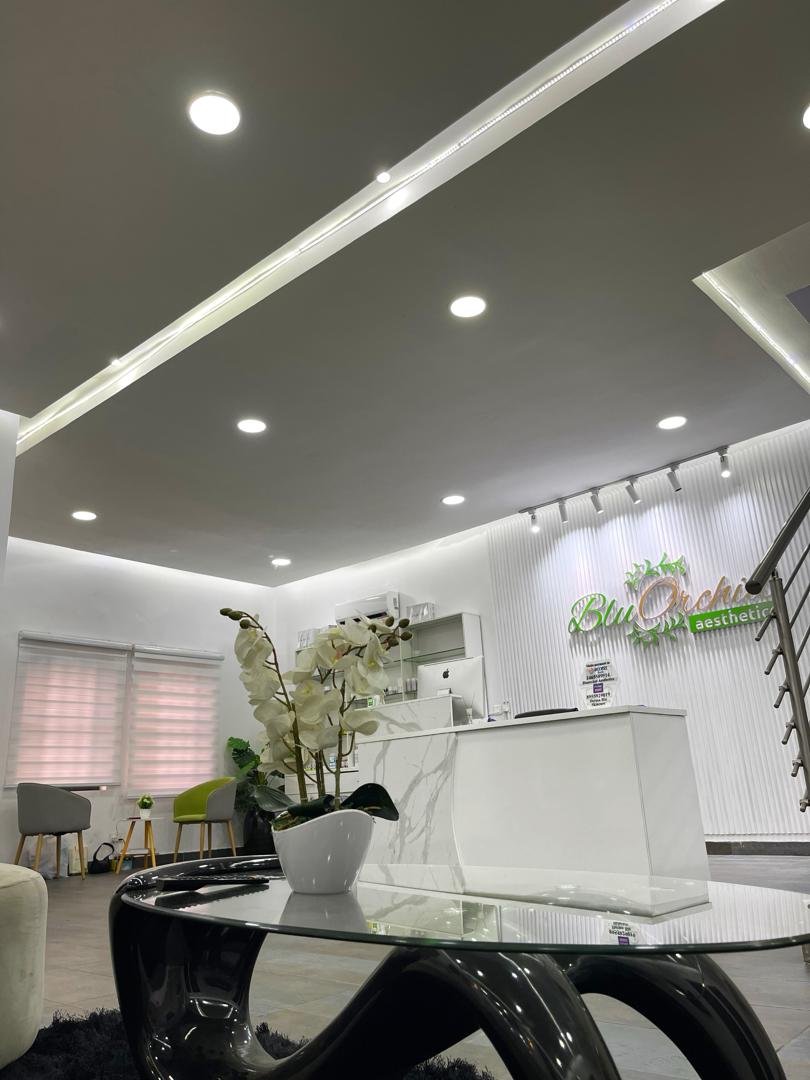
When you are considering an aesthetic treatment, it is natural to focus on the result.
Will your skin look better?
Will your lips still look natural?
Will your face still look like you?
But there is another question that deserves just as much attention:
What exactly is being put into or used on your body, and how does the clinic make sure it is safe?
That question is particularly important for injectable treatments.
The quality of an aesthetic treatment does not begin when a needle touches your skin.
It begins much earlier.
It begins with where products come from, how they are received, how they are stored, how they are identified, who uses them, and how the treatment is documented.
At BluOrchid Aesthetics, safety is not something we want patients to think about only when something goes wrong.
It is part of the treatment process from the beginning.
Why Product Sourcing Matters in Aesthetic Medicine
Aesthetic medicine involves products and devices that are used directly on the human body.
That means provenance matters.
A clinic should be able to establish where its medical products come from rather than relying on an unknown or informal supply chain.
The World Health Organization notes that the distribution and supply chain is an important part of maintaining the quality and safety of medical products, and that regulated distributors should be able to demonstrate where products were purchased or sourced.
In Nigeria, medical products are subject to regulatory requirements overseen by NAFDAC.
NAFDAC’s current medical-device guidance, for example, sets requirements around the manufacture, packaging, labelling, storage and distribution of regulated products and states that applicable products should meet registration requirements before being manufactured, imported, advertised, sold or distributed in Nigeria.
For a patient, this leads to a simple principle:
A clinic should know what it is using and where it came from.
We Do Not Treat Product Sourcing as an Afterthought
Before a product reaches a treatment room, there is a supply chain behind it.
That supply chain matters.
Responsible sourcing means considering factors such as:
- The manufacturer.
- The product identity.
- The authorised supply route.
- Regulatory status where applicable.
- Batch or lot information.
- Expiry information.
- Packaging integrity.
- Required storage conditions.
This is very different from buying a product simply because it is popular on social media or because it is cheaper from an informal supplier.
Aesthetic medicine should not operate on the principle of:
“If it looks genuine, it must be genuine.”
There should be a process behind the product.
We Check Products When They Arrive
Receiving a product is not simply a matter of opening a box and putting it on a shelf.
Products should be checked when they enter the clinic.
That can include confirming:
- The product received is the product ordered.
- Packaging is intact.
- Labelling is appropriate.
- Batch or lot information is available.
- Expiry information is checked.
- Any required storage conditions have been maintained.
- Products are appropriately recorded.
These steps may seem administrative.
They are not.
They create accountability.
If a product is used on a patient, the clinic should be able to connect that treatment to the product that was actually used.
Storage Matters as Much as Sourcing
Even a legitimate medical product can require specific handling and storage conditions.
That is why purchasing a product from an appropriate source is only one part of the safety process.
Storage conditions need to follow the manufacturer’s requirements.
WHO good storage and distribution guidance states that medical products should be maintained under the conditions specified on their labels or by the manufacturer during storage and distribution.
For products requiring temperature control, temperature monitoring is particularly important.
WHO guidance describes temperature monitoring and temperature mapping as integral to appropriate pharmaceutical storage.
In practical terms, that means a clinic should not simply assume that a product is safe because it was delivered in the correct packaging.
How it was transported and stored matters too.
What Happens When Storage Conditions Are Important?
Different products have different storage requirements.
There is no universal temperature that applies to every aesthetic product.
The correct approach is to follow the specific manufacturer’s instructions.
That is why responsible clinics need appropriate storage systems and procedures rather than relying on:
- “The room feels cool.”
- “It has always been kept here.”
- “The supplier said it was fine.”
Where temperature-controlled storage is required, monitoring and records provide a way to identify whether conditions have remained within the required range.
If there is a storage problem or temperature excursion, the product should not simply be used because it would be inconvenient or expensive to discard it.
It should be assessed according to the applicable product and manufacturer requirements.
We Care About Traceability
Traceability is one of the less visible parts of good clinical practice.
A patient may never see the records behind a treatment.
But those records matter.
For appropriate products, documentation can connect:
Patient → treatment → product → batch/lot → date → practitioner
This creates a record of what happened.
It also becomes important if there is ever a product complaint, safety concern, recall or follow-up question.
WHO specifically identifies traceability and the ability to demonstrate where medical products were sourced as important parts of a controlled supply chain.
Good documentation is therefore not bureaucracy for its own sake.
It is part of patient safety.
We Do Not Choose Products Simply Because They Are Trending
Aesthetic medicine changes quickly.
New products appear.
New techniques become popular.
Social media creates demand for whatever treatment happens to be trending that month.
But popularity is not the same thing as suitability.
A product should have a legitimate clinical reason for being considered.
The question should not be:
“Is everyone using this?”
It should be:
“Is this appropriate for this patient, this indication and this treatment plan?”
That distinction becomes especially important when patients arrive with a treatment already selected from TikTok or Instagram.
You can know the name of a product and still not know whether it is appropriate for you.
The Product Is Only One Part of Safety
A legitimate product does not make an aesthetic treatment automatically safe.
The person administering it matters.
The patient’s anatomy matters.
The treatment plan matters.
The environment matters.
The technique matters.
The ability to recognise and respond to complications matters.
This is why we do not think about safety as a single checklist.
It is a system.
The Consultation Is Part of the Safety Process
A proper consultation is not simply an opportunity to decide what treatment you want.
It is also an opportunity to determine whether the treatment is appropriate in the first place.
That means understanding:
- What you want to change.
- What you do not want to change.
- Your previous aesthetic treatments.
- Your relevant medical history.
- Your expectations.
- Your facial structure and features.
- Whether the proposed treatment actually addresses your concern.
Sometimes the safest recommendation is not to perform the treatment you initially requested.
That is not a failure.
It is part of responsible aesthetic medicine.
Brand at BluOrchid Aesthetics, Lagos
We Do Not Believe in Injecting Everything That Can Be Injected
Modern aesthetics gives practitioners many tools.
That does not mean every patient needs all of them.
If your concern is pigmentation, filler may not be the answer.
If your concern is facial movement, adding volume may not solve it.
If your concern is skin quality, treating the skin may make more sense than changing your facial structure.
And sometimes a patient is already well balanced and does not need the procedure they came in asking for.
Our approach is to start with the concern.
Then determine whether treatment is appropriate.
Then decide what treatment, product and amount make sense.
Not the other way around.
We Explain What Is Being Used
Patients should feel comfortable asking questions about their treatment.
You can ask:
What product are you using?
Who manufactures it?
What is it intended for?
How is it stored?
How will the treatment be documented?
What should I expect after treatment?
A good clinic should not make you feel uncomfortable for asking.
You are not being difficult.
You are being informed.
We Keep Treatment Records
Documentation is another important part of safety.
A treatment record can include information such as:
- The date of treatment.
- The treatment performed.
- The areas treated.
- The product used.
- Relevant batch or lot information.
- The practitioner involved.
- Relevant treatment notes.
- Follow-up information where appropriate.
The exact documentation required depends on the treatment and applicable clinical and regulatory requirements.
But the principle remains:
If something was done to your face or body, there should be a record of what was done.
We Take Aftercare Seriously
Safety does not end when you leave the clinic.
Patients should understand what to expect after treatment and what would be unusual enough to warrant contacting the clinic.
That means distinguishing between:
Expected post-treatment effects
and
Signs that require further assessment.
The specific advice depends on the treatment.
There should not be one generic aftercare sheet for every procedure.
Your instructions should reflect what you actually had done.
We Want Patients to Know When to Contact Us
One of the most important parts of treatment is knowing what happens if you have a concern afterwards.
Patients should know:
- Who to contact.
- When to contact the clinic.
- What symptoms should prompt an urgent response.
- When an issue requires assessment rather than simply waiting for it to settle.
This is particularly important for injectable treatments because, although complications may be uncommon, some complications require prompt recognition and management.
Safety therefore includes having a plan for what happens after the procedure.
Safety Does Not Mean Zero Risk
No medical treatment is completely risk-free.
A responsible clinic should not promise otherwise.
The goal is to reduce avoidable risk through:
- Appropriate patient selection.
- Qualified clinical care.
- Suitable products.
- Controlled sourcing.
- Appropriate storage.
- Good documentation.
- Proper technique.
- Clear aftercare.
- Follow-up.
- Prompt recognition of complications.
That is a much more meaningful definition of safety than simply saying:
“We use the best products.”
What Patients Should Look for in an Aesthetic Clinic
If you are comparing aesthetic clinics, look beyond Instagram.
Ask yourself:
Can the clinic tell you what product is being used?
You should not have to accept mystery products.
Can they explain where products come from?
A reputable supply chain matters.
Do they appear to have proper storage procedures?
Products should be stored according to their requirements.
Does the practitioner assess you before recommending treatment?
A treatment should be based on you, not simply on what you requested.
Does the clinic keep treatment records?
Documentation is part of responsible care.
Are you given appropriate aftercare?
You should understand what happens after treatment.
Can you contact the clinic if you have a concern?
The relationship should not end immediately after payment.
Are they willing to tell you when treatment is not appropriate?
This may be one of the strongest signs that the clinic is prioritising your interests over simply making a sale.
What “Safe Aesthetics” Should Actually Mean
Safety is not a marketing word.
It should describe a process.
It means taking responsibility for the entire treatment journey:
Before treatment: Assessment, suitability and informed decision-making.
Product selection: Appropriate products from controlled sources.
Receiving and storage: Checking products and maintaining required storage conditions.
During treatment: Appropriate technique, clinical judgement and documentation.
After treatment: Clear aftercare, follow-up and a plan for concerns.
That is what responsible aesthetic medicine should look like.
At BluOrchid, Safety Starts Before the Needle
At BluOrchid Aesthetics, we believe that good aesthetic medicine is about more than creating a beautiful result.
It is about creating that result responsibly.
That means taking the time to understand the patient, selecting appropriate treatments, using properly sourced products, paying attention to storage and traceability, maintaining treatment records and ensuring patients understand what to expect before and after treatment.
Because the question should never be simply:
“Will this make me look better?”
It should also be:
“Am I in a clinical environment where my safety is being taken seriously?”
If you are considering Botox, dermal fillers, facial profiling or another aesthetic treatment in Lagos, book a consultation with Dr Gigi at BluOrchid Aesthetics.
Your treatment should begin with a conversation, not a syringe.
Frequently asked questions
Where do BluOrchid's products come from?
From traceable supply routes rather than whichever source is cheapest or quickest. Every product can be traced back, which is the point of handling sourcing deliberately.
How do you know a product is genuine?
Products are checked on arrival rather than assumed to be correct, and traceability is maintained so that what was used in a treatment can always be established afterwards.
Does storage really affect a treatment?
Yes. Several of these products depend on being held in the right conditions, so storage matters as much as where a product was bought.
Is a safe product enough to make a treatment safe?
No. The product is one part of it. The assessment, the practitioner and the technique decide the rest, which is why consultation is treated as part of the safety process.
A consultation at BluOrchid begins with exactly this assessment.
One hour with our doctors. An honest assessment. A plan built around you. ₦50,000, credited in full toward your first treatment.
Book your consultation Doctor-led assessment at Lekki Phase 1, Lagos.