Non-Surgical Facelift Options in Nigeria
Comparing non-surgical facelift options in Nigeria? Learn what HIFU, thread lifts, fillers and other treatments can realistically change.

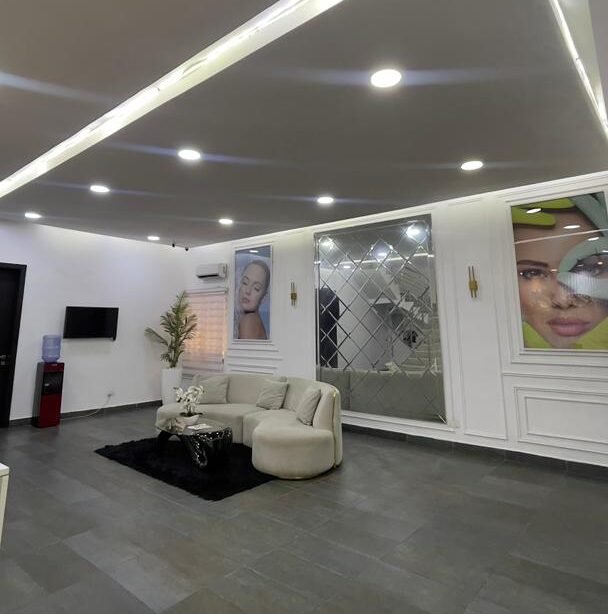
The phrase “non-surgical facelift” sounds simple.
The reality is not.
There is no single treatment called a non-surgical facelift. The term is used to describe a range of aesthetic procedures that can improve different aspects of facial ageing, from skin laxity and loss of definition to volume changes and early jowling.
That distinction matters.
A treatment that improves skin tightening is not necessarily going to lift descended facial tissue. A filler that restores lost volume is not the same as a thread lift. And none of these procedures can reproduce everything a surgical facelift does.
So if you are searching for non-surgical facelift options in Nigeria, the better question is:
What has changed in your face, and which treatment can realistically address that change?
What is a non-surgical facelift?
“Non-surgical facelift” is an umbrella term rather than a specific medical procedure.
It can refer to treatments such as:
- HIFU and other energy-based skin-tightening procedures
- PDO thread lifts
- Dermal fillers for selected areas of facial structure and volume
- Skin-tightening treatments
- Combination approaches designed around a patient’s facial anatomy
These treatments work in different ways.
Some target skin laxity.
Some restore volume.
Some provide mechanical support.
Some improve the appearance of facial contours.
That is why choosing a treatment based solely on the phrase “facelift without surgery” can create unrealistic expectations.

The main non-surgical facelift options in Nigeria
1. HIFU
HIFU, high-intensity focused ultrasound, is one of the better-known non-surgical approaches to facial tightening.
It uses focused ultrasound energy delivered at selected depths beneath the skin.
The objective is to create controlled tissue effects that can contribute to tightening and collagen remodelling.
HIFU may be considered for selected patients with concerns such as:
- Mild facial laxity
- Early jowling
- Loss of jawline definition
- Selected neck laxity
- A general desire for skin tightening
The important limitation is that HIFU does not physically remove excess skin or surgically reposition descended tissue.
It is therefore not equivalent to a facelift.
Who might consider HIFU?
Someone with relatively early or mild laxity who wants a non-surgical approach may be a candidate.
It may be less suitable when the dominant concern is significant excess skin or substantial tissue descent.
Treatment suitability also depends on the specific device, treatment area, skin characteristics and practitioner assessment.
2. PDO thread lift
A PDO thread lift takes a different approach.
Rather than delivering energy through the skin, absorbable threads are placed beneath the skin to provide mechanical support and reposition selected tissues.
This can create a visible lifting effect in appropriately selected patients.
Thread lifts may be considered for concerns such as:
- Early jowling
- Mild facial tissue descent
- Loss of definition
- Selected areas of facial laxity
But a thread lift should not be described as a facelift performed without surgery.
It is a minimally invasive procedure, not a non-invasive one.
There are insertion points, procedural risks and a recovery period.
And because the threads are absorbable, the effect is not permanent.
3. Dermal fillers
Fillers are sometimes included under the broad “non-surgical facelift” category, but this requires an important distinction.
Fillers do not primarily tighten loose skin.
Their main purpose is to restore or add volume and, when appropriately placed, improve facial structure and contour.
For example, carefully planned filler treatment may be considered when ageing has created changes around areas such as:
- The cheeks
- Chin
- Jawline
- Temples
- Lips
The goal is not necessarily to add volume everywhere.
In fact, excessive filler can make an ageing face look heavier rather than lifted.
The better approach is to understand where volume has been lost and whether restoring structure can improve overall facial balance.
HIFU at BluOrchid Aesthetics, Lagos
4. Combination treatment
Sometimes facial ageing is not caused by one problem.
You may have:
- Skin laxity
- Volume loss
- Early jowling
- Changes around the jawline
- Skin-quality changes
In those cases, one treatment may not address everything.
A practitioner may therefore recommend a combination approach, depending on the patient’s anatomy and goals.
For example, a treatment plan could involve addressing skin laxity separately from facial volume or contour.
But combining treatments should not mean simply adding procedures together.
Every treatment should have a specific purpose.
Which non-surgical facelift gives the best results?
There is no single winner.
It depends on what you are trying to change.
| Main concern | Treatment that may be considered |
|---|---|
| Mild skin laxity | HIFU or another appropriate tightening approach |
| Early jowling | HIFU, thread lift or structural treatment depending on cause |
| Loss of facial volume | Dermal fillers |
| Loss of jawline definition | HIFU, threads or carefully selected structural treatment |
| Mild neck laxity | HIFU or another appropriate approach |
| Significant excess skin | Surgical assessment may be more appropriate |
| Multiple signs of facial ageing | Individualised combination plan |
This is not a treatment prescription.
The same visible concern can have different underlying causes in different people.
HIFU vs thread lift
These two are often compared because both are marketed around facial lifting.
But they are fundamentally different.
HIFU uses focused ultrasound energy.
A thread lift uses absorbable threads placed beneath the skin.
HIFU is non-invasive.
A thread lift is minimally invasive.
A thread lift can provide mechanical lifting, whereas HIFU aims to create tissue effects associated with tightening and remodelling.
Neither is automatically better.
The choice depends on the degree and type of laxity, the area being treated and the patient’s expectations.
Fillers vs HIFU
This is another important distinction.
If your primary concern is loose skin, adding volume may not be the answer.
If your primary concern is loss of facial structure or volume, tightening the skin may not restore the proportions you have lost.
Some patients have both issues.
That is why facial assessment matters more than choosing a treatment based on a single symptom.

What about a facelift?
If you have significant facial laxity, substantial jowling or excess skin, it is important to understand the limits of non-surgical treatments.
A facelift is surgery.
It can physically reposition facial tissues and address excess skin in a way that non-surgical procedures cannot reproduce.
That does not mean everyone with facial ageing needs surgery.
It means that the greater the degree of structural change, the more important it becomes to discuss whether a non-surgical treatment can realistically deliver the correction you want.
Sometimes the most useful consultation is the one that tells you what a treatment cannot do.
Can a non-surgical facelift remove sagging skin?
Not in the same way surgery can.
Non-surgical treatments may improve the appearance of laxity or create some degree of tightening or lifting, depending on the treatment and patient.
But they do not provide the same ability to remove excess skin as surgery.
If there is substantial skin excess, this distinction becomes particularly important.
How long do non-surgical facelift results last?
There is no single answer because “non-surgical facelift” covers several different treatments.
HIFU results develop differently from thread-lift effects.
Fillers have their own longevity depending on the product, area and individual.
And none of these treatments stops the natural ageing process.
Your practitioner should explain:
- When you should expect to see changes
- How the result may evolve
- How long the effect may last
- Whether maintenance may be appropriate
Be cautious of anyone promising a permanent non-surgical facelift.
What about downtime?
Recovery depends on the procedure.
HIFU generally involves less recovery than an invasive procedure, although temporary tenderness, swelling, redness or sensitivity can occur.
Thread lifts can involve more noticeable swelling, bruising or tenderness while the tissues settle.
Fillers can also produce temporary swelling or bruising.
The amount of downtime you should expect should be discussed before treatment rather than assumed from the phrase “non-surgical.”

Are non-surgical facelift treatments safe on dark skin?
Having dark skin does not automatically rule out non-surgical facial treatments.
But skin type should be part of treatment planning.
This is particularly important when energy-based treatments are being considered, because treatment parameters and practitioner experience matter.
If you have a history of post-inflammatory hyperpigmentation or unusually reactive skin, tell your practitioner during your consultation.
A good treatment plan should account for your skin, not simply the treatment being advertised.
What should you ask before booking?
Before choosing a non-surgical facelift treatment, ask:
What exactly is causing my facial laxity?
Is it primarily skin laxity, volume loss, tissue descent, or a combination?
What can this treatment realistically change?
Ask specifically what the procedure can and cannot correct.
Why are you recommending this treatment for me?
The answer should relate to your anatomy and goals, not simply the fact that the treatment is popular.
How long should the result last?
Ask about the expected duration and whether maintenance treatments may be required.
What are the risks?
“Non-surgical” does not mean risk-free.
What happens if I do nothing?
This can be surprisingly useful.
You should understand whether treatment is addressing a meaningful concern or simply responding to pressure to intervene.
When should you consider a consultation instead of choosing a treatment online?
If you are unsure whether you need HIFU, threads, fillers or something else, a consultation is usually more useful than trying to diagnose your own face from treatment descriptions.
A proper assessment should consider:
- Your facial anatomy
- Skin quality
- Degree of laxity
- Volume distribution
- Jawline and neck
- Your aesthetic goals
- Previous aesthetic treatments
- Relevant medical history
The result should be a treatment recommendation based on your face, rather than a generic menu.
Non-surgical facelift in Lagos: where should you start?
If you are looking for a non-surgical facelift in Lagos, start by deciding whether your primary concern is:
Tightness
Lift
Volume
Contour
Skin quality
or a combination of these.
That distinction can completely change the treatment discussion.
At BluOrchid Aesthetics, the appropriate starting point is a consultation rather than selecting a procedure simply because it is described as a “non-surgical facelift.”
The aim should be to understand what is changing in your face and determine which intervention, if any, is appropriate.
Frequently asked questions
What is the best non-surgical facelift in Nigeria?
There is no single best option for everyone. HIFU, thread lifts, fillers and other treatments address different aspects of facial ageing. The appropriate choice depends on your anatomy, degree of laxity and goals.
Is HIFU better than a thread lift?
Not necessarily. HIFU uses focused ultrasound energy, while a thread lift uses absorbable threads for mechanical support and lifting. They are different procedures and suit different situations.
Can fillers give you a facelift?
Fillers can restore volume and improve selected aspects of facial structure and contour, but they do not reproduce the tissue repositioning or skin removal possible with facelift surgery.
Can HIFU replace a facelift?
HIFU can be useful for selected patients with mild to moderate laxity, but it cannot reproduce the structural correction possible with surgery.
Are thread lifts permanent?
No. The threads are absorbable, and the effect is not permanent.
What is better for jowls: HIFU or threads?
It depends on why the jowls have developed and how pronounced they are. Mild laxity and tissue descent may be approached differently from substantial excess skin.
Can a non-surgical facelift remove excess skin?
No. Non-surgical treatments may improve the appearance of laxity, but they do not remove excess skin in the way surgery can.
Is a non-surgical facelift really non-surgical?
Not always. The phrase is often used broadly. HIFU is non-invasive, while a thread lift is minimally invasive. Always ask exactly what procedure is being proposed.
How long does a non-surgical facelift last?
There is no universal duration. Longevity depends on the treatment used, the individual and other factors. Your practitioner should explain the expected duration for the specific procedure.
The bottom line
A non-surgical facelift is not one procedure.
It is a category of treatments that can address different aspects of facial ageing without undergoing a traditional facelift.
HIFU may be considered for selected cases of skin laxity and tightening.
Thread lifts can provide mechanical support and lifting in appropriately selected patients.
Fillers can restore volume and improve facial structure and contour where appropriate.
But if the face has substantial excess skin or significant tissue descent, non-surgical treatment may not provide the degree of correction you are looking for.
The most useful question is therefore not:
“Which non-surgical facelift is best?”
It is:
“What has changed in my face, and what treatment can realistically improve it?”
That is where a proper facial assessment begins.
A consultation at BluOrchid begins with exactly this assessment.
One hour with our doctors. An honest assessment. A plan built around you. ₦50,000, credited in full toward your first treatment.
Book your consultation Doctor-led assessment at Lekki Phase 1, Lagos.